
General Surgery Retractor Guides
What Is a Richardson Retractor? Uses, Blade Sizes & Applications
الكاتب: Saad Shahid · تم التحديث · 7 دقائق قراءة

Deep cavitary and abdominal surgery requires instruments capable of mobilizing thick, muscular walls and dense fascial boundaries. While delicate skin hooks and small flat blades suffice for dermal incisions, retracting the rectus abdominis muscle or deep pelvic tissues demands substantial mechanical strength.
المبعدات التي يتناولها هذا الدليل: Richardson Eastman Retractor, مُبعّد Richardson بمقبض مريح, مُبعّد Richardson بمقبض حلقي. تصفح جميع المبعدات الجراحية.
A Richardson retractor is an established handheld surgical retractor for heavy soft-tissue displacement. Its right-angled (L-shaped) blade has an atraumatic retaining lip and an ergonomic handle. The Richardson retractor gives surgical teams leverage to open abdominal walls and maintain deep operative sightlines.
Contents
What Is a Richardson Retractor?
A Richardson retractor is a manual, single-ended or double-ended surgical retractor that applies firm, directional counter-traction to thick muscular walls and wound edges. Named after prominent American surgeon Dr. Maurice Howe Richardson, it remains a core component of general laparotomy trays.
Key design features include:
- Right-angled blade: Extends from the shank at approximately 90 degrees to provide vertical traction against deep wound margins.
- Curved retaining lip: A smooth, upward-curved distal edge keeps muscular tissue from slipping over the blade under heavy tension.
- Ergonomic handle: A solid contoured grip with finger rests or a lightweight hollow grip gives assistants firm rotational control.
- Heavy-duty construction: Forged, reinforced shanks resist bending or deformation under strong retraction force.
Why Does Richardson Retractor Blade Size Matter?
Blade dimensions directly affect procedural safety and exposure efficiency. A blade that is too narrow can cause focal tissue trauma. An oversized blade can obstruct deep dissection planes.
| Specification | Technical Importance | Clinical Significance |
|---|---|---|
| Blade Width | Governs force distribution across tissue margins | Broad blades prevent muscular tissue from rolling inward around the sides |
| Blade Depth | Determines vertical reach into anatomical cavities | Deep blades reach retroperitoneal planes; shallow blades manage abdominal fascia |
| Retaining Lip Curve | Prevents tissue slippage under tension | Retains thick, greasy adipose and muscle layers securely |
| Overall Length | Governs leverage arm for operating assistant | Provides hand clearance outside the primary illumination beam |
Standard catalog sizes typically range from small, narrow blades, such as 20 mm wide × 25 mm deep, for pediatric or superficial cases to large, broad blades, such as 50 mm wide × 75 mm+ deep, for major open abdominal laparotomies.
What Are Richardson Retractors Used For?
The Richardson retractor is used for deep-cavity and heavy soft-tissue retraction in the following procedures:
- Open laparotomy and abdominal wall elevation: Elevates thick rectus abdominis muscle bellies and peritoneal walls during exploratory laparotomies, bowel resections, and cholecystectomies.
- Pelvic and urological procedures: Retracts lower abdominal walls and pelvic fascia during open prostatectomies, cystectomies, and hysterectomies.
- Major orthopedic approaches: Mobilizes deep muscle masses around the hip joint and femur during total joint arthroplasty or fracture fixation.
- Thoracotomy and chest wall retraction: Helps retract intercostal and pectoral musculature during open thoracic procedures.
Richardson vs. Deaver Retractor
| Feature | Richardson Retractor | Deaver Retractor |
|---|---|---|
| Blade Contour | Distinct right-angled (L-shaped) blade with lip | Continuous, sweeping curved arc ("question mark") |
| Primary Target | Muscular abdominal wall, fascia, thick wound margins | Mobile internal visceral organs (liver, stomach, intestines) |
| Mechanical Action | Directional, vertical pulling leverage | Expansive surface cradling and cupping |
| Slip Resistance | High (inward retaining lip traps tissue) | Moderate (smooth curved surface distributes wide pressure) |
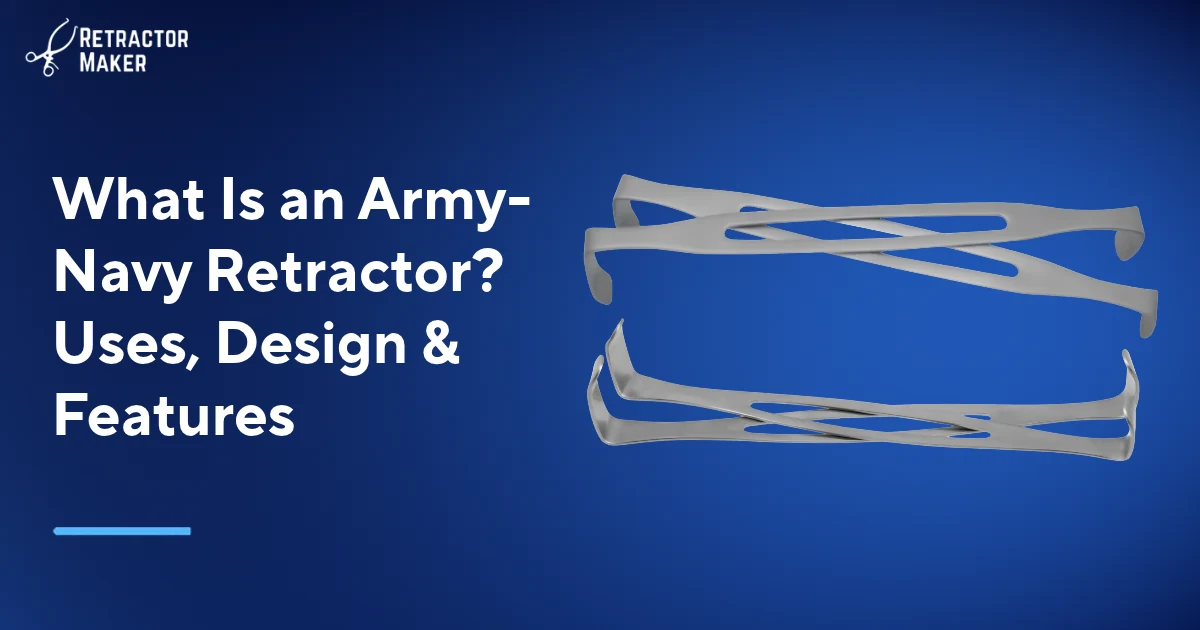
Richardson vs. Army-Navy Retractor
| Feature | Richardson Retractor | Army-Navy Retractor |
|---|---|---|
| Configuration | Usually single-ended with contoured/hollow handle | Double-ended with central fenestrated bar |
| Blade Dimensions | Substantially deeper and wider | Compact, shallow to intermediate blades |
| Tissue Capability | Heavy muscle, thick abdominal wall, deep fascia | Skin, subcutaneous adipose, superficial connective tissue |
How Should Retractors Be Cleaned and Sterilized?
- Soil removal: Wipe away blood and bioburden immediately after use. Clean beneath the retaining lip, where tissue fragments can lodge.
- Cleaning: Immerse in enzymatic solutions and scrub with soft nylon brushes. Ensure solution flows freely through drainage ports on hollow-handle variants.
- Inspection: Check the neck/shank junction for metal fatigue or bending caused by high manual torque.
- Sterilization: Autoclave with validated moist heat steam sterilization according to the manufacturer IFU and hospital infection control protocols.
Summary for Surgical Teams and Buyers
The Richardson retractor is a foundational tool for open cavitary surgery. It provides dependable leverage and tissue retention against heavy muscular boundaries. Its rigid, right-angled design and protective retaining lip support clear, safe surgical access.
Retractor Maker manufactures Richardson retractors in Sialkot, Pakistan, for international healthcare markets. Materials and features include high-tensile Premium Grade AISI 304/316 Stainless Steel (Non-Magnetic), non-glare satin finishes, and ergonomic hollow or solid handles.
Which Blade Measurements Should Buyers Request?
Request blade width and depth for the selected length and handle style. The product listings below specify overall lengths but do not provide blade width or depth. For purchasing and tray planning involving the Richardson Eastman retractor, request measurements for both ends. Overall length is not a substitute for blade size when comparing quotations or ordering replacements.
| Model | Overall Length | Blade Size | Notes |
|---|---|---|---|
| Richardson Eastman Retractor | 10 ¼″; 10 ½″; 10 ¾″; 11 ¼″ | On request | Asymmetrical double-ended configuration |
| Richardson Retractor Grip Handle | 9 ½″; 10″; 11″ | On request | Hollow Grip, Lamb, or Lightweight Grip Handle |
| Richardson Retractor Loop Handle | 9 ½″ (24.13 cm); 10″ (25.40 cm) | On request | Single-ended; integrated loop handle |
How Should Surgical Assistants Handle Retraction?
- Maintain a secure, controlled grip with a comfortable wrist position. If your hand tires or slips, request a coordinated handover rather than applying more force.
- Confirm traction direction with the surgeon before pulling. Maintain the requested angle without twisting the blade or using the incision edge as a fulcrum.
- Apply only the traction needed for the requested view. Avoid sudden pulls or increasing force simply because exposure becomes restricted.
- Agree with the surgeon on opportunities to ease or release pressure. Reassess during prolonged holds and operative pauses rather than using a fixed release interval.
- Watch blade-contact tissue for blanching, discoloration, slipping, or tearing. Report changes promptly and coordinate unloading or repositioning with the surgeon.
- Tell the surgeon before changing position, angle, or grip. Request guidance before advancing if the blade tip or underlying tissue cannot be assessed.
- Pass the retractor handle first. Control the blade and keep it clear of drapes and personnel. Control the unused end of double-ended models during passing and use.
What Determines the Autoclave Cycle?
Autoclave cycle selection depends on the retractor IFU, packaging, and sterilizer. Steam sterilization follows completed cleaning, rinsing, inspection, and preparation for the validated load configuration. Exposure time is time at the specified sterilization temperature, not total cycle duration. Complete the validated drying phase. Assess wet packs under hospital policy before release.
| Cycle | Temperature | Exposure | Drying |
|---|---|---|---|
| Pre-vacuum | 132°C/270°F | 4 min | 20–30 min |
| Pre-vacuum | 134°C/273°F | 3 min; some regions use 18 min for prion protocols | Per validated IFU |
| Gravity displacement | 121°C/250°F | 30 min | 15–30 min |
These are typical reference values, not product-specific validated instructions. The validated instructions for use (IFU), sterilizer manufacturer's instructions, and hospital policy always take precedence. Prion protocols require separate institutional guidance. These retractors are supplied non-sterile and must be sterilized before first use.
تنبيه سريري: هذا الدليل موجّه للفرق الجراحية ومشتري المستشفيات. اتبع دائمًا تعليمات الاستخدام (IFU) الصادرة عن الشركة المصنعة وقواعد التعقيم في مستشفاك قبل الاستخدام السريري.
الأسئلة الشائعة
What is a Richardson retractor?
A Richardson retractor is a handheld surgical instrument for heavy abdominal wall and soft-tissue retraction. It has a right-angled blade with a curved retaining lip. This blade design provides traction, while the lip helps retain tissue during use.
What are Richardson retractors used for?
Richardson retractors are used to retract thick muscle layers, abdominal walls, and deep fascia during open abdominal, pelvic, and orthopedic surgeries. Their role is heavy soft-tissue retraction, providing access to deeper operative areas by holding these tissue layers aside.
Why does a Richardson retractor have a curved lip on the blade?
The Richardson retractor has an upward-curved lip to prevent thick muscle bellies and adipose tissue from slipping off the blade during traction. The lip sits at the distal blade edge and helps retain tissue when tension is applied.
What is the difference between a Richardson and a Deaver retractor?
The Richardson retractor pulls structural muscle walls with a right-angled blade, while the Deaver retractor cups and elevates internal visceral organs with a sweeping curved blade. The main distinction is blade shape and the tissues each design is intended to retract.
Is the Richardson retractor single-ended or double-ended?
Most classic Richardson retractors are single-ended with an ergonomic handle, but double-ended variations also exist. The Richardson-Eastman is one such double-ended variation. The configuration therefore depends on the model rather than being the same across all Richardson designs.
Can Richardson retractors be autoclaved?
Yes. Forged from Premium Grade AISI 304/316 Stainless Steel (Non-Magnetic), reusable Richardson retractors are fully autoclavable.
What is a Richardson-Eastman retractor?
A Richardson-Eastman retractor is a Richardson model with an asymmetrical double-ended configuration. The guide lists overall lengths but does not provide blade width or depth for this model. Request measurements for both ends; overall length is not a substitute for blade size.
How does a Richardson retractor differ from an Army-Navy retractor?
A Richardson retractor has substantially deeper and wider blades for heavy muscle, thick abdominal walls, and deep fascia, while an Army-Navy retractor has compact blades for superficial tissues. The Richardson usually has a single-ended configuration with a contoured or hollow handle. The Army-Navy is double-ended with a central fenestrated bar.
How should a Richardson retractor be cleaned before sterilization?
A Richardson retractor should be wiped immediately after use, immersed in an enzymatic solution, and scrubbed with soft nylon brushes. Clean thoroughly beneath the retaining lip, where tissue fragments can lodge. For hollow-handle variants, ensure cleaning solution flows freely through the drainage ports.
عن الكاتب
Saad Shahid · مدير المبيعات والتسويق
سعد شاهد هو مدير المبيعات والتسويق ومؤسس Retractor Maker التي انطلقت عام 2023 في سيالكوت، باكستان. ويعمل أيضًا مع والده في Hospitech Traders، الشركة العائلية للأدوات الجراحية التي تأسست عام 1989.
مدونات وأدلة ذات صلة


مبعدات ذات صلة
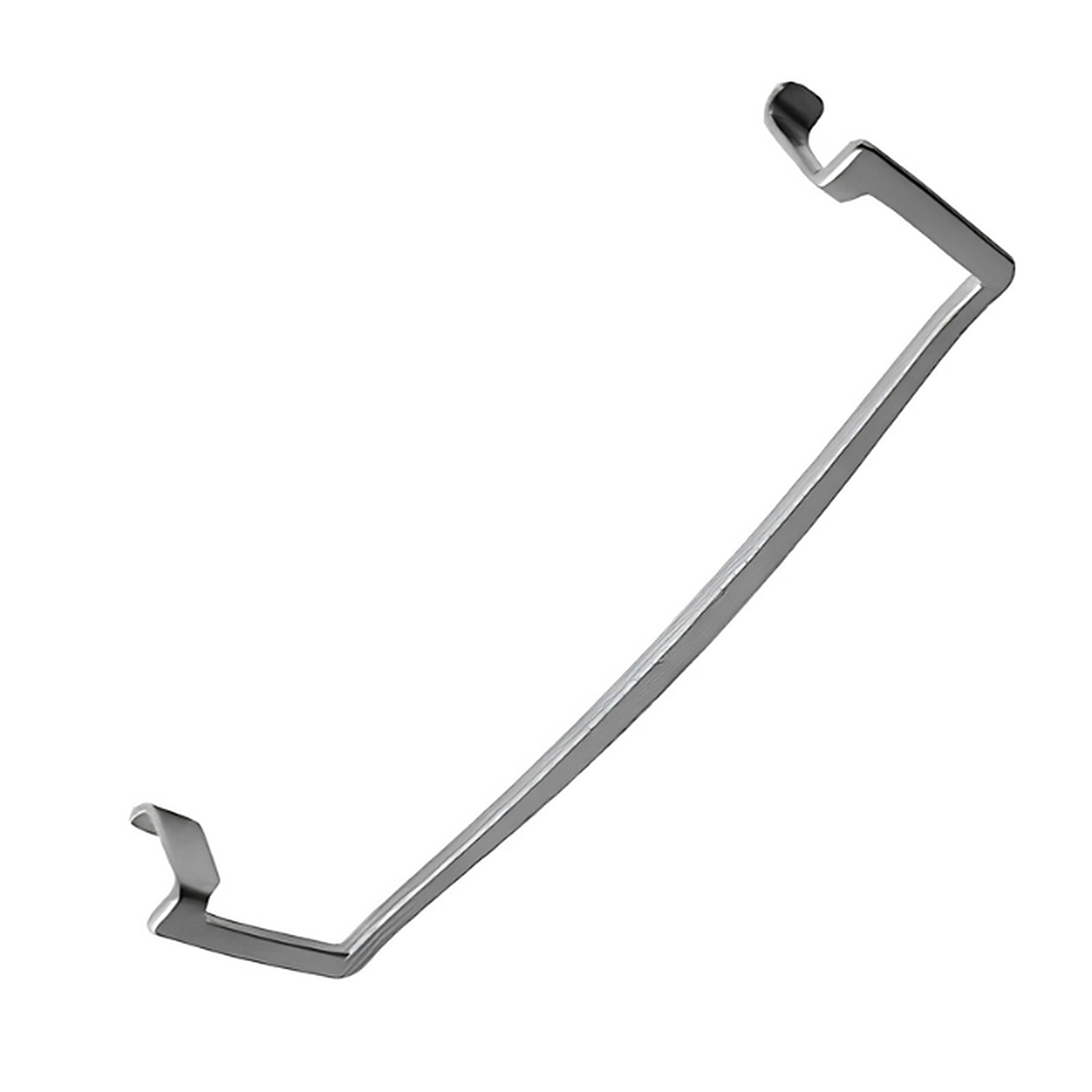
مبعد Senn Forward Retractor
$49.00
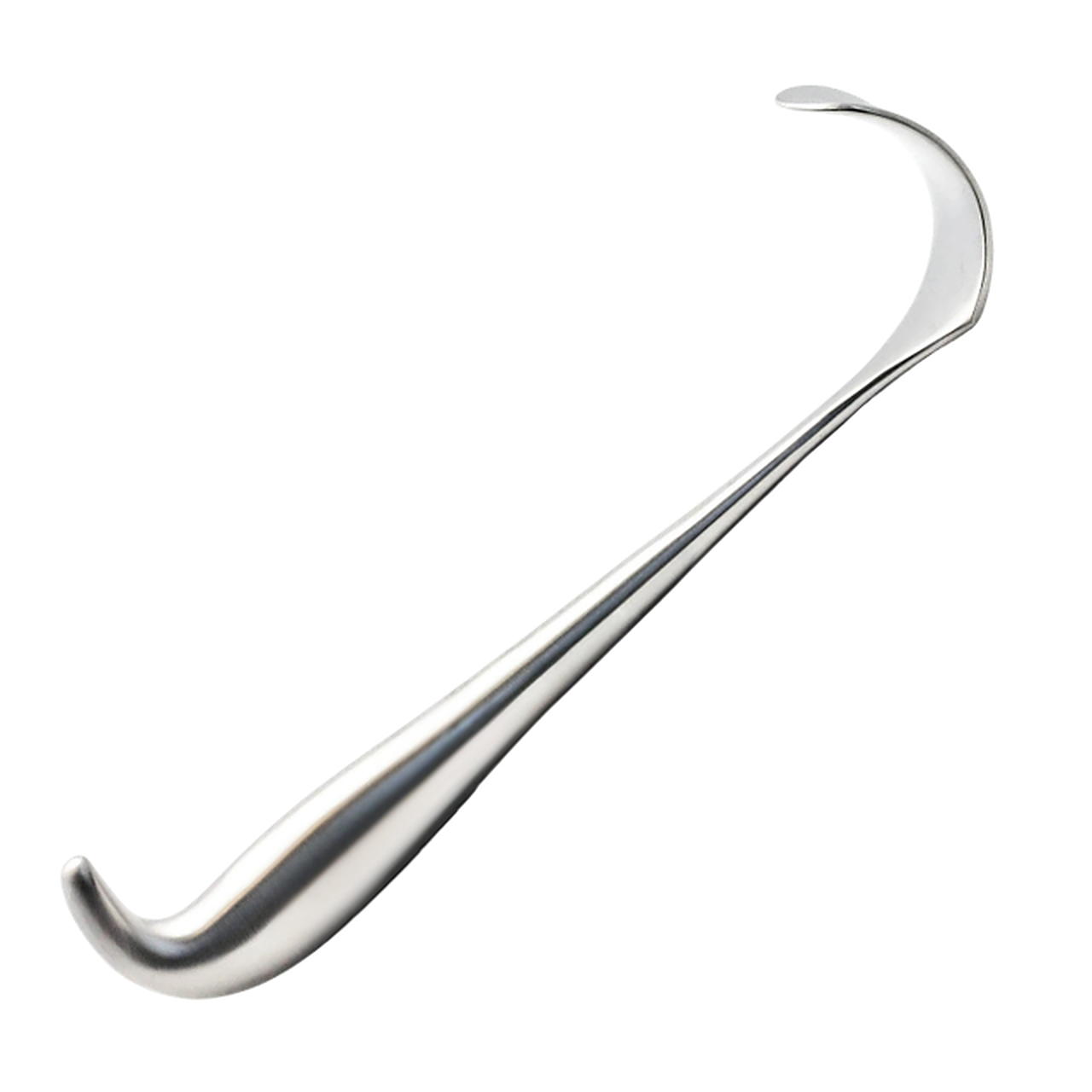
مُبعّد Brewster Retractor
ابتداءً من $159
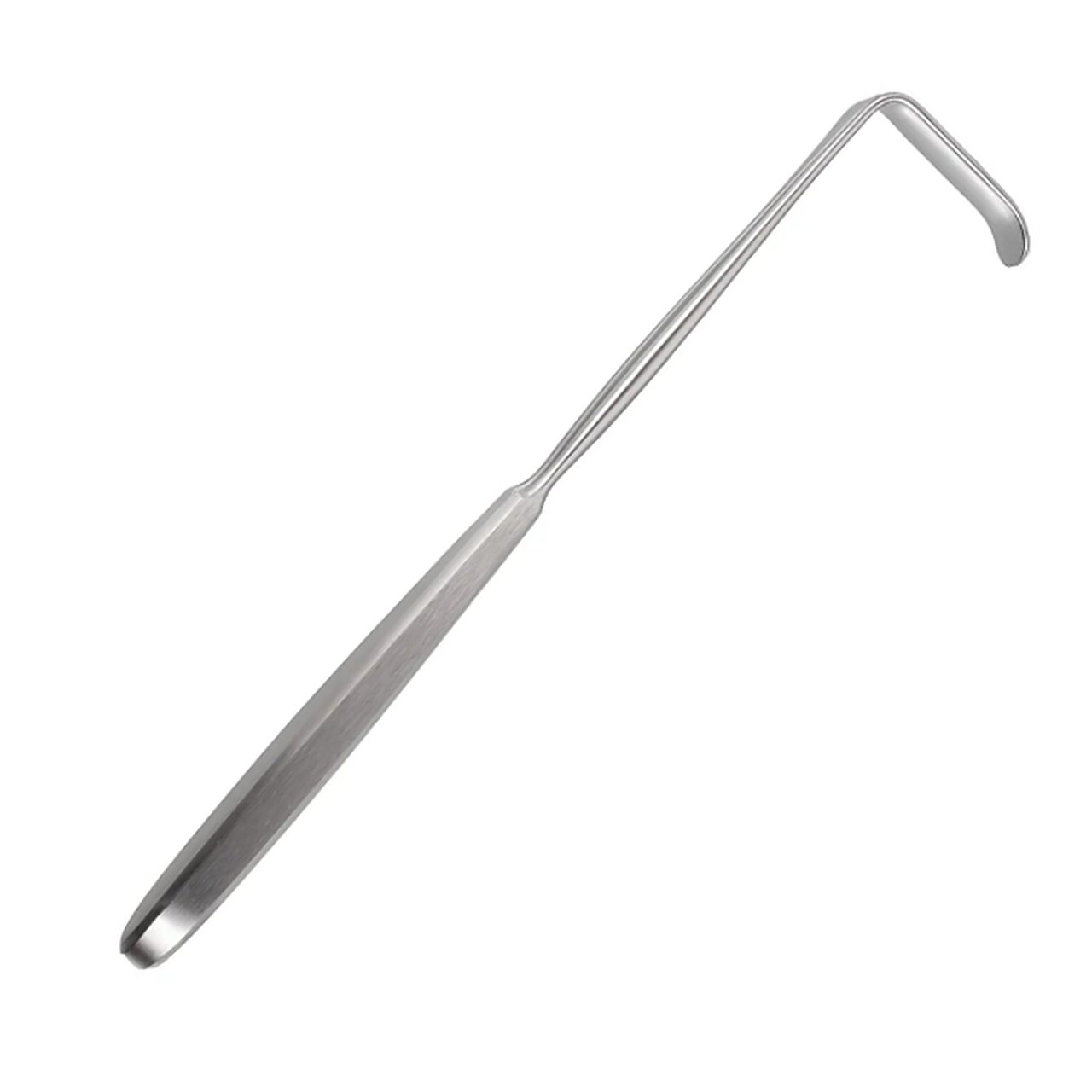
مُبعّد Langenbeck Retractor-Solid Handle
$49.00
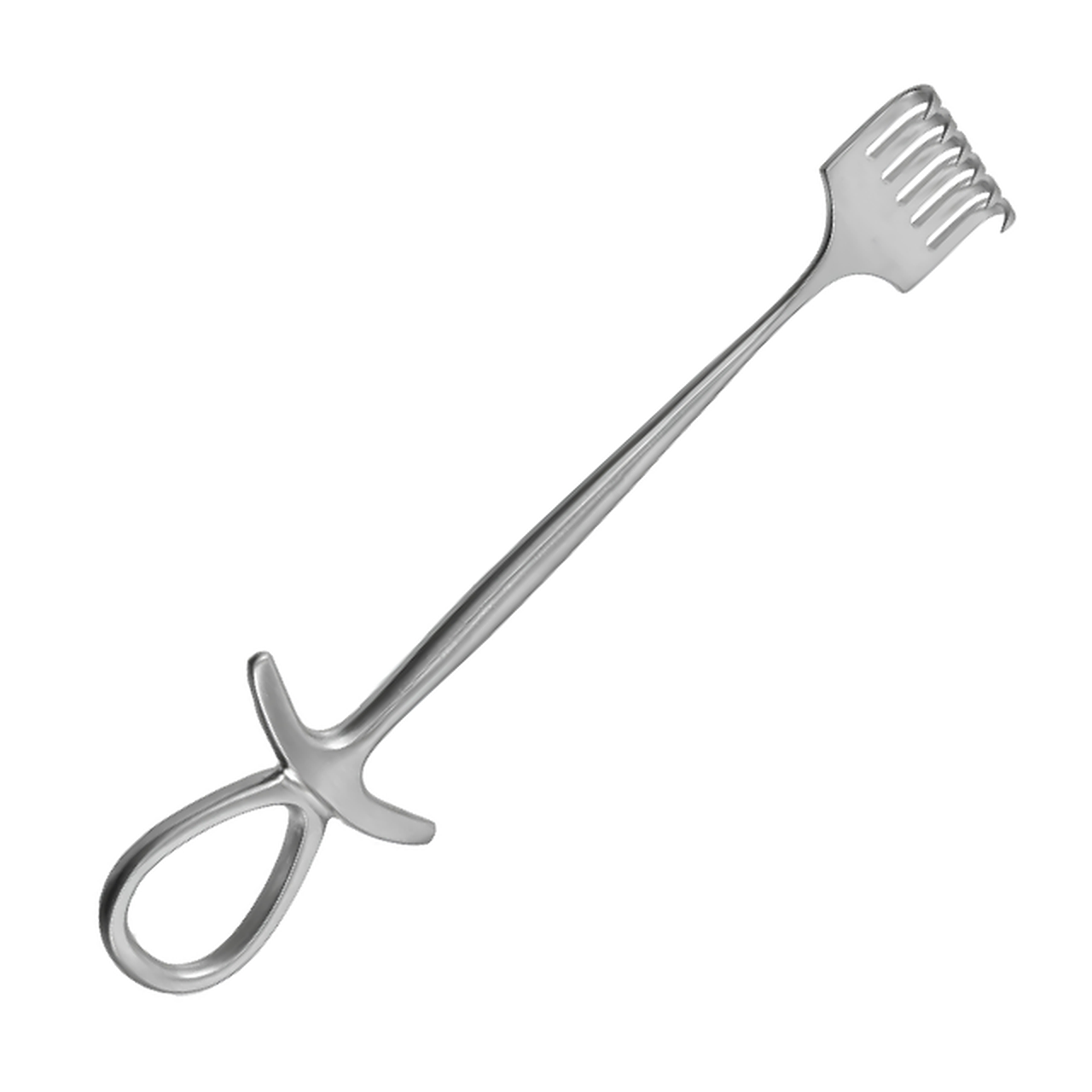
Murphy Retractor
ابتداءً من $44.00
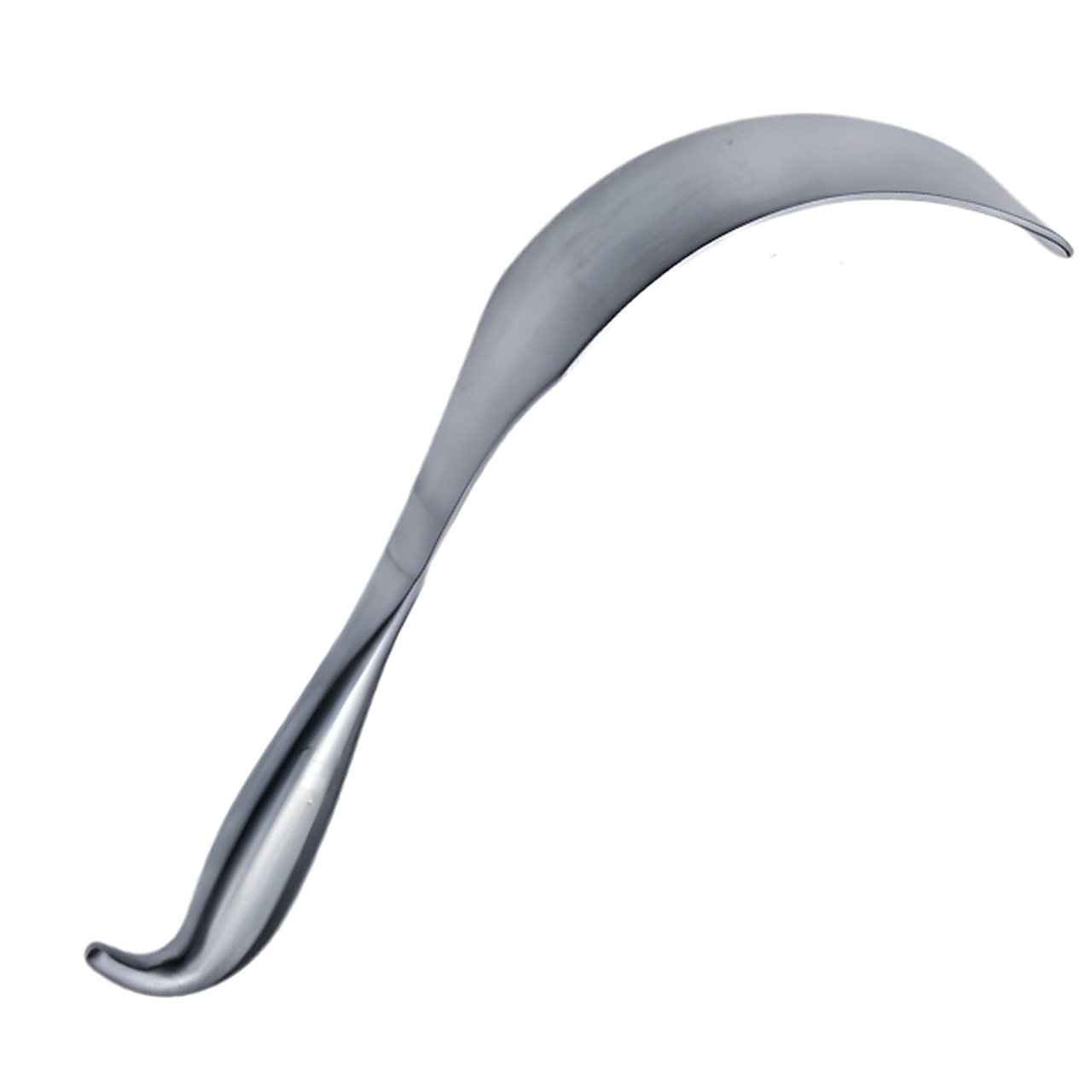
مبعد Leriche Retractor-Atraumatic Wide Blade
ابتداءً من $94.00
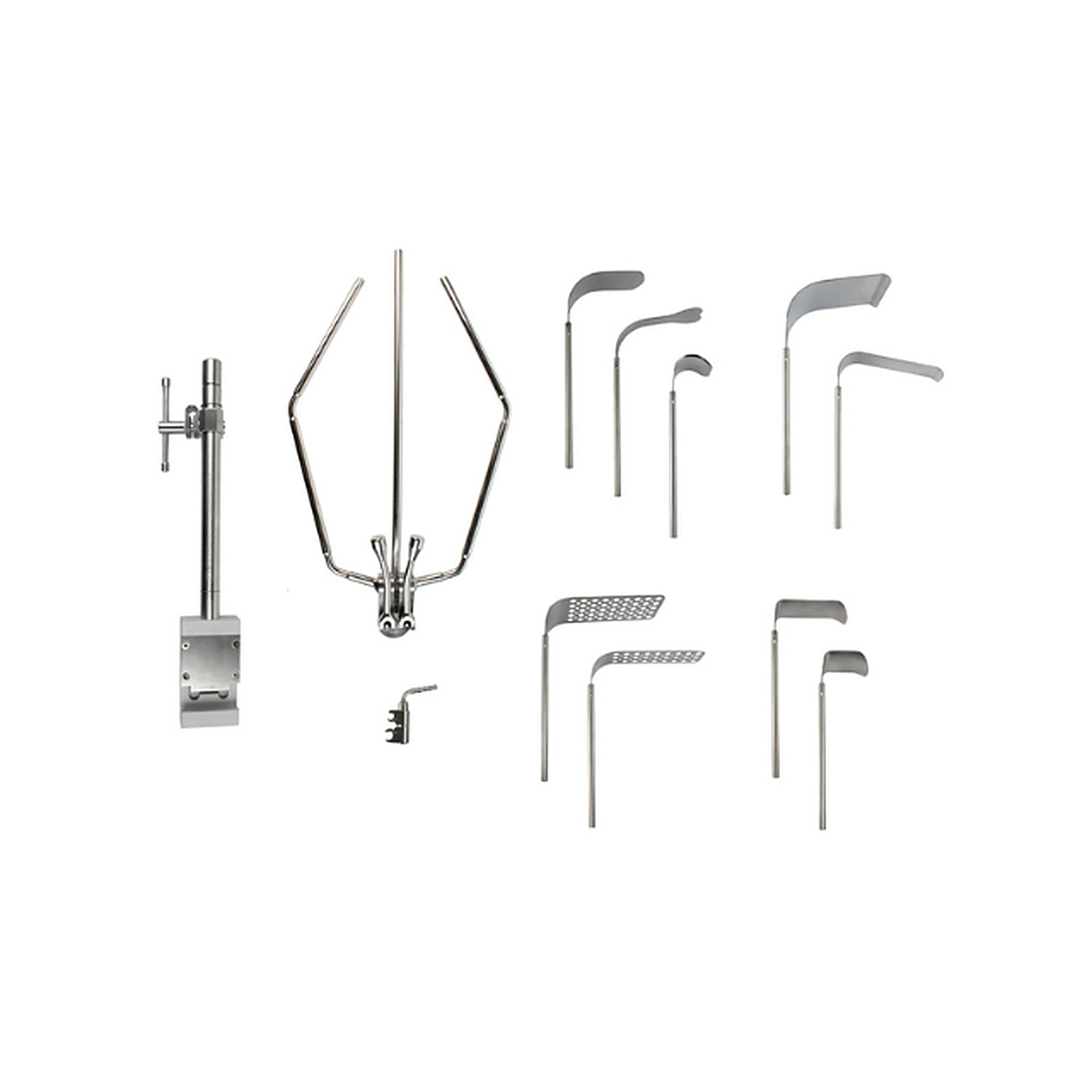
نظام المبعد الجراحي العام Lobster General Retractor System
$2,699Free Shipping
هل تحتاج إلى مبعدات جراحية أو مكونات؟
أخبرنا بما تحتاجه، بما في ذلك المنتج، والتكوين، والكمية، وبلد الوجهة. يمكن لـ Retractor Maker توفير التوفر والمواصفات والأسعار.
طلب عرض سعر