
General Surgery Retractor Guides
What Is a Langenbeck Retractor? Uses, Blade Sizes & Surgical Applications
الكاتب: Saad Shahid · تم التحديث · 6 دقائق قراءة

In specialized surgical dissections, surgical incisions must often remain small while reaching intermediate or deep anatomical planes. Using wide-bladed retractors in these confined spaces crowds the operative field, blocks overhead light, and impairs instrument maneuverability.
المبعدات التي يتناولها هذا الدليل: مُبعّد Kocher Langenbeck Retractor, Langenbeck Green Retractor, مُبعّد Langenbeck Retractor-Solid Handle. تصفح جميع المبعدات الجراحية.
A Langenbeck retractor is an established, single-ended handheld surgical instrument for narrow-corridor retraction. Its slender, right-angled flat blade and ergonomic teardrop handle provide deep, localized exposure with minimal incision crowding.
Contents
What Is a Langenbeck Retractor?
The Langenbeck retractor manually displaces soft tissues, tendons, and muscle sheaths in confined operative spaces. It is named after the pioneering German surgeon Bernhard von Langenbeck.
The core design combines a narrow blade, a down-turned lip, a loop or teardrop handle, and a slender shaft:
- Slender right-angled blade: A flat, narrow blade projects at 90 degrees from a delicate, elongated shaft.
- Atraumatic down-turned lip: A subtle downward lip at the blade tip anchors behind fascial shelves without penetrating tissue.
- Teardrop / loop handle: An ergonomic proximal loop or teardrop opening provides comfortable finger purchase and steady rotational control.
- Minimal profile: The slender shaft occupies minimal space and preserves optical lines of sight.
How Do Blade Width and Depth Affect Selection?
Langenbeck retractors come in diverse blade widths and depths to match localized anatomy:
| Blade Parameter | Technical Role | Anatomical Example |
|---|---|---|
| Narrow Width (6 mm – 10 mm) | Inserts between tight neurovascular corridors | Thyroidectomy, digital tendon repair |
| Standard Width (11 mm – 15 mm) | Retracts discrete muscle bellies and fascia | Hernia repair, extremity orthopedic exposure |
| Shallow Depth (15 mm – 25 mm) | Manages superficial and subfascial layers | Plastic surgery, minor soft-tissue excisions |
| Deep Depth (30 mm – 50 mm+) | Reaches deep planes through a compact skin cut | Deep intermuscular dissections, hip joint exposure |
What Is a Langenbeck Retractor Used For?
- Thyroid and head/neck surgery: Gently retracts strap muscles and cervical skin flaps during thyroidectomies and parathyroid explorations.
- Orthopedic extremity surgery: Mobilizes intermuscular planes and periosteum during wrist, ankle, and forearm fracture fixations.
- Herniorrhaphy: Displaces inguinal canal margins and the external oblique muscle aponeurosis during open hernia repairs.
- Plastic and reconstructive surgery: Retracts localized facial or limb soft-tissue envelopes where precise, narrow retraction is needed.
How Do Langenbeck, Richardson, and Army-Navy Compare?
| Feature | Langenbeck Retractor | Richardson Retractor | Army-Navy Retractor |
|---|---|---|---|
| Configuration | Single-ended, narrow blade | Single-ended, broad heavy blade | Double-ended, flat dissimilar blades |
| Blade Width | Narrow (typically 6–15 mm) | Broad (typically 20–50 mm) | Intermediate (typically 15–22 mm) |
| Handle Design | Teardrop / loop handle | Contoured solid or hollow grip | Central fenestrated bar |
| Primary Utility | Deep, narrow operative corridors | Heavy abdominal muscular wall | Superficial wound opening |
How Should You Clean, Inspect, and Sterilize It?
- Cleaning: Remove dried blood at the shaft and right-angled blade junction with enzymatic detergents and soft nylon brushes.
- Inspection: Visually check the slender shaft for bending or metal fatigue and blade tips for burrs or sharp imperfections.
- Sterilization: Autoclave in validated sterilization cassettes according to the manufacturer’s IFU and institutional infection control protocols.
Key Points for Surgical Teams and Buyers
The Langenbeck retractor provides controlled, low-profile exposure in confined anatomical corridors. Its slender blade geometry and ergonomic handle support deep dissection through compact incisions with minimal tissue trauma.
Retractor Maker manufactures Langenbeck retractors in Sialkot, Pakistan. International healthcare providers can choose from an extensive selection of blade dimensions and non-glare satin finishes.
Langenbeck Retractor Blade Measurements and Sizes
Use model-specific measurements for tray lists and purchase requests. Overall length and blade size are separate specifications, so confirm the available combination before ordering. The blade dimensions below are length × width in millimetres, not overall instrument dimensions.
| Model | Overall Length | Blade Size | Notes |
|---|---|---|---|
| Langenbeck Green Retractor | 17 cm or 22 cm | 25 × 6 or 41 × 11 mm | Flat handle with lateral serrations; length/blade pairings: On request. |
| Langenbeck Retractor-Solid Handle | 20.3 cm (8 inches) | Style #1: 32 × 10; #2: 38 × 10; #3: 38 × 12; #4: 38 × 16 mm | Solid flat handle. |
| Kocher Langenbeck Retractor | 20.3 cm or 22 cm; also noted as 215 mm standard frame | 15×85, 20×55, 20×63, 25×6, 28×13, 28×15, 31×10, 35×8, 35×15, 38×11, 38×13, 40×11, 41×13, 41×14, 41×15, 50×11, 55×11, 70×14, 80×12, 80×16 mm | Shafts: 10, 12 or 14 cm. Finger ring or hollow grip handle. Clarification of overall/frame length: On request. |
How Should Surgical Assistants Handle Retraction?
- Keep a secure, relaxed grip and support the wrist where practical. Do not twist the handle or lever it against the wound edge.
- Apply traction in the surgeon’s requested direction. Keep the blade seated under direct vision; do not increase pull when exposure is inadequate.
- Use only the pressure needed for the requested exposure. If the retractor slips, pause and ask for repositioning instead of pulling harder.
- Agree on pressure-release intervals with the surgeon and release during suitable pauses. No single interval suits every tissue or procedure.
- Check visible tissue beneath and around the blade for blanching, indentation, or tearing. Report changes promptly and coordinate pressure reduction or repositioning.
- Communicate fatigue, loss of purchase, or an obstructed view early. Confirm the new direction before changing traction as dissection progresses.
- Pass the retractor handle-first, with the blade controlled and directed away from people. Confirm the receiver’s secure grip before letting go.
What Should You Check Before an Autoclave Cycle?
Steam sterilization follows completed cleaning, rinsing, and inspection; it does not replace cleaning. Exposure time is the time at the specified sterilization temperature, not the total cycle duration. Packaging, load configuration, and drying requirements must match the validated process.
| Cycle | Temperature | Exposure | Drying |
|---|---|---|---|
| Pre-vacuum | 132°C/270°F | 4 min | 20–30 min |
| Pre-vacuum | 134°C/273°F | 3 min; some regions use 18 min for prion protocols | On request |
| Gravity displacement | 121°C/250°F | 30 min | 15–30 min |
Validated instructions take precedence over these typical reference values, which are not model-specific validated instructions. Follow the validated instructions for use (IFU), sterilizer manufacturer’s instructions, and hospital policy, including any applicable prion protocol. These retractors are supplied non-sterile and must be sterilized before first use.
تنبيه سريري: هذا الدليل موجّه للفرق الجراحية ومشتري المستشفيات. اتبع دائمًا تعليمات الاستخدام (IFU) الصادرة عن الشركة المصنعة وقواعد التعقيم في مستشفاك قبل الاستخدام السريري.
الأسئلة الشائعة
What is a Langenbeck retractor?
A Langenbeck retractor is a single-ended handheld surgical instrument for localized retraction in narrow fields. It has a slender, right-angled blade and a teardrop handle. This design supports deep exposure while keeping incision crowding to a minimum.
What is a Langenbeck retractor used for?
A Langenbeck retractor retracts muscle sheaths, soft tissue, and fascia during thyroidectomies, hernia repairs, orthopedic extremity surgery, and plastic surgery. Its narrow blade supports localized exposure in confined operative spaces, including facial or limb soft-tissue envelopes.
What is the advantage of the Langenbeck's narrow blade?
The Langenbeck retractor’s narrow blade provides deep access through compact incisions without blocking overhead illumination or crowding dissecting tools. Its slender shaft occupies minimal space and preserves optical lines of sight during localized retraction in confined operative spaces.
What is the difference between a Langenbeck and a Richardson retractor?
The Langenbeck retractor has a slender blade for tight spaces, while the Richardson retractor has a broad, heavy blade for pulling thick abdominal walls. The Langenbeck’s narrow blade supports deep access through compact incisions without crowding dissecting tools.
Is a Langenbeck retractor reusable?
Yes. Manufactured from Premium Grade AISI 304/316 Stainless Steel (Non-Magnetic), reusable Langenbeck retractors are fully autoclavable.
How do I select the right Langenbeck blade size?
Select a Langenbeck retractor by matching blade depth to the target anatomical plane and blade width to the space between adjacent neurovascular structures. Overall length and blade size are separate specifications. Confirm the available combination before ordering or preparing tray lists.
How does a Langenbeck retractor differ from an Army-Navy retractor?
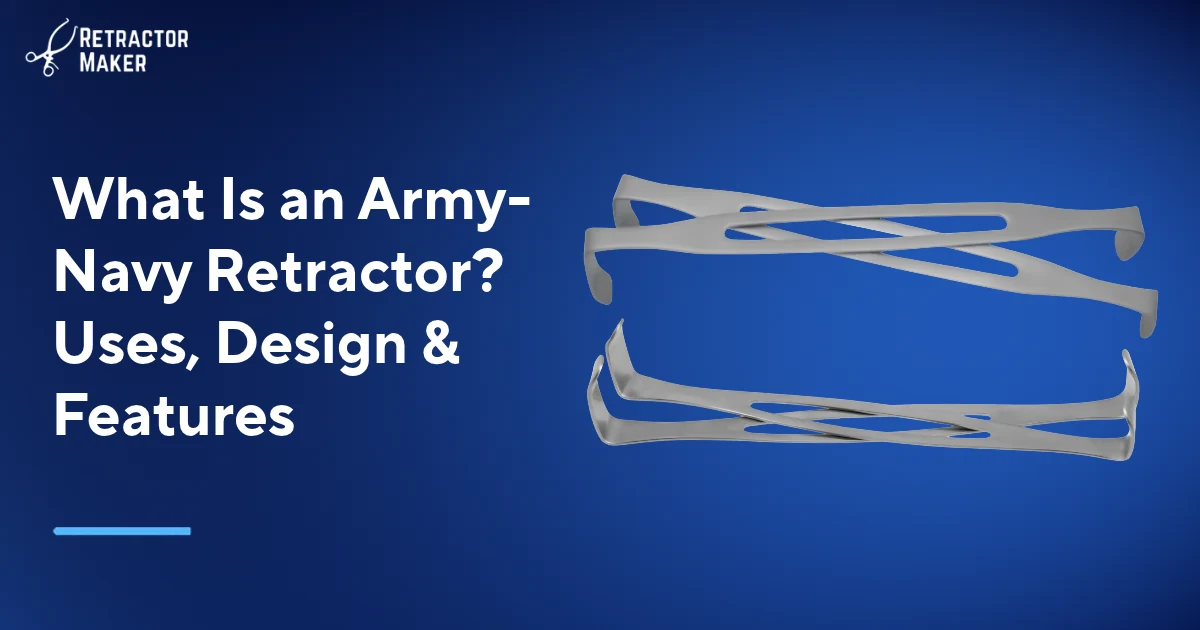
A Langenbeck retractor is single-ended with a narrow blade for deep, narrow operative corridors, while an Army-Navy retractor is double-ended with flat, dissimilar blades for superficial wound opening. The Langenbeck has a teardrop or loop handle; the Army-Navy has a central fenestrated bar.
How should a Langenbeck retractor be cleaned and inspected?
Clean a Langenbeck retractor with enzymatic detergents and soft nylon brushes, removing dried blood at the junction between the shaft and right-angled blade. Before sterilization, visually inspect the slender shaft for bending or metal fatigue. Check blade tips for burrs or sharp imperfections.
What should a surgical assistant do if a Langenbeck retractor slips?
If a Langenbeck retractor slips, pause and ask for repositioning rather than pulling harder. Keep the blade seated under direct vision and use only the pressure needed for the requested exposure. Communicate loss of purchase or an obstructed view early.
عن الكاتب
Saad Shahid · مدير المبيعات والتسويق
سعد شاهد هو مدير المبيعات والتسويق ومؤسس Retractor Maker التي انطلقت عام 2023 في سيالكوت، باكستان. ويعمل أيضًا مع والده في Hospitech Traders، الشركة العائلية للأدوات الجراحية التي تأسست عام 1989.
مدونات وأدلة ذات صلة

مبعدات ذات صلة
مبعد Senn Forward Retractor
$49.00
مُبعّد Brewster Retractor
ابتداءً من $159
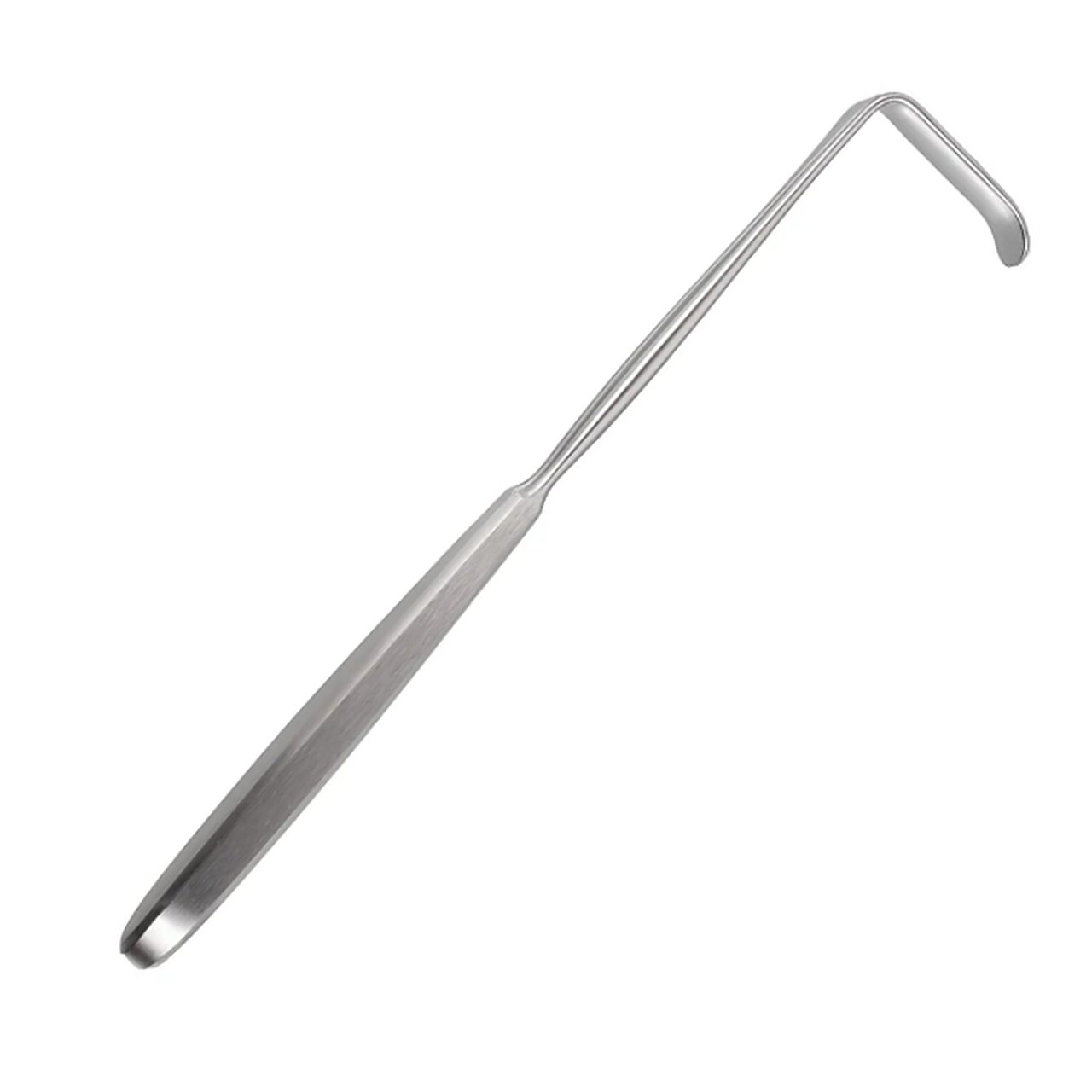
مُبعّد Langenbeck Retractor-Solid Handle
$49.00
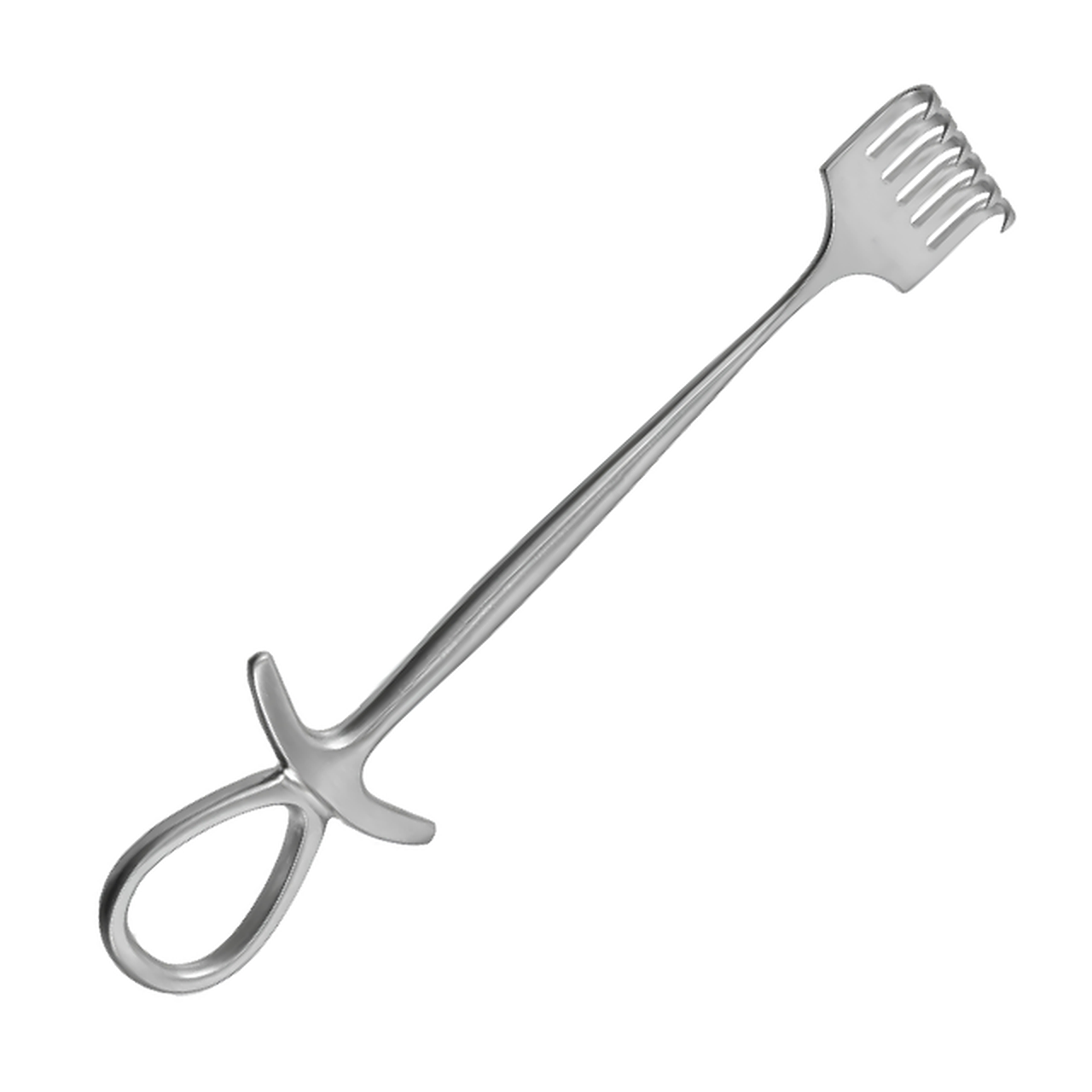
Murphy Retractor
ابتداءً من $44.00
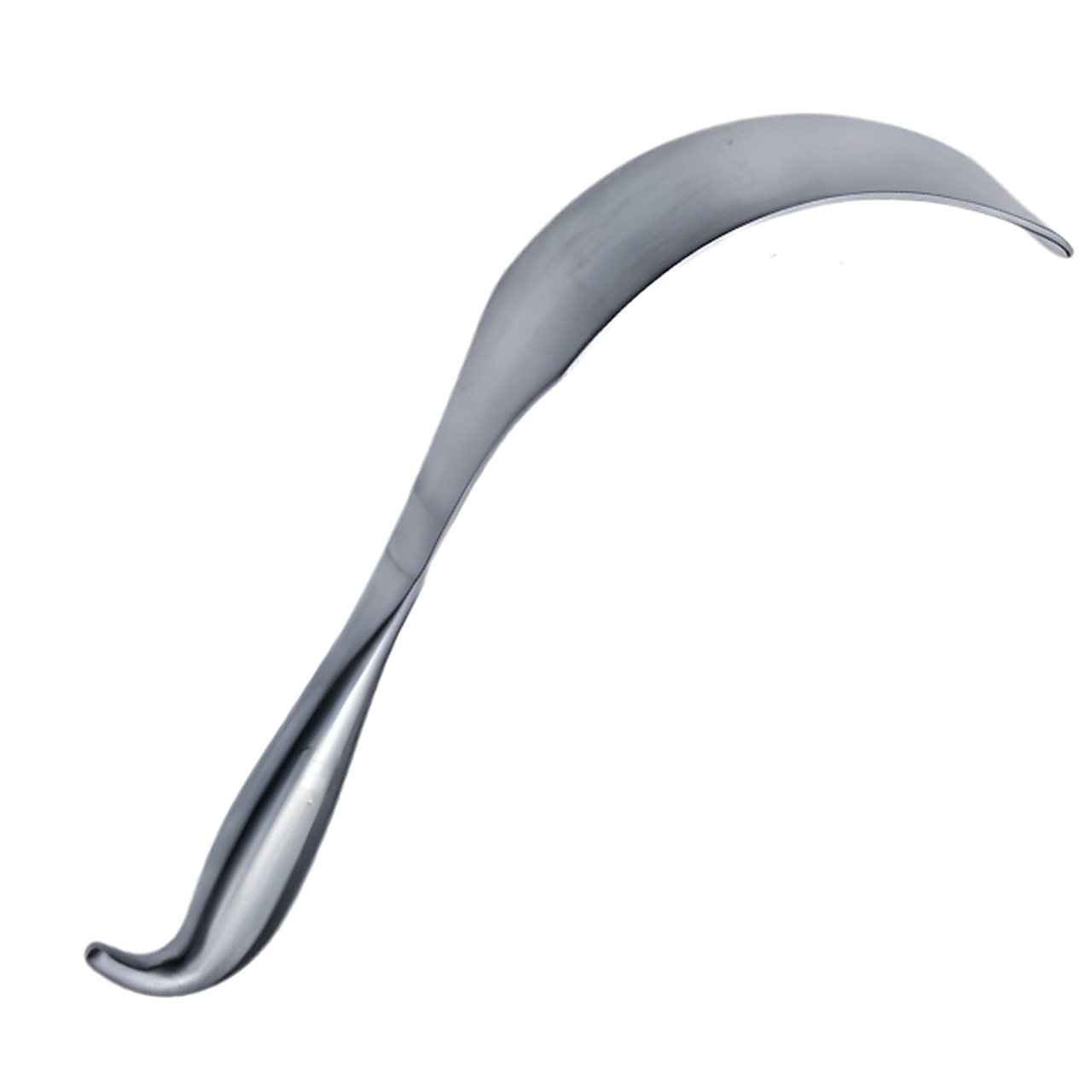
مبعد Leriche Retractor-Atraumatic Wide Blade
ابتداءً من $94.00
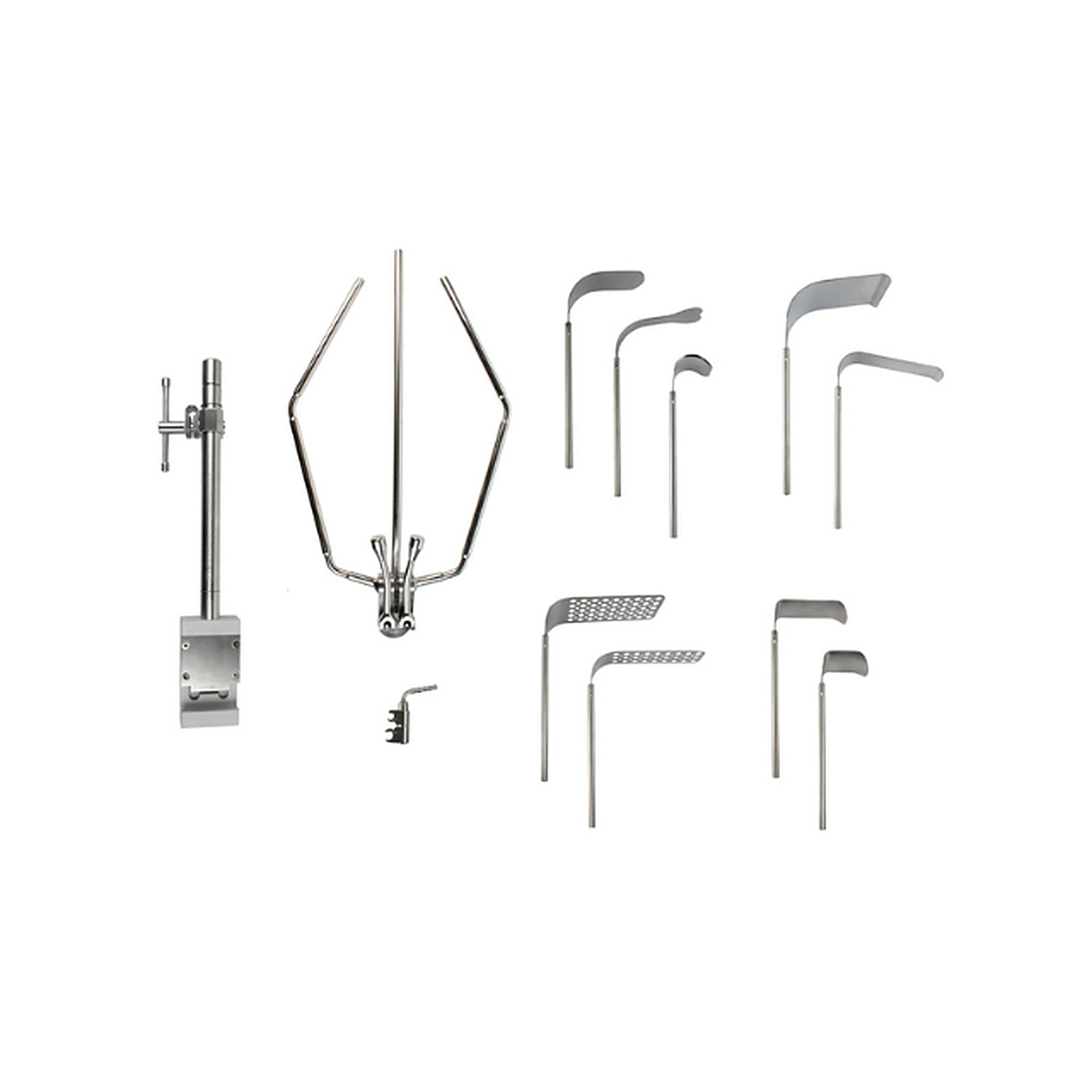
نظام المبعد الجراحي العام Lobster General Retractor System
$2,699Free Shipping
هل تحتاج إلى مبعدات جراحية أو مكونات؟
أخبرنا بما تحتاجه، بما في ذلك المنتج، والتكوين، والكمية، وبلد الوجهة. يمكن لـ Retractor Maker توفير التوفر والمواصفات والأسعار.
طلب عرض سعر