
General Surgery Retractors
Sweetheart Retractor: Uses, Design, Sizes & Selection
Author: Saad Shahid · Updated · 7 min read
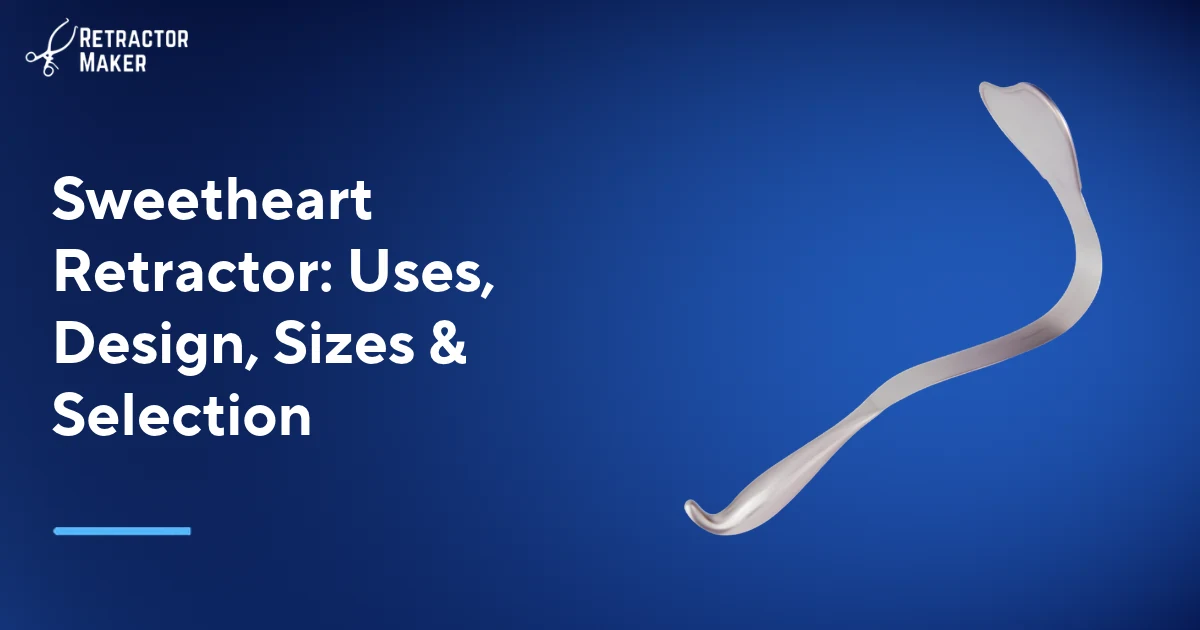
Learn sweetheart retractor uses, blade sizes, positioning, and sterilization considerations, plus wholesale and OEM ordering options from Retractor Maker.
Retractors discussed in this guide: Harrington Sweetheart Retractor. Browse all surgical retractors.
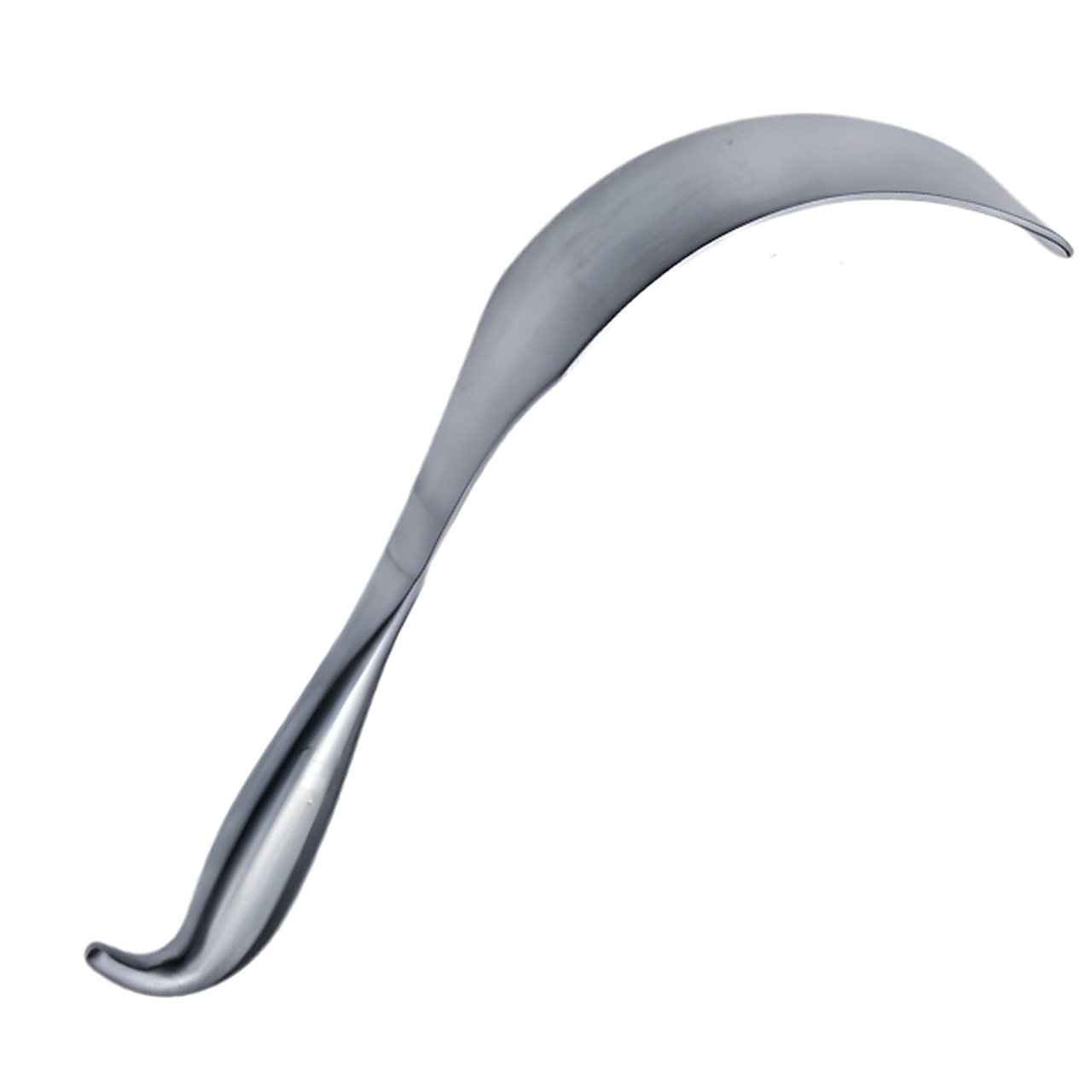
A sweetheart retractor is a surgical visceral retractor with a broad, heart-shaped paddle used to retract and protect abdominal and pelvic organs during deep surgery. The Harrington Sweetheart Retractor from Retractor Maker is intended for abdominal viscera, liver lobes, spleen, and bladder. Its role is to maintain exposure while supporting displaced tissue. For surgeons, operating room staff, and buyers, selection depends on blade dimensions, shank profile, intended configuration, and access to appropriate reprocessing instructions.
What is a sweetheart retractor?
The sweetheart retractor takes its descriptive name from its heart-shaped paddle. In this product listing, the instrument is identified as the Harrington Sweetheart Retractor. It is a visceral retractor, meaning its intended role is organ retraction and protection rather than simply holding superficial wound edges apart.
The broad paddle provides a supporting surface for tissue contact. Smooth, atraumatic peripheral lips are part of the listed blade geometry, but atraumatic describes the design rather than a guarantee against injury. Safe retraction still depends on appropriate placement, controlled force, and ongoing observation. The instrument is available for handheld or modular use; buyers should establish the required configuration before ordering rather than assume every supplied instrument fits an existing support system.
What is a sweetheart retractor used for?
The Harrington Sweetheart Retractor is used to retract and protect abdominal viscera, liver lobes, spleen, and bladder during deep abdominal and pelvic surgery. These uses may be relevant to general abdominal, hepatobiliary, and pelvic surgical teams when the operative approach requires controlled displacement of these structures.
- Abdominal viscera: supporting and displacing organs to improve access to deeper operative structures.
- Liver lobes: maintaining exposure when liver tissue must be held away from the working area.
- Spleen: providing retraction and protection when required by the operative field.
- Bladder: supporting displacement during deep pelvic exposure when clinically appropriate.
These are anatomical applications, not a prescription to use the instrument in every operation involving those organs. The surgeon determines whether the available exposure, tissue condition, and operative approach make a sweetheart blade suitable. Staff should anticipate the need for repositioning as dissection progresses rather than regard the initial placement as permanent.
What are its design features and parts?
The defining features are the broad heart-shaped paddle, smooth peripheral lips, and a choice of curved or straight shank. The paddle forms the tissue-contacting surface, while the shank establishes the relationship between the blade and the point from which retraction is controlled.
Paddle geometry and shank profile
The paddle should support the intended tissue without relying on a small edge contact point. A curved or straight shank changes the approach geometry and may affect clearance around the operative field. Neither profile is universally preferable: the appropriate choice depends on anatomy, access, and the planned method of holding the instrument.
Material and supplied condition
The listed material is Premium Grade AISI 304/316 Stainless Steel (Non-Magnetic). The instrument is supplied brand new in individual protective packaging and is supplied non-sterile, fully autoclavable. Protective packaging should not be interpreted as a sterile barrier. The material description also does not replace device-specific cleaning, inspection, or sterilization instructions.
Which sweetheart retractor sizes and variants are available?
The supplied product range identifies one named instrument, the Harrington Sweetheart Retractor, with selectable blade dimensions and curved or straight shank options. The comparison below summarizes that product without implying that separate named models or specific modular attachments are included.
| Product name | Design and configuration | Typical use |
|---|---|---|
| Harrington Sweetheart Retractor | Broad heart-shaped paddle with smooth, atraumatic peripheral lips; curved or straight shank; handheld / modular configuration | Retraction and protection of abdominal viscera, liver lobes, spleen, and bladder during deep abdominal and pelvic surgery |
| Selectable blade dimensions | Listed price |
|---|---|
| 4 × 12.8 cm | $129 |
| 6.5 × 12.8 cm | $134 |
| 6.5 × 14.6 cm | $139 |
| 9 × 25.5 cm | $144 |
| 11.5 × 25.5 cm | $149 |
Use these measurements as listed blade dimensions, not as confirmed overall instrument lengths. Request a dimensional drawing if your tray specification depends on exact measurement orientation or working reach. Match the tissue-contacting surface to the planned exposure; a larger blade is not automatically a safer or more useful choice. Confirm the selected dimensions, shank profile, and configuration together before purchase.
How is a sweetheart retractor positioned safely?
A sweetheart retractor should be positioned under direct visualization by trained surgical personnel, with the paddle supporting the intended tissue and the applied force kept to what is needed for exposure. These principles are general guidance, not a substitute for operative training or the manufacturer's instructions.
- Inspect the instrument and confirm that the selected blade can be introduced without forcing access.
- Identify the tissue to be supported and adjacent structures that must remain free of compression.
- Establish broad paddle contact and avoid concentrating force on the peripheral edge.
- Apply controlled retraction while checking that tissue is not trapped or excessively tensioned.
- Reassess tissue appearance and exposure throughout use, adjusting or releasing retraction as clinically appropriate.
For handheld use, clear communication between the surgeon and assistant helps maintain a consistent direction of pull. For modular use, verify the intended connection and support arrangement before surgery. Do not assume compatibility with a frame or holder from the word modular alone.
How should it be cleaned and sterilized?
The Harrington Sweetheart Retractor requires appropriate preparation before first surgical use because it is supplied non-sterile. Although it is listed as fully autoclavable, the product information does not provide a validated sterilization cycle, detergent specification, or detailed reprocessing sequence. Obtain the manufacturer's current instructions before processing.
Follow those instructions and the facility's validated workflow for cleaning, inspection, packaging, sterilization, drying, and storage. Cleaning must precede sterilization; visible contamination should not be treated as something an autoclave will remove. Inspect the paddle, peripheral lips, and shank for residue, damage, surface deterioration, or deformation. Remove instruments with concerning defects from service for assessment. Do not infer cycle settings from the material grade or apply an arbitrary steam cycle.
How do you choose and order from Retractor Maker?
Choose a sweetheart retractor by matching blade dimensions, shank profile, and configuration to the planned exposure and local instrument system. Retractor Maker is a surgical retractor manufacturer and exporter in Sialkot, Pakistan, offering wholesale and OEM supply with worldwide shipping. The listed minimum order quantity for this product is 1 Piece.
For a purchase enquiry, specify the Harrington Sweetheart Retractor, selected blade dimensions, curved or straight shank, intended handheld or modular use, quantity, and delivery destination. Request confirmation of connection details when modular use is planned. Hospital buyers should also request reprocessing instructions and any documentation needed for local procurement. For OEM enquiries, submit the required specification for review rather than assume customization is included. Confirm quotation terms, freight, and delivery arrangements before placing an order.
Clinical notice: This guide is for surgical teams and hospital buyers. Always follow the manufacturer's instructions for use (IFU) and your hospital's sterilization rules before clinical use.
Frequently Asked Questions
What is a sweetheart retractor used for?
A sweetheart retractor is used to retract and protect abdominal and pelvic organs during deep surgery. The Harrington Sweetheart Retractor is specifically intended for abdominal viscera, liver lobes, spleen, and bladder. Its broad heart-shaped paddle supports tissue while helping maintain operative exposure, with selection and positioning determined by the surgical team.
Is a sweetheart retractor the same as a Harrington retractor?
The product listed here is named the Harrington Sweetheart Retractor. Sweetheart describes its characteristic heart-shaped paddle, while Harrington forms part of the instrument name. When ordering, use the complete product name and specify blade dimensions, shank profile, and configuration so that a familiar shorthand does not leave the required instrument details unclear.
What sizes does the Harrington Sweetheart Retractor come in?
The listed blade dimensions are 4 × 12.8 cm, 6.5 × 12.8 cm, 6.5 × 14.6 cm, 9 × 25.5 cm, and 11.5 × 25.5 cm. These are specified as blade dimensions, not overall instrument lengths. Confirm measurement orientation and working reach with Retractor Maker if those details are essential to your instrument specification.
Is the sweetheart retractor self-retaining?
The listed sweetheart retractor is described as handheld / modular, not as a standalone self-retaining instrument. Modular use requires confirmation of the intended support arrangement and connection details. Buyers should not assume that a frame, holder, attachment, or compatibility with an existing retraction system is included in the product description.
Can a sweetheart retractor be autoclaved?
The Harrington Sweetheart Retractor is listed as fully autoclavable and is supplied non-sterile. Obtain the manufacturer's current reprocessing instructions for validated cleaning and steam sterilization requirements before use. The listing does not specify cycle settings, so operating room and sterile processing teams should not select a cycle solely from the material description.
Where can hospitals buy sweetheart retractors wholesale?
Hospitals can enquire about wholesale sweetheart retractor supply directly from Retractor Maker in Sialkot, Pakistan. The manufacturer and exporter offers OEM supply and worldwide shipping, and the listed product minimum order quantity is 1 Piece. Include blade dimensions, shank profile, configuration, quantity, and destination when requesting a quotation and procurement documentation.
About the author
Saad Shahid · Sales & Marketing Manager
Saad Shahid is the Sales & Marketing Manager and founder of Retractor Maker, started in 2023 in Sialkot, Pakistan. He also works with his father at Hospitech Traders, the family surgical instrument business founded in 1989.
Related Blogs & Guide
Related Retractors
Senn Forward Retractor
$49.00
Brewster Retractor
From $159
Langenbeck Retractor-Solid Handle
$49.00
Murphy Retractor
From $44.00
Leriche Retractor-Atraumatic Wide Blade
From $94.00
Lobster General Retractor System
$2,699Free Shipping
Need Surgical Retractors or Components?
Tell us what you need, including the product, configuration, quantity and destination country. Retractor Maker can provide availability, specifications and pricing.
Request a Quote