
General Surgery Retractors
Roux Retractor: Uses, Blade Sizes & Buying Guide
Author: Saad Shahid · Updated · 7 min read
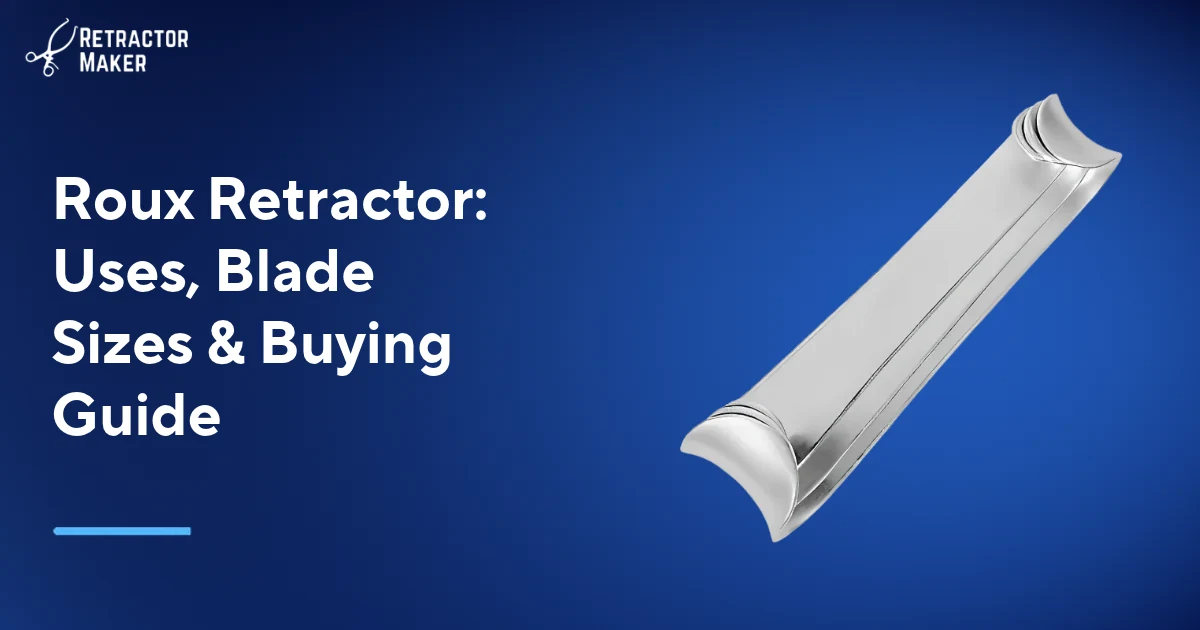
Learn about Roux retractor uses, double-ended design, blade sizes, positioning, sterilization, and wholesale or OEM ordering options from Retractor Maker.
Retractors discussed in this guide: Roux Retractor - Double Ended. Browse all surgical retractors.
A roux retractor is a handheld, double-ended surgical instrument used to retract skin margins, fascia, and superficial muscle layers during general and plastic surgery. Its curved C-shaped blades and flat central handle allow a surgeon or assistant to maintain manual counter-traction. Selecting the appropriate configuration requires attention to the operative field, tissue being retracted, and requested blade dimensions. This guide explains the supplied product specifications, practical handling considerations, and purchasing details for surgical teams and hospital buyers.
What is a Roux retractor?
A Roux retractor provides temporary surgical exposure by holding tissue away from the area being examined or treated. The listed product is handheld rather than self-retaining: an operator maintains its position and adjusts traction as the procedure progresses. Its intended tissue targets are skin margins, fascia, and superficial muscle layers, rather than an unrestricted range of deep structures.
The double-ended configuration places a curved blade at each end of a central handle. The operator selects an appropriate working end and controls it manually. Unlike a self-retaining retraction system, this instrument does not independently maintain exposure. Surgical teams should therefore plan both instrument selection and the assistance needed to sustain suitable traction without obstructing access to the operative site.
What is a Roux retractor used for?
The Roux Retractor - Double Ended is intended for retraction of skin margins, fascia, and superficial muscle layers during general and plastic surgery. Its role is exposure: moving the tissue edge sufficiently to support visualization and access. It is not a cutting, grasping, or tissue-fixation instrument, and retraction should remain proportionate to what the operative step requires.
- Skin margins: retract an incision edge to improve access to the underlying operative field.
- Fascia: maintain exposure of a fascial edge while the surgical team performs the planned step.
- Superficial muscle layers: move accessible tissue aside under direct visualization when appropriate.
- General and plastic surgery: provide manually controlled exposure within the stated tissue indications.
Suitability depends on the actual exposure required, not the specialty name alone. The surgeon should assess tissue condition, incision access, and surrounding anatomy before choosing a retractor. If exposure requires excessive force or the blade cannot be seated safely, reassess the instrument choice and positioning rather than increasing traction. The supplied product information does not establish suitability for every procedure within either specialty.
What are the design and parts of a Roux retractor?
The listed design combines curved C-shaped blades, a double-ended configuration, and a flat central handle. The blade engages the tissue being retracted while the handle provides manual control. Because the opposite end remains outside the working site, the operator should also remain aware of its position relative to drapes, adjacent instruments, and other team members.
Material and handle
The specified material is Premium Grade AISI 304/316 Stainless Steel (Non-Magnetic). The flat central ergonomic handle is intended to support a steady manual grip. Handle design does not remove the need to monitor applied force or operator fatigue. Controlled positioning, appropriate assistance, and reassessment of exposure remain important throughout use.
Overall length and blade dimensions
Available overall lengths are 14 cm, 15 cm, and 17 cm. Listed blade selections are Small (19 × 25 mm), Medium (22 × 41 mm), and Large (25 × 41 mm). A separate jaw footprint specification gives a depth range of 20 mm to 36 mm and a width range of 15 mm to 20 mm. These entries are not mapped to individual configurations, so buyers should confirm measurement orientation and the exact length-to-blade combination before ordering.
Which Roux retractor variants are available?
The supplied product range contains one named model, Roux Retractor - Double Ended, with several blade selections and a set option. The comparison below separates those ordering choices without implying that they are different instrument patterns. No distinct procedure-specific indication is supplied for the Small, Medium, or Large selection.
| Product or selection | Design | Typical use |
|---|---|---|
| Roux Retractor - Double Ended | Handheld, double-ended curved C-shaped blades with a flat central handle | Skin margin, fascia, and superficial muscle retraction in general and plastic surgery |
| Small blade selection | Listed blade dimensions: 19 × 25 mm | The same stated tissue indications, when the dimensions suit the operative field |
| Medium blade selection | Listed blade dimensions: 22 × 41 mm | The same stated tissue indications, when the dimensions suit the operative field |
| Large blade selection | Listed blade dimensions: 25 × 41 mm | The same stated tissue indications, when the dimensions suit the operative field |
| Complete Set of Three | Small, Medium, and Large selections | Provides the listed blade selections for case-by-case instrument choice |
Overall length and blade selection should be treated as separate purchasing specifications until the manufacturer confirms their pairing. A longer instrument should not automatically be assumed to have a particular blade size. For an existing tray, compare the requested configuration with the instruments already in service and document the dimensions that matter to the surgical team.
How should a Roux retractor be positioned?
A trained surgical operator should position the working blade under direct visualization and apply only the traction needed for exposure. Instrument selection, placement, and repositioning depend on anatomy and the procedure. These general principles do not replace surgical training, the manufacturer's instructions, or local operating-room protocols.
- Inspect the instrument and verify that the chosen end suits the intended tissue and access.
- Seat the blade with visibility of the tissue being engaged and nearby structures.
- Establish controlled counter-traction while keeping the handle clear of the working path.
- Monitor tissue appearance, blade stability, and the amount of force being applied.
- Release traction before repositioning, and communicate changes with the operating team.
Avoid using sustained force to compensate for poor blade placement. Excessive pressure or traction can injure tissue, even when exposure initially appears adequate. If the view deteriorates, pause and reassess placement, assistance, or instrument choice. Maintain awareness of both ends during transfer and handling.
How is a Roux retractor cleaned and sterilized?
The listed Roux retractor is supplied non-sterile and is fully autoclavable. It requires appropriate processing before surgical use. Individual protective packaging or set packaging should not be interpreted as a sterile barrier. Cleaning must precede sterilization because retained soil can interfere with effective processing.
Follow the manufacturer's current reprocessing instructions and the facility's validated procedures for cleaning, inspection, packaging, and steam sterilization. The supplied product information does not specify cleaning chemistry, cycle temperature, exposure time, or drying parameters. Obtain those instructions rather than selecting a cycle solely from the material description. Inspect blade edges, curved surfaces, and the handle for residual soil, damage, or corrosion, and remove questionable instruments from service pending assessment.
How do you choose and buy from Retractor Maker?
Choose a Roux retractor by matching the required exposure to confirmed blade dimensions and overall length. Retractor Maker is a surgical retractor manufacturer and exporter in Sialkot, Pakistan, offering wholesale supply, OEM ordering, and worldwide shipping. For procurement, specify the named model, requested configuration, quantity, packaging preference, and destination.
Listed prices are $54.00 for 14 cm, $59.00 for 15 cm, and $64.00 for 17 cm. The Complete Set of Three is listed at $94.00. The minimum order quantity is 1 Piece (or 1 Set), and the product condition is Brand New. Confirm the final configuration, current quotation, shipping charges, and delivery arrangements before issuing a purchase order.
Hospital buyers should request current reprocessing instructions and any documentation required by their facility or destination market. For OEM or wholesale enquiries, agree on specifications and packaging requirements before production. Record the confirmed blade measurements and length together so that repeat orders refer to an unambiguous configuration rather than the instrument name alone.
Clinical notice: This guide is for surgical teams and hospital buyers. Always follow the manufacturer's instructions for use (IFU) and your hospital's sterilization rules before clinical use.
Frequently Asked Questions
What is a Roux retractor used for?
A Roux retractor is used to retract skin margins, fascia, and superficial muscle layers during general and plastic surgery. The listed double-ended model provides manually controlled exposure with curved C-shaped blades. Its suitability depends on the tissue, access, and exposure required; the specialty name alone does not establish that it is appropriate for every procedure.
Is a Roux retractor self-retaining?
The listed Roux retractor is handheld, not self-retaining. A surgeon or assistant maintains traction through its flat central handle and adjusts placement as exposure needs change. Because it does not hold its own position, the surgical team must provide appropriate assistance and monitor both the tissue response and the force being applied.
What sizes does the Roux retractor come in?
The listed Roux retractor comes in overall lengths of 14 cm, 15 cm, and 17 cm. Blade selections are Small (19 × 25 mm), Medium (22 × 41 mm), and Large (25 × 41 mm). Separate jaw footprint ranges are also listed, but their relationship to these selections is not specified. Confirm the exact measurements and length-to-blade pairing before ordering.
Can a Roux retractor be autoclaved?
The listed Roux retractor is fully autoclavable and supplied non-sterile. It must be appropriately cleaned and sterilized before surgical use according to current manufacturer instructions and validated facility procedures. The supplied specifications do not provide cycle settings, so request the applicable reprocessing instructions rather than assuming a temperature, exposure time, or drying requirement.
What material is the Roux retractor made from?
The listed Roux retractor is made from Premium Grade AISI 304/316 Stainless Steel (Non-Magnetic). This is the manufacturer's stated material wording for the product. Buyers needing more specific material documentation should request confirmation for the ordered configuration. The material description does not replace instructions for cleaning, inspection, sterilization, or ongoing instrument maintenance.
Where can hospitals buy Roux retractors wholesale?
Hospitals can enquire about wholesale Roux retractors from Retractor Maker in Sialkot, Pakistan. The manufacturer and exporter offers OEM ordering and worldwide shipping, with a listed minimum order quantity of 1 Piece (or 1 Set). Provide the required overall length, blade selection, quantity, and destination, and confirm specifications, documentation, pricing, and shipping arrangements before ordering.
About the author
Saad Shahid · Sales & Marketing Manager
Saad Shahid is the Sales & Marketing Manager and founder of Retractor Maker, started in 2023 in Sialkot, Pakistan. He also works with his father at Hospitech Traders, the family surgical instrument business founded in 1989.
Related Blogs & Guide
Related Retractors
Senn Forward Retractor
$49.00
Brewster Retractor
From $159
Langenbeck Retractor-Solid Handle
$49.00
Murphy Retractor
From $44.00
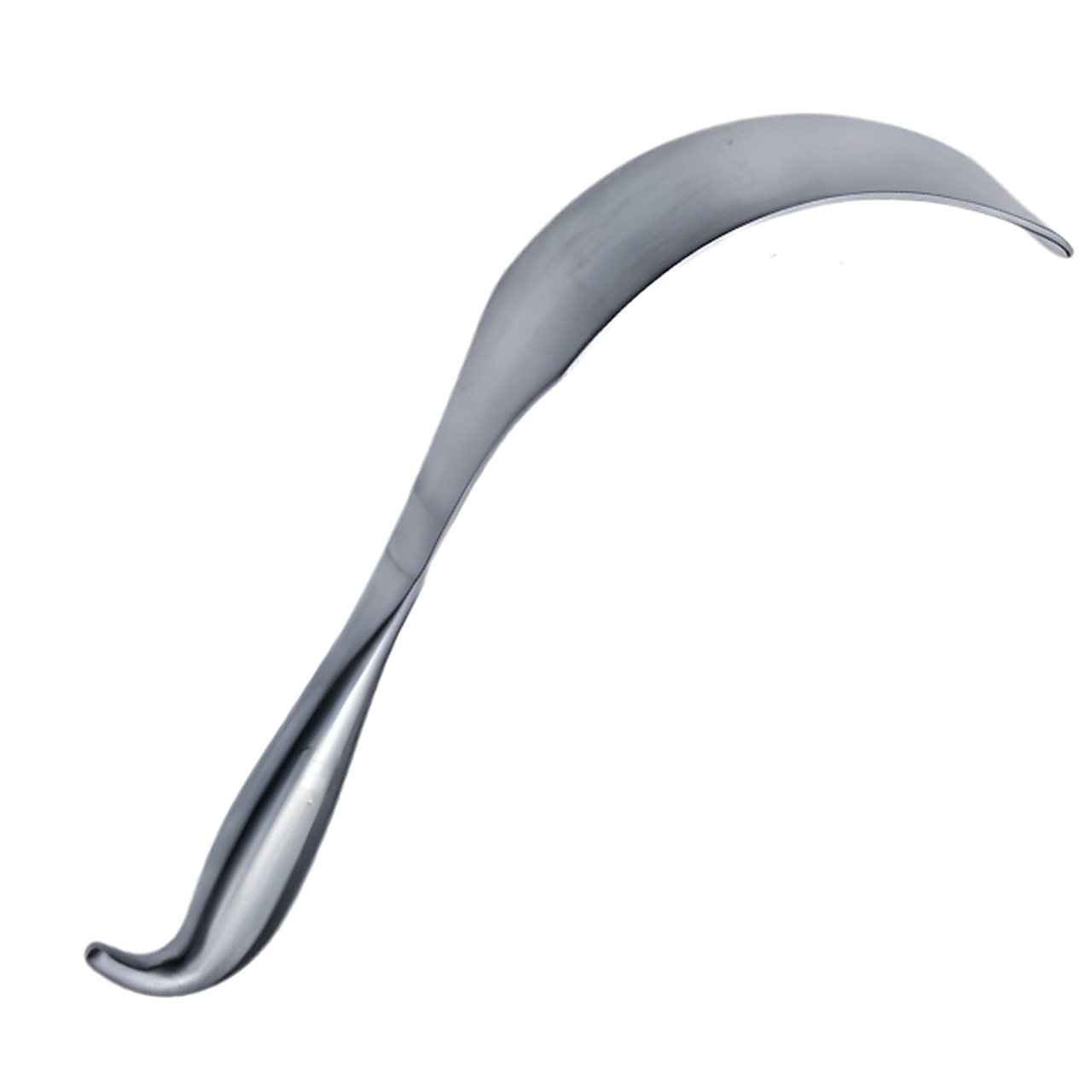
Leriche Retractor-Atraumatic Wide Blade
From $94.00
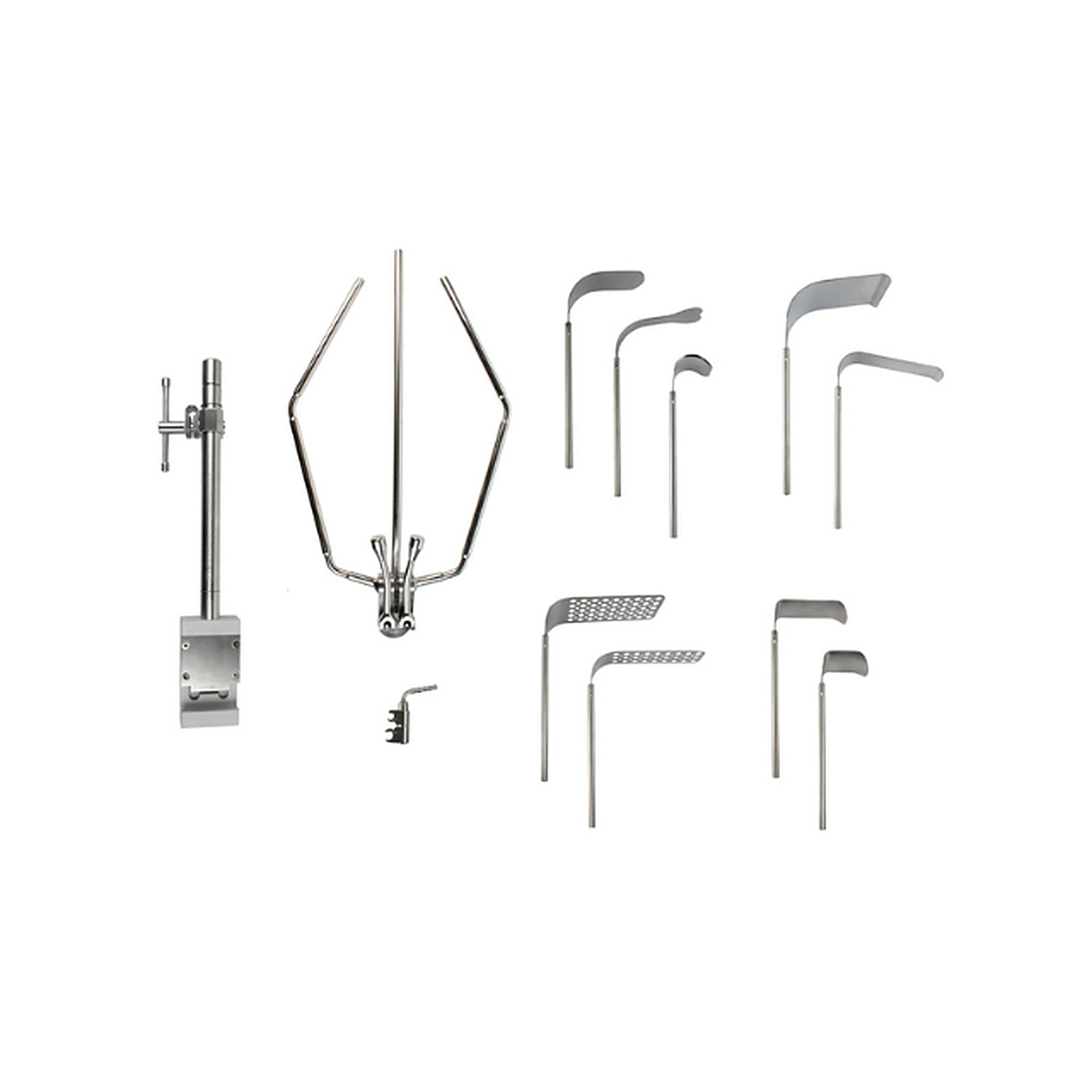
Lobster General Retractor System
$2,699Free Shipping
Need Surgical Retractors or Components?
Tell us what you need, including the product, configuration, quantity and destination country. Retractor Maker can provide availability, specifications and pricing.
Request a Quote