
General Surgery Retractors
Farabeuf Retractor: Uses, Design, Sizes & Buying Guide
Author: Saad Shahid · Updated · 7 min read
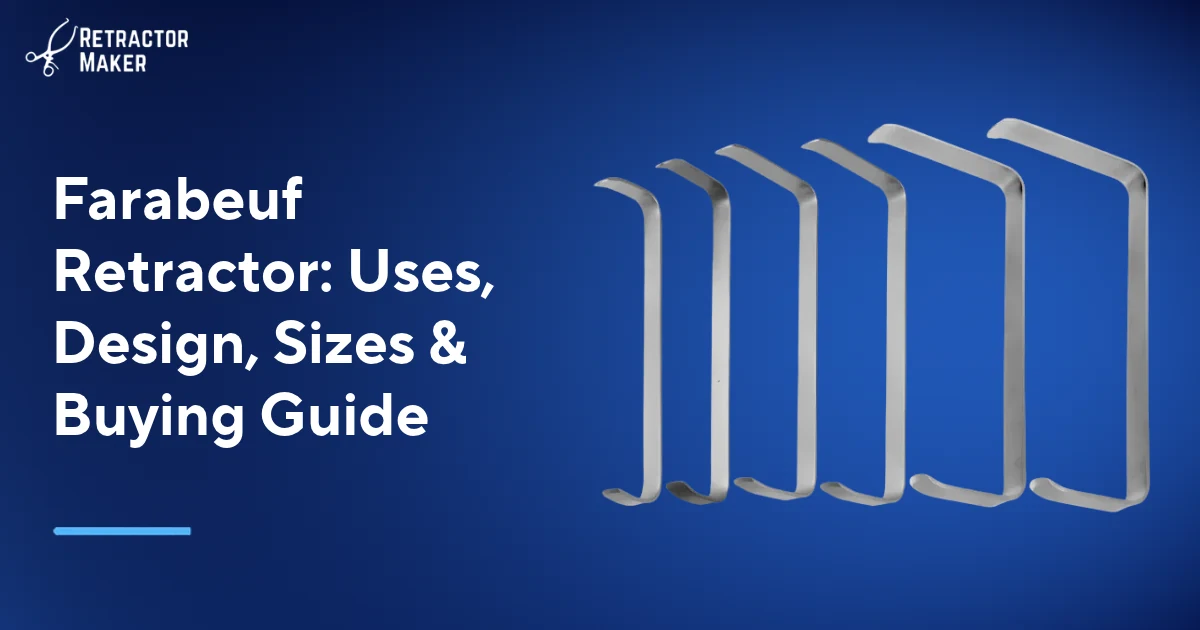
Learn about Farabeuf retractor uses, paired double-ended design, available lengths, safe handling, sterilization and ordering options at Retractor Maker.
Retractors discussed in this guide: Farabeuf Retractor. Browse all surgical retractors.
A Farabeuf retractor is a double-ended handheld surgical instrument used to retract skin, fascia, superficial soft tissue and wound margins. It provides manual exposure across superficial and intermediate surgical incisions, allowing the operator to adjust tissue separation as the operative view changes. Retractor Maker supplies this instrument as a paired set, with short and long right-angled blades on opposing ends of each retractor. For surgeons, OR staff and hospital buyers, the main selection considerations are the intended exposure, overall instrument length, manual handling requirements and preparation before sterile use.
What is a Farabeuf retractor?
The Farabeuf retractor is a manually held tissue-retraction instrument, not a self-retaining device. A surgeon or assistant holds the central handle while the selected blade supports a wound margin or appropriate soft-tissue layer. Because exposure depends on the person holding the instrument, the direction and amount of retraction can be adjusted throughout the procedure.
The supplied configuration is a pair of two double-ended instruments. This allows the surgical team to use separate retractors where the operative field requires support from different positions. The pair should not be confused with a single instrument that has two working ends: each retractor is double-ended, and the supplied set contains two retractors. The appropriate number in use depends on the incision and exposure requirements.
What is a Farabeuf retractor used for?
A Farabeuf retractor is used for skin, fascia and soft-tissue retraction in general, plastic and orthopedic surgery. Its stated intended use covers superficial and intermediate surgical incisions. Selection should follow the tissue layer and required exposure rather than the specialty name alone; not every incision within these specialties needs the same retractor.
- General surgery: manual separation of wound margins and suitable superficial soft-tissue layers during access and exposure.
- Plastic surgery: controlled retraction of skin and soft-tissue margins where handheld exposure is appropriate.
- Orthopedic surgery: retraction of skin, fascia and suitable soft tissues during access through superficial or intermediate incisions.
- Shared OR use: adjustable manual exposure when the surgeon needs an assistant to change retraction direction as the operative view develops.
The instrument's presence in an orthopedic tray does not make it a dedicated bone retractor, and its overall length does not establish suitability for a deep cavity. Where the target tissue lies beyond appropriate blade access, another retractor design may be needed. Clinical judgment should determine whether the blade can support the intended tissue without placing nearby structures under unwanted pressure.
What are its design, parts and material?
Each Farabeuf retractor has a flat solid central handle and two right-angled blades: one shorter blade and one longer blade on opposing ends. The central handle is the manual gripping area, while the selected blade is the working end. The alternative end gives the operator a different blade choice without changing to a separate instrument design.
The stated material is Premium Grade AISI 304/316 Stainless Steel (Non-Magnetic). The instrument is supplied non-sterile and is fully autoclavable. These are separate characteristics: autoclavability describes compatibility with steam sterilization, while the non-sterile supply condition means the instrument is not ready for introduction into a sterile field on receipt.
The listed overall lengths are not blade measurements. Blade length, blade width and other dimensional tolerances are not specified in the supplied product information. Buyers matching an existing hospital instrument should request those details rather than assuming that an overall-length match guarantees an identical working end.
Which Farabeuf retractor sizes are available?
Retractor Maker lists 12 cm and 15 cm overall-length options for the Farabeuf Retractor. Both options belong to the same paired, double-ended handheld configuration and share the stated intended use. The available information does not assign a particular specialty or incision depth exclusively to either length.
| Product option | Design | Typical use | Listed price |
|---|---|---|---|
| Farabeuf Retractor — 12 cm overall length | Paired double-ended handheld instruments; shorter and longer right-angled blades; flat central handles | Skin, fascia and soft-tissue retraction across superficial and intermediate incisions | $24.00 |
| Farabeuf Retractor — 15 cm overall length | Paired double-ended handheld instruments; shorter and longer right-angled blades; flat central handles | Skin, fascia and soft-tissue retraction across superficial and intermediate incisions | $29.00 |
Choose overall length with the operative workspace, hand position and existing tray requirements in mind. Do not interpret the longer option as proof of a longer blade or greater permitted retraction force. Confirm the selected variation, current quotation and supply terms before ordering, particularly when standardizing instruments across several operating rooms.
How is a Farabeuf retractor positioned and used?
A trained surgical team positions the selected blade against the intended tissue margin under direct vision and applies controlled manual retraction. The objective is adequate exposure with the least necessary tissue displacement. The following principles are general handling guidance, not a substitute for surgical training or procedure-specific judgment.
- Confirm that the instrument has been inspected, processed and presented according to the facility's sterile-use requirements.
- Select the working end according to the tissue margin and required exposure, rather than overall length alone.
- Position the blade under direct vision, keeping vulnerable structures clear of unwanted contact or compression.
- Hold the central handle securely and apply only the traction needed to maintain the operative view.
- Communicate changes in traction with the surgeon and reassess tissue condition during continued retraction.
- Release or reposition the instrument when exposure changes; avoid dragging the blade across tissue.
Manual retraction requires ongoing attention. A blade that initially gives an appropriate view may need repositioning after dissection or a change in approach. If exposure remains inadequate, reassess instrument selection and positioning rather than simply increasing force.
How should it be cleaned and sterilized?
The Farabeuf retractor is supplied non-sterile and must undergo appropriate preparation before sterile surgical use. It is fully autoclavable, but the supplied product information does not include a detailed reprocessing protocol. Obtain the manufacturer's applicable instructions and follow the facility's validated cleaning, packaging and steam-sterilization procedures.
Cleaning must precede sterilization. Follow approved handling procedures for contaminated instruments, remove soil using compatible cleaning methods, and inspect the blades, angled transitions and handle before packaging. Check for residual debris, surface damage or deformation that could affect safe use. An instrument that fails inspection should not return to service without appropriate assessment.
Do not infer a sterilization temperature, exposure time or drying cycle from the material description alone. Use the applicable validated instructions for the instrument, sterilizer and packaging system. Protective shipping packaging is not evidence of sterility. After processing, maintain package integrity and store instruments according to facility policy.
How do you choose and order from Retractor Maker?
Choose a Farabeuf retractor by confirming the intended tissue exposure, required overall length and paired-set configuration. Retractor Maker is a surgical retractor manufacturer and exporter in Sialkot, Pakistan, offering wholesale supply, OEM services and worldwide shipping. For hospital purchasing, separate the clinical specification from commercial requirements so that neither is left to assumption.
The product is supplied brand new with individual protective packaging as a set of two. The listed minimum order quantity is one set, or pair. State the selected length, number of sets and delivery destination in the inquiry. For OEM or wholesale orders, request confirmation of the required specifications, documentation, packaging arrangements and shipping terms before approval.
Clinical notice: This guide is for surgical teams and hospital buyers. Always follow the manufacturer's instructions for use (IFU) and your hospital's sterilization rules before clinical use.
Frequently Asked Questions
What is a Farabeuf retractor used for?
A Farabeuf retractor is used to retract skin, fascia, superficial soft tissue and wound margins. Its stated applications include general, plastic and orthopedic surgery across superficial and intermediate incisions. The surgeon or assistant manually controls exposure, selecting the working end and position according to the tissue layer and operative view.
Is a Farabeuf retractor self-retaining?
A Farabeuf retractor is handheld, not self-retaining. A surgeon or assistant must maintain its position and control the retraction force during use. This permits adjustments as exposure needs change, but it also requires continued attention to tissue contact, nearby structures and communication within the surgical team.
What sizes does the Farabeuf retractor come in?
Retractor Maker lists Farabeuf retractor options measuring 12 cm or 15 cm in overall length. Both are supplied as paired sets of double-ended handheld instruments. These measurements describe the whole instrument, not the blades; request blade dimensions separately if matching an existing instrument or a hospital purchasing specification.
Why is the Farabeuf retractor double-ended?
The Farabeuf retractor is double-ended to provide a shorter and a longer right-angled blade on the same instrument. The operator selects the working end according to the required tissue exposure. Each instrument has a flat central handle, and Retractor Maker supplies two of these double-ended instruments in a paired set.
Can a Farabeuf retractor be autoclaved?
The Farabeuf retractor supplied by Retractor Maker is fully autoclavable. It arrives non-sterile, so appropriate preparation is required before sterile surgical use. Cleaning must precede sterilization, and the processing team should obtain the applicable manufacturer instructions rather than assume cycle settings from the stainless steel material or the instrument's appearance.
How can hospitals buy Farabeuf retractors from Retractor Maker?
Hospitals can submit an inquiry specifying the Farabeuf retractor length, quantity of paired sets and delivery destination. The listed minimum order is one set, or pair. Retractor Maker offers wholesale supply, OEM services and worldwide shipping from Sialkot, Pakistan; buyers should confirm specifications, required documentation, current pricing and shipping terms before placing an order.
About the author
Saad Shahid · Sales & Marketing Manager
Saad Shahid is the Sales & Marketing Manager and founder of Retractor Maker, started in 2023 in Sialkot, Pakistan. He also works with his father at Hospitech Traders, the family surgical instrument business founded in 1989.
Related Blogs & Guide

Related Retractors
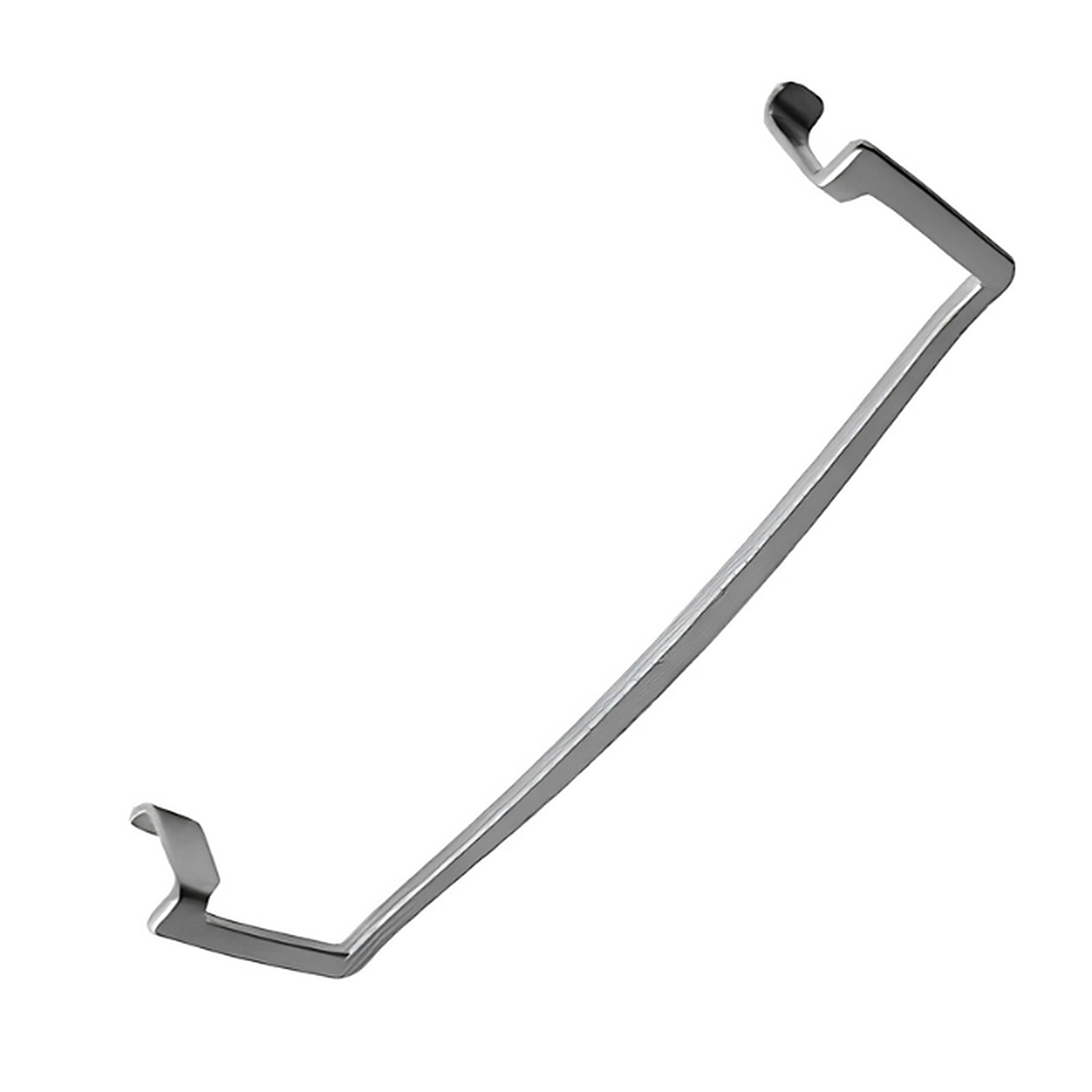
Senn Forward Retractor
$49.00
Brewster Retractor
From $159
Langenbeck Retractor-Solid Handle
$49.00
Murphy Retractor
From $44.00
Leriche Retractor-Atraumatic Wide Blade
From $94.00
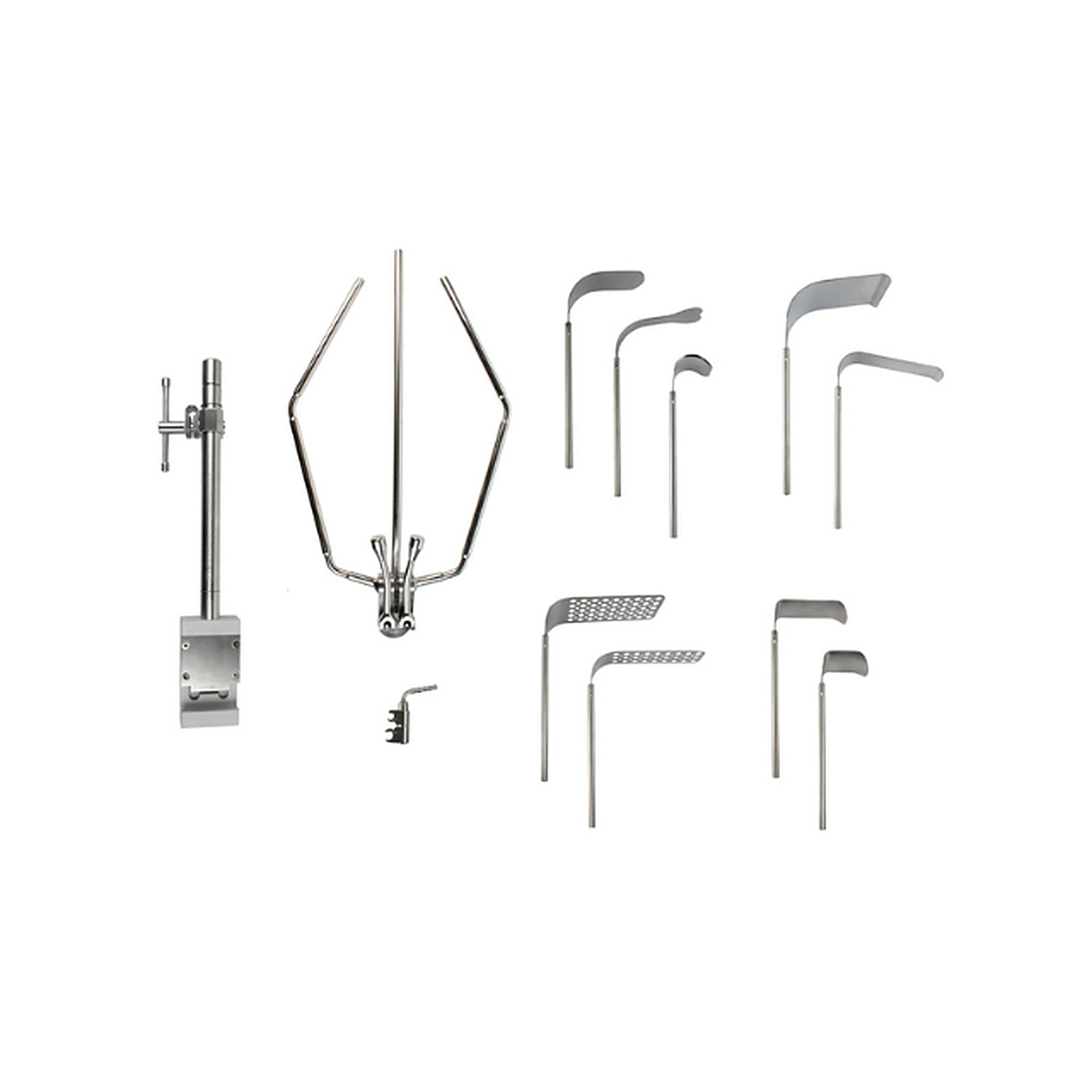
Lobster General Retractor System
$2,699Free Shipping
Need Surgical Retractors or Components?
Tell us what you need, including the product, configuration, quantity and destination country. Retractor Maker can provide availability, specifications and pricing.
Request a Quote