
Plastic Surgery Retractors
ALM Self-Retaining Retractor: Micro, Hand & Minor Surgery Retraction
Author: Saad Shahid · Updated · 5 min read
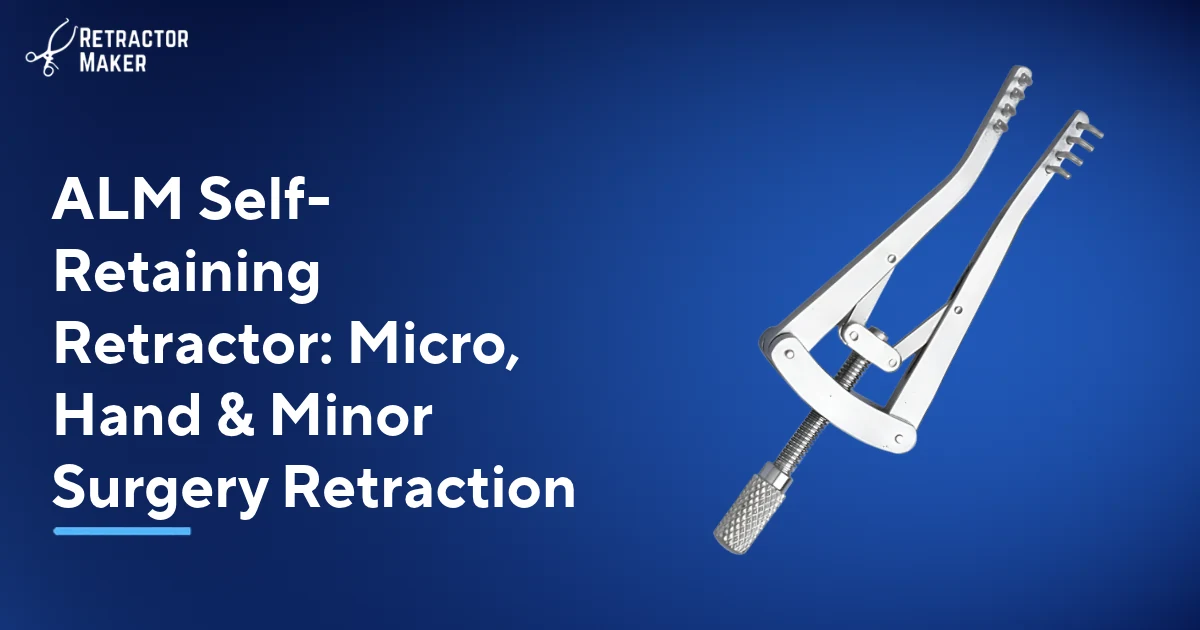
An ALM retractor is a compact, self-retaining surgical instrument featuring two opposing multi-pronged or blunted arms adjusted along a crossbar via a knurled thumb-screw. It is primarily used in hand surgery, plastic surgery, and minor surgical procedures to maintain delicate, hands-free soft-tissue exposure.
Retractors discussed in this guide: ALM Self Retaining Retractor. Browse all surgical retractors.
An ALM retractor is a compact, self-retaining surgical device for small-incision and delicate soft-tissue exposure. Minor surgical interventions, hand and wrist procedures, and localized ophthalmic or plastic surgery present tight working spaces. Standard self-retaining retractors, such as Weitlaner or Gelpi models, are often too bulky, heavy, or long for these fields. They can distort tissue or obstruct fine micro-dissection tools.
The ALM self-retaining retractor provides stable, hands-free exposure in tight anatomical workspaces. This established compact mechanical design uses a miniature frame with an incremental thumb-screw or rack drive for small-incision and delicate soft-tissue retraction.
Contents
What Is an ALM Retractor?
The ALM retractor is a miniature self-retaining retractor. In surgical reference catalogs and clinical practice, “ALM” names this specific compact mechanical design.
The ALM retractor uses a low-profile, flat frame rather than scissor handles and ratchets that project above the wound. Two small arms slide along a threaded transverse bar or rack, controlled by a knurled thumb-screw. This mechanism allows fine, millimeter-level expansion while staying completely outside the surgeon’s micro-surgical sightlines.
How Does the Compact Screw-Drive Design Work?
The ALM retractor combines low mass, a low profile, and fine mechanical calibration. Its key design features are:
- Thumb-screw drive: Rotating a precision-machined knurled thumb-screw along a threaded guide bar separates and holds the arms. The screw provides infinitely variable adjustment rather than step-wise ratchet teeth.
- Flat working profile: The frame rests flat against the skin beside the wound, keeping the field clear for loupe magnification, operating microscopes, or micro-forceps.
- Prong configurations:
- 4×4 sharp prongs: Small, tapered points provide secure, non-slip purchase in tough palmar fascia, fibrous dermis, or scalp tissue.
- 4×4 blunt prongs: Rounded tips displace delicate skin flaps, subcutaneous fat, or mucosal edges without puncturing vascular margins.
- Compact dimensions: Typical overall lengths range from 70 mm to 100 mm (approx. 2.75 to 4 inches), with prong depths between 3 mm and 8 mm.
Which Procedures Require Small-Field Exposure?
The ALM retractor supports delicate, small-incision exposure across hand, plastic, podiatric, ENT, and facial surgery. Applications include:
- Hand and wrist surgery: Frequently used for trigger finger releases, carpal tunnel decompression, ganglion cyst enucleation, and digital nerve or tendon repairs.
- Plastic and reconstructive surgery: Stabilizes cutaneous margins during small scar revisions, skin lesion excisions, and local flap rotations.
- Minor podiatric surgery: Used for small-incision toe and forefoot procedures, including Morton's neuroma excision and digital exostosis removal.
- Minor ENT and facial procedures: Provides localized retraction during minor dermatological excisions around the ears, nose, and scalp.
ALM vs. Gelpi vs. Weitlaner Retractor
| Feature | ALM Retractor | Gelpi Retractor | Weitlaner Retractor |
|---|---|---|---|
| Frame Architecture | Miniature flat frame with thumb-screw | Scissor-action ring handle | Scissor-action ring handle |
| Adjustment Drive | Continuous threaded screw | Graduated ratchet & pawl | Graduated ratchet & pawl |
| Overall Length | Very compact (approx. 70–100 mm) | Intermediate to large (100–180 mm) | Intermediate to large (105–250 mm) |
| Overhead Clearance | Maximum (frame lies flat) | Moderate (handles project upright) | Moderate (handles project upright) |
| Primary Indication | Small fields, hand/digital surgery, minor cases | Deep, focal orthopedic & spinal sites | Broad linear soft-tissue incisions |
How Should It Be Inspected and Reprocessed?
- Point-of-use care: Remove blood and biological soil immediately after use. Pay particular attention to fine adjustment-screw threads and small crevices between prongs.
- Cleaning and ultrasonic decontamination: Submerge in neutral-pH enzymatic cleaner. Open the arms fully along the threaded screw to expose all surfaces. Ultrasonic cleaning is essential for removing micro-particulates from the thumb-screw carriage’s internal threads.
- Inspection: Visually check micro-prongs for bending or blunting. Confirm smooth thumb-screw rotation without binding or thread stripping.
- Sterilization: Autoclave open and unlocked in dedicated micro-instrument cassettes, following the manufacturer's validated IFU.
What Should Buyers Check When Sourcing ALM Retractors?
Distributors and healthcare clinics sourcing ALM retractors should check thread precision, prong symmetry, and available OEM options.
- Thread precision: Smooth, high-tolerance threading prevents screw jamming during delicate adjustments.
- Prong symmetry: Uniformly aligned prongs ensure even tension across fragile skin margins.
- OEM capabilities: Retractor Maker manufactures ALM retractors in Sialkot, Pakistan, with sharp and blunt prong profiles, custom blade depths, satin non-glare finishes, and private-label laser marking.
Clinical notice: This guide is for surgical teams and hospital buyers. Always follow the manufacturer's instructions for use (IFU) and your hospital's sterilization rules before clinical use.
Frequently Asked Questions
What is an ALM retractor?
An ALM retractor is a miniature self-retaining surgical instrument designed for small-field surgery. Two pronged arms move along a crossbar through adjustment of a knurled thumb-screw. The compact design maintains hands-free exposure of delicate soft tissue in small incisions.
What is an ALM retractor used for?
An ALM retractor is primarily used in hand surgery, plastic surgery, and minor surgical procedures to maintain hands-free exposure of small incisions. Applications include trigger finger releases, carpal tunnel decompression, small scar revisions, skin lesion excisions, and local flap rotations.
How does an ALM retractor work?
An ALM retractor works by moving opposing arms apart along a threaded bar when the knurled thumb-screw is rotated. The screw holds the arms securely at the chosen width without ratchets. This mechanism provides infinitely variable adjustment for fine expansion.
What is the difference between sharp and blunt ALM retractors?
Sharp ALM retractors grip tough fibrous fascia and dermis without slipping, while blunt ALM retractors protect delicate skin flaps and nerves from puncture trauma. Sharp prongs have small, tapered points. Blunt prongs have rounded tips for displacing delicate tissue without puncturing vascular margins.
How does an ALM retractor compare to a Weitlaner retractor?
An ALM retractor is much smaller and uses a threaded screw drive, while a Weitlaner retractor is larger and uses scissor handles with a ratchet. The ALM retractor lies flat against the patient rather than having handles that project upright from the wound.
Is an ALM retractor autoclavable?
Reusable ALM retractors made from Premium Grade AISI 304/316 Stainless Steel (Non-Magnetic) are fully compatible with standard steam autoclave sterilization. Autoclave them in the open, unlocked configuration within dedicated micro-instrument cassettes, following the manufacturer's validated IFU.
What sizes do ALM retractors come in?
ALM retractors typically measure 70–100 mm in overall length, with prong depths between 3 mm and 8 mm. These compact dimensions complement a low-profile, flat frame. The frame rests against the skin beside the wound, keeping the field clear for microscopes, loupe magnification, or micro-forceps.
How should an ALM retractor be cleaned?
An ALM retractor should have blood and biological soil removed immediately after use, followed by cleaning in a neutral-pH enzymatic cleaner with the arms fully opened. Ultrasonic cleaning is essential for removing micro-particulates from the thumb-screw carriage’s internal threads. Pay particular attention to fine screw threads and crevices between the prongs.
What should be checked when inspecting an ALM retractor?
Inspect an ALM retractor for bent or blunted micro-prongs and confirm that the thumb-screw rotates smoothly without binding or thread stripping. Check for uniform prong alignment to ensure even tension across fragile skin margins. Smooth, high-tolerance threading prevents screw jamming during delicate adjustments.
About the author
Saad Shahid · Sales & Marketing Manager
Saad Shahid is the Sales & Marketing Manager and founder of Retractor Maker, started in 2023 in Sialkot, Pakistan. He also works with his father at Hospitech Traders, the family surgical instrument business founded in 1989.
Related Blogs & Guide

Related Retractors
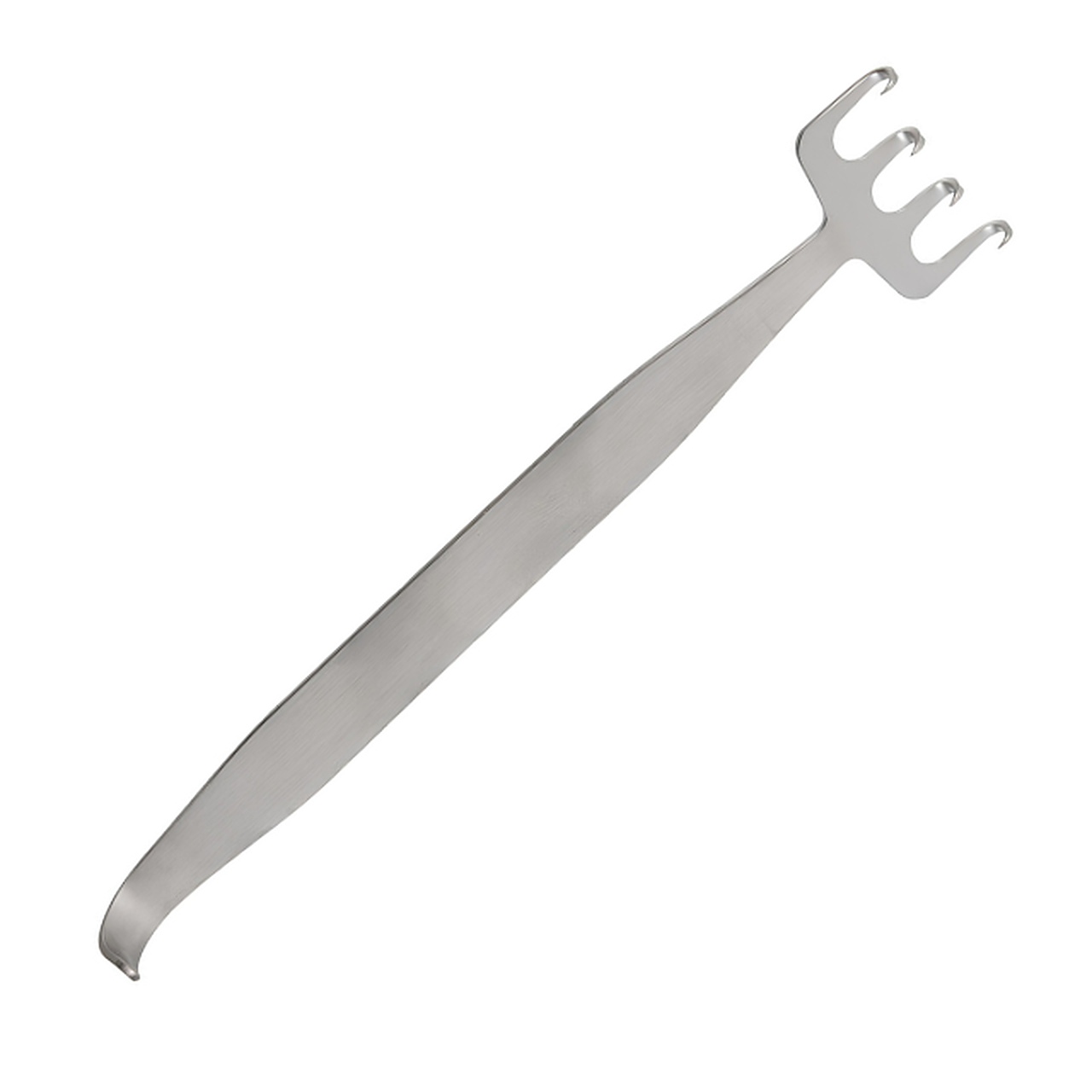
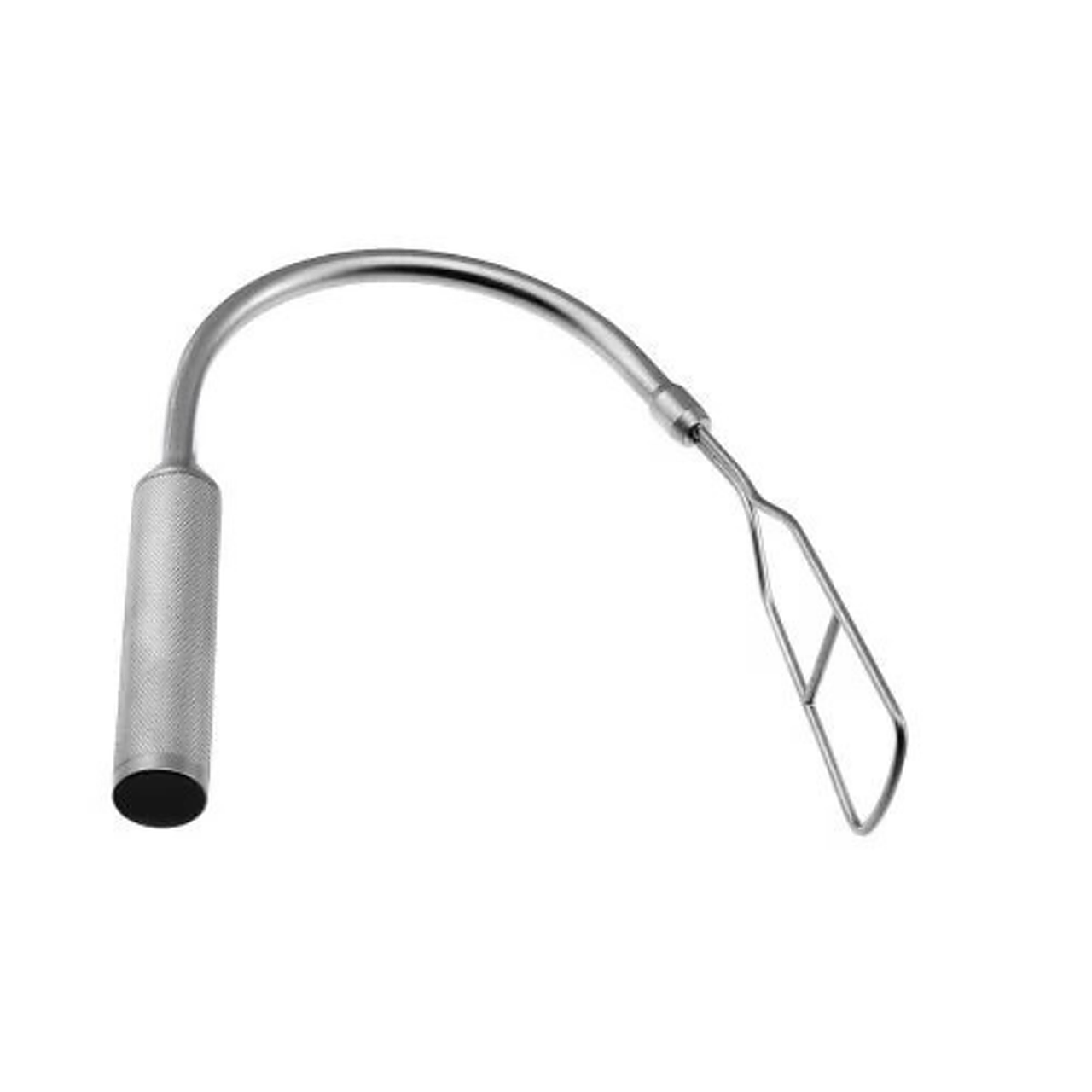
Freeman Rake Retractor
From $44.00
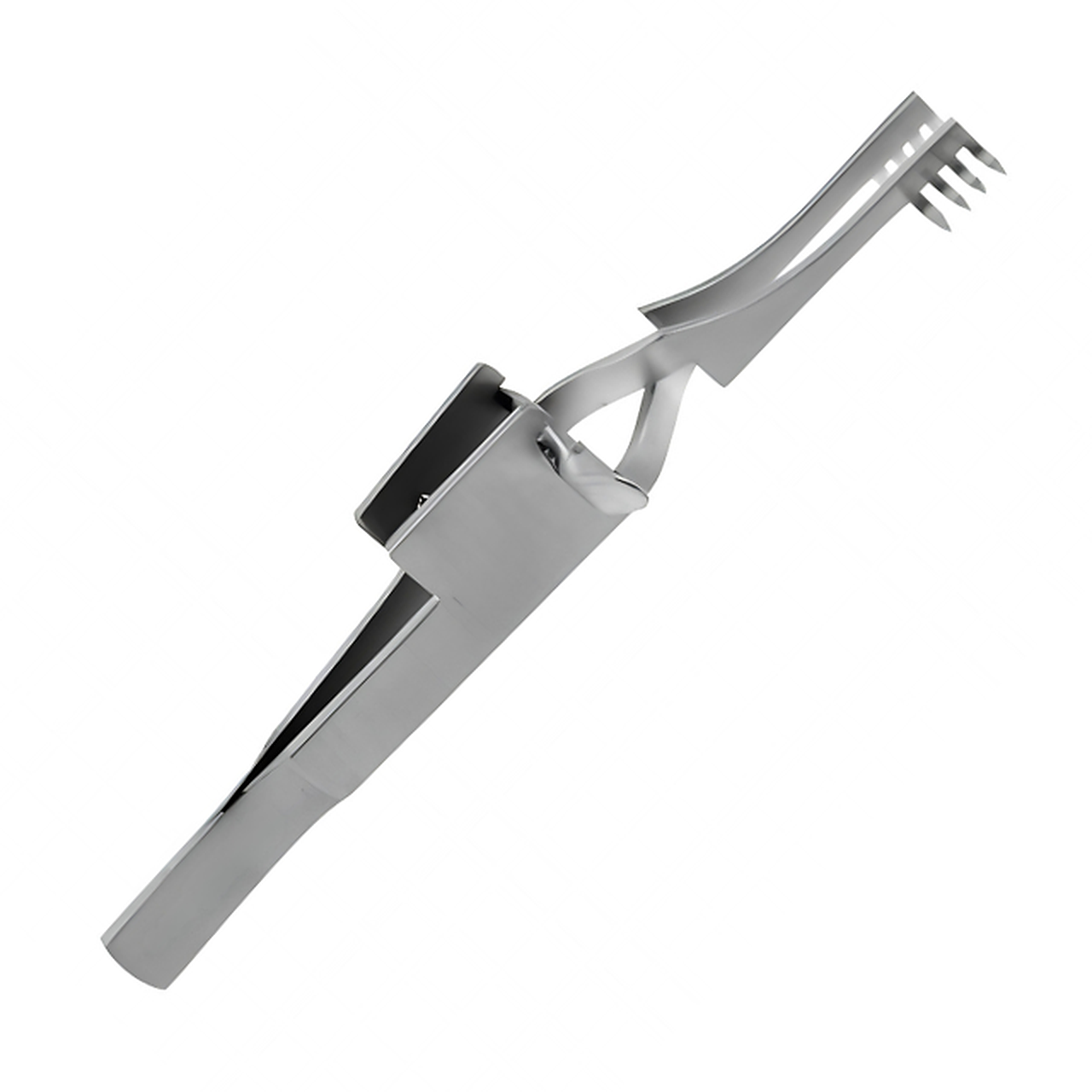
Biggs Mammaplasty Retractor standard
$69.00
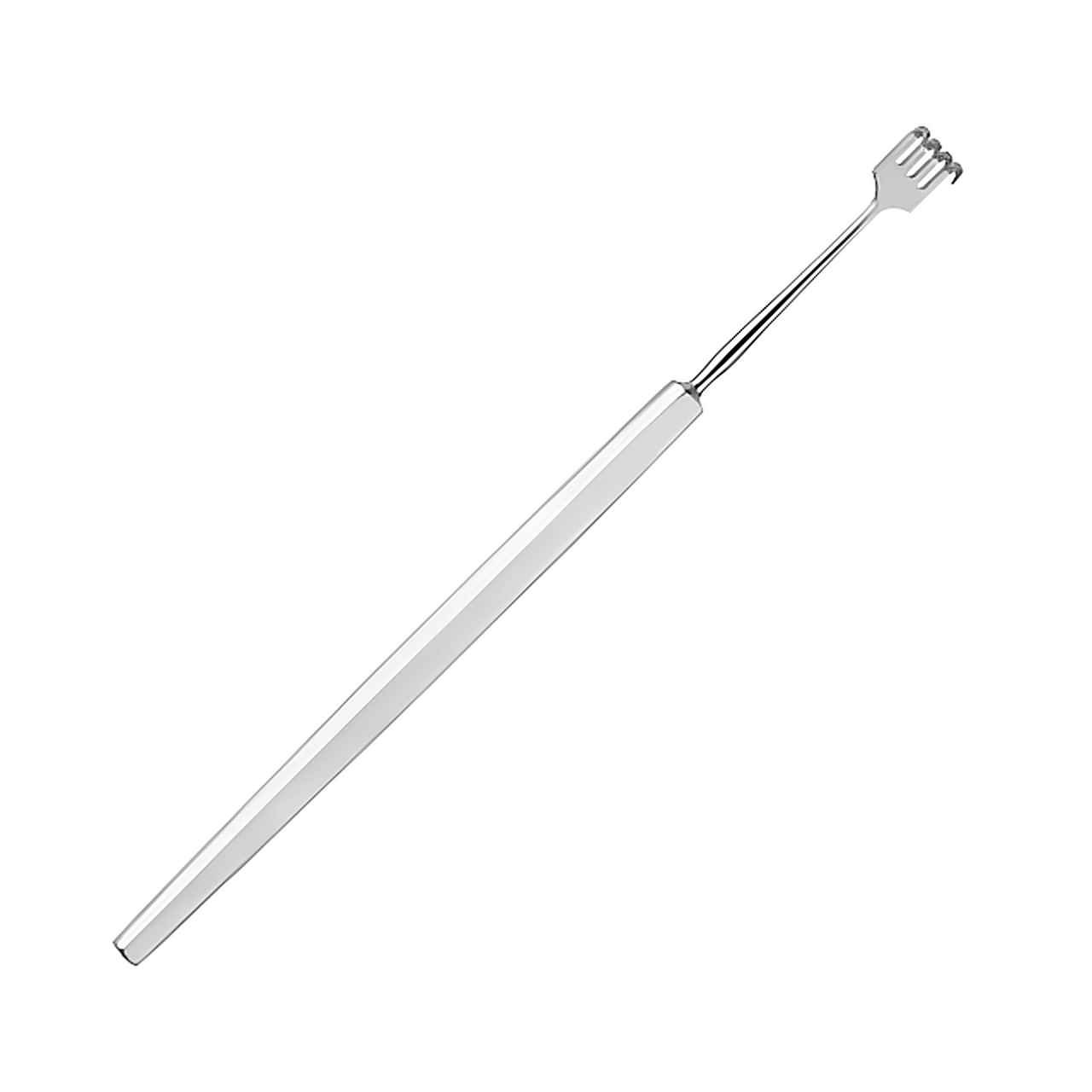
Knapp Self-Retaining Retractor
$79.00
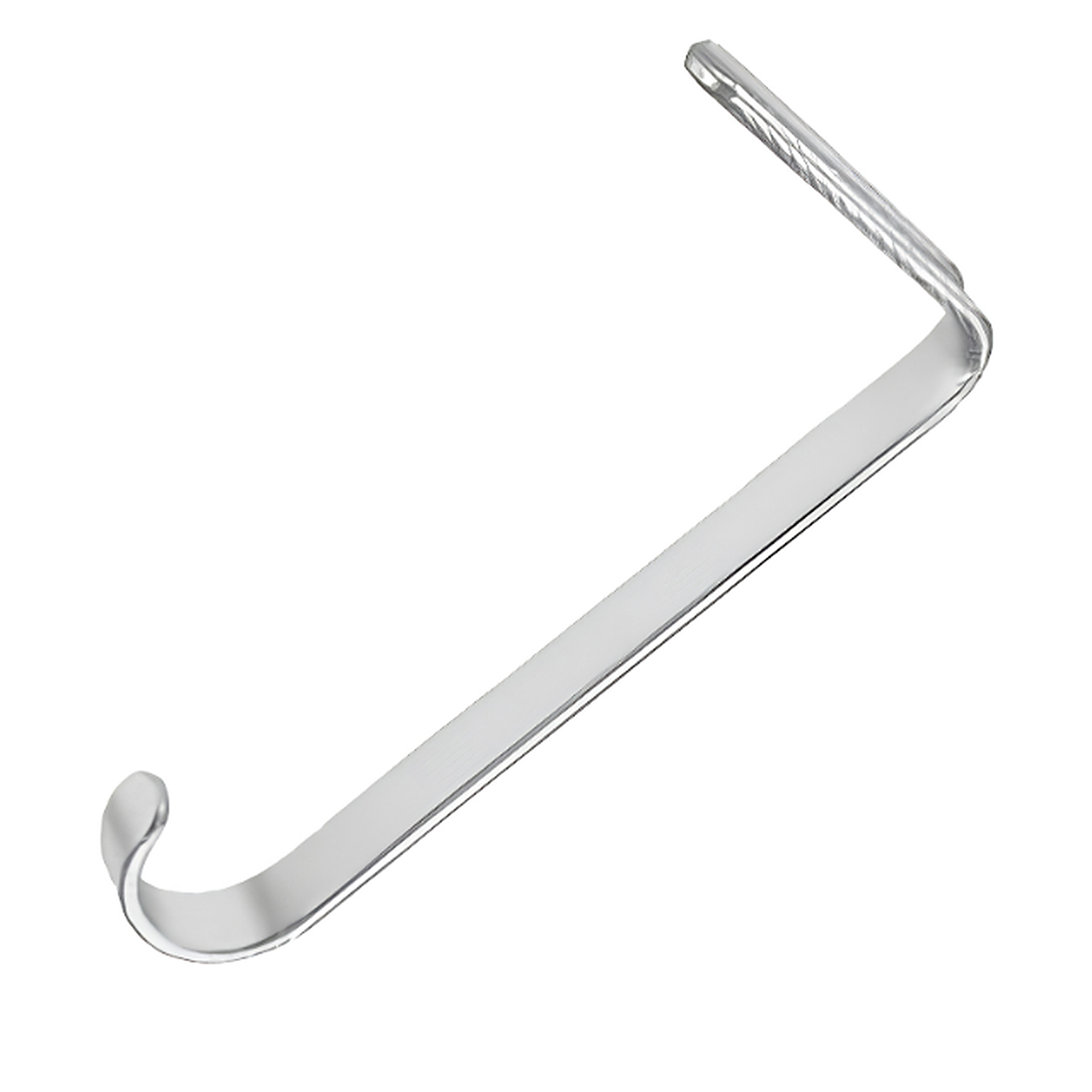
Blair Finger Retractor
From $94.00
Aufricht Daniel Nasal Retractor
$29.00
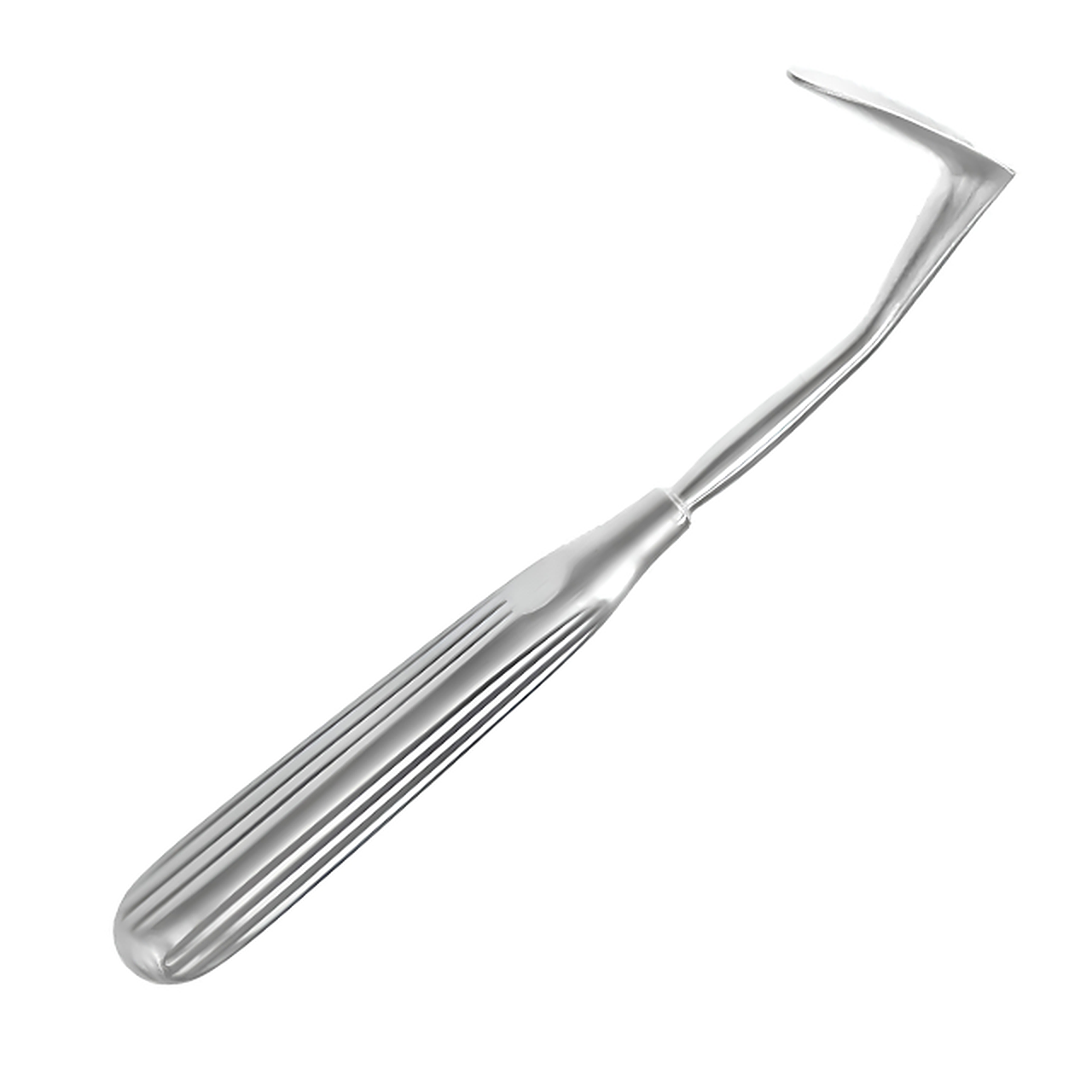
Aufricht Nasal Retractor
From $59.00
Need Surgical Retractors or Components?
Tell us what you need, including the product, configuration, quantity and destination country. Retractor Maker can provide availability, specifications and pricing.
Request a Quote