
Surgical Retractor Guides
What Is a Deaver Retractor? Uses, Features, and Applications
Author: Saad Shahid · Updated · 6 min read
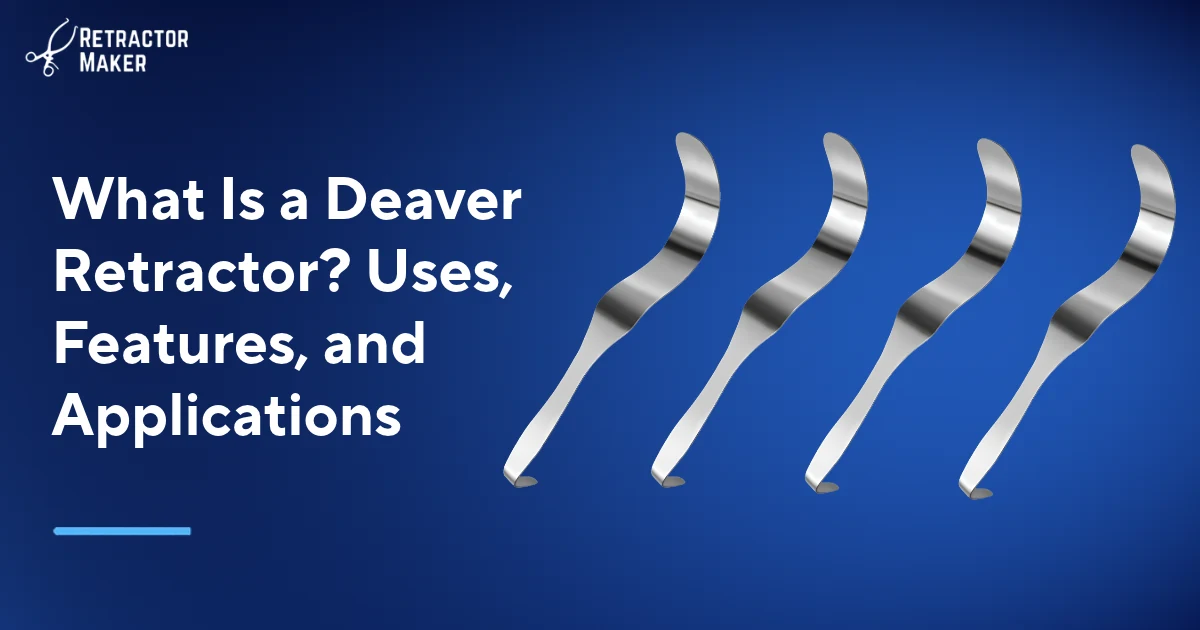
In deep-cavity surgical procedures, gaining unobstructed visual access while safely mobilizing visceral organs is a primary technical objective. Tissues in the abdominal, thoracic, and pelvic cavities require instruments that can distribute mechanical retraction force over broad surface areas without causing crush injuries or focal ischemic damage. The Deaver retractor is one of the most established surgical instruments designed specifically for this purpose.
Retractors discussed in this guide: Deaver Retractor, Deaver Retractor Thin Handle, Deaver Retractors Hollow Grip Handle, Fiber optic Deaver Retractor. Browse all surgical retractors.
What Is a Deaver Retractor?
A Deaver retractor is a large, hand-held surgical tool with a broad, curved blade. It moves heavy soft tissues and organs and retracts abdominal walls. Surgeon John Blair Deaver popularized its use. It lifts organs away from the surgical area.
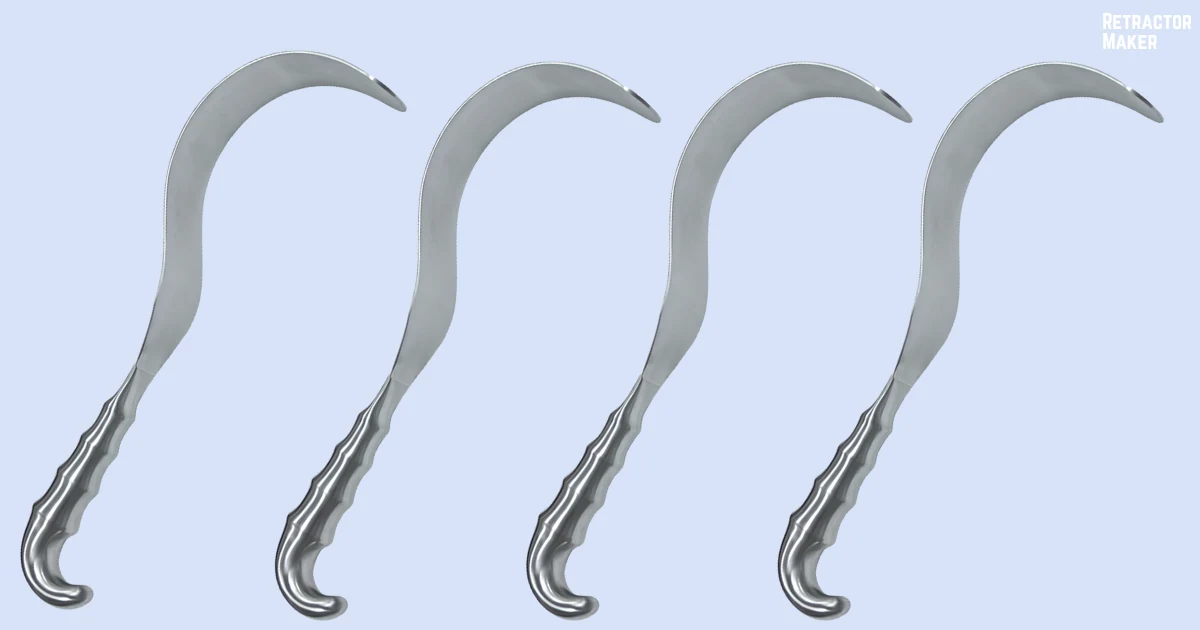
Deaver retractors come in many blade widths and lengths. Their continuous curve resembles a question mark or hook. This shape helps assistants hold tissues deeply while keeping their hands in an ergonomic position outside the surgical field.
Contents
What Are the Deaver Retractor's Design Features?
The Deaver retractor uses a continuous, sweeping shape for effective tissue retraction. Its key design features include:
- Broad, flat blade with a gradual, continuous curve that follows internal body shapes. It distributes force evenly, prevents high-pressure points, and protects visceral tissue from tearing or bruising.
- Atraumatic blade edges with rounded, polished sides and tip for smooth contact with soft tissues.
- Ergonomic handle formed by the upper shaft. Flat or shaped handles, sometimes with a special grip, help assistants maintain control during long surgeries.
- Non-reflective finish. High-quality Deaver retractors have matte or satin surfaces to reduce glare from bright surgical lights.
What Is a Deaver Retractor Used For?
The Deaver retractor is mainly used for deep-cavity exposure. It gently holds back delicate or bulky organs to reveal deeper body structures.
- Abdominal organ retraction: lifts the liver, moves the stomach, or holds back intestines during abdominal surgery, including gallbladder, biliary, and gastric procedures.
- Pelvic retraction: holds back the bladder, uterus, or rectosigmoid colon during deep pelvic dissections to expose vessels, nodes, or ligaments.
- Thoracic cavity exposure: gently moves lung tissue or mediastinal fat during open chest procedures to clear the view near the pericardium or chest wall.
- Abdominal wall elevation: the broad blade hooks under muscle layers during laparotomy, lifting the wall for initial entry and visual checks.
Surgeons must choose an appropriate instrument for the patient's anatomy, incision size, and procedure requirements.
How Does a Hollow Grip Handle Help?
Many modern Deaver retractors have a hollow grip handle to improve balance and reduce physical strain during long surgeries.
A hollow grip replaces the solid metal handle. This design offers several benefits:
- Significant weight reduction: solid steel deep retractors can be heavy. A hollow handle reduces total weight and assistant forearm fatigue during hours of static retraction.
- Improved rotational grip: rounded or ribbed hollow handles fit the hand's natural closure. This ergonomic shape reduces slipping and hand cramps associated with thin, flat-shaft retractors.
- Optimized center of gravity: mass shifts toward the blade, balancing the instrument naturally in the hand and making small angle adjustments easier.
What Sizes Do Deaver Retractors Come In?
Deaver retractors range from narrow, shallow versions to wide, deep blades. Available sizes suit different surgical spaces and depths.
- Narrow blades: 19 mm to 25 mm wide, for pediatric patients, shallow pelvic areas, or smaller incisions where space is limited.
- Intermediate blades: 38 mm to 50 mm wide. These standard sizes support general abdominal wall retraction and routine laparotomies.
- Broad/deep blades: 75 mm to 100 mm wide, with extended reach for obese patients, deep retroperitoneal views, or liver movement during major surgeries.
Correct blade size is vital. An undersized blade will not hold organs. An oversized blade crowds the surgical field and may place excessive pressure on tissues.
How Does Deaver Compare With Other Hand-Held Retractors?
The Deaver retractor differs from other hand-held designs in its sweeping curve and role in organ retraction.
| Feature | Deaver Retractor | Richardson Retractor | Kelly Retractor |
|---|---|---|---|
| Blade Curvature | Continuous, gentle sweeping arc | Distinct right-angled (L-shaped) blade | Deep right-angled blade with curved lip |
| Tissue Interaction | Broad surface distribution; organ displacement | Direct vertical traction on wound walls | Deep abdominal wall and muscular retraction |
| Primary Indication | Deep visceral organ mobilization (liver, bowel) | Abdominal wall incision opening | Deep pelvic and abdominal wall margins |
| Handle Geometry | Flat or hollow-grip ergonomic handle | Loop handle or contoured hand grip | Loop handle with finger rests |
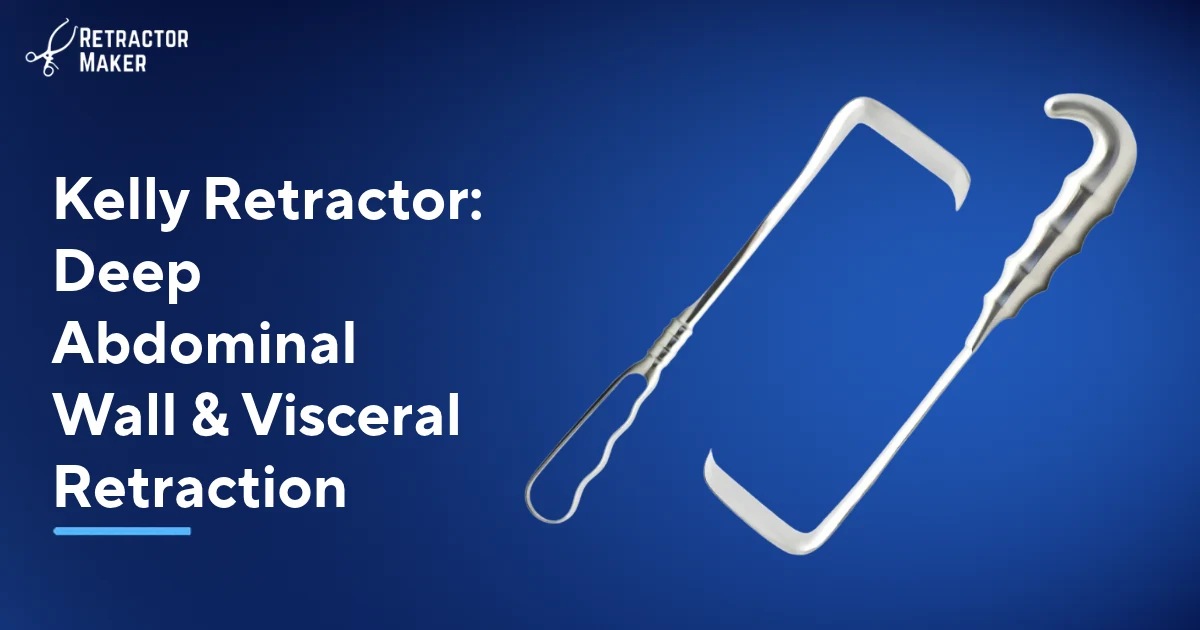
Right-angled retractors, such as Richardson or Kelly, pull muscle walls. Deaver's sweeping curve is suited to cupping and lifting mobile organs.
How Should Retractors Be Cleaned and Sterilized?
Deaver retractors require strict, proven reprocessing because they enter deep body cavities and contact body fluids.
- Point-of-use care: immediately wipe away blood, bile, and fluid after removal with a sterile, moist wipe. Do not let fluids dry on the instrument.
- Cleaning and decontamination: use ultrasound and immerse in enzymatic detergent. For hollow handles, ensure cleaning solution flows through ports. Clean all blade and handle surfaces with soft brushes.
- Visual inspection: check the blade for micro-scratches or burrs that could harm delicate tissues. Confirm hollow-handle welds are sealed and undamaged.
- Sterilization: package in hospital wraps or trays and autoclave with moist heat steam. Follow the manufacturer's instructions and institutional infection protocols.
Related Deaver Retractor Products
Check specifications and availability for the Deaver Retractor.
Check specifications and availability for the Deaver Retractor Thin Handle.
Check specifications and availability for the Deaver Retractors Hollow Grip Handle.
Summary for Surgical Teams and Hospital Buyers
The Deaver retractor is a trusted tool for major open surgeries. Its curved blade, atraumatic finish, and size range make it essential for deep-cavity views and organ movement.
The Deaver retractor distributes traction evenly across broad anatomical areas. This balances surgical access with tissue protection.
Retractor Maker manufactures precise surgical retraction platforms in Sialkot, Pakistan. We use high-grade stainless steel for Deaver retractors and supply hospitals and distributors worldwide.
Clinical notice: This guide is for surgical teams and hospital buyers. Always follow the manufacturer's instructions for use (IFU) and your hospital's sterilization rules before clinical use.
Frequently Asked Questions
What is a Deaver retractor?
A Deaver retractor is a large, hand-held surgical tool with a broad, smoothly curved blade. During deep-cavity surgery, the blade holds back soft tissues, abdominal walls, and organs to expose the surgical area and deeper body structures.
What is a Deaver retractor used for?
A Deaver retractor holds back internal organs to provide clear surgical access during abdominal, pelvic, and thoracic procedures. It can retract organs such as the liver or intestines, allowing the surgical team to view deeper body structures.
Why does a Deaver retractor have a curved blade?
A Deaver retractor has a curved blade to distribute retraction tension across a broad body surface area. Its sweeping, continuous curve spreads force rather than concentrating it at pressure points. This helps protect organ serosa from trauma.
What sizes do Deaver retractors come in?
Deaver retractors come in many blade widths and lengths, with sizes ranging from 19 mm to over 100 mm. The range includes options for superficial, standard, and deep areas, allowing selection according to surgical space and depth.
What is a hollow-grip Deaver retractor?
A hollow-grip Deaver retractor has an ergonomic, hollow handle that greatly reduces its weight. The lighter design improves handling comfort for the assistant. This improved comfort decreases assistant fatigue when holding the hollow-grip Deaver during long procedures.
Is a Deaver retractor hand-held?
Yes, it is a manual instrument. A surgical assistant or surgeon must position and hold it.
Can a reusable Deaver retractor be sterilized?
Reusable stainless-steel Deaver retractors can be cleaned and sterilized by steam autoclaving. Follow hospital procedures and manufacturer instructions when cleaning and steam autoclaving reusable stainless-steel Deaver retractors. Both cleaning and sterilization should follow these procedures and instructions.
How does a Deaver retractor differ from a Richardson or Kelly retractor?
A Deaver retractor cups and lifts mobile organs, while right-angled retractors such as the Richardson or Kelly pull muscle walls. The Deaver has a continuous, gentle sweeping curve. Its broad blade surface distributes force during organ displacement.
How should a Deaver retractor be cleaned after use?
A Deaver retractor should be wiped immediately after removal to prevent blood, bile, and other fluids from drying on it. The guide also calls for ultrasonic cleaning with enzymatic detergent. Softly brush the blade and handle surfaces, and ensure cleaning solution flows through hollow-handle ports.
What should be checked when inspecting a Deaver retractor?
Inspect a Deaver retractor for blade micro-scratches or burrs, and check that any hollow-handle welds are sealed and undamaged. The guide identifies blade defects as potential sources of harm to delicate tissues. These visual checks are part of the reprocessing routine.
About the author
Saad Shahid · Sales & Marketing Manager
Saad Shahid is the Sales & Marketing Manager and founder of Retractor Maker, started in 2023 in Sialkot, Pakistan. He also works with his father at Hospitech Traders, the family surgical instrument business founded in 1989.
Related Blogs & Guide
Related Retractors
Senn Forward Retractor
$49.00
Brewster Retractor
From $159
Langenbeck Retractor-Solid Handle
$49.00
Murphy Retractor
From $44.00
Leriche Retractor-Atraumatic Wide Blade
From $94.00
Lobster General Retractor System
$2,699Free Shipping
Need Surgical Retractors or Components?
Tell us what you need, including the product, configuration, quantity and destination country. Retractor Maker can provide availability, specifications and pricing.
Request a Quote