
Plastic Surgery Retractors
Freeman Retractor: Uses, Types, Sizes & Selection
Author: Saad Shahid · Updated · 8 min read

Compare Freeman retractor types, sizes, surgical uses, positioning and sterilization guidance, plus wholesale and OEM buying options from Retractor Maker.
Retractors discussed in this guide: Freeman Face Lift Retractors, Freeman Flap Retractor, Freeman Flap Retractor With Fiber Optic Illumination, Freeman Mini Rake Retractor. Browse all surgical retractors.
A Freeman retractor is a handheld surgical instrument used to elevate and retract skin flaps or soft tissue during plastic, facial and reconstructive surgery. The name covers several designs rather than a single interchangeable instrument. Smooth blades support flaps, contoured facial blades provide manual counter-traction, and rake patterns engage tissue with sharp prongs. Choosing between them requires matching the tissue, operative space and exposure requirement to the working end.
What is a Freeman retractor?
A Freeman retractor provides manually controlled tissue displacement to help expose the operative field. These models are handheld, so the surgeon or assistant maintains their position and adjusts traction as the procedure progresses. They are not self-retaining retractors. Their role is exposure and flap elevation, rather than cutting or dissection.
The Retractor Maker range includes the Freeman Flap Retractor, Freeman Face Lift Retractors, Freeman Flap Retractor With Fiber Optic Illumination, Freeman Rake Retractor and Freeman Mini Rake Retractor. Although all serve a retraction function, their tissue-contact surfaces differ substantially. An instrument request should therefore identify the full product name, working width and applicable profile rather than simply asking for a Freeman.
What is a Freeman retractor used for?
Freeman retractors are used for flap elevation and soft-tissue retraction in the procedures specified for each model. Plastic and reconstructive surgery share a need for controlled exposure, but the tissue layer and available space determine which design is appropriate. A broad supporting blade and a sharp rake should not be treated as equivalent contact surfaces.
- Plastic, breast and reconstructive surgery: the Freeman Flap Retractor elevates skin flaps and subcutaneous tissue.
- Rhytidectomy and aesthetic facial surgery: Freeman Face Lift Retractors elevate facial skin flaps and the SMAS layer.
- Aesthetic and reconstructive plastic surgery: the illuminated flap model combines flap elevation with fiber-optic lighting.
- Rhytidectomy and reconstructive plastic surgery: the Freeman Rake Retractor retracts skin flaps through sharp-prong engagement.
- Blepharoplasty and rhinoplasty: the Freeman Mini Rake Retractor provides minute skin flap elevation and delicate soft-tissue traction.
SMAS refers to the superficial musculoaponeurotic system, a facial soft-tissue layer relevant to facelift surgery. Product selection should follow the planned tissue plane and the operating surgeon's technique. A procedure name alone does not establish that every Freeman variant belongs in the same instrument set.
What are the main design features and parts?
The working end is the main distinction between Freeman designs. The flap model has a smooth blade with rounded retaining borders and Curved or Straight tip options. The face lift models use a broad contoured blade with rounded retaining margins and Straight Profile or Fully Curved Pattern options. These surfaces support tissue across a blade rather than engaging it with prongs.
The standard rake has multiple sharp prongs, while the mini rake has four sharp prongs. The flap, face lift, rake and mini rake models have flat handles with lateral grip serrations. Rounded blade margins do not eliminate pressure-related injury, and secure rake engagement does not justify greater traction. Tissue condition and operator control remain important with every pattern.
The illuminated model combines a smooth curved blade with an integrated fiber-optic light bundle and universal connector. Its listed light-source compatibility includes Storz, Olympus, Wolf and ACMI. All five products list the material as Premium Grade AISI 304/316 Stainless Steel (Non-Magnetic). Buyers should retain that exact specification when preparing procurement documents.
Which Freeman retractor types and sizes are available?
The available types include supporting blades, illuminated retraction and sharp rake designs. Compare the working end first, then confirm length, width and profile. The table summarizes the supplied product specifications; widths refer to the blade or rake head, not the size of an incision.
| Product name | Design and listed sizes | Typical use |
|---|---|---|
| Freeman Flap Retractor | Single-end smooth blade; Curved or Straight tip; 8 inches (20.3 cm) long; widths ½″ (12 mm) or 1″ (24 mm) | Skin flap and subcutaneous tissue elevation in plastic, breast and reconstructive surgery |
| Freeman Face Lift Retractors | Broad contoured blade; Straight Profile or Fully Curved Pattern; 7 inches (17.8 cm) long; widths 20, 22, 35, 36, 37 or 38 mm | Facial skin flap and SMAS elevation in rhytidectomy and aesthetic facial surgery |
| Freeman Flap Retractor With Fiber Optic Illumination | Smooth curved blade with integrated lighting; overall length 8 inches (203 mm); blade widths 13 or 25 mm | Illuminated soft-tissue retraction in aesthetic and reconstructive plastic surgery |
| Freeman Rake Retractor | Multiple sharp prongs; 7 inches (18 cm) long; rake widths 22 or 38 mm | Skin flap elevation in rhytidectomy and reconstructive plastic surgery |
| Freeman Mini Rake Retractor | Four sharp prongs; 4 ¾ inches (12.0 cm) long; rake head width 1 inch (25.4 mm) | Minute skin flap elevation and delicate traction in confined spaces, including blepharoplasty and rhinoplasty |
Mini describes the compact instrument configuration, not necessarily the narrowest working head. Check the listed head width rather than assuming a smaller handle means a narrower rake. Similarly, distinguish the conventional flap blade widths from the illuminated model's widths when ordering replacements.
How is a Freeman retractor positioned and used?
A Freeman retractor is positioned under direct visualization and held with controlled manual traction appropriate to the tissue. Use is restricted to trained surgical personnel following the operative plan. The intended tissue layer, nearby structures and desired line of exposure should be established before applying retraction.
- Confirm the requested model, width and profile before passing the instrument.
- Inspect the working end and handle for damage or contamination.
- Position the blade or prongs under direct vision, avoiding unintended tissue capture.
- Apply only the traction needed for exposure and reassess tissue response throughout use.
- Release traction before repositioning rather than dragging the working end across tissue.
- For the illuminated model, verify the light connection and follow the light-source instructions.
Smooth blades require stable tissue support, while sharp rakes require particular attention to engagement and release. Excessive or sustained pressure can injure tissue regardless of the blade description. The assistant should communicate changes in exposure and follow the surgeon's direction. For illuminated use, observe the light-source manufacturer's thermal precautions and keep active light connections away from drapes.
How should Freeman retractors be cleaned and sterilized?
All listed Freeman retractors are supplied non-sterile and are fully autoclavable. They require appropriate cleaning and sterilization before surgical use. Individual protective packaging is not a sterile barrier claim. The product data does not specify a validated sterilization cycle, so obtain the manufacturer's reprocessing instructions rather than selecting parameters from this guide.
Follow facility procedures for safe transport and timely cleaning after use. Inspect blade surfaces, retaining margins, handle serrations and rake prongs for residual soil or damage. Protect sharp working ends during handling. Remove damaged instruments from service and assess any instrument that cannot be adequately cleaned before returning it to the set.
For the fiber-optic model, obtain instructions covering the integrated light bundle and connector as well as the instrument. Do not assume that an external light cable or accessory shares the retractor's autoclavability. Cleaning, packaging, sterilization and storage should follow the relevant device instructions and the facility's validated sterile-processing workflow.
How do you choose and buy from Retractor Maker?
Choose a Freeman retractor by intended use, tissue-contact design, working width and profile. Confirm the surgeon's preferred pattern before standardizing a tray. For illuminated models, also confirm the exact light-source connection required by the operating room; a listed universal connector should not replace a configuration check.
Retractor Maker is a surgical retractor manufacturer and exporter in Sialkot, Pakistan, offering wholesale supply, OEM services and worldwide shipping. Each listed Freeman product has a minimum order quantity of 1 Piece and individual protective packaging. For a purchasing request, specify the full product name, selected width, applicable profile, quantity and delivery destination.
Hospital buyers should request current pricing, availability, reprocessing instructions and relevant product documentation before purchase. Discuss OEM requirements separately and confirm the agreed specifications in writing. Keeping clinical selection and procurement details aligned helps avoid substitutions between smooth blades, illuminated instruments and sharp rake patterns.
Clinical notice: This guide is for surgical teams and hospital buyers. Always follow the manufacturer's instructions for use (IFU) and your hospital's sterilization rules before clinical use.
Frequently Asked Questions
What is a Freeman retractor used for?
A Freeman retractor is used to elevate and retract skin flaps or soft tissue during plastic, facial and reconstructive surgery. The specific application depends on the model. The flap retractor also covers breast surgery, face lift models elevate facial flaps and the SMAS layer, and the mini rake supports delicate traction during blepharoplasty and rhinoplasty.
What is the difference between a Freeman flap and rake retractor?
A Freeman flap retractor supports tissue with a smooth blade, while a Freeman rake retractor engages tissue with sharp prongs. The flap model offers Curved or Straight tips with rounded retaining borders. The standard rake has multiple sharp prongs, and the mini rake has four. Selection depends on the intended tissue contact and operative exposure.
What sizes do Freeman face lift retractors come in?
Freeman Face Lift Retractors are 7 inches (17.8 cm) long and come in widths of 20, 22, 35, 36, 37 and 38 mm. They offer Straight Profile or Fully Curved Pattern configurations. Specify both width and profile when ordering, because the product name alone does not identify the required version.
Are Freeman retractors supplied sterile?
The listed Freeman retractors are supplied non-sterile and are fully autoclavable. Their individual protective packaging does not mean they are ready for surgical use. Obtain the manufacturer's reprocessing instructions and follow the facility's validated cleaning and sterilization workflow. The supplied product information does not provide sterilization temperatures, exposure times or drying parameters.
Which light sources work with the illuminated Freeman retractor?
The Freeman Flap Retractor With Fiber Optic Illumination lists compatibility with Storz, Olympus, Wolf and ACMI light sources through its universal connector. It has an integrated fiber-optic light bundle and a smooth curved blade. Before ordering, confirm the exact connection configuration with Retractor Maker and obtain separate handling and reprocessing instructions for any external cable or accessory.
Where can hospitals buy Freeman retractors wholesale?
Hospitals can request wholesale Freeman retractors from Retractor Maker, a manufacturer and exporter in Sialkot, Pakistan, offering worldwide shipping and OEM services. The listed minimum order quantity is 1 Piece per product. Include the product name, width, applicable profile and quantity in the inquiry, and confirm current pricing, delivery arrangements and reprocessing documentation before purchasing.
About the author
Saad Shahid · Sales & Marketing Manager
Saad Shahid is the Sales & Marketing Manager and founder of Retractor Maker, started in 2023 in Sialkot, Pakistan. He also works with his father at Hospitech Traders, the family surgical instrument business founded in 1989.
Related Blogs & Guide
Related Retractors
Senn Forward Retractor
$49.00
Brewster Retractor
From $159
Langenbeck Retractor-Solid Handle
$49.00
Murphy Retractor
From $44.00
Leriche Retractor-Atraumatic Wide Blade
From $94.00
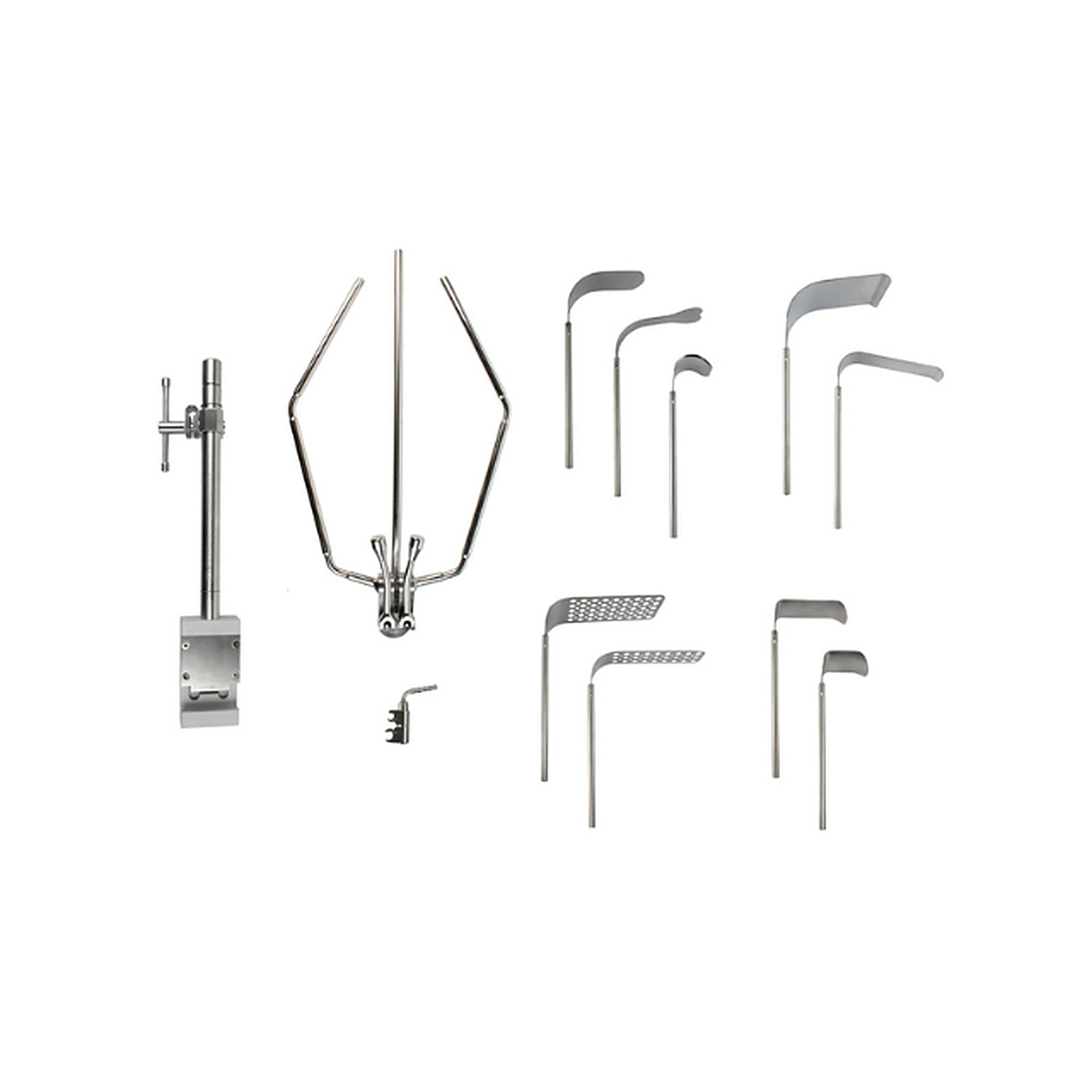
Lobster General Retractor System
$2,699Free Shipping
Need Surgical Retractors or Components?
Tell us what you need, including the product, configuration, quantity and destination country. Retractor Maker can provide availability, specifications and pricing.
Request a Quote