
General Surgery Retractors
Goelet Retractor: Uses, Design, Sizes & Buying Guide
Author: Saad Shahid · Updated · 7 min read
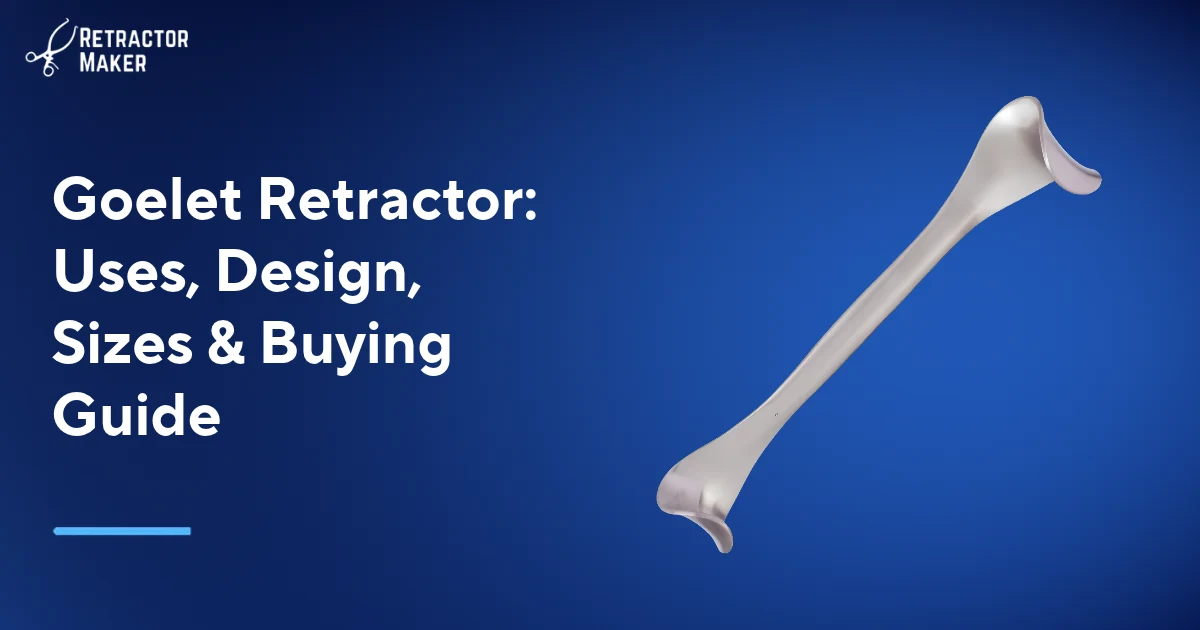
Learn about Goelet retractor uses, blade widths, positioning, and sterilization, with practical purchasing guidance for surgical teams and hospital buyers.
Retractors discussed in this guide: Goelet Retractor. Browse all surgical retractors.
A goelet retractor is a handheld, double-ended surgical instrument used to retract skin, subcutaneous fat, and muscle during superficial and intermediate procedures. Its curved blades hold tissue and wound margins away from the operative field while a surgeon or assistant controls the direction and amount of traction. Retractor Maker supplies this instrument for use in minor general, orthopedic, and plastic surgery. Understanding its blade geometry, manual handling requirements, and non-sterile supply status helps clinical teams assess suitability and helps purchasing teams specify the correct instrument.
What is a Goelet retractor?
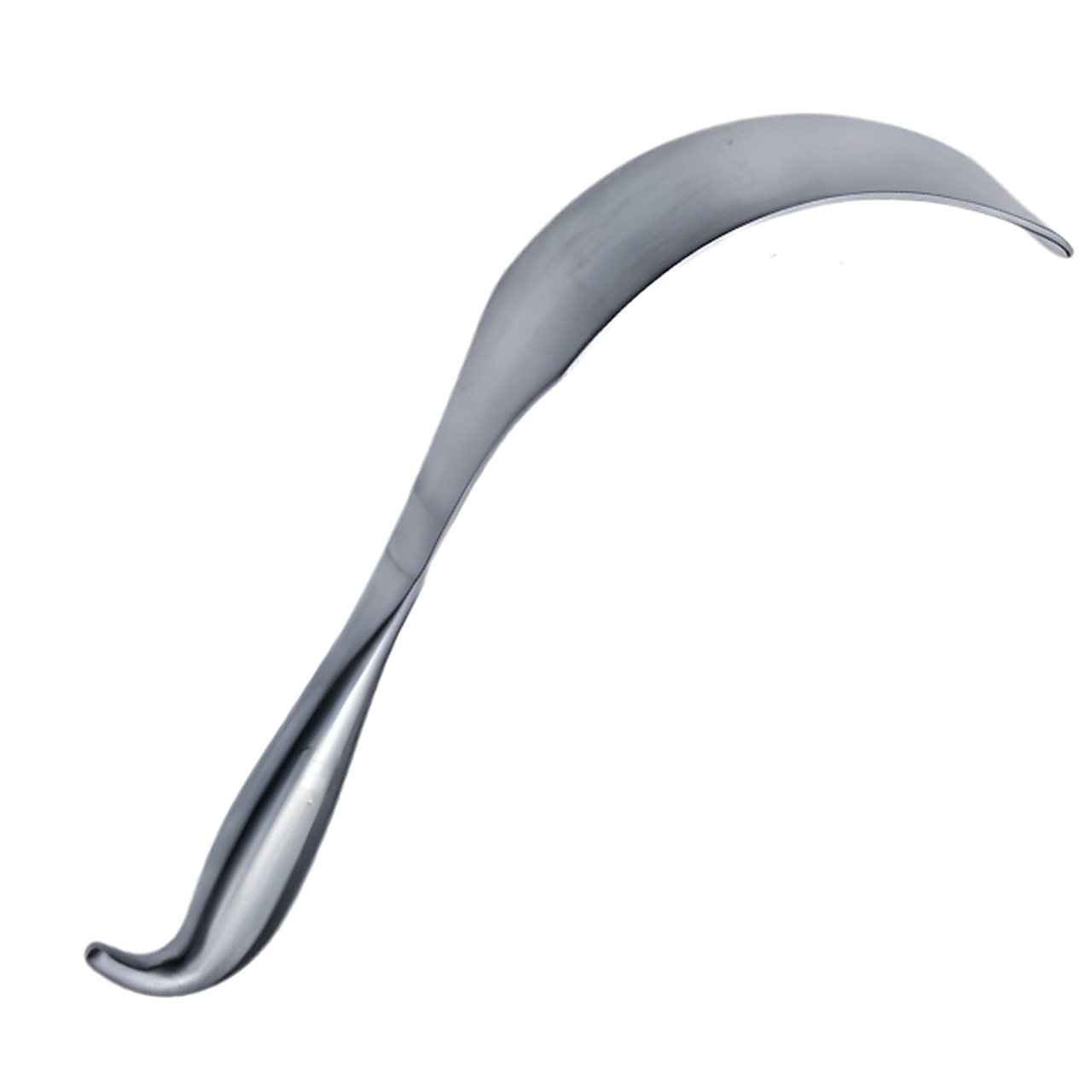
The Goelet retractor is a manual exposure instrument with a working blade at each end of a central handle. Its asymmetrical design provides different blade widths within the same instrument. The operator selects the end that suits the wound margin and required tissue contact, rather than treating both ends as interchangeable in every situation.
Unlike a self-retaining retractor, a handheld retractor requires continuous manual control to maintain exposure. This allows the operator to respond as the surgical field changes, but it also requires coordination with the operating surgeon. The instrument supports visualization and access; it does not replace appropriate incision planning, careful tissue handling, or selection of another retractor when the operative anatomy calls for it.
What is a Goelet retractor used for?
The stated use is retraction of skin, subcutaneous fat, and muscle in superficial and intermediate surgical procedures. Its role is to expose tissue and wound margins during minor general, orthopedic, and plastic surgery. Selection should follow the actual depth, tissue condition, and access requirements rather than the specialty label alone.
- Minor general surgery: holding superficial or intermediate wound margins aside to support visualization and access.
- Orthopedic surgery: retracting the listed soft tissues where the blade geometry and wound depth are appropriate.
- Plastic surgery: providing controlled exposure of skin, subcutaneous fat, and muscle during suitable procedures.
- Operative assistance: maintaining surgeon-directed manual retraction as the required viewing angle changes.
These applications describe a tissue-exposure role, not a claim that the instrument suits every operation within those specialties. Deep cavity exposure or an operative field requiring sustained self-retaining retraction may call for a different instrument. The surgeon should evaluate whether the selected blade can support the tissue without obstructing access or placing excessive pressure on vulnerable structures.
What are the design, parts, and dimensions?
The supplied Goelet Retractor measures 18.5 cm, approximately 7.3 inches, overall. It has a 38 mm wide blade at one end and a 45 mm wide blade at the opposite end. These measurements describe blade width, not blade depth or working reach; buyers should request any additional dimensions needed for comparison.
Curved bullnose blades
Both working ends have curved bullnose profiles with rounded atraumatic edges. The asymmetrical widths offer different tissue-contact options. Rounded edges are a design feature, not a guarantee against tissue injury: excessive force, prolonged pressure, or unsuitable positioning can still damage tissue. Blade choice must account for the available space and the tissue being supported.
Central handle and material
A solid flat central handle provides the manual gripping area and is contoured to support the operator's grip. The listed material is Premium Grade AISI 304/316 Stainless Steel (Non-Magnetic). The instrument is supplied brand new in Individual Protective Packaging. Packaging protects the supplied instrument but does not establish sterility; the product is explicitly supplied non-sterile.
Which Goelet retractor types or variants are listed?
The supplied product information lists one Goelet Retractor configuration. Its different blade widths are working ends of the same instrument, not separate product variants. The table summarizes that listed product without implying additional sizes, blade patterns, or configurations are available.
| Product name | Design | Listed dimensions | Typical use |
|---|---|---|---|
| Goelet Retractor | Handheld, double-ended instrument with asymmetrical curved bullnose blades and rounded atraumatic edges | 18.5 cm overall; 38 mm and 45 mm blade widths | Skin, subcutaneous fat, and muscle retraction in superficial and intermediate procedures in minor general, orthopedic, and plastic surgery |
When comparing supplier quotations, check the complete specification rather than the instrument name alone. Confirm overall length, each blade width, blade profile, and supply condition. If an existing tray requires a particular fit, ask for clarification of unlisted dimensions before approving a replacement. Do not assume that an OEM inquiry guarantees a particular modification.
How is a Goelet retractor positioned and used?
A trained surgical team positions the selected blade to support the intended tissue margin and applies controlled manual traction under direct vision. These are general handling principles, not a substitute for operative training or the manufacturer's instructions. The required exposure and surrounding anatomy determine the appropriate blade and direction of pull.
- Before use, confirm that the instrument has completed the required reprocessing and inspect the working ends and handle.
- Choose the blade width that fits the available space and supports the intended tissue margin.
- Position the blade under direct vision, avoiding entrapment of vulnerable structures.
- Apply only the traction needed for exposure and coordinate adjustments with the operating surgeon.
- Reassess tissue condition and blade position throughout retraction; release or reposition when clinically appropriate.
Maintain awareness of the unused end because this is a double-ended instrument. Changes in hand position can move that blade near the patient, drapes, or other instruments. If exposure remains inadequate, reassess positioning and instrument selection rather than simply increasing force. Handheld retraction depends on active observation as well as a stable grip.
How should it be cleaned and sterilized?
The Goelet Retractor is supplied non-sterile and is fully autoclavable. It therefore requires appropriate preparation and sterilization before clinical use. No validated cleaning method or autoclave cycle parameters are included in the supplied product information; obtain the current manufacturer instructions before establishing a processing workflow.
Cleaning must precede sterilization because retained soil can interfere with effective processing. Follow the applicable instructions and facility policy for handling contaminated instruments, cleaning, rinsing, drying, inspection, packaging, and steam sterilization. Do not infer detergent compatibility, exposure temperature, cycle duration, or drying requirements solely from the material description or the statement that the instrument is autoclavable.
Inspect the blades, edges, and handle for residual soil, corrosion, deformation, or surface damage before returning the instrument to service. Remove instruments with suspected defects from use for assessment. After processing, maintain package integrity and storage conditions according to facility policy.
How do you choose and buy from Retractor Maker?
Choose the Goelet Retractor by matching the required tissue exposure to its listed blade widths, overall length, and handheld configuration. Clinical users should review suitability, while sterile processing staff confirm access to usable reprocessing instructions. Purchasing teams should document the specification and non-sterile supply condition so receipt and preparation expectations are clear.
Retractor Maker is a surgical retractor manufacturer and exporter in Sialkot, Pakistan, offering wholesale supply, OEM services, and worldwide shipping. The listed minimum order quantity for this product is 1 Piece. For a quotation, identify the Goelet Retractor and product slug goelet-retractor, specify the quantity and destination, and describe any OEM requirements for review.
Before placing an order, request confirmation of the agreed specification, packaging, current reprocessing documentation, delivery arrangements, and any requested OEM details. Confirm destination-specific procurement or import requirements through the appropriate hospital and regulatory channels. Worldwide shipping availability should not be treated as evidence of regulatory authorization in every market.
Clinical notice: This guide is for surgical teams and hospital buyers. Always follow the manufacturer's instructions for use (IFU) and your hospital's sterilization rules before clinical use.
Frequently Asked Questions
What is a Goelet retractor used for?
A Goelet retractor is used to retract skin, subcutaneous fat, and muscle during superficial and intermediate surgical procedures. The listed applications include tissue and wound margin exposure in minor general, orthopedic, and plastic surgery. Suitability depends on wound depth, tissue condition, and the exposure required, rather than the specialty name alone.
What size is the Goelet retractor?
The listed Goelet Retractor is 18.5 cm, approximately 7.3 inches, long, with blade widths of 38 mm and 45 mm. These are opposite working ends of the same double-ended instrument. Blade depth and other working-end dimensions are not specified in the supplied information and should be confirmed if needed for purchasing comparisons.
Is a Goelet retractor self-retaining?
A Goelet retractor is handheld, not self-retaining. A surgeon or assistant maintains manual control of its position and traction during use. This allows adjustment as exposure requirements change, but it requires ongoing attention to tissue pressure, blade placement, and coordination with the operating surgeon.
Is the Goelet retractor supplied sterile?
The Goelet Retractor is supplied non-sterile in Individual Protective Packaging. It must undergo appropriate preparation and sterilization before clinical use. Protective packaging should not be mistaken for a sterile barrier, and receiving teams should route the instrument through the facility's approved preparation and sterile processing workflow.
Can the Goelet retractor be autoclaved?
The listed Goelet Retractor is fully autoclavable. However, the supplied product information does not provide validated cycle temperatures, exposure times, or drying parameters. Obtain the manufacturer's current reprocessing instructions and follow facility policy; autoclavability alone is not enough information to select a complete sterilization cycle.
Where can hospitals buy a Goelet retractor wholesale?
Hospitals can contact Retractor Maker in Sialkot, Pakistan, for Goelet Retractor wholesale inquiries and worldwide shipping. The listed minimum order quantity is 1 Piece, and OEM services are available for discussion. Buyers should provide the required quantity, destination, and specification, then confirm documentation, delivery arrangements, and any OEM requirements before ordering.
About the author
Saad Shahid · Sales & Marketing Manager
Saad Shahid is the Sales & Marketing Manager and founder of Retractor Maker, started in 2023 in Sialkot, Pakistan. He also works with his father at Hospitech Traders, the family surgical instrument business founded in 1989.
Related Blogs & Guide
Related Retractors
Senn Forward Retractor
$49.00
Brewster Retractor
From $159
Langenbeck Retractor-Solid Handle
$49.00
Murphy Retractor
From $44.00
Leriche Retractor-Atraumatic Wide Blade
From $94.00
Lobster General Retractor System
$2,699Free Shipping
Need Surgical Retractors or Components?
Tell us what you need, including the product, configuration, quantity and destination country. Retractor Maker can provide availability, specifications and pricing.
Request a Quote