
General Surgery Retractors
Murphy Retractor: Uses, Types, Sizes & Buying Guide
Author: Saad Shahid · Updated · 7 min read
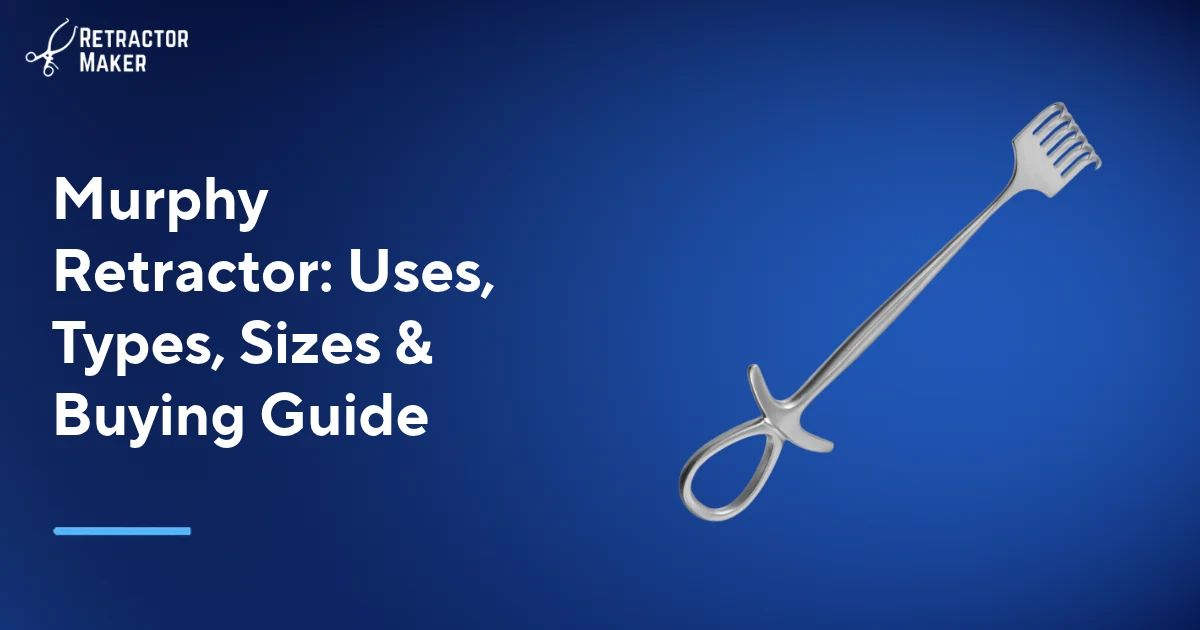
Compare Murphy retractor types, sizes, tips, surgical uses, and care requirements, with practical buying guidance for hospitals and surgical teams worldwide.
Retractors discussed in this guide: Murphy Retractor, Murphy Ball Retractor. Browse all surgical retractors.
A Murphy retractor is a handheld, multi-prong surgical rake retractor used to retract skin margins, fascia, and muscle tissue. Retractor Maker also offers the Murphy Ball Retractor, a distinct instrument for exploring, mobilizing, and retracting delicate nerves, vessels, and ducts during deep surgical procedures. These instruments share a name but serve different tissue-handling needs. For surgeons, OR staff, and hospital buyers, the essential distinction is a curved-prong working end versus an angled hook with a spherical ball tip. Selection should begin with the intended tissue and exposure requirement, rather than the Murphy name alone.
What Is a Murphy Retractor?
The standard Murphy Retractor is a manually held rake instrument that maintains surgical exposure through tissue retraction. Its curved prongs engage the selected tissue, while the handle allows the operator to apply counter-traction. It is not a self-retaining retractor: positioning and force remain under the control of the surgeon or assistant holding it.
The Murphy Ball Retractor has a different purpose and working-end geometry. It combines extended reach with a rounded spherical tip for delicate tissue manipulation in deeper operative fields. When preparing a preference card, instrument tray, or purchase request, specify the complete product name. A request for a Murphy retractor without further detail may not identify the intended instrument.
What Is a Murphy Retractor Used For?
The standard Murphy Retractor is intended for skin-margin, fascia, and muscle retraction across general, orthopedic, and plastic surgery. Its role is to help maintain exposure while the operating team works on the surgical site. Suitability depends on the tissue being held, the required access, and the selected prong configuration.
- General surgery: retraction of skin margins, fascia, or muscle when manual exposure is needed.
- Orthopedic surgery: soft-tissue retraction involving skin margins, fascia, and muscle during operative access.
- Plastic surgery: controlled retraction of the listed tissue layers according to the operative plan.
- Deep surgical procedures: the Murphy Ball Retractor is intended to explore, mobilize, and retract delicate nerves, vessels, and ducts.
These intended uses do not make the instruments interchangeable. A pronged rake should not be selected as a substitute for the ball-tip instrument when the task involves delicate nerves, vessels, or ducts. Procedure-specific selection remains a clinical decision; the product descriptions do not establish suitability for every operation within a specialty.
What Are the Main Design Features and Parts?
The standard Murphy Retractor measures 19.5 cm, approximately 7.7 inches, and has curved prongs with selectable blunt or sharp tips. Its handle incorporates a teardrop finger aperture for manual leverage and counter-traction. The working-end layout determines the available retraction width, while tip choice affects how the instrument engages tissue.
The Murphy Ball Retractor measures 35 cm, approximately 13.8 inches, and features a 60-degree angled hook. Selectable spherical ball-tip diameters are 2.0 mm, 3.0 mm, and 4.0 mm. Its flat handle has lateral serrations for tactile grip stability. The extended reach and angled working end distinguish it from the shorter multi-prong rake.
Both instruments are handcrafted from Premium Grade AISI 304/316 Stainless Steel (Non-Magnetic). Both are supplied non-sterile and fully autoclavable. These specifications describe the supplied products, but they do not replace validated cleaning and sterilization instructions. Rounded or blunt contact surfaces also do not eliminate the possibility of tissue injury from excessive pressure or prolonged traction.
Which Murphy Retractor Types and Sizes Are Available?
The available products are the multi-prong Murphy Retractor and the Murphy Ball Retractor. Compare their intended uses before choosing dimensions or tip options. Length alone is not an adequate selection criterion because the instruments differ in tissue contact, working-end shape, and purpose.
| Product name | Design and available sizes | Typical use |
|---|---|---|
| Murphy Retractor | Handheld curved-prong rake; 19.5 cm overall length; blunt or sharp tips; teardrop finger aperture. Layouts: 2 prongs / 8 mm, 3 prongs / 13 mm, 4 prongs / 18 mm, or 6 prongs / 28 mm. | Retraction of skin margins, fascia, and muscle in general, orthopedic, and plastic surgery. |
| Murphy Ball Retractor | Handheld ball-tip nerve and tissue probe retractor; 35 cm overall length; 60-degree angled hook; 2.0 mm, 3.0 mm, or 4.0 mm spherical tip; flat handle with lateral serrations. | Exploration, mobilization, and retraction of delicate nerves, vessels, and ducts during deep surgical procedures. |
For the standard rake, confirm both prong count and width rather than ordering by prong count alone. Specify blunt or sharp tips separately. For the ball-tip model, state the required ball diameter. Clear configuration details help purchasing teams compare quotations and help OR staff verify that the delivered instrument matches the requested tray specification.
How Should a Murphy Retractor Be Positioned?
A Murphy retractor should be positioned by trained surgical personnel under direct visualization, using only the traction needed for adequate exposure. Placement depends on anatomy, tissue condition, and the operative objective. The following principles support safe handling but do not replace supervised training or procedure-specific technique.
- Confirm the instrument type, tip configuration, and condition before use.
- Identify the tissue to be retracted and protect nearby vulnerable structures.
- Keep the working end visible during placement and changes in position.
- Apply controlled traction and reassess tissue response throughout use.
- Release or adjust traction when exposure changes or tissue stress is apparent.
With the rake model, ensure the selected tissue is appropriately engaged before maintaining counter-traction. With the ball-tip model, avoid blind probing or using the tip as a lever against a vulnerable structure. A rounded tip does not justify greater force. Communication between the operator and assistant is particularly important when exposure or hand position changes.
How Do You Clean and Sterilize a Murphy Retractor?
Both products require processing before clinical use because they are supplied non-sterile. Individual Protective Packaging protects the supplied instrument but does not establish sterility. Obtain the current manufacturer instructions for use and follow the facility's validated cleaning, inspection, packaging, and steam-sterilization procedures.
During cleaning and inspection, pay attention to prongs, the angled hook, ball tip, handle serrations, and the finger aperture, as applicable. Remove residual soil using compatible methods specified in the instructions. Inspect for deformation, surface damage, and other defects that could affect cleaning or tissue contact. Remove damaged instruments from service for assessment.
Fully autoclavable does not define a complete sterilization cycle. The supplied specifications do not provide cycle temperature, exposure time, detergent compatibility, or drying parameters. Do not infer these settings from the material description. Sterile processing staff should resolve missing instructions before releasing either instrument for clinical use.
How Do You Choose and Buy from Retractor Maker?
Choose the instrument by intended tissue, then confirm its configuration and reprocessing documentation. Retractor Maker is a surgical retractor manufacturer and exporter in Sialkot, Pakistan, offering wholesale supply, OEM services, and worldwide shipping. Both listed products are brand new, individually packaged, and have a minimum order quantity of 1 Piece.
For a quotation, provide the full product name, required tip option, quantity, and shipping destination. State prong count and width for the Murphy Retractor or ball diameter for the Murphy Ball Retractor. Hospital buyers should also request current pricing, lead times, applicable documentation, and manufacturer reprocessing instructions. Discuss OEM requirements before ordering rather than assuming a requested modification is already available.
Clinical notice: This guide is for surgical teams and hospital buyers. Always follow the manufacturer's instructions for use (IFU) and your hospital's sterilization rules before clinical use.
Frequently Asked Questions
What is a Murphy retractor used for?
A Murphy Retractor is used to retract skin margins, fascia, and muscle tissue during general, orthopedic, and plastic surgery. It is a handheld multi-prong rake that provides manual counter-traction. The separately named Murphy Ball Retractor serves a different purpose: exploring, mobilizing, and retracting delicate nerves, vessels, and ducts during deep surgical procedures.
What is the difference between a Murphy Retractor and a Murphy Ball Retractor?
The Murphy Retractor uses curved prongs, while the Murphy Ball Retractor uses an angled hook with a spherical ball tip. The standard rake is intended for skin, fascia, and muscle retraction. The ball-tip model is intended for delicate nerves, vessels, and ducts in deep surgical procedures. Their different working ends and intended uses mean they should not be treated as interchangeable.
What sizes does a Murphy retractor come in?
The standard Murphy Retractor is 19.5 cm long and offers four prong-and-width layouts. These are 2 prongs / 8 mm, 3 prongs / 13 mm, 4 prongs / 18 mm, and 6 prongs / 28 mm. The Murphy Ball Retractor is 35 cm long, with selectable ball-tip diameters of 2.0 mm, 3.0 mm, or 4.0 mm.
Should I choose blunt or sharp Murphy retractor tips?
Blunt or sharp Murphy retractor tips should be selected according to the tissue and the surgeon's intended handling technique. Both options are available for the standard multi-prong Murphy Retractor. Neither option removes the need for direct visualization, controlled traction, and repeated tissue assessment. Specify the tip style explicitly when ordering rather than relying on the product name alone.
Can a Murphy retractor be autoclaved?
Both listed Murphy instruments are fully autoclavable and supplied non-sterile. They require appropriate processing before clinical use, including cleaning and inspection. The product specifications do not provide a validated cycle temperature or exposure time. Obtain the manufacturer's current reprocessing instructions and follow the facility's validated procedures rather than selecting a cycle solely from the material description.
Where can hospitals buy Murphy retractors wholesale?
Hospitals can request wholesale Murphy retractor quotations from Retractor Maker in Sialkot, Pakistan. The manufacturer and exporter offers OEM services and worldwide shipping, with a listed minimum order quantity of 1 Piece for each product. Include the complete product name, configuration, quantity, and destination, and confirm current pricing, delivery arrangements, and reprocessing documentation before purchase.
About the author
Saad Shahid · Sales & Marketing Manager
Saad Shahid is the Sales & Marketing Manager and founder of Retractor Maker, started in 2023 in Sialkot, Pakistan. He also works with his father at Hospitech Traders, the family surgical instrument business founded in 1989.
Related Blogs & Guide

Related Retractors
Gifford-Jansen Retractor
From $84.00
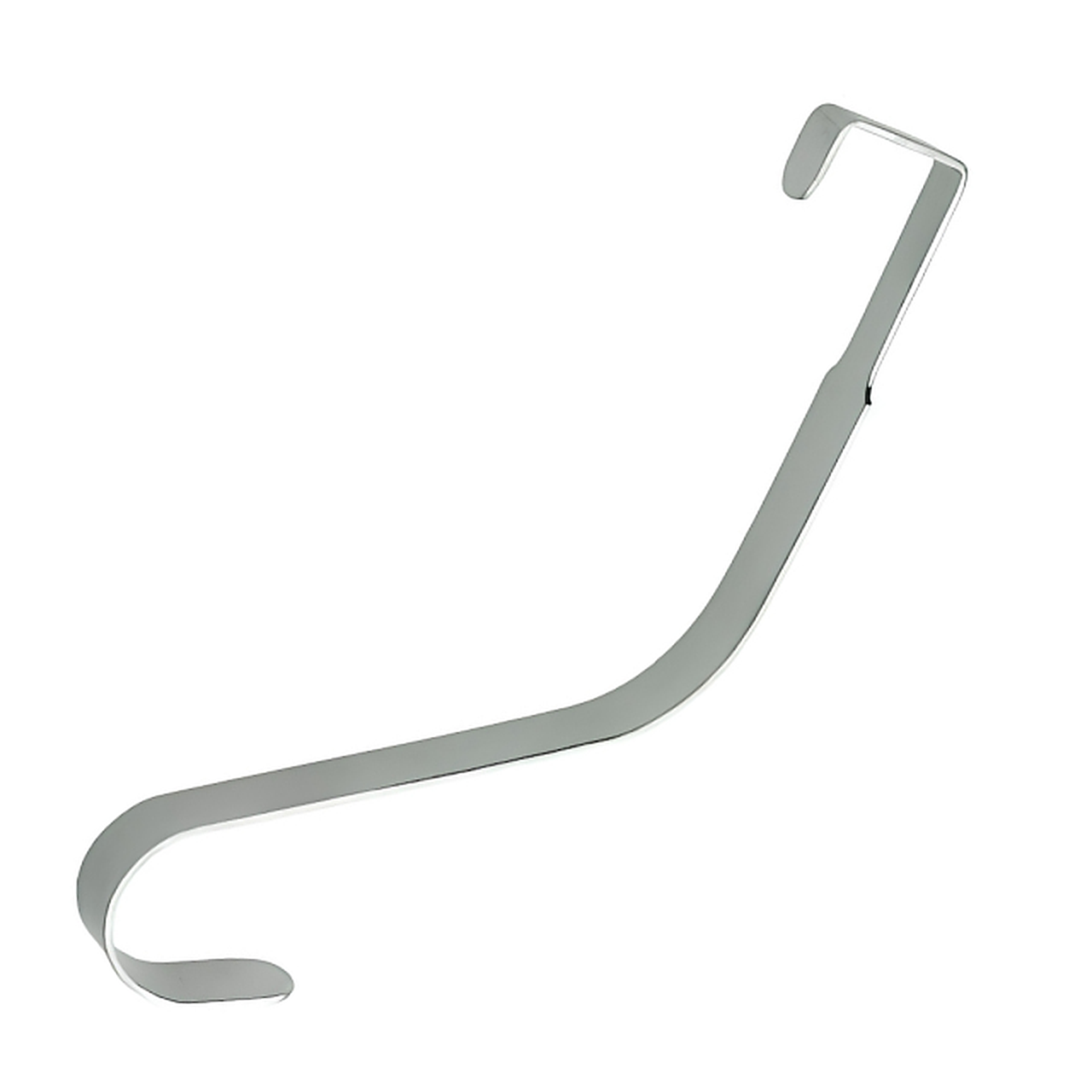
Hajek Cheek Retractor
$24.00
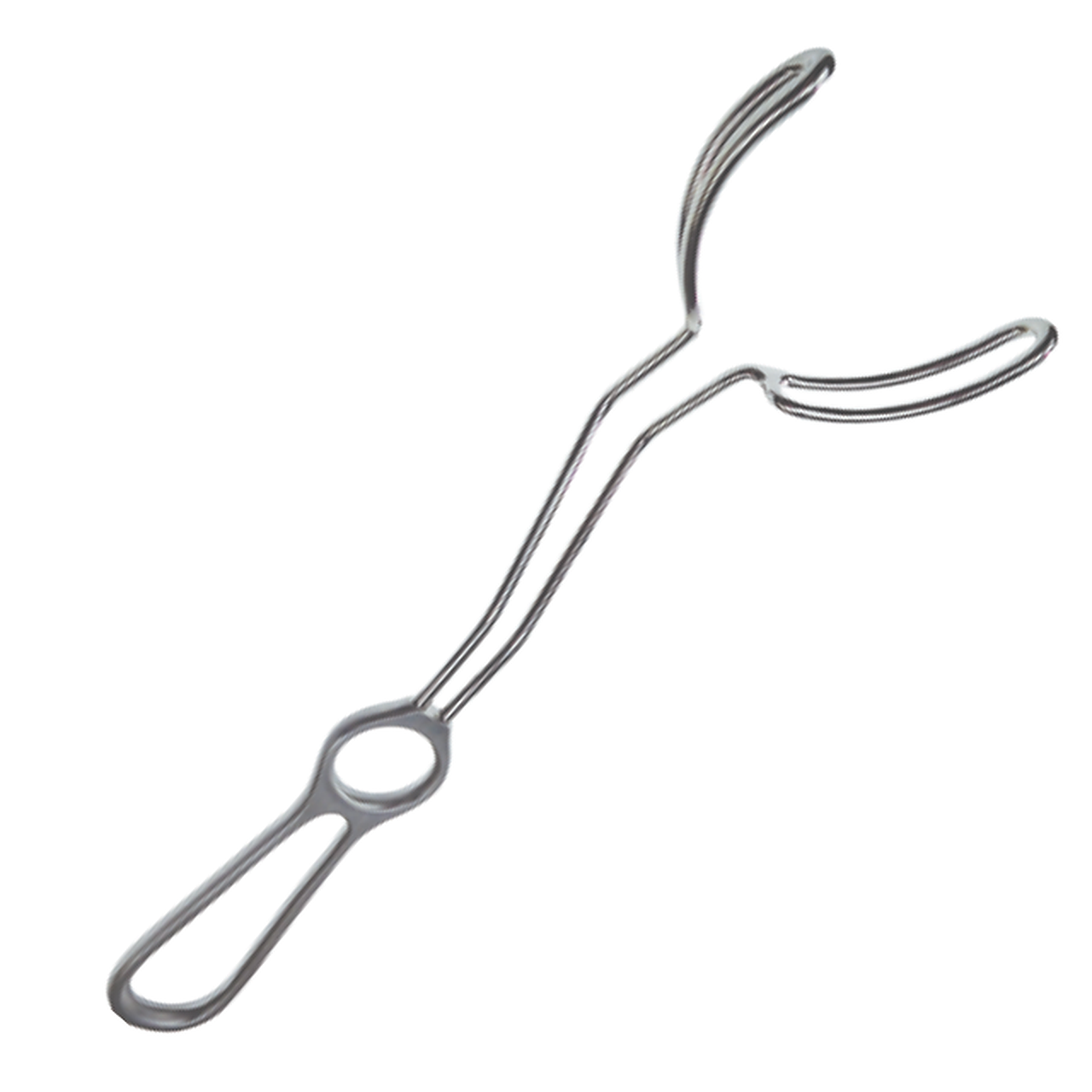
Lip And Cheek Retractor
$49.00
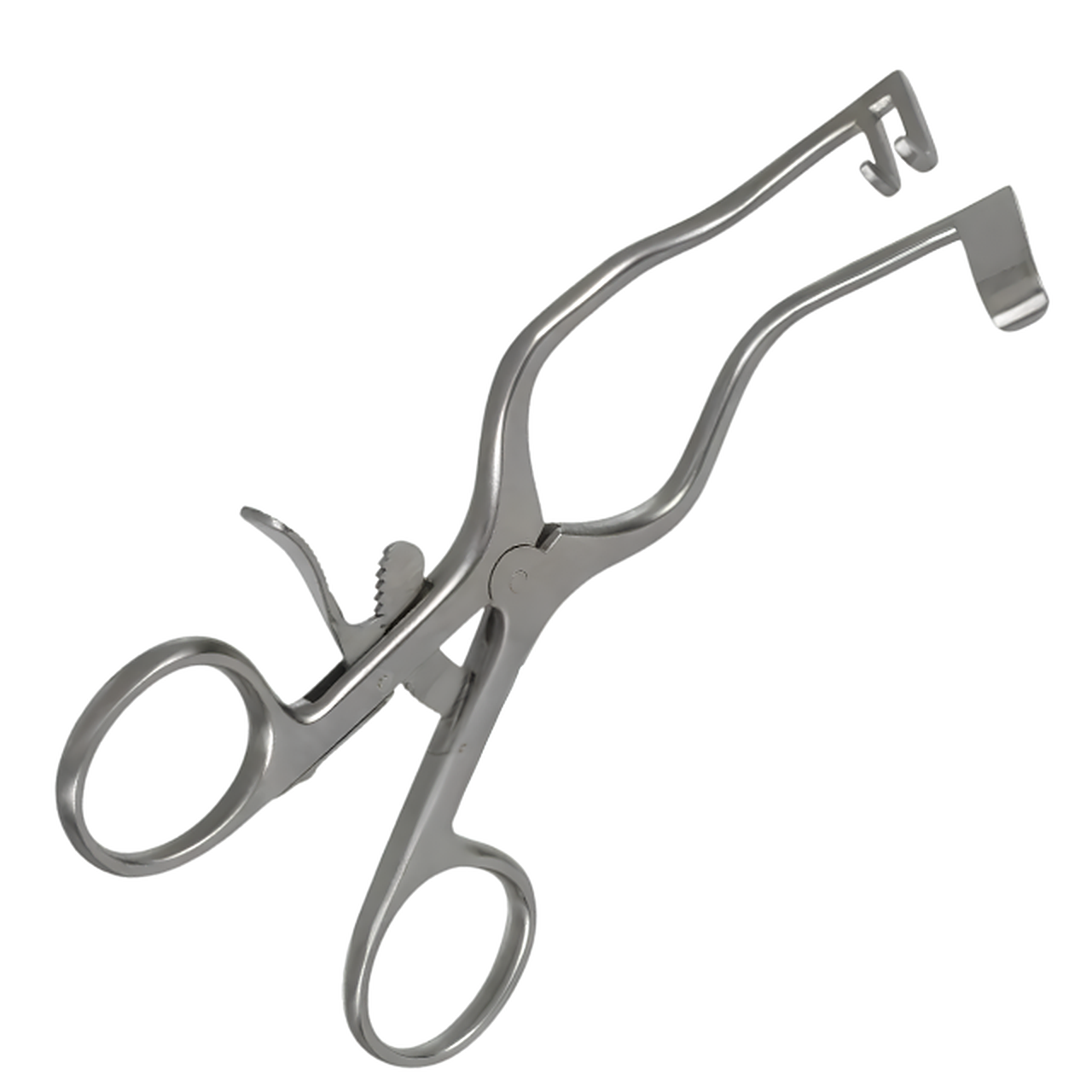
Bellucci Endaural Retractors
From $174
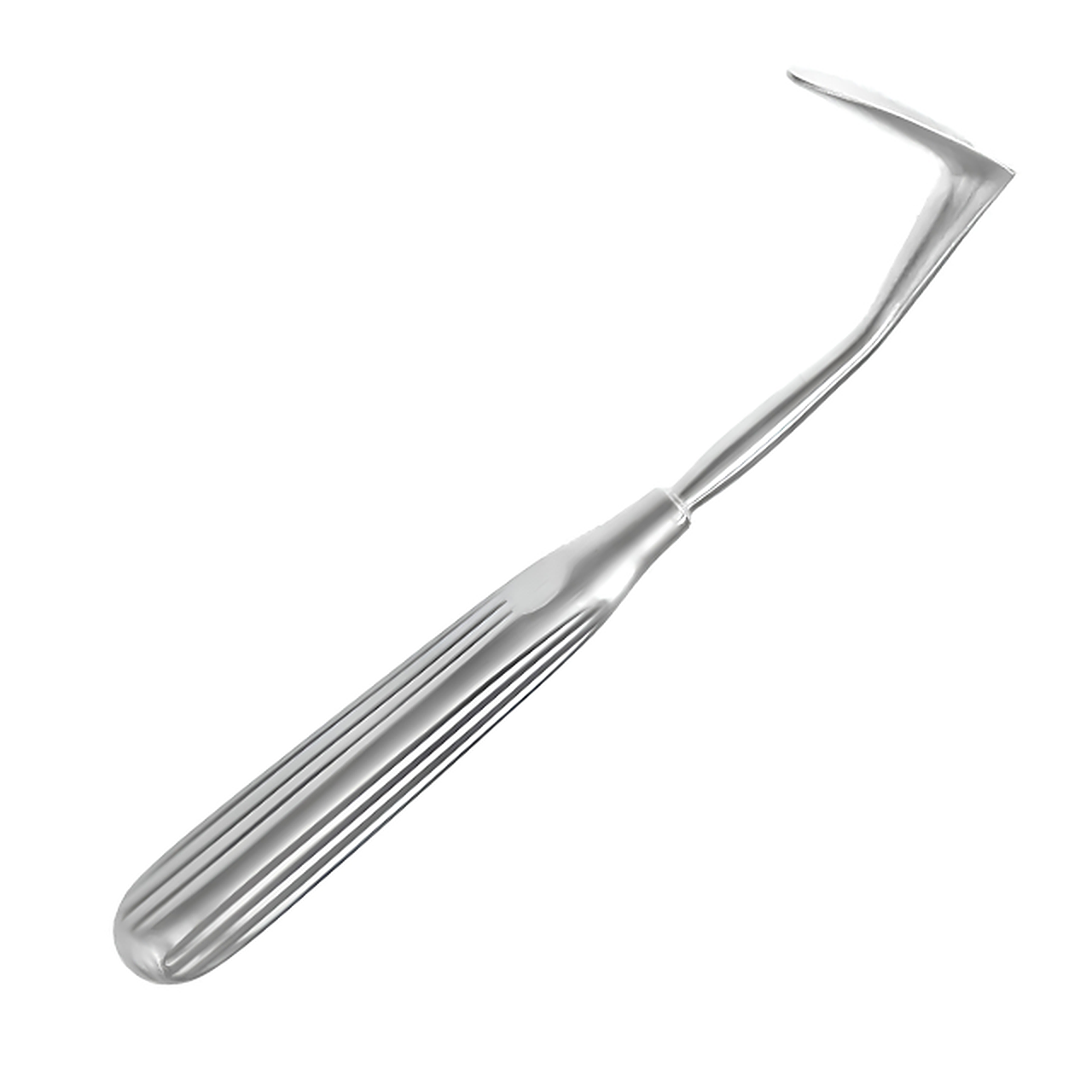
Aufricht Nasal Retractor
From $59.00
Aufricht Walter Nasal Retractor
$69.00
Need Surgical Retractors or Components?
Tell us what you need, including the product, configuration, quantity and destination country. Retractor Maker can provide availability, specifications and pricing.
Request a Quote