
Plastic Surgery Retractors
Skin Hook: Uses, Design, Sizes & Buying Guide
Author: Saad Shahid · Updated · 7 min read
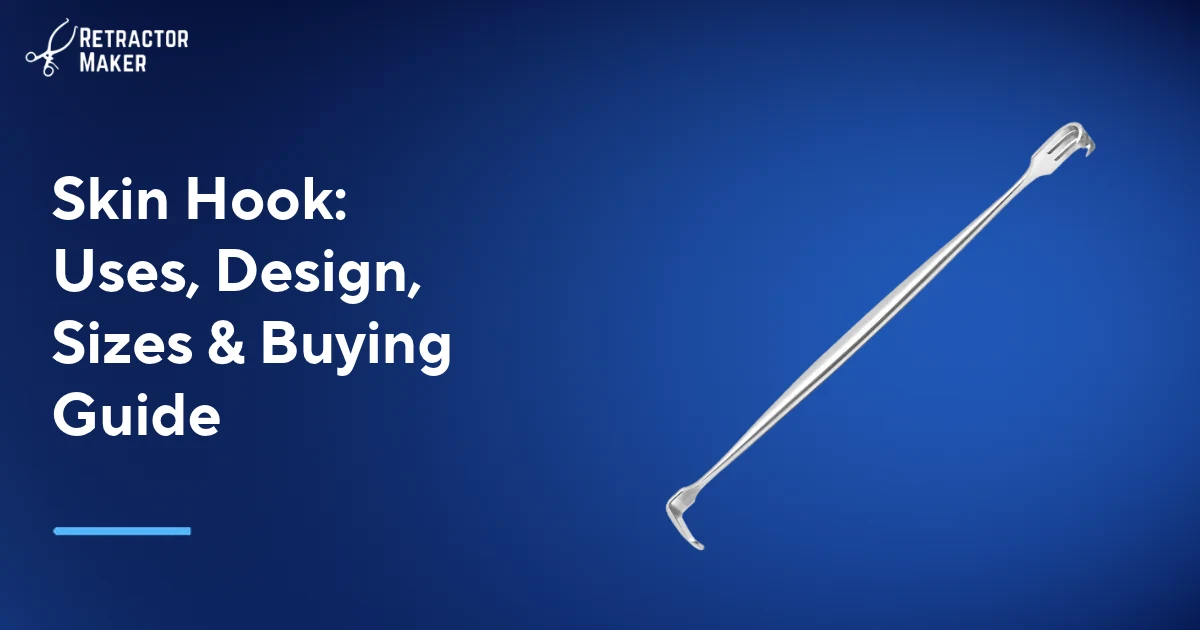
Learn how a skin hook supports surgical exposure, compare Meyerding sizes, and review positioning, sterilization, and buying options at Retractor Maker.
Retractors discussed in this guide: Meyerding Skin Hook/Retractor. Browse all surgical retractors.
A skin hook is a handheld surgical instrument used to elevate skin edges and retract superficial soft tissue so the operative area can be seen and accessed. The Meyerding Skin Hook/Retractor from Retractor Maker combines a sharp single-prong hook and a solid right-angled blade in a double-ended instrument. It is intended for plastic, reconstructive, and minor surgery. For surgeons, OR staff, and buyers, the practical questions are how each end supports exposure, which available length suits the working field, and what processing and purchasing details need confirmation before use.
What is a skin hook?
A skin hook provides localized traction at a skin edge rather than covering a broad area with a retractor blade. Its pointed end allows the surgeon to engage selected tissue and lift it away from the area being treated. Because traction is concentrated at the point of engagement, placement and applied force require careful control.
The Meyerding model also functions as a blade retractor. Its opposite end has a solid right-angled blade for soft-tissue retraction, giving the user a choice between a hooked contact point and a wider contact surface. It is handheld, not self-retaining: exposure depends on the operator maintaining and adjusting the instrument throughout the relevant part of the procedure.
What is a skin hook used for in surgery?
The Meyerding Skin Hook/Retractor is designed to elevate delicate skin edges and retract soft tissue during plastic, reconstructive, and minor surgery. Its role is exposure, not cutting or closure. By moving an edge away from the working area, it can help the surgical team see tissue boundaries and access the operative field.
- Plastic surgery: elevation of skin edges when localized exposure is needed.
- Reconstructive surgery: controlled skin-edge elevation and soft-tissue retraction.
- Minor surgery: temporary manual retraction to improve access around a superficial operative site.
- Changing exposure needs: selection of the hook or blade end according to the tissue and the surgeon's assessment.
Suitability depends on the tissue condition, operative location, and required direction of traction. A sharp hook should not be treated as a universal solution for every delicate structure. Friable tissue or an area requiring broader support may call for another retraction method. The operating surgeon determines whether the instrument offers appropriate exposure without excessive focal loading.
How is the Meyerding skin hook designed?
The Meyerding Skin Hook/Retractor has a double-ended configuration with a flat central handle. One end carries a single sharp pointed hook prong; the other carries a solid right-angled blade. The listed material is Premium Grade AISI 304/316 Stainless Steel (Non-Magnetic). These product details identify the configuration but do not replace inspection or the manufacturer's instructions for use.
Hook end and blade end
The hook end provides pointed dermal engagement for elevating skin edges. Secure engagement still depends on appropriate placement and controlled traction; no hook eliminates the possibility of slipping or tissue injury. The opposite blade measures 5.0 mm wide × 16.0 mm long and has a right-angled profile. Its contact surface supports a different retraction approach from the single-prong hook.
Handle and manual control
The flat central ergonomic handle has lateral serrations for tactile stability during manual use. Grip stability helps the operator manage orientation, but it does not determine a safe traction force. The user must continuously assess the tissue response and maintain awareness of the unused end, especially when the blade is working and the sharp hook remains exposed.
What skin hook sizes and variants are available?
The supplied Meyerding product is available in overall lengths of 16 cm and 22.86 cm (9 inches). These are length options of the same listed double-ended design, not separate hook configurations. The product information does not specify a different intended use or end profile for each length.
| Product and size | Design | Typical use | Listed price |
|---|---|---|---|
| Meyerding Skin Hook/Retractor, 16 cm | Double-ended; sharp single-prong hook and solid right-angled blade; flat handle with lateral serrations | Skin-edge elevation and soft-tissue retraction in plastic, reconstructive, and minor surgery | $44.00 |
| Meyerding Skin Hook/Retractor, 22.86 cm (9 inches) | Double-ended; sharp single-prong hook and solid right-angled blade; flat handle with lateral serrations | Skin-edge elevation and soft-tissue retraction in plastic, reconstructive, and minor surgery | $49.00 |
Choose length in relation to working distance, hand position, and clearance around the operative field. A longer instrument is not automatically better for delicate tissue, and a shorter instrument is not automatically safer. Buyers should confirm the requested length and current quotation before ordering, rather than infer additional tip options from the product name.
How should a skin hook be positioned?
Skin-hook positioning requires direct visualization and gentle, controlled traction by trained surgical personnel. The surgeon selects the contact point and working end according to the exposure needed and the tissue's ability to tolerate retraction. This overview is not a substitute for supervised surgical training or procedure-specific judgment.
- Inspect the hook, blade, and handle before use; remove damaged instruments from service.
- Orient the selected end under direct vision and keep the unused end clear of personnel and unintended tissue contact.
- Apply only the traction needed for exposure, avoiding abrupt pulling or twisting.
- Monitor for slipping, tearing, or excessive tissue tension, and adjust or release retraction when necessary.
- Coordinate repositioning and instrument transfer with the surgical team using the facility's sharps-handling practices.
When exposure changes, reassess the contact point rather than simply increasing force. If the tissue cannot tolerate localized hook engagement, the surgeon may select broader support or another retractor. Manual retraction should remain responsive to changes in the field throughout use.
How do you clean and sterilize a skin hook?
The Meyerding Skin Hook/Retractor is Supplied Non-Sterile (Fully Autoclavable). It must be appropriately cleaned and sterilized before clinical use, following the manufacturer's validated instructions and the facility's processing procedures. Individual Protective Packaging protects the supplied instrument but does not establish sterility.
Reprocessing should address visible soil, cleaning of the hook and blade surfaces, and inspection of the serrated handle. Personnel should protect themselves from the sharp tip during handling and cleaning. After cleaning, inspect for residual contamination, corrosion, deformation, or damage that could interfere with safe use, and segregate instruments requiring assessment.
No validated reprocessing cycle is included in the supplied product information. Do not infer cleaning chemistry, steam-cycle settings, drying requirements, or reuse limits from the material description alone. Obtain the applicable instructions from Retractor Maker and confirm compatibility with the sterile processing department's validated workflow before introducing the instrument into service.
How do you choose and buy from Retractor Maker?
Choose a skin hook by matching its contact design, overall length, and handling characteristics to the intended exposure. For this Meyerding model, confirm that a sharp single-prong hook paired with a right-angled blade meets the clinical team's requirements. Include sterile processing staff in the review so that processing documentation is assessed alongside clinical suitability.
Retractor Maker is a surgical retractor manufacturer and exporter in Sialkot, Pakistan, offering wholesale supply, OEM services, and worldwide shipping. The Meyerding product is listed as Brand New, with Individual Protective Packaging and a minimum order quantity of 1 Piece. Request an order-specific quotation covering the selected length, quantity, shipping destination, and any OEM requirements.
For hospital procurement, confirm current pricing, delivery arrangements, and available documentation before approval. Discuss OEM specifications directly rather than assuming that unlisted dimensions or configurations are available. A clear purchasing record should distinguish the supplied product specifications from any separately agreed requirements.
Clinical notice: This guide is for surgical teams and hospital buyers. Always follow the manufacturer's instructions for use (IFU) and your hospital's sterilization rules before clinical use.
Frequently Asked Questions
What is a skin hook used for?
A skin hook is used to elevate skin edges and retract superficial tissue for surgical exposure. The Meyerding Skin Hook/Retractor is intended for plastic, reconstructive, and minor surgery. Its sharp single-prong end provides localized engagement, while its opposite right-angled blade offers a different contact surface for soft-tissue retraction.
What is the difference between a skin hook and a retractor?
A skin hook is a type of retraction instrument that engages tissue through a hooked contact point rather than a broad blade. Retractor is the wider category. The Meyerding Skin Hook/Retractor combines both approaches in a handheld double-ended design, with a sharp single-prong hook at one end and a solid right-angled blade at the other.
What sizes does the Meyerding skin hook come in?
The Meyerding Skin Hook/Retractor is available in overall lengths of 16 cm and 22.86 cm (9 inches). Listed prices are $44.00 and $49.00 respectively. The product specification lists a 5.0 mm wide × 16.0 mm long right-angled blade and does not describe different end profiles for the two length options.
Can a skin hook be autoclaved?
The Meyerding Skin Hook/Retractor is listed as fully autoclavable and is supplied non-sterile. Cleaning and sterilization must follow the applicable manufacturer's validated instructions and facility procedures. The supplied product information does not include cycle settings, so sterile processing personnel should obtain those instructions rather than select a cycle based only on the material.
How do you use a skin hook without damaging tissue?
Careful placement, minimal necessary traction, and ongoing tissue assessment help reduce injury risk during skin-hook use. A sharp hook concentrates force at its engagement point, so avoiding abrupt pulling and excessive tension is important. Trained surgical personnel should reassess or change the retraction method if the tissue slips, tears, or cannot tolerate localized engagement.
Where can hospitals buy Meyerding skin hooks wholesale?
Hospitals can contact Retractor Maker for wholesale purchasing of the Meyerding Skin Hook/Retractor. The manufacturer and exporter is based in Sialkot, Pakistan, and offers OEM services and worldwide shipping. The listed minimum order quantity is 1 Piece; confirm the selected length, current quotation, processing documentation, and shipping arrangements before placing an order.
About the author
Saad Shahid · Sales & Marketing Manager
Saad Shahid is the Sales & Marketing Manager and founder of Retractor Maker, started in 2023 in Sialkot, Pakistan. He also works with his father at Hospitech Traders, the family surgical instrument business founded in 1989.
Related Blogs & Guide
Related Retractors
Senn Forward Retractor
$49.00
Brewster Retractor
From $159
Langenbeck Retractor-Solid Handle
$49.00
Murphy Retractor
From $44.00
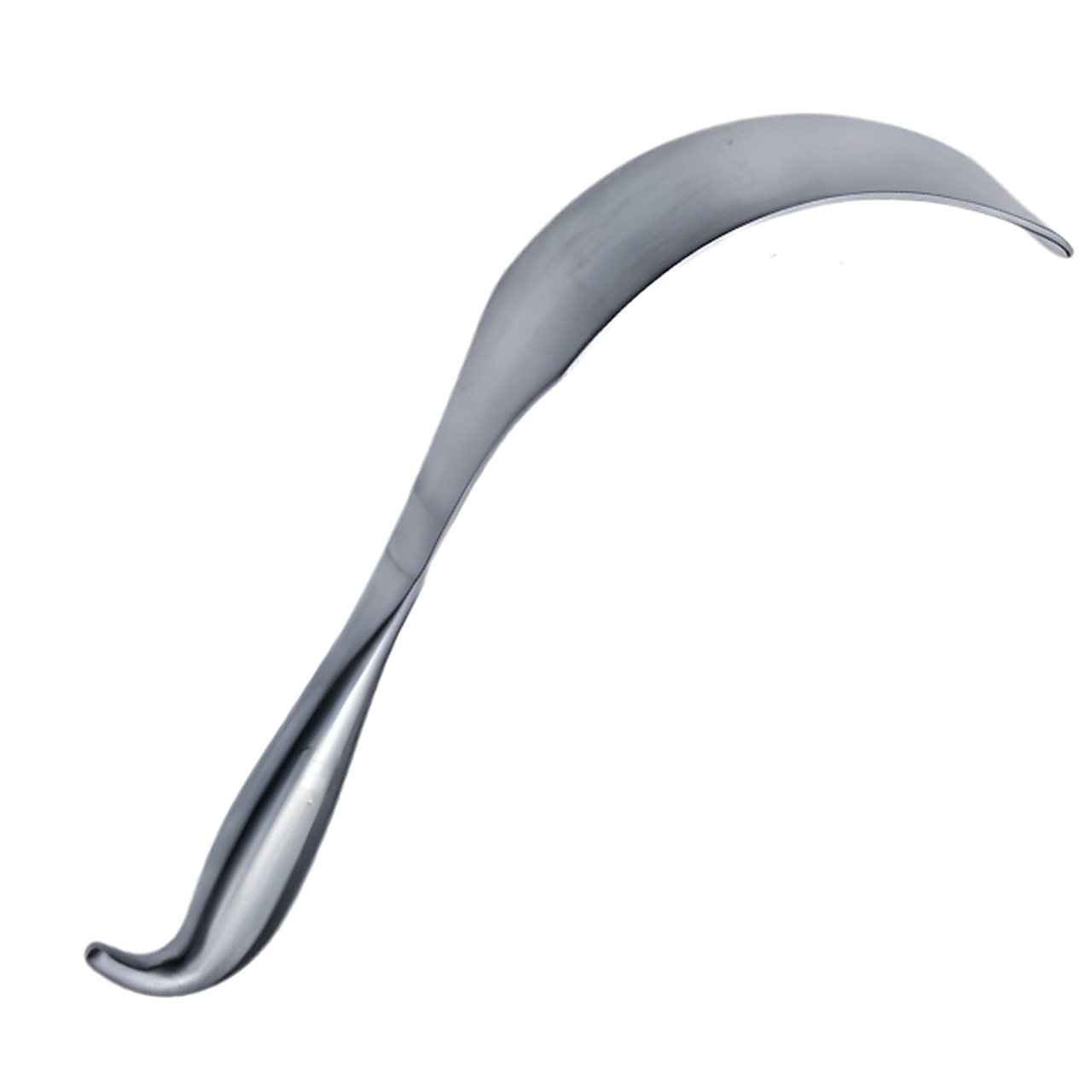
Leriche Retractor-Atraumatic Wide Blade
From $94.00
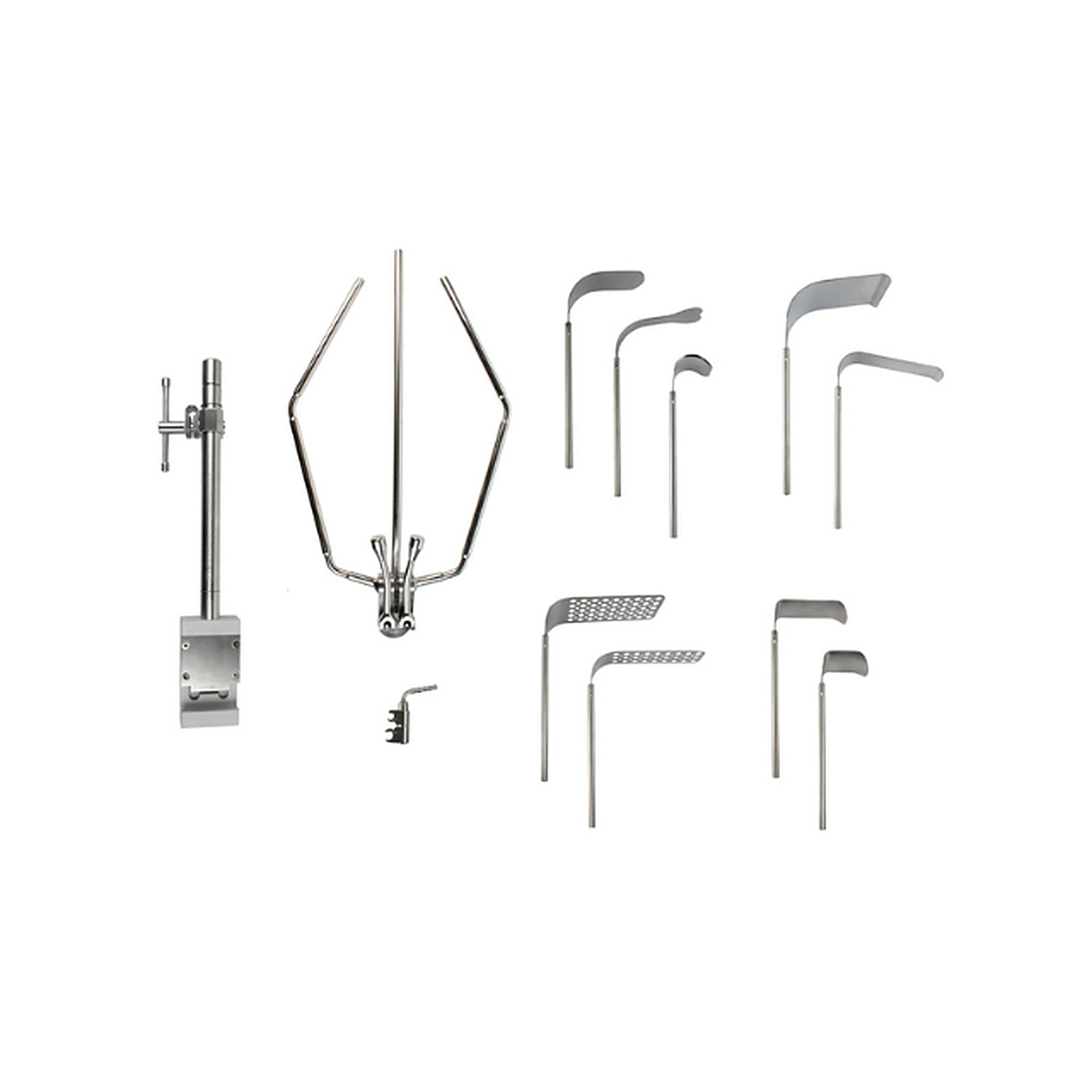
Lobster General Retractor System
$2,699Free Shipping
Need Surgical Retractors or Components?
Tell us what you need, including the product, configuration, quantity and destination country. Retractor Maker can provide availability, specifications and pricing.
Request a Quote