
Surgical Retractor Guides
What Is a Gelpi Retractor? Features, Uses, and Benefits
Author: Saad Shahid · Updated · 9 min read

A Gelpi retractor is a self-retaining instrument used to maintain localized surgical exposure. This guide explains its design, uses, sizing, benefits, limitations, safe handling, and validated reprocessing considerations.
Retractors discussed in this guide: Deep Gelpi Retractor, Deep Gelpi Self Retaining Retractor, Gelpi Crossover Retractor - Deep Angles, Wiltse-Gelpi Self-Retaining Retractor. Browse all surgical retractors.
Contents
What Is a Gelpi Retractor?
A Gelpi retractor is a specialized, self-retaining surgical tool with two opposing, outward-curving blades. An integrated ratcheting lock holds it in place. Unlike manual retractors, which need constant holding by an assistant, the Gelpi retractor keeps wound edges open and steady. It stays locked after the surgeon positions it.
Localized, moderate-depth tissue retraction provides a clear view of the surgical site. It frees the surgical team's hands for dissection, bone preparation, or instrumentation. The Gelpi surgical retractor helps establish stable exposure across many surgical fields. Reliable performance depends on proper use and clinical judgment.
How Does the Gelpi Retractor Design Work?
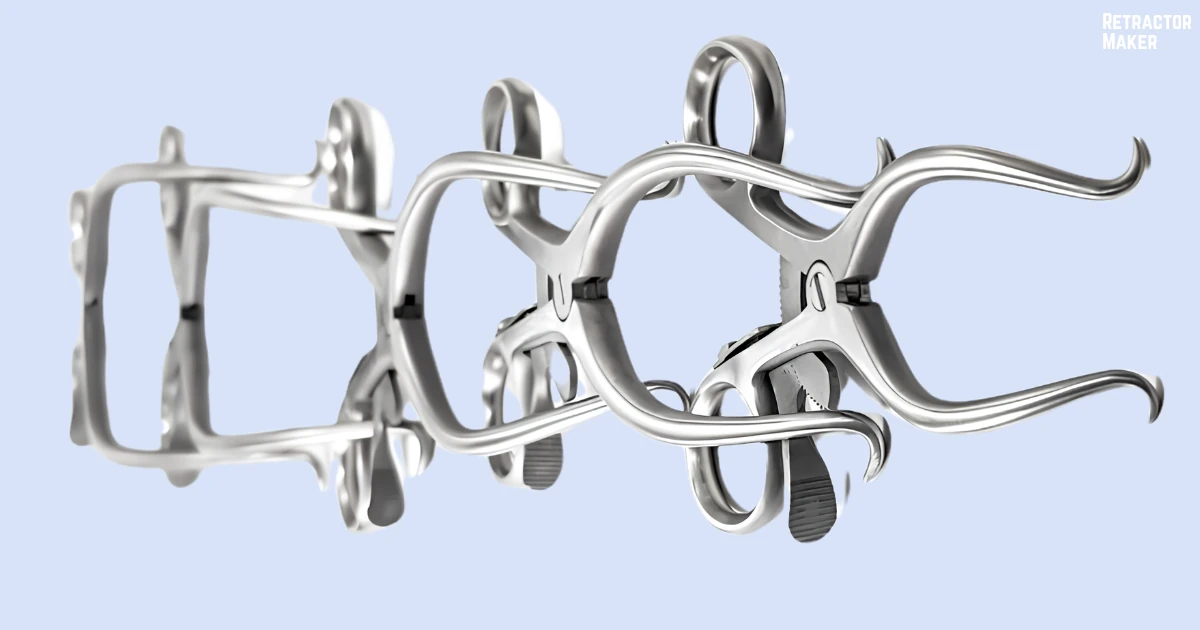
The Gelpi retractor combines a scissor-style frame with a mechanical locking interface. Dimensions, arm curves, and tip shapes vary by maker and model. The core design includes these standard features:
- Scissor-action handle and pivot: Two ring handles connect through a central hinge pin. Squeezing the rings moves the working ends outward, translating hand closure into outward tissue movement.
- Opposing distal blades: Angled, curved blades sit beneath tissue edges and hook under fascia, muscle, or skin boundaries. They spread lateral retraction forces. Sharp tips grip fibrous tissue; blunt tips reduce pressure on softer parts.
- Ratcheting locking mechanism: A graduated ratchet bar near the finger rings engages a spring-loaded pawl. Closing the handles expands the blades. Ratchet teeth lock incrementally to hold the chosen width without manual effort. A quick-release lever allows immediate disengagement.
- Spring-tensioned return: Many models use leaf springs or integral tension bars between the shanks. These support smooth, controlled spreading and provide positive mechanical feedback during adjustment.
This design provides greater mechanical consistency than a hand-held retractor. During long operations, hand-held retractors can cause assistant fatigue and may show subtle tremors or unwanted shifts. A self-retaining retractor creates a rigid, stationary perimeter around the surgical area.
Physical size, metal hardness, shank curves, and tip configurations vary greatly between manufacturers. Selection requires careful evaluation of blade profile, material integrity, and mechanical fit for the target anatomy.
Gelpi retractors come in various sizes and configurations for specific surgical applications.
What Is a Gelpi Retractor Used For?
The Gelpi retractor provides localized, direct exposure without the bulk of table-mounted systems. Common applications include orthopedic, spinal, neurosurgical, general, and vascular procedures.
How Are Gelpi Retractors Used in Orthopedic Surgery?
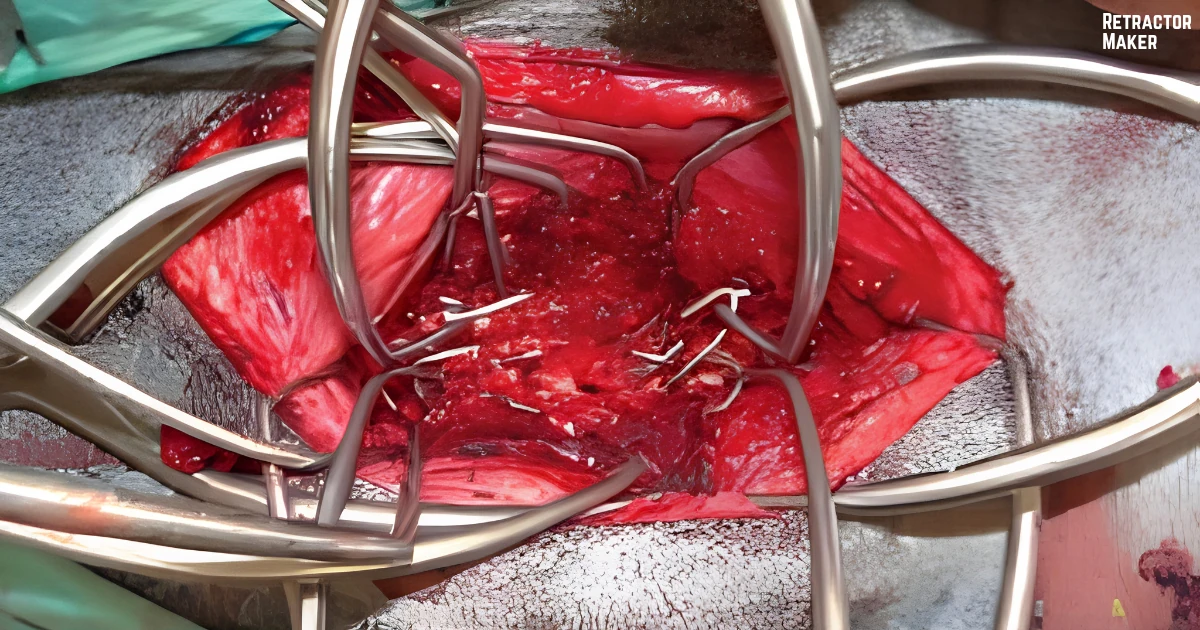
Gelpi retractors retract subcutaneous tissue, muscle bellies, and periosteal layers in extremity and joint surgery. Uses include fracture reduction, internal fixation, hardware removal, and tendon repairs. Pointed blade tips grip fibrous soft tissues to prevent slipping on wet surfaces.
Spinal and Neurosurgical Procedures
Gelpi retractors hold paraspinal muscles and superficial fascia aside during posterior spinal approaches, including microdiscectomies or laminectomies. They maintain a clear view of laminar margins and interlaminar windows. They also preserve an open corridor for scopes and micro-instruments.
General and Vascular Procedures
Surgeons use Gelpi retractors for soft-tissue excisions, inguinal hernia repairs, groin dissections, and vascular cutdowns such as femoral artery exposure. Their compact size provides lateral exposure without blocking clamps, fine sutures, or electrosurgical tips.
Clinical use depends on patient anatomy, incision depth, neurovascular structures, and the operating surgeon's preference. A Gelpi retractor is not suitable for every procedure. It does not replace large abdominal wall or deep pelvic systems.
How Is Tissue Retraction Managed During Surgery?
Self-retaining retraction requires anatomical awareness and careful mechanical execution. Both are vital for necessary visualization and protection of surrounding soft tissue:
- Initial positioning: After the incision, the surgeon or assistant compresses the handles to bring the blade tips together. The tips are inserted smoothly into the wound between opposing tissue planes.
- Controlled expansion: The operator slowly closes the handle rings to move the blades outward until anatomical exposure is sufficient. The ratchet catches incrementally for precise control of opening width.
- Tissue protection and vector management: Follow natural tissue planes to prevent tearing fascia or capillary networks. Blade tips must not press on major nerves or touch vascular bundles or viscera. Place moist sponges or cottonoids between blades and soft tissues for protection.
- Continuous intraoperative observation: Monitor tissue edges for excessive ischemia, blanching, and blade displacement. If visualization needs change, release the ratchet to redistribute the mechanical load.
What Gelpi Retractor Sizes Are Available?
Gelpi retractors are available in lengths of 90 mm to 110 mm for small incisions, intermediate sizes of 130 mm to 150 mm, and extended versions of 180 mm or longer. Extended versions support deeper musculoskeletal exposure. Different lengths and blade types match different surgical depths.
Selection depends on anatomical depth, blade curvature and angle, tip sharpness, and surgical corridor dimensions:
- Anatomical depth: Match the blade's working reach to the target depth. A blade that is too short will pull out of the incision. One that is too deep may press on vulnerable structures.
- Blade curvature and angle: Variations include standard 90-degree outward bends, extended ergonomic curves, and offset shanks. Contoured drop tips navigate deep fascial shelves without blocking sightlines.
- Tip sharpness: Sharp, tapered points secure tough, fibrous fascial layers and prevent slipping. Rounded, blunt, or ball-tipped types are better near delicate nerves, vascular sheaths, or loose tissues, where sharp points create puncture risks.
- Surgical corridor dimensions: The instrument's footprint must accommodate adjacent tools, lighting systems, and optical magnification devices.
What Are the Benefits and Limitations?
Gelpi retractors offer mechanical advantages but also have limitations. A balanced assessment of both guides proper operating room use.
Design-Related Benefits
- Autonomous field maintenance: Mechanical support holds wound margins open. This frees the first assistant for secondary retraction, suctioning, irrigation, or suture management.
- Adjustable incremental width: The multi-tooth ratchet allows precise tension changes, matching retraction to local tissue resistance.
- Minimal overhead footprint: The low-profile shank and ring design occupies less space than bulky table-mounted frames or broad-bladed manual retractors.
- Stable purchase: Contoured blade tips anchor securely beneath tissue margins and resist slipping. Patient respiration or tissue shifts cannot easily dislodge them.
Operational Limitations
- Point-load tissue stress: Force is concentrated over two narrow blade points, unlike the distribution from broad, curved spatulas. Excessive spreading can cause focal pressure necrosis, muscle fiber tearing, or bruising.
- Limited retraction geometry: A single lateral vector provides two-point opposition. The design cannot independently provide multi-directional, circumferential, or deep-cavity 3D retraction.
- Risk of deep structure injury: In deep or narrow wounds, sharp blade tips can damage blood vessels, nerves, or organ capsules when used without direct sight.
How Should Reusable Retractors Be Cleaned and Sterilized?
Reusable surgical retractors require thorough decontamination, cleaning, and sterilization between clinical uses. Follow standard reprocessing workflows to support longevity and safety:
- Point-of-use handling: Immediately after the procedure, remove gross bioburden, blood, and saline residues with a damp, lint-free wipe. Do not let bioburden dry on ratchets or hinges.
- Decontamination and manual cleaning: Open fully to expose all parts. Submerge in a neutral or enzymatic solution according to the detergent manufacturer's instructions. Remove deposits with a soft nylon brush. Avoid abrasive pads and harsh chemicals that can strip the chromium oxide layer.
- Ultrasonic and automated washing: Ultrasonic cleaning removes microscopic particles lodged inside the hinge pin assembly. Clean instruments in the fully opened, unlocked position.
- Inspection and functional testing: Rinse thoroughly with deionized water and dry. Technicians should inspect under magnification for damaged ratchet teeth, secure pawl engagement, symmetrical blade alignment, and smooth hinge movement without play. Apply surgical-grade lubricant to the box lock and ratchet.
- Packaging and terminal sterilization: Use validated wraps or containers. Leave the ratchet unlatched for steam contact and to prevent stress fractures during heating. Use moist heat steam sterilization according to the manufacturer's Instructions for Use (IFU) and local hospital infection control standards.
Reprocessing parameters depend on metallurgy, surface coating, and manufacturer validation. Facility protocols and the original IFU must always take priority.
Related Gelpi Retractor Products
A Gelpi retractor is a self-retaining surgical device that maintains exposure in localized fields. Review available sizes and configurations for our Deep Gelpi Retractor.
For another self-retaining configuration, see the Deep Gelpi Self Retaining Retractor.
For deeper angled access, review the Gelpi Crossover Retractor - Deep Angles.
Gelpi retractor: key considerations
The Gelpi retractor provides stable, self-retaining exposure in localized surgical fields. This trusted surgical device combines outward-curving blades, a responsive scissor frame, and an incremental ratchet lock. These features free operating staff from constant manual retraction.
Good procedural outcomes rely on choosing the correct instrument size. Respect tissue boundaries to prevent injury. Follow validated reprocessing workflows between uses.
Retractor Maker manufactures surgical retractor systems in Sialkot, Pakistan, and supplies them globally through B2B sales. The company focuses on dimensional precision, durable metallurgy, and structural reliability. Its wide range of surgical retractors serves hospitals, surgical centers, and distributors worldwide.
Visit our catalog for detailed product configurations and review our technical manufacturing capabilities. Contact our sales team directly for a commercial quotation.
Clinical notice: This guide is for surgical teams and hospital buyers. Always follow the manufacturer's instructions for use (IFU) and your hospital's sterilization rules before clinical use.
Frequently Asked Questions
What is a Gelpi retractor used for?
A Gelpi retractor maintains localized surgical exposure by retracting skin, muscle, and fibrous soft tissue. Its uses include orthopedics, spinal procedures, and general surgery. It also aids in vascular approaches where localized surgical exposure is needed.
Is a Gelpi retractor self-retaining?
The Gelpi retractor is a self-retaining surgical tool. Its ratcheting mechanism locks the opposing blades in place to keep tissue retracted. This maintains surgical exposure without requiring operating staff to hold the blades open continuously by hand.
How does a Gelpi retractor work?
A Gelpi retractor works by moving its curved blades outward when the finger rings are squeezed. The blades push against wound margins. An integrated ratchet and pawl automatically engage, locking the arms at the chosen width until the surgical team releases them.
What is the difference between a Gelpi retractor and a hand-held retractor?
A Gelpi retractor locks mechanically in place, while a hand-held retractor requires continuous pulling by an assistant. Manual pulling can cause fatigue or inconsistent tension. Mechanical locking maintains stable, hands-free surgical exposure throughout the procedure.
Are Gelpi retractors available in different sizes?
Gelpi retractors come in various lengths, ranging from 90 mm to over 180 mm. Blade depths also vary across configurations. These differences in length and blade depth suit superficial, intermediate, and deep surgical needs requiring localized exposure.
What types of surgery may use a Gelpi retractor?
Gelpi retractors are commonly used in orthopedic extremity procedures, spinal decompressions, and microdiscectomies. Other surgical uses include groin dissections and vascular cutdowns. They also help maintain localized surgical exposure during procedures involving the excision of soft-tissue masses.
How should a reusable Gelpi retractor be cleaned and sterilized?
A reusable Gelpi retractor should be cleaned fully open and unlocked, then steam-autoclaved according to the manufacturer’s IFU. Use enzymatic solutions and brush the ratchet teeth and box locks. Rinse with deionized water, lubricate, and sterilize by steam autoclaving.
What are the limitations of a Gelpi retractor?
A Gelpi retractor provides two-point lateral retraction but cannot provide multidirectional, circumferential, or deep-cavity retraction alone. Narrow blade points concentrate force. Excessive spreading can cause focal pressure necrosis, muscle fiber tearing, or bruising. Sharp tips can injure deep structures without direct sight.
What is the difference between sharp and blunt Gelpi retractor tips?
Sharp Gelpi retractor tips secure tough, fibrous fascial layers, while rounded, blunt, or ball-tipped versions are better near delicate nerves, vascular sheaths, or loose tissues. Sharp points help prevent slipping in fibrous tissue but create puncture risks around these more vulnerable structures.
About the author
Saad Shahid · Sales & Marketing Manager
Saad Shahid is the Sales & Marketing Manager and founder of Retractor Maker, started in 2023 in Sialkot, Pakistan. He also works with his father at Hospitech Traders, the family surgical instrument business founded in 1989.
Related Blogs & Guide


Related Retractors
Senn Forward Retractor
$49.00
Brewster Retractor
From $159
Langenbeck Retractor-Solid Handle
$49.00
Murphy Retractor
From $44.00
Leriche Retractor-Atraumatic Wide Blade
From $94.00
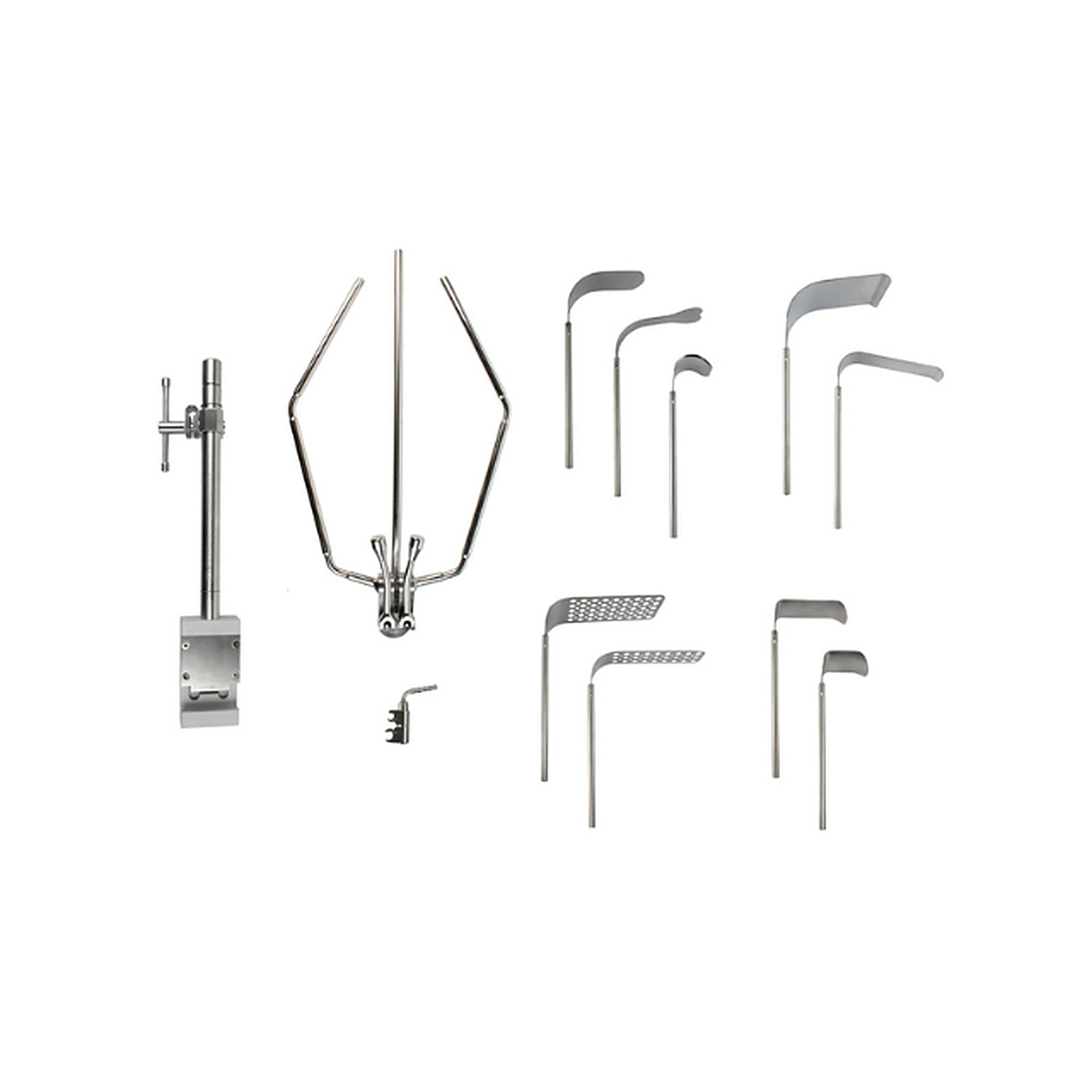
Lobster General Retractor System
$2,699Free Shipping
Need Surgical Retractors or Components?
Tell us what you need, including the product, configuration, quantity and destination country. Retractor Maker can provide availability, specifications and pricing.
Request a Quote