
ENT Retractors
Aufricht Nasal Retractor: Rhinoplasty & Septoplasty Vault Exposure
Author: Saad Shahid · Updated · 7 min read
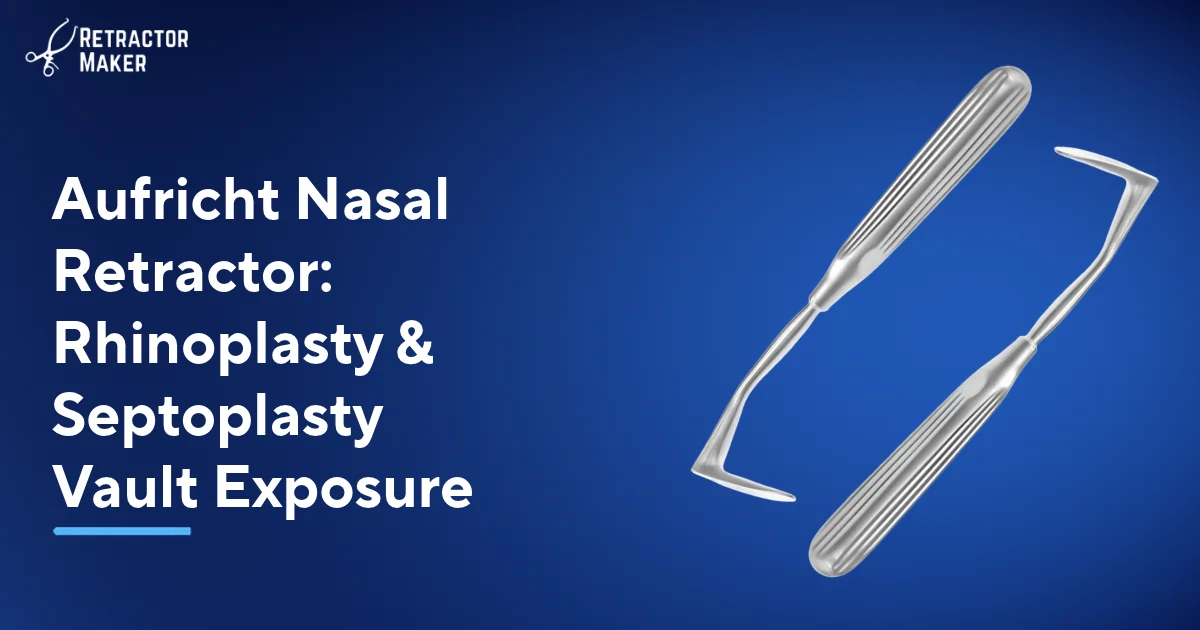
An Aufricht nasal retractor is a specialized handheld facial plastic surgery instrument featuring an anatomically curved downward blade and a contoured handle. It is primarily used in rhinoplasty and septoplasty to elevate the nasal skin-soft tissue envelope, exposing the cartilaginous and bony nasal dorsum.
Retractors discussed in this guide: Aufricht Daniel Nasal Retractor, Aufricht Nasal Retractor, Aufricht Nasal Retractor - Fiber Optic, Aufricht Walter Nasal Retractor. Browse all surgical retractors.
An Aufricht retractor is a handheld surgical device used to elevate nasal soft tissues and expose the nasal dorsum. Aesthetic and functional nose surgery requires precise visualization through minimal incisions. In open and closed rhinoplasty and complex septorhinoplasty, the cartilaginous and bony nasal dorsum must be evaluated, rasped, osteotomized, or augmented with grafts. The elastic nasal skin-soft tissue envelope (SSTE) naturally clings to the nasal skeleton, making an elevated working tent critical.
The Aufricht nasal retractor elevates nasal soft tissues and exposes the nasal vault. It is an established surgical instrument designed for aesthetic, functional, and reconstructive nasal procedures.
Contents
What Is an Aufricht Nasal Retractor?
Designed to facilitate dorsal visualization, the device takes its name from pioneering plastic surgeon Dr. Gustave Aufricht. He was an early associate of Jacques Joseph and helped establish modern rhinoplasty techniques.
The Aufricht retractor is introduced beneath the elevated soft-tissue envelope during endonasal (closed) approaches or after trans-columellar flap elevation in open rhinoplasty. Its downward-curving blade follows the slope of the nasal dorsum. This tents the skin away from the upper lateral cartilages, dorsal septum, and nasal bones.
What Blade Shapes and Handle Options Are Available?
The Aufricht nasal retractor balances optical clearance with tissue elevation through its blade geometry and handle design:
- Anatomically curved blade: Drops downward from the shank in a sweeping concave-convex curve. The arc follows the nasal bridge, allowing smooth movement over the dorsum without gouging cartilage.
- Blade surfaces: Smooth or serrated options.
- Smooth blades: Highly polished surfaces allow non-traumatic sliding beneath delicate periosteum and soft tissues.
- Lightly serrated or ribbed undersides: Some models have cross-serrations on the outer blade surface to prevent lateral slipping of the overlying skin flap.
- Fiber-optic light guide options: Modern variants offer integrated fiber-optic lighting channels or suction tubes, with cold illumination delivered beneath the elevated nasal skin flap.
- Ergonomic handle: Solid contoured finger grips, fenestrated handles, or teardrop profiles allow fine fingertip control.
How Is It Used in Rhinoplasty and Septoplasty?
The Aufricht nasal retractor is widely used for nasal exposure in facial plastic and reconstructive surgery:
- Dorsal hump reduction: Tents nasal skin during rasping, osteotome reduction, or ultrasonic piezosurgical contouring of the bony-cartilaginous hump.
- Dorsal graft placement: Provides visualization for inserting spreader grafts, diced cartilage fascia (DCF) grafts, or solid dorsal augmentations.
- Septorhinoplasty and upper lateral cartilage exposure: Holds soft tissues clear during separation of the upper lateral cartilages from the dorsal septum.
- Nasal fracture reduction: Elevates overlying soft tissues during open reduction and internal fixation of comminuted nasal bone fractures.
How Does the Aufricht Retractor Compare With Other Nasal Retractors?
| Feature | Aufricht Nasal Retractor | Converse Nasal Retractor | Cottle Nasal Speculum |
|---|---|---|---|
| Primary Target | Nasal dorsum & soft-tissue envelope | Nasal tip, alar cartilage, vestibular skin | Intranasal septum & nasal cavity |
| Blade Geometry | Long, downward-curved sweeping blade | Angled, narrow flat or curved blade | Dual parallel bivalve blades with spring |
| Working Function | Tents the skin flap over the bridge | Retracts alar margins and local soft tissue | Dilates the nostrils and vestibule |
| Operation | Handheld manual elevation | Handheld manual retraction | Handheld spring-action speculum |
How Should Cleaning, Inspection, and Reprocessing Be Performed?
- Point-of-use cleaning: Immediately after use, remove blood, bone dust, and cartilage fragments with sterile water-dampened wipes.
- Cleaning: Submerge in neutral-pH enzymatic cleaner and use soft nylon brushes. Clean fiber bundles and light connection posts on fiber-optic models according to specialized manufacturer IFUs.
- Inspection: Examine the distal blade tip under magnification for burrs or scratches that could lacerate nasal skin flaps. Check fiber-optic cables for broken fibers.
- Sterilization: Autoclave in dedicated plastic surgery micro-instrument trays according to the manufacturer's validated IFU and hospital infection prevention protocols.
What Should Buyers Specify for Sourcing and OEM Orders?
Facial plastic clinics, hospital purchasing teams, and distributors should specify blade lengths, illumination requirements, and OEM customization needs:
- Blade length options: Sets should include standard blades of approx. 45 mm to 50 mm and extended blades of approx. 60 mm+ to match varying nasal proportions.
- Fiber-optic integration: Specify whether standard non-illuminated or fiber-optic illuminated models are required.
- OEM customization: Retractor Maker manufactures Aufricht nasal retractors in Sialkot, Pakistan, with custom blade curvatures, specialized non-glare satin finishes, and private-label laser marking.
Aufricht Nasal Retractor Blade Measurements and Sizes
Use model-specific measurements for tray lists and purchase specifications. Overall length differs from working blade length. If a blade dimension is unavailable, request confirmation before ordering. Do not estimate it from photographs or another retractor model.
| Model | Overall Length | Blade Size | Notes |
|---|---|---|---|
| Aufricht Daniel Nasal Retractor | 11 cm (approx. 4.3 inches) | 50 mm long × 10 mm wide | Smooth blade; single-end configuration |
| Aufricht Nasal Retractor | 6″ (15.2 cm) | 8 mm wide; length: On request | Flat solid blade with curved tip; standard non-suction or integrated suction tube |
| Aufricht Walter Nasal Retractor | 13.5 cm (approx. 5.3 inches) | 42 mm long × 7 mm wide on both ends | Double-ended configuration |
| Aufricht Nasal Retractor - Fiber Optic | 6 ¼″ (15.9 cm) | 7.0 mm wide; length: On request | Concave blade; built-in fiber-optic light bundle |
How Should Surgical Assistants Handle Retraction?
- Maintain a steady, relaxed grip that permits small adjustments. Support your wrist where practical without leaning on the patient or surgical field.
- Follow the surgeon's requested traction direction. Do not twist the retractor or use the incision edge as a lever when changing angles.
- Apply only enough traction for the requested view. If exposure remains inadequate, ask the surgeon to reassess placement rather than pulling harder.
- Agree on pressure-release intervals with the surgeon based on tissue condition and procedural needs. Coordinate releases to avoid interrupting active dissection.
- Watch tissue at the blade and incision edge for blanching, excessive stretching, pinching, or slipping. Report changes promptly and adjust as directed.
- Notify the surgeon before repositioning, changing hands, or handing over retraction. Request relief if fatigue prevents a steady hold on the retractor.
- Pass the retractor handle-first, keeping the working end controlled and visible. For double-ended models, identify the intended working end and confirm the recipient's grip before releasing.
Which Autoclave Cycle Instructions Should Be Followed?
Select a validated steam sterilization cycle for the specific retractor, packaging, and load configuration. Complete cleaning, rinsing, and inspection first; sterilization does not replace cleaning. Confirm separate processing requirements for suction channels and illumination components. Check whether connected accessories must be removed before processing.
| Cycle | Temperature | Exposure | Drying |
|---|---|---|---|
| Pre-vacuum | 132°C/270°F | 4 min | 20–30 min |
| Pre-vacuum | 134°C/273°F | 3 min; some regions: 18 min for prion protocols | Per validated IFU |
| Gravity displacement | 121°C/250°F | 30 min | 15–30 min |
The validated instructions for use (IFU), sterilizer manufacturer's instructions, and hospital policy take precedence over typical reference values. This includes any applicable prion protocol. Reference values are not model-specific validated processing instructions. Retractors are supplied non-sterile and must be sterilized before first use.
Clinical notice: This guide is for surgical teams and hospital buyers. Always follow the manufacturer's instructions for use (IFU) and your hospital's sterilization rules before clinical use.
Frequently Asked Questions
What is an Aufricht nasal retractor?
An Aufricht nasal retractor is a specialized handheld surgical instrument with a curved downward blade for elevating nasal soft tissues during rhinoplasty and septoplasty. Its anatomically curved blade and contoured handle support exposure of the cartilaginous and bony nasal dorsum.
What is the primary function of an Aufricht retractor?
The Aufricht retractor tents the skin-soft tissue envelope (SSTE) away from the nasal dorsum to expose the nasal bones and upper lateral cartilages for surgical modification. Its downward-curving blade follows the dorsal slope and holds the skin away from the underlying nasal structures.
How does an Aufricht retractor differ from a Converse retractor?
An Aufricht retractor has a longer curved blade designed for the nasal dorsum, while a Converse retractor has a shorter angled blade suited to the alar cartilage and nasal tip. The distinction is in both blade geometry and the nasal area each design is intended to expose.
Are Aufricht retractors available with light guides?
Yes. Many modern Aufricht retractors feature integrated fiber-optic light cables to illuminate the deep nasal cavity.
Can an Aufricht retractor be autoclaved?
Yes. Standard surgical stainless-steel Aufricht retractors are fully autoclavable; fiber-optic models must be processed according to validated illumination-instrument IFUs.
What blade lengths are available for an Aufricht retractor?
They are typically available in blade lengths ranging from 40 mm to 60 mm to accommodate varying patient nasal bridges.
How should an Aufricht nasal retractor be cleaned and inspected?
An Aufricht nasal retractor should be cleaned immediately after use and inspected under magnification. Remove blood, bone dust, and cartilage fragments with sterile water-dampened wipes. Submerge the retractor in neutral-pH enzymatic cleaner and clean with soft nylon brushes. Examine the distal blade tip for burrs or scratches. For illuminated models, follow specialized manufacturer instructions for cleaning fiber bundles and light connection posts.
How do smooth and serrated Aufricht retractor blades differ?
Smooth Aufricht retractor blades allow non-traumatic sliding beneath delicate periosteum and soft tissues. Lightly serrated or ribbed surfaces help prevent lateral slipping of the overlying skin flap. The curved blade follows the nasal bridge and rides smoothly over the dorsum without gouging cartilage.
What should assistants do if Aufricht retractor exposure is inadequate?
If exposure with an Aufricht retractor is inadequate, surgical assistants should ask the surgeon to reassess placement rather than pull harder. Assistants should follow the requested traction direction and avoid twisting or levering against the incision edge. They should promptly report blanching, excessive stretching, pinching, or slipping so adjustments can be made as directed.
About the author
Saad Shahid · Sales & Marketing Manager
Saad Shahid is the Sales & Marketing Manager and founder of Retractor Maker, started in 2023 in Sialkot, Pakistan. He also works with his father at Hospitech Traders, the family surgical instrument business founded in 1989.
Related Blogs & Guide
Related Retractors
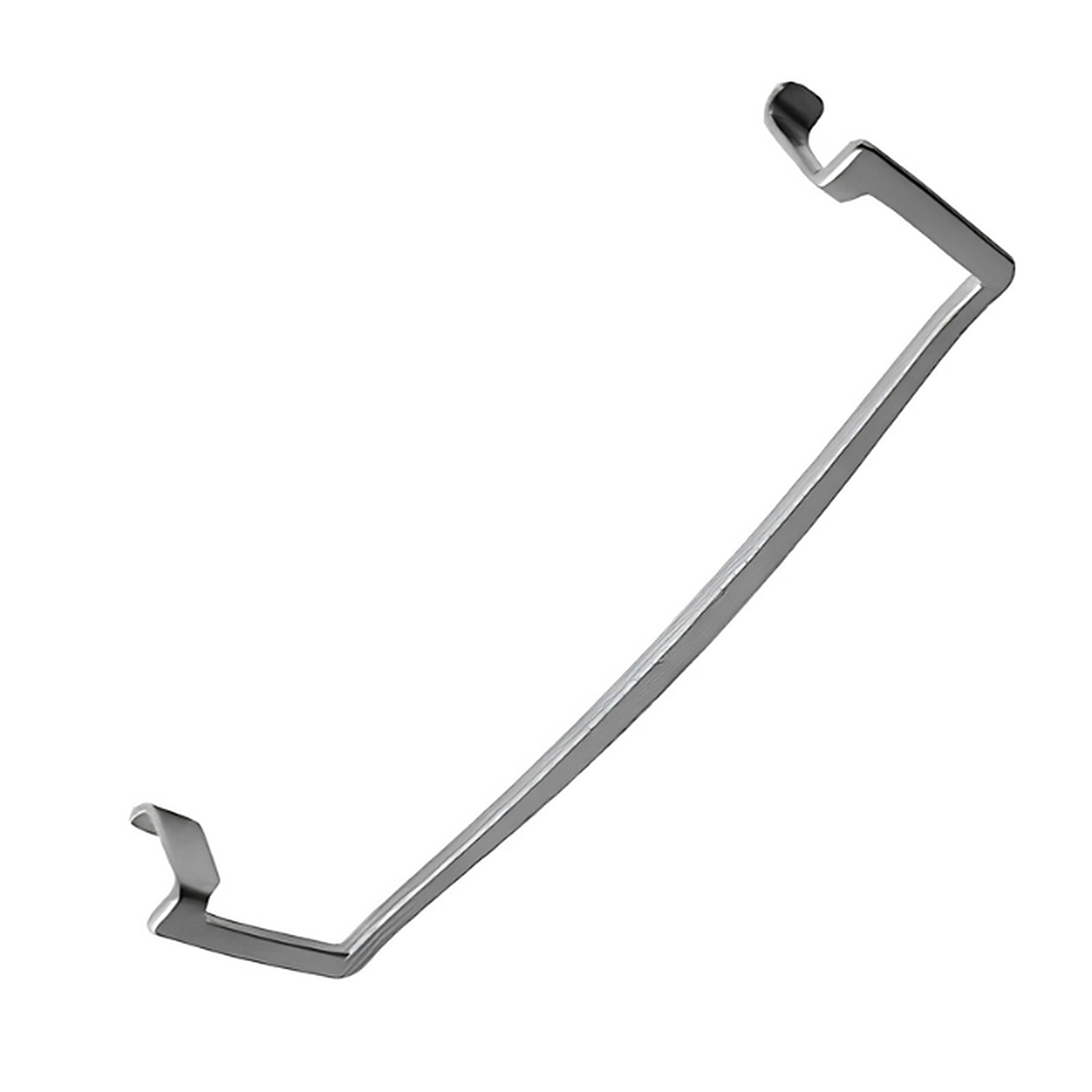
Senn Forward Retractor
$49.00
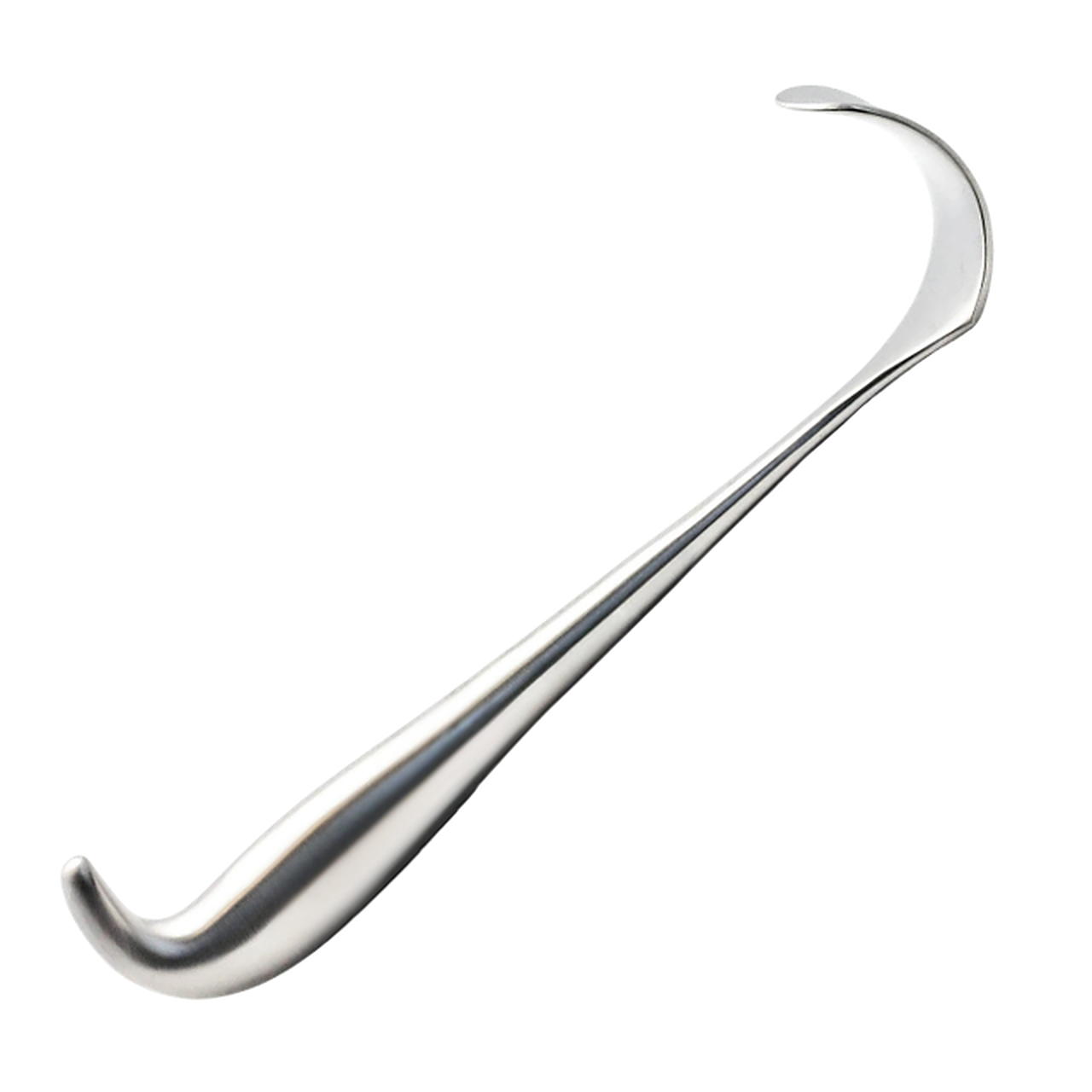
Brewster Retractor
From $159
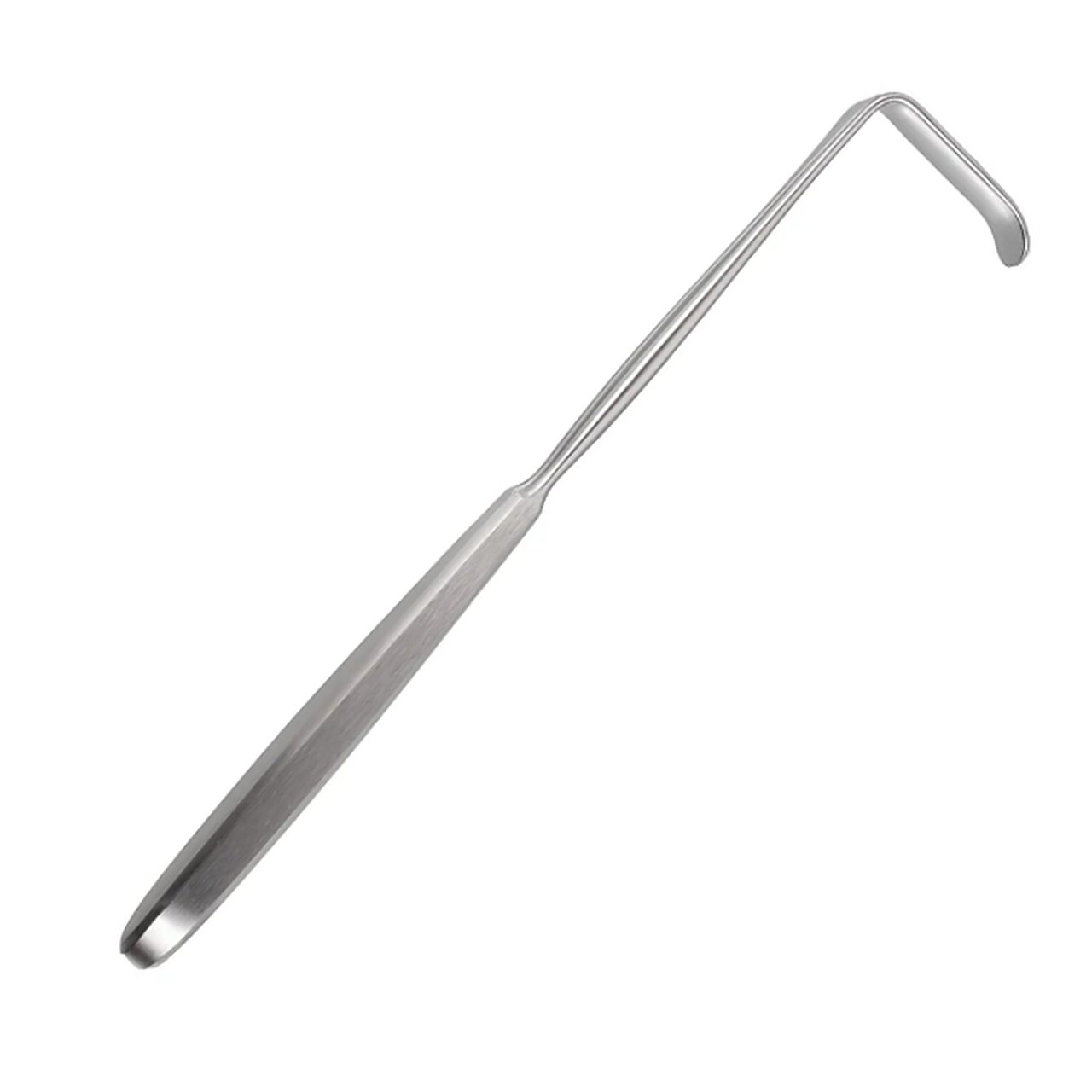
Langenbeck Retractor-Solid Handle
$49.00
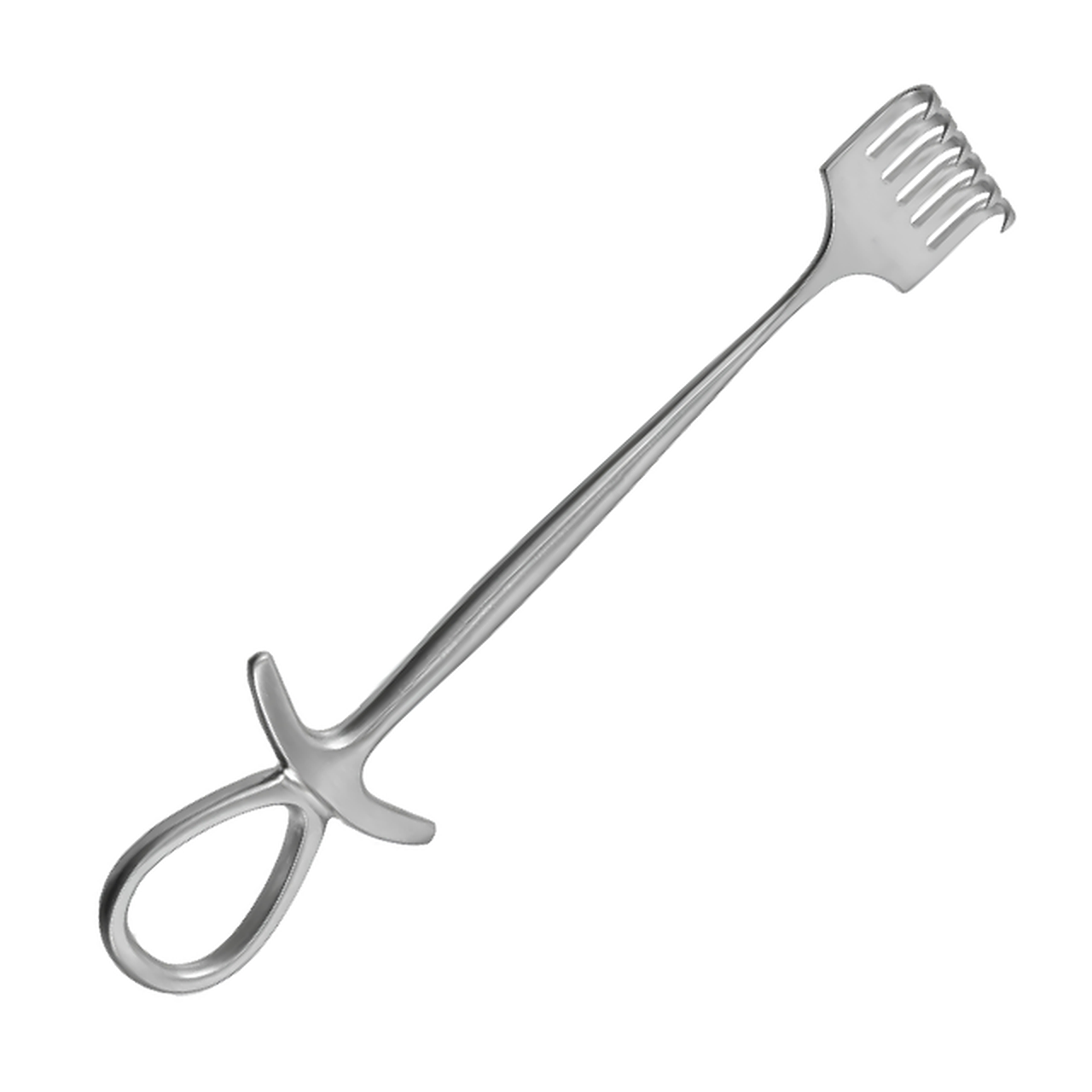
Murphy Retractor
From $44.00
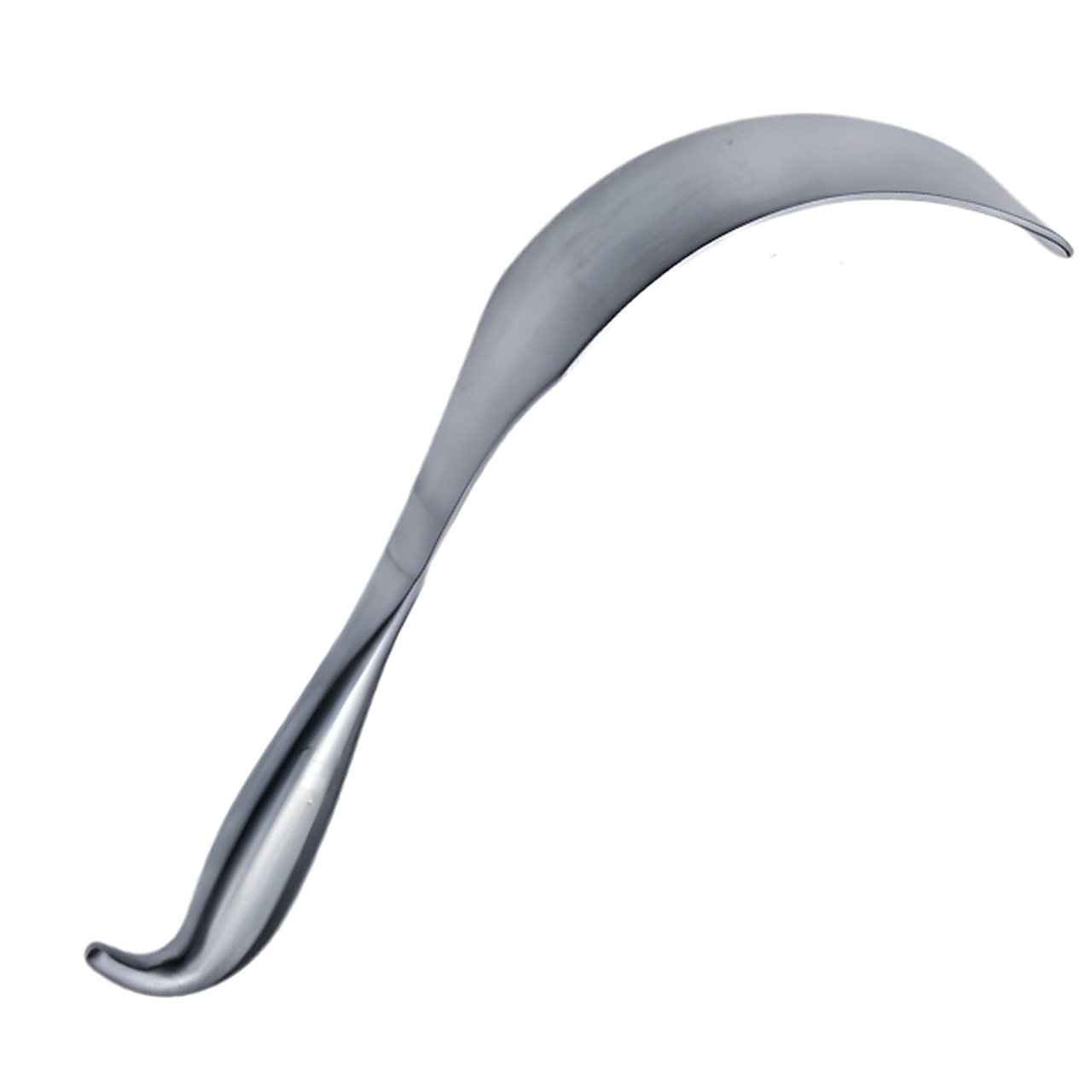
Leriche Retractor-Atraumatic Wide Blade
From $94.00
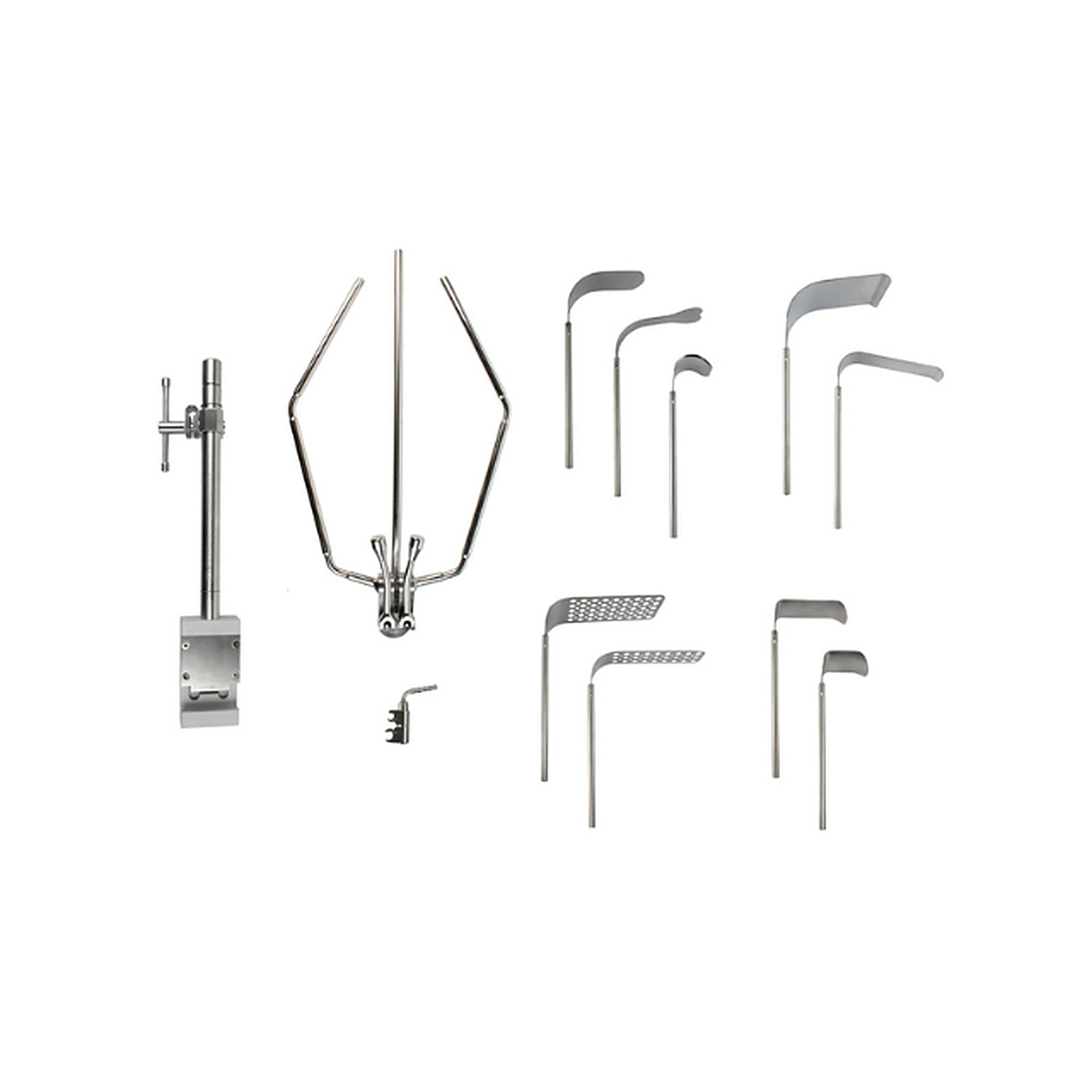
Lobster General Retractor System
$2,699Free Shipping
Need Surgical Retractors or Components?
Tell us what you need, including the product, configuration, quantity and destination country. Retractor Maker can provide availability, specifications and pricing.
Request a Quote