
Orthopedic & Spine Retractors
Bennett Tibia Retractor: Proximal Tibia & Knee Exposure
Author: Saad Shahid · Updated · 6 min read
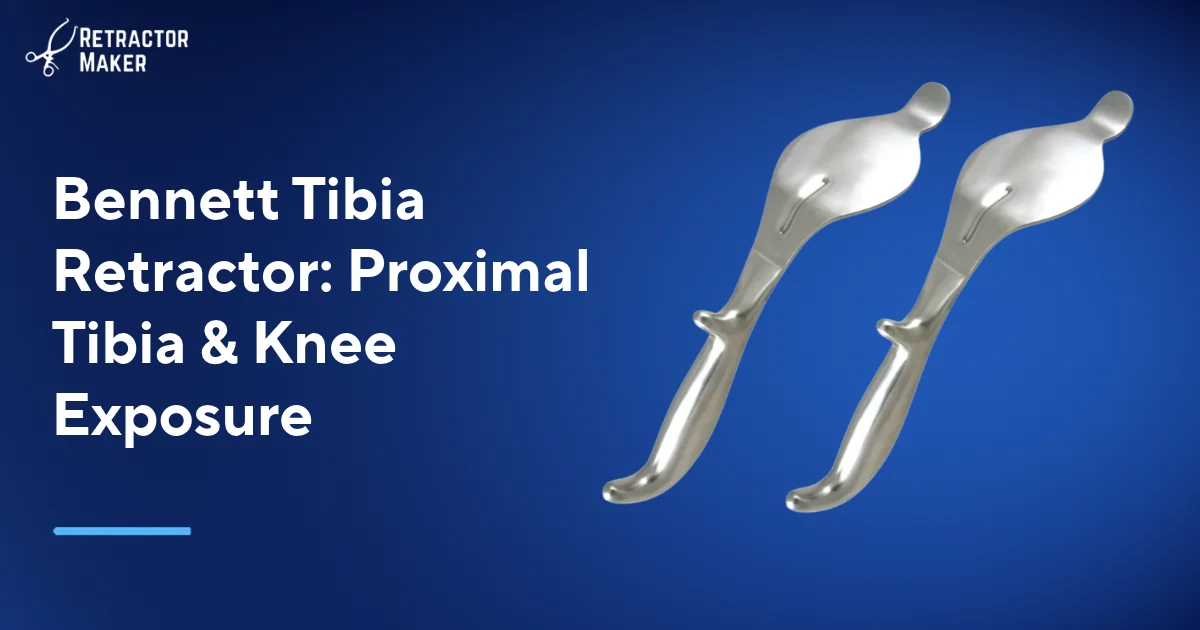
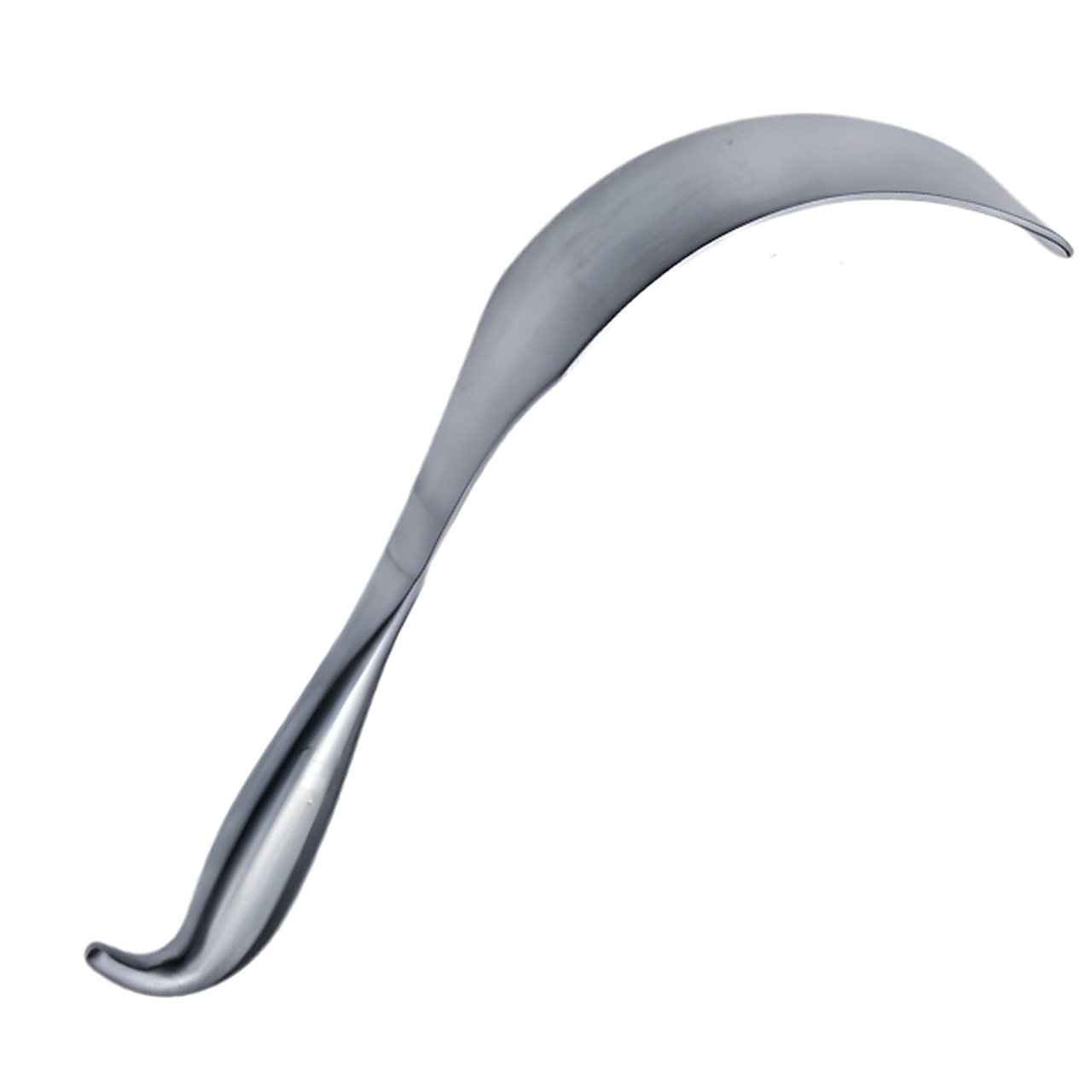
A Bennett tibia retractor is a specialized handheld orthopedic instrument featuring a broad, flared curved blade with a hooked distal tip. Designed to wrap partially around bone shafts, it is primarily used in knee arthroplasty and proximal tibial surgery to retract muscle bellies and ligamentous structures while providing wide osseous exposure.
Retractors discussed in this guide: Bennett Tibia Retractor. Browse all surgical retractors.
The Bennett tibia retractor, often categorized simply as a Bennett retractor, is a classic orthopedic bone and tissue retractor designed to expose the proximal tibia and knee joint capsule. Complex orthopedic interventions require broad soft-tissue retraction around the cylindrical contours of long bones. Standard flat-blade retractors can apply uneven edge pressure or slip off curved osseous cortices. The curved design addresses these anatomical demands.
Contents
What Is a Bennett Tibia Retractor?
The Bennett retractor provides stable, non-traumatic retraction of dense soft-tissue envelopes away from large cylindrical bones, notably the tibia and femur. It was introduced to orthopedic surgery for this purpose. Its broad, fan-shaped or flared blade curves smoothly along the working axis to match the convex geometry of skeletal structures.
The Bennett retractor uses a curved distal tongue or lip rather than sharp points that bite into bone. The lip hooks behind the far cortex or collateral soft-tissue margins. Broad surface contact elevates muscular structures and maintains a wide, clear operative view.
How Does the Blade Design Support Retraction?
The Bennett tibia retractor combines a flared blade, curved contour, distal lip, and rigid handle to manage the mechanical forces of major joint and long-bone procedures.
- Flared blade geometry: The blade widens considerably from the shank toward the distal working end, preventing muscle from bulging around the blade margins into the working field.
- Curved blade contour: A continuous concave radius follows the proximal tibia and distal femur, sitting flush against the cortex without high focal point-loads.
- Distal lip / beak: The inward-curving tip anchors behind bony ridges or fibrous tissue planes to resist involuntary slippage.
- Ergonomic handle: An elongated, rigid, forged handle lets the assistant maintain firm leverage outside the surgeon’s primary working and illumination axis.
Where Is It Used in Tibial and Knee Surgery?
The Bennett tibia retractor is used in reconstructive and trauma procedures, including knee arthroplasty, tibial osteotomy, tibial plateau fracture fixation, and femoral shaft exposure.
- Total Knee Arthroplasty (TKA): Retracts collateral ligaments, the patellar tendon, and posterior soft tissues during tibial resection, proximal tibial plateau preparation, and trial component placement.
- High Tibial Osteotomy (HTO): Stabilizes soft tissues around the proximal medial or lateral tibial cortex during cutting-guide and fixation-plate positioning.
- Tibial Plateau Fracture Fixation: Retracts anterior and lateral muscle compartments from the proximal tibia during open reduction and internal fixation (ORIF), exposing comminuted fracture margins.
- Femoral Shaft Exposure: Retracts large quadriceps muscle bellies from the femoral shaft during intramedullary nailing or plate fixation in orthopedic trauma.
Bennett Tibia Retractor vs. Hohmann Retractor
While both are standard orthopedic retractors, their designs serve different tissue-handling roles:
| Feature | Bennett Tibia Retractor | Hohmann Retractor |
|---|---|---|
| Blade Width | Broad, fan-shaped flared blade | Narrow to intermediate blade body |
| Operating Mechanism | Surface cradling & broad tissue elevation | Focal bone levering using cortical fulcrum |
| Tip Profile | Smooth, broad curved lip or tongue | Narrow pointed or blunt beak |
| Tissue Interaction | Distributes force over wide muscle masses | Concentrates leverage at a discrete cortical point |
| Primary Indication | Wide ligamentous and muscular retraction around bone | Direct periosteal levering and joint margin exposure |
What Should Buyers Check When Selecting Retractors?
Procurement departments and orthopedic surgical teams should assess blade width, shank curvature, and edge radiusing when selecting Bennett retractors.
- Blade width options: Bennett retractors typically come in standard broad widths of approx. 40 mm to 50 mm and narrower widths of approx. 25 mm to 30 mm for smaller anatomies or minimally invasive knee approaches.
- Shank curvature: Some models have an angled or offset shank to clear surgical cutting blocks, navigation arrays, or robotic arms used in modern joint arthroplasty.
- Edge radiusing: Verify that all lateral margins of the flared blade are polished and rounded to avoid lacerating collateral ligaments or neurovascular structures.
How Should Retractors Be Inspected and Reprocessed?
- Point-of-use handling: Remove bone marrow, blood, and reaming debris from curved blade surfaces immediately after use.
- Cleaning and ultrasonic decontamination: Submerge in neutral-pH enzymatic detergent, brush all blade contours with soft nylon brushes, and use ultrasonic cleaning to remove microscopic particulate matter.
- Visual inspection: Check the curved tip for burrs or deformation. Inspect the shaft-handle transition for structural alignment and surface integrity.
- Sterilization: Autoclave with validated moist heat steam sterilization protocols, following the manufacturer’s validated IFU and hospital infection control guidelines.
What OEM and Custom Manufacturing Options Are Available?
Retractor Maker produces Bennett-style retractors with custom blade widths, specialized offset handle angles, non-reflective satin finishes, and private-label laser marking. Retractor Maker partners with orthopedic implant brands, distributors, and surgical centers to tailor these options to client specifications.
Clinical notice: This guide is for surgical teams and hospital buyers. Always follow the manufacturer's instructions for use (IFU) and your hospital's sterilization rules before clinical use.
Frequently Asked Questions
What is a Bennett tibia retractor?
A Bennett tibia retractor is an orthopedic surgical instrument with a broad, flared, curved blade for retracting muscle and soft tissue around the proximal tibia and long bones. Its hooked distal tip wraps partially around bone shafts to support wide osseous exposure.
What is the main use of a Bennett retractor?
A Bennett retractor is primarily used in knee arthroplasty, tibial osteotomies, and fracture fixation to elevate muscular and ligamentous tissues away from the tibial cortex. Its broad, curved blade provides soft-tissue retraction and wide exposure around the proximal tibia.
How does a Bennett retractor differ from a Hohmann retractor?
A Bennett retractor has a broad, flared blade that cradles bone and distributes soft-tissue pressure widely, while a Hohmann retractor has a narrower blade with a beak for localized levering. These design differences give the two orthopedic retractors different tissue-handling roles.
Is a Bennett retractor handheld or self-retaining?
It is a handheld instrument that requires continuous manual holding by an operating assistant.
What sizes do Bennett retractors come in?
Bennett retractors commonly come in standard broad and narrow blade variations to accommodate different patient anatomies and incision sizes. Broad configurations are approx. 40 mm to 50 mm wide. Narrower profiles are approx. 25 mm to 30 mm wide for smaller anatomies or minimally invasive knee approaches.
Can a Bennett retractor be autoclaved?
Reusable Bennett retractors constructed from Premium Grade AISI 304/316 Stainless Steel (Non-Magnetic) are fully compatible with standard steam autoclave sterilization. Use validated moist heat steam sterilization protocols in accordance with the manufacturer’s validated IFU and hospital infection control guidelines.
How should a Bennett tibia retractor be cleaned after use?
A Bennett tibia retractor should have bone marrow, blood, and reaming debris removed from its curved blade surfaces immediately after use. For cleaning and decontamination, submerge in neutral-pH enzymatic detergent. Brush all blade contours with soft nylon brushes, then use ultrasonic cleaning to remove microscopic particulate matter.
What should be inspected on a Bennett tibia retractor?
A Bennett tibia retractor should be checked for burrs or deformation at the curved tip and for structural alignment and surface integrity at the shaft-handle transition. Also verify that the flared blade’s lateral margins are polished and rounded to avoid lacerating collateral ligaments or neurovascular structures.
Why do some Bennett tibia retractors have an offset shank?
Some Bennett tibia retractors have an angled or offset shank to clear cutting blocks, navigation arrays, or robotic arms used in joint arthroplasty. Shank curvature is an instrument-selection factor. Specialized offset handle angles are also available among the custom manufacturing options.
About the author
Saad Shahid · Sales & Marketing Manager
Saad Shahid is the Sales & Marketing Manager and founder of Retractor Maker, started in 2023 in Sialkot, Pakistan. He also works with his father at Hospitech Traders, the family surgical instrument business founded in 1989.
Related Blogs & Guide
Related Retractors
Senn Forward Retractor
$49.00
Brewster Retractor
From $159
Langenbeck Retractor-Solid Handle
$49.00
Murphy Retractor
From $44.00
Leriche Retractor-Atraumatic Wide Blade
From $94.00
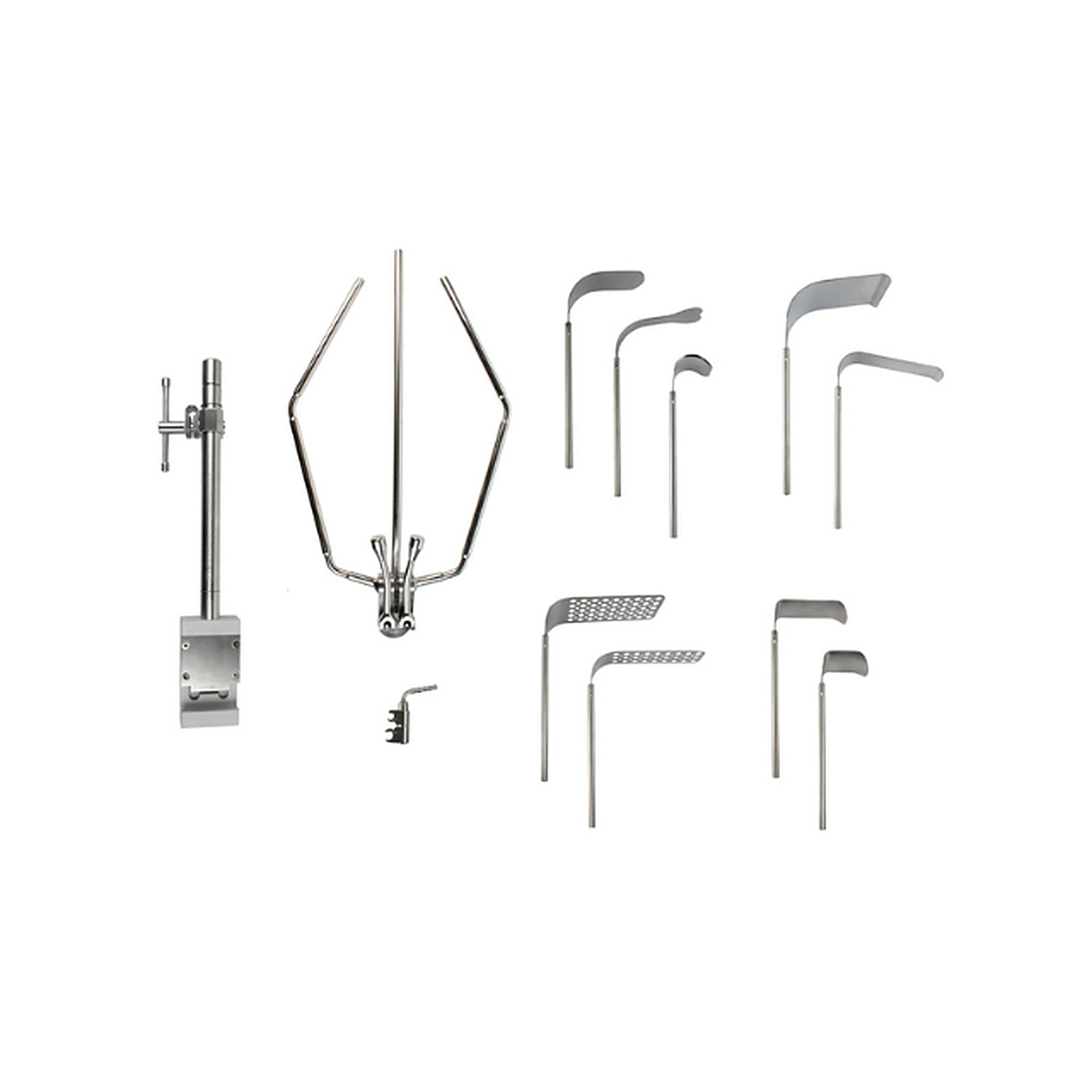
Lobster General Retractor System
$2,699Free Shipping
Need Surgical Retractors or Components?
Tell us what you need, including the product, configuration, quantity and destination country. Retractor Maker can provide availability, specifications and pricing.
Request a Quote