
Orthopedic & Spine Retractors
Fukuda Shoulder Retractor: Glenoid Exposure in Shoulder Arthroplasty
Author: Saad Shahid · Updated · 6 min read
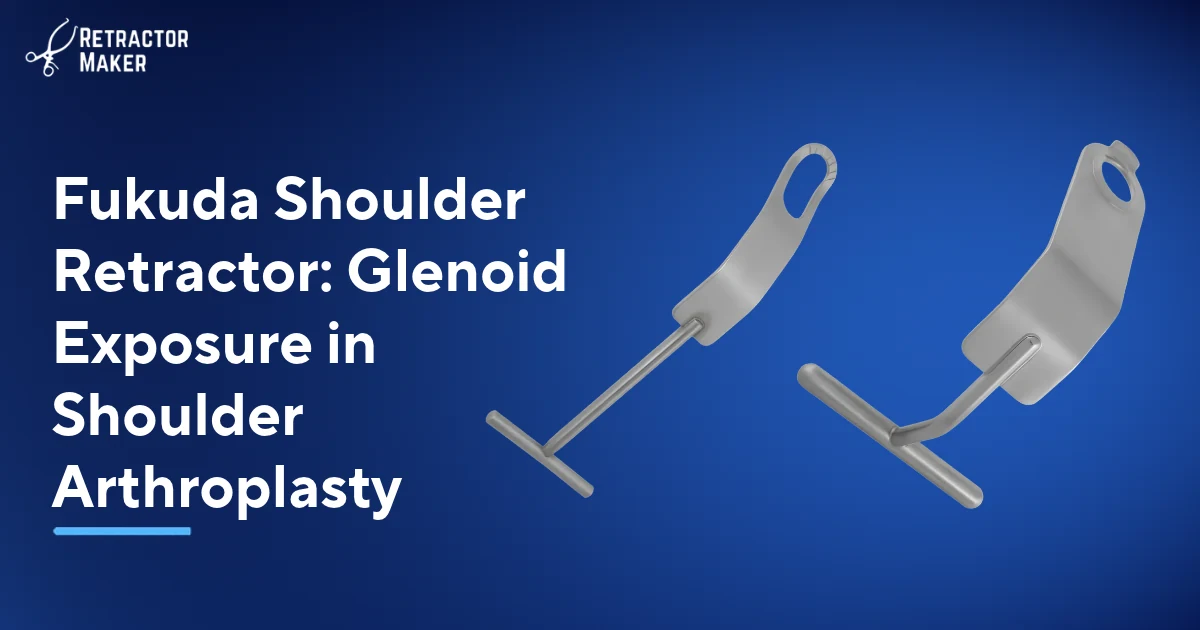
A Fukuda shoulder retractor is an orthopedic surgical instrument characterized by a fenestrated (ring-shaped) curved blade and an ergonomic handle. It is designed to cradle the proximal humerus and retract it posteriorly, providing an unobstructed view of the glenoid vault during shoulder arthroplasty and reconstruction.
Retractors discussed in this guide: Fukuda Kujat Style Retractor, Fukuda Style Retractors, Modified Fukuda Type Retractors. Browse all surgical retractors.
A shoulder retractor provides exposure during shoulder arthroplasty and complex glenohumeral reconstruction in a deep, anatomically constrained space. These procedures require precise exposure. During total shoulder arthroplasty (TSA) or reverse total shoulder arthroplasty (rTSA), a primary technical challenge is retracting the proximal humerus posteriorly for direct, perpendicular visualization of the glenoid articular surface. Standard flat retractors can slip off the humeral head or cause focal cartilage or bone damage.
The Fukuda shoulder retractor maintains posterior humeral displacement to optimize glenoid exposure during open shoulder surgery. This orthopedic instrument was developed specifically for that purpose.
Contents
What Is a Fukuda Shoulder Retractor?
The design addresses the difficult exposure geometry of the glenohumeral joint and is named after Japanese orthopedic surgeon Dr. H. Fukuda. Following an anterior deltopectoral approach and capsular release, the proximal humerus must move posteriorly and laterally away from the glenoid neck. This allows the glenoid face to be reamed, drilled, and fitted with an implant.
The Fukuda retractor uses a distinctive ring-shaped (fenestrated) curved working end to achieve this displacement. The circular opening cradles the humeral head or metaphysis. It stabilizes the bone against lateral or vertical slippage while an assistant applies steady posterior traction.
How Does the Blade and Shank Design Support Retraction?
The Fukuda shoulder retractor has structural features designed to address the rotational forces of the shoulder girdle:
- Fenestrated ring blade: An open, curved distal ring cups the convex proximal humerus. It distributes counter-traction evenly across the bone surface rather than concentrating force at one contact point.
- Offset shank: An ergonomic neck offset keeps the assistant’s hand outside the narrow deltopectoral working channel, preserving direct sightlines and lighting.
- Radiused, polished margins: Smoothly rounded inner and outer blade perimeters minimize abrasion to intact articular cartilage, periosteum, and adjacent rotator cuff tendons.
- Heavy-duty construction: Forged from rigid Premium Grade AISI 304/316 Stainless Steel (Non-Magnetic) to prevent shank flexing when displacing heavy pectoral and deltoid musculature.
What Blade Sizes Are Available?
Fukuda retractors are generally manufactured in two primary blade sizes to accommodate different skeletal proportions:
| Model Configuration | Blade Dimensions / Characteristics | Clinical Consideration |
|---|---|---|
| Small Fukuda Retractor | Smaller ring diameter (approx. 32 mm to 38 mm) | Suited for smaller anatomy, female patients, and pediatric or adolescent shoulder procedures. |
| Large Fukuda Retractor | Expanded ring diameter (approx. 40 mm to 48 mm+) | Designed for broad humeral heads, muscular male anatomies, or revision shoulder arthroplasty cases. |
How Is the Fukuda Retractor Used for Glenoid Exposure?
The Fukuda retractor is an essential component of shoulder reconstruction sets, supporting exposure in the following procedures:
- Glenoid preparation in TSA: After humeral head resection, the Fukuda blade sits behind the posterior glenoid rim and proximal humerus. Posterior traction moves the humeral shaft out of the field, giving reamers and drill guides perpendicular access to the glenoid face.
- Reverse total shoulder arthroplasty (rTSA): Provides exposure for glenosphere baseplate positioning, central screw drilling, and peripheral locking screw insertion.
- Open anterior instability repair: Supports joint visualization during open Bankart or Latarjet procedures by maintaining humerus displacement during glenoid neck preparation.
How Does the Fukuda Retractor Compare With Other Designs?
| Feature | Fukuda Shoulder Retractor | Bankart Shoulder Retractor | Trillat Shoulder Retractor |
|---|---|---|---|
| Blade Design | Fenestrated, curved ring blade | Multi-pronged or hooked blade | Broad, curved spatulated blade |
| Primary Target | Humeral head / proximal metaphysis | Glenoid rim and anterior capsule | Deltoid muscle and anterior tissue |
| Working Function | Cradles and retracts humerus posteriorly | Elevates capsule and exposes glenoid edge | Broad soft-tissue and muscle elevation |
| Bone Protection | High (cradles bone via open ring) | Moderate (hooks into localized margins) | High (broad flat surface) |
How Should Cleaning, Inspection, and Reprocessing Be Done?
- Point-of-use cleaning: Remove all biological fluids, bone dust, and saline residues immediately after use. Pay particular attention to the fenestrated ring’s inner perimeter.
- Decontamination: Submerge in enzymatic detergent, scrub ring edges with soft nylon brushes, and use an ultrasonic bath to remove microscopic particulates.
- Inspection: Visually check the ring for structural distortion, micro-pitting, or burrs that could abrade soft tissues. Confirm that the shaft remains straight and rigid.
- Sterilization: Autoclave using validated moist heat steam sterilization parameters, following the manufacturer’s validated IFU and hospital infection prevention protocols.
What Should Procurement and OEM Buyers Verify?
Hospitals and distributors sourcing Fukuda retractors should verify alloy purity, surface finish, and available OEM customization:
- Alloy purity: Premium Grade AISI 304/316 Stainless Steel (Non-Magnetic) with high fatigue resistance prevents shank bending during heavy posterior traction.
- Surface finish: A satin or matte finish eliminates harsh reflections from surgical headlights and operating theater lighting.
- OEM customization: Retractor Maker works with international orthopedic distributors to supply standard and custom-sized Fukuda retractors, specialized handle contours, and private-label laser marking.
Clinical notice: This guide is for surgical teams and hospital buyers. Always follow the manufacturer's instructions for use (IFU) and your hospital's sterilization rules before clinical use.
Frequently Asked Questions
What is a Fukuda shoulder retractor?
A Fukuda shoulder retractor is an orthopedic surgical instrument with a fenestrated curved ring blade used to retract the proximal humerus during shoulder arthroplasty. The blade cradles the bone and supports posterior displacement to provide an unobstructed view of the glenoid vault.
What is the primary use of a Fukuda retractor?
The Fukuda retractor is primarily used in total and reverse shoulder arthroplasty to displace the humerus posteriorly for direct visualization of the glenoid vault. This displacement clears the working field so reamers and drill guides can access the glenoid face perpendicularly.
Why does the Fukuda retractor have a hole in the blade?
The Fukuda retractor has a fenestrated, ring-shaped blade to cup the convex humeral head securely without slipping or causing focal bone crushing. The opening cradles the bone, while the curved blade distributes counter-traction across the surface rather than concentrating force at one contact point.
What sizes are available for Fukuda retractors?
They are typically available in Small and Large sizes to match varying humeral head and patient dimensions.
Is a Fukuda retractor handheld or self-retaining?
It is a handheld instrument that is positioned and held manually by a surgical assistant during glenoid preparation.
Can a Fukuda retractor be sterilized in an autoclave?
Reusable Fukuda retractors made from Premium Grade AISI 304/316 Stainless Steel (Non-Magnetic) are fully compatible with standard steam autoclave sterilization cycles. Use validated moist heat steam parameters in accordance with the manufacturer’s validated IFU and hospital infection prevention protocols.
How does a Fukuda retractor differ from other shoulder retractors?
A Fukuda retractor cradles and retracts the proximal humerus posteriorly, while other shoulder retractors target the glenoid rim, capsule, or soft tissues. Its curved ring blade differs from multi-pronged or hooked blades used to elevate the capsule and broad spatulated blades used for deltoid and anterior tissue elevation.
How should a Fukuda retractor be cleaned and inspected?
A Fukuda retractor should be cleaned immediately after use to remove biological fluids, bone dust, and saline residues, especially around the ring’s inner perimeter. Decontamination uses enzymatic detergent, soft nylon brushing, and an ultrasonic bath. Inspect the ring for distortion, micro-pitting, and burrs, then check shaft straightness and rigidity.
Why does a Fukuda retractor have an offset shank?
The Fukuda retractor has an offset shank to keep the assistant’s hand outside the narrow deltopectoral working channel, preserving direct sightlines and lighting. This ergonomic structural feature supports exposure within the anatomically constrained space encountered during open shoulder surgery.
About the author
Saad Shahid · Sales & Marketing Manager
Saad Shahid is the Sales & Marketing Manager and founder of Retractor Maker, started in 2023 in Sialkot, Pakistan. He also works with his father at Hospitech Traders, the family surgical instrument business founded in 1989.
Related Blogs & Guide
Related Retractors
Senn Forward Retractor
$49.00
Brewster Retractor
From $159
Langenbeck Retractor-Solid Handle
$49.00
Murphy Retractor
From $44.00
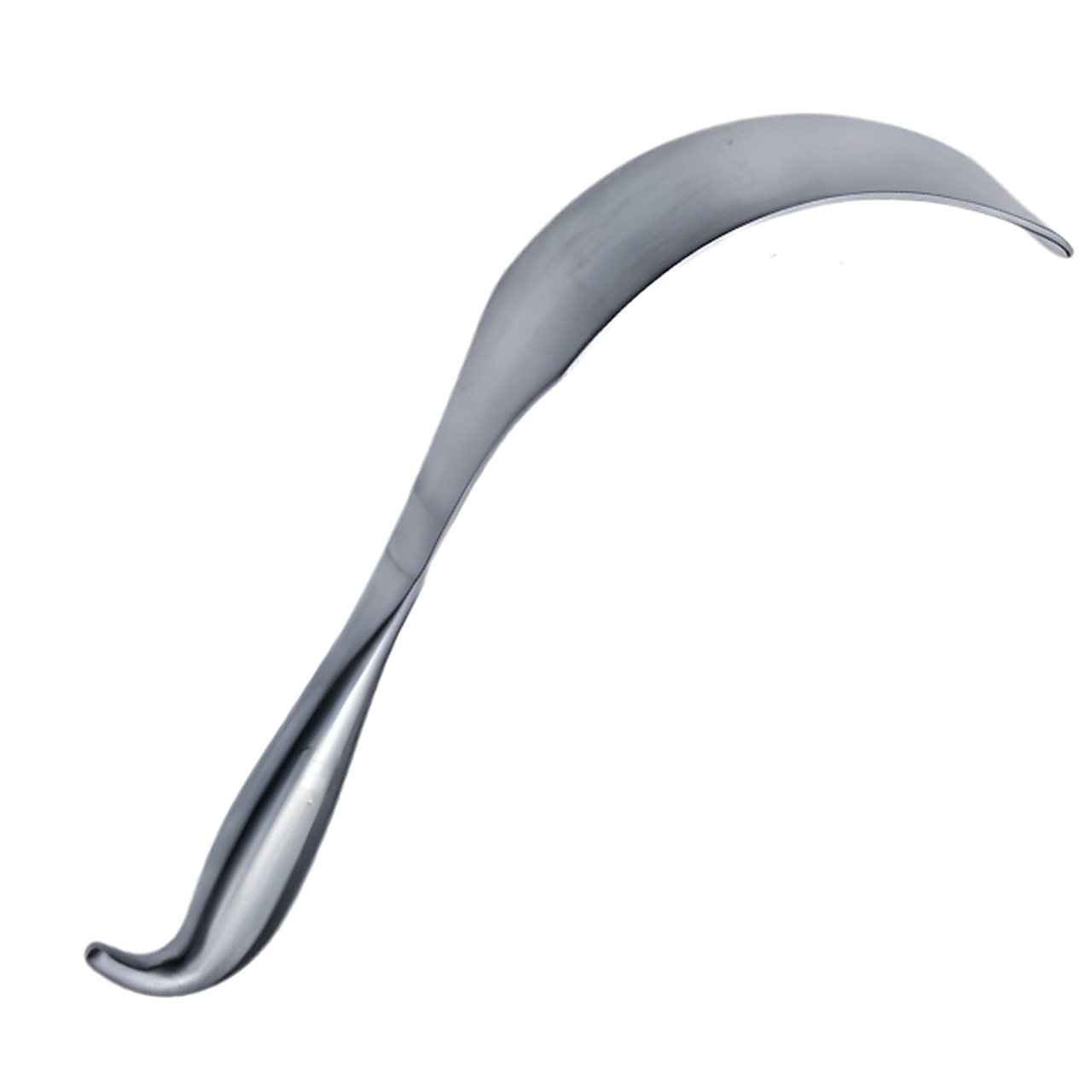
Leriche Retractor-Atraumatic Wide Blade
From $94.00
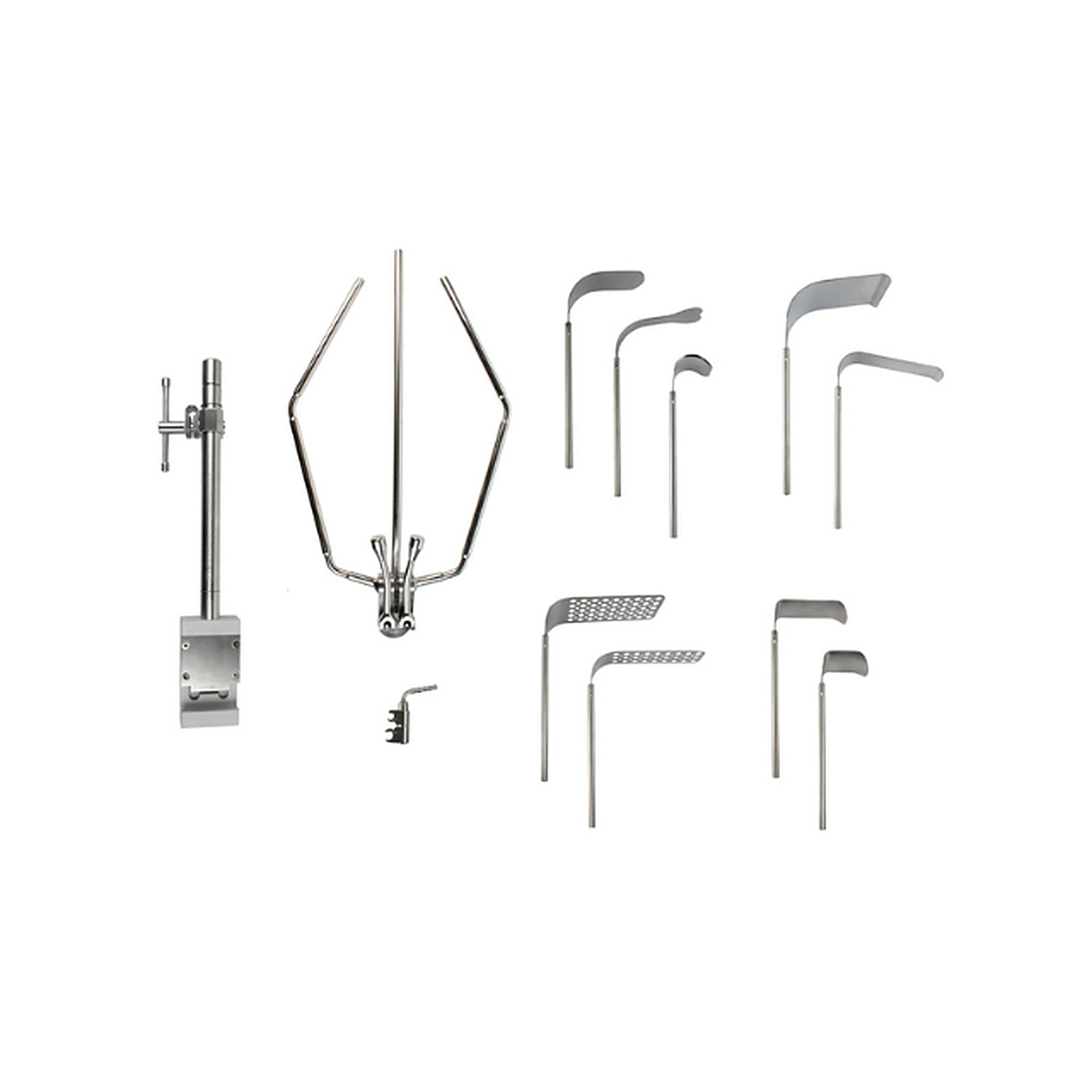
Lobster General Retractor System
$2,699Free Shipping
Need Surgical Retractors or Components?
Tell us what you need, including the product, configuration, quantity and destination country. Retractor Maker can provide availability, specifications and pricing.
Request a Quote