
Orthopedic & Spine Retractors
Cobra Retractor: Acetabular Exposure in Total Hip Arthroplasty
Author: Saad Shahid · Updated · 6 min read
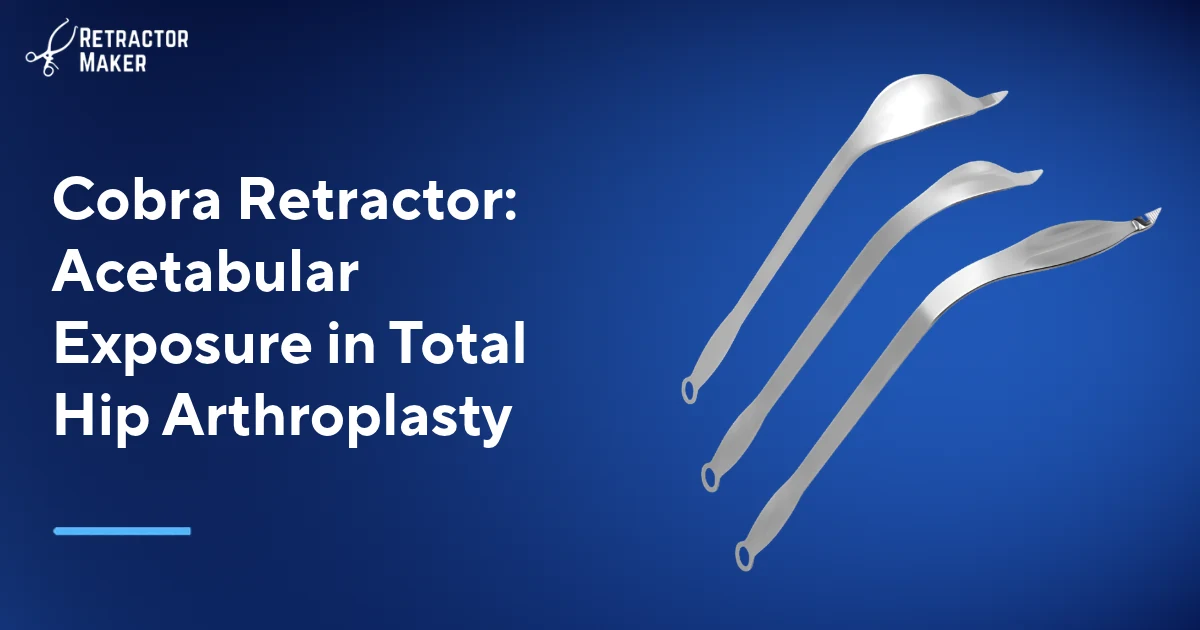
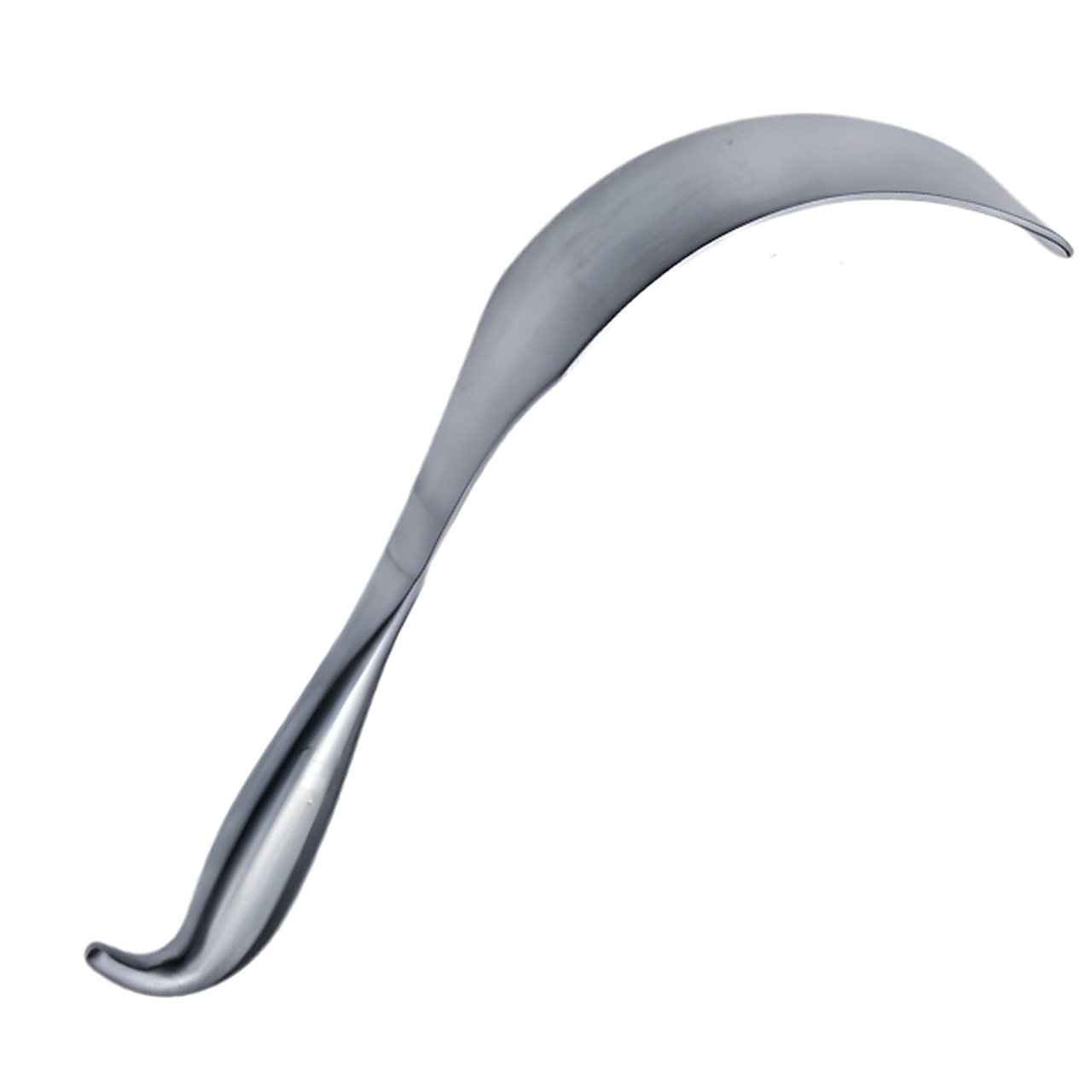
A Cobra retractor is a specialized handheld orthopedic instrument characterized by a broad, flared curved blade that tapers to a pointed or blunt distal beak. It is primarily used in total hip arthroplasty to hook over the acetabular rim or femoral cortex, levering dense musculature away to expose the joint socket.
Retractors discussed in this guide: Cobra Retractor, Cobra Retractor with Hand Rest, Cobra Style Femur Retractor, Flared Cobra Retractors. Browse all surgical retractors.
A Cobra retractor is a handheld orthopedic instrument used to maintain exposure around the acetabulum during total hip arthroplasty (THA). Exposing the acetabular vault is one of the operation’s most mechanically demanding phases. The acetabulum lies deep within dense capsular tissue, surrounded by powerful muscle masses, including the gluteal muscles and abductor complex. Accurate acetabular reaming and implant cup placement require levering the femoral neck and anterior or posterior soft-tissue envelopes clear of the joint space.
The Cobra retractor maintains periacetabular exposure and levers soft tissues away from the pelvic brim. This established orthopedic instrument is also called a Cobra-style retractor or Aufranc-Cobra retractor.
Contents
What Is a Cobra Retractor?
The Cobra retractor takes its name from its cobra-like shape. An elongated shaft widens into an expansive, curved hooded blade, then tapers to a distal tip resembling a cobra’s hood and head.
The Cobra retractor uses mechanical leverage to handle the substantial retraction forces of open hip reconstruction. Its curved blade follows the proximal femur and acetabular wall. The distal beak anchors against bony margins, allowing operating assistants to apply firm counter-traction without instrument slippage.
What Blade Shapes and Design Variations Are Available?
The Cobra retractor combines levering strength with anatomical contouring through its blade, beak, shaft, and construction:
- Hooded flared blade: A broad middle section forms a physical barrier that keeps heavy gluteal and thigh muscle bellies from bulging into the acetabular field.
- Distal beak profile: The tip tapers into a distinct beak, available in these models:
- Pointed beaks: Anchor firmly into dense bone cortices or behind the acetabular wall.
- Blunt / rounded beaks: Seat near sensitive neurovascular boundaries, such as the anterior acetabular rim near the femoral nerve and vessels, to minimize puncture risks.
- Shank drop and angle: A pronounced shaft drop or bend keeps the assistant’s hands and handle below the surgeon’s reaming and impaction trajectory.
- Heavy-duty construction: Forged from thick, high-tensile Premium Grade AISI 304/316 Stainless Steel (Non-Magnetic) to withstand significant leverage forces during hip surgery.
How Is a Cobra Retractor Used in Hip and Pelvic Surgery?
The Cobra retractor is widely used for joint reconstruction, including hip arthroplasty, complex pelvic osteotomies, and acetabular fracture procedures:
- Acetabular exposure in THA: Anterior, posterior, or inferior placement around the acetabular rim retracts the proximal femur and soft tissues, exposing the socket for reaming and cup impaction.
- Direct Anterior Approach (DAA) hip surgery: Specialized curved Cobra retractors help elevate the proximal femur and retract the tensor fasciae latae muscle.
- Posterior Approach THA: Placement behind the posterior acetabular wall protects the sciatic nerve while holding back the posterior soft-tissue envelope.
- Complex pelvic osteotomies and trauma: Broad muscular retraction supports open reduction and internal fixation of acetabular fractures.
Cobra Retractor vs. Hohmann Retractor: What Differs?
| Feature | Cobra Retractor | Standard Hohmann Retractor |
|---|---|---|
| Blade Silhouette | Flared, hooded blade resembling a cobra | Narrow to intermediate straight/curved blade |
| Surface Width | Very broad through mid-blade (approx. 35–50 mm+) | Narrow to intermediate (approx. 10–30 mm) |
| Primary Indication | Deep periacetabular and hip joint exposure | General bone levering on long bones and joints |
| Tissue Barrier | Blocks large muscle masses from spilling into field | Focuses leverage along a narrower contact area |
| Leverage Capacity | High; designed for major joint torque | Moderate to high; suited for diverse bone shafts |
What Should Buyers Check When Selecting Instruments?
Procurement teams and orthopedic departments should evaluate Cobra retractors for tip profile, blade dimensions, and shaft rigidity:
- Tip profile options: Sets should include pointed-tip models for posterior/superior bone anchoring and blunt-tip models for safe anterior placement near the femoral vessel sheath.
- Blade width and depth assortment: Sizes must accommodate varying patient anatomies, with standard and deep-reach profiles.
- Shaft rigidity: The shaft must resist flexing under heavy manual leverage to ensure consistent surgical exposure.
How Should Cleaning, Inspection, and Reprocessing Be Done?
- Point-of-use handling: Remove all bone fragments, marrow lipids, and blood immediately after use.
- Cleaning: Submerge in neutral-pH enzymatic detergent. Scrub the hooded blade and distal beak with soft nylon brushes, then use an ultrasonic bath to remove microscopic bone particles.
- Inspection: Visually check the distal beak for chipping, burrs, or bending. Examine the shaft for structural alignment and surface integrity.
- Sterilization: Autoclave using validated moist heat steam sterilization parameters, following the manufacturer’s validated IFU and hospital infection control guidelines.
What OEM and Custom Manufacturing Options Are Available?
Retractor Maker manufactures Cobra retractors in Sialkot, Pakistan, with custom options for orthopedic distributors and surgical brands. Available options include custom blade widths, specialized offset angles, non-glare satin finishes, and private-label laser marking.
Clinical notice: This guide is for surgical teams and hospital buyers. Always follow the manufacturer's instructions for use (IFU) and your hospital's sterilization rules before clinical use.
Frequently Asked Questions
What is a Cobra retractor?
A Cobra retractor is a heavy-duty orthopedic surgical instrument designed for deep joint exposure during hip surgery. Its broad, flared, hooded blade tapers to a distal beak. The handheld design supports mechanical leverage to hold dense musculature away from the joint socket.
What is a Cobra retractor used for?
A Cobra retractor is used primarily in total hip arthroplasty (THA) and pelvic surgery to expose the hip joint. It hooks over the acetabular rim and levers thick muscle bellies away, providing access to the socket for reaming and cup impaction.
Why is it called a Cobra retractor?
A Cobra retractor is named for its resemblance to the flared hood and head of a cobra snake. Its elongated shaft widens into a broad, curved, hooded blade before narrowing to a tapering distal beak.
What is the difference between a Cobra and a Hohmann retractor?
A Cobra retractor has a much wider, flared blade than a standard Hohmann retractor. The broad blade holds back large muscle masses around the hip, while the standard Hohmann retractor has a narrower blade profile.
Are Cobra retractors sharp or blunt?
Cobra retractors are manufactured with both pointed (sharp) and blunt/rounded beaks. Pointed versions provide secure cortical purchase for bone anchoring. Blunt/rounded versions are designed for safe placement near neurovascular structures, including the anterior acetabular rim near the femoral nerve and vessels.
Can a Cobra retractor be autoclaved?
Reusable Cobra retractors are compatible with standard steam autoclave sterilization. They are forged from Premium Grade AISI 304/316 Stainless Steel (Non-Magnetic). Use validated moist heat steam sterilization parameters in accordance with the manufacturer’s validated IFU and hospital infection control guidelines.
How should a Cobra retractor be cleaned and inspected?
A Cobra retractor should be cleaned immediately after use to remove bone fragments, marrow lipids, and blood. Follow with neutral-pH enzymatic detergent, soft nylon brushes, and an ultrasonic bath. Inspect the distal beak for chipping, burrs, or bending, and check the shaft for structural alignment and surface integrity.
Why does a Cobra retractor have a bent shaft?
A Cobra retractor has a pronounced shaft drop or bend to keep the assistant’s hands and handle below the surgeon’s reaming and impaction trajectory. The curved blade accommodates the proximal femur and acetabular wall. The distal beak anchors against bony margins to support firm counter-traction without instrument slippage.
What sizing and strength factors matter when selecting a Cobra retractor?
Cobra retractor selection depends on blade width, blade depth, and shaft rigidity. Dimensions should accommodate varying patient anatomies, with standard and deep-reach profiles as sizing options. The shaft must withstand heavy manual leverage and resist flexing to ensure consistent surgical exposure.
About the author
Saad Shahid · Sales & Marketing Manager
Saad Shahid is the Sales & Marketing Manager and founder of Retractor Maker, started in 2023 in Sialkot, Pakistan. He also works with his father at Hospitech Traders, the family surgical instrument business founded in 1989.
Related Blogs & Guide
Related Retractors
Senn Forward Retractor
$49.00
Brewster Retractor
From $159
Langenbeck Retractor-Solid Handle
$49.00
Murphy Retractor
From $44.00
Leriche Retractor-Atraumatic Wide Blade
From $94.00
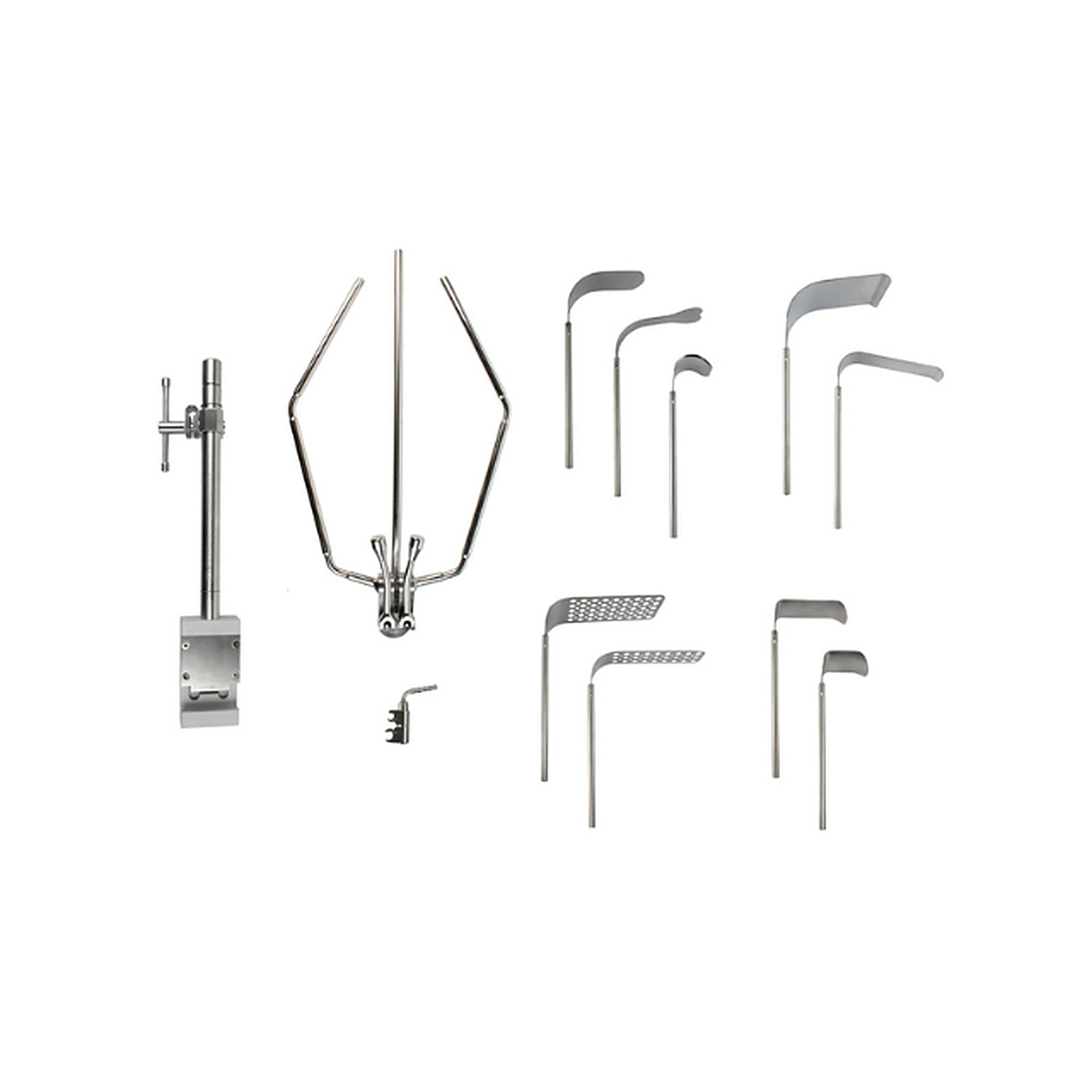
Lobster General Retractor System
$2,699Free Shipping
Need Surgical Retractors or Components?
Tell us what you need, including the product, configuration, quantity and destination country. Retractor Maker can provide availability, specifications and pricing.
Request a Quote