
General Surgery Retractors
Harrington Retractor: Deep Pelvic & Splanchnic Exposure
Author: Saad Shahid · Updated · 6 min read
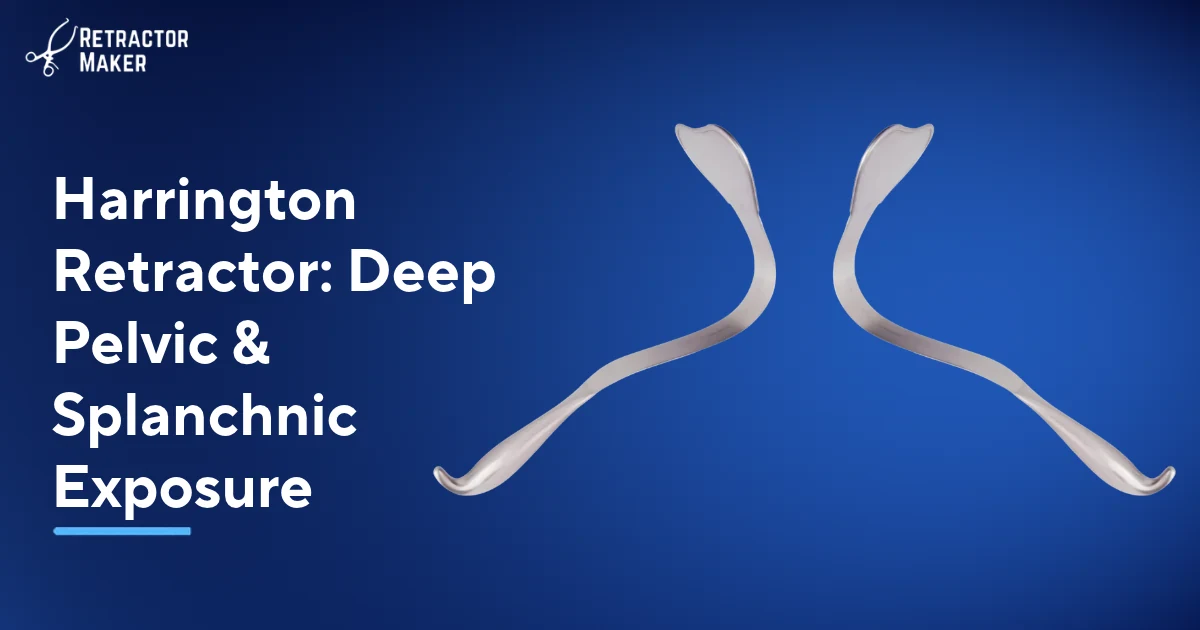
A Harrington retractor is a handheld surgical instrument featuring a long shaft and an expansive, heart-shaped or cloverleaf-shaped distal blade. It is primarily used in deep abdominal, hepatobiliary, and pelvic surgeries to gently retract internal viscera—such as the liver, stomach, or deep pelvic organs—while distributing counter-traction broadly to protect delicate serosa.
Retractors discussed in this guide: Harrington Splanchnic Retractor, Harrington Splanchnic Retractor With Fiber Optic, Harrington Sweetheart Retractor. Browse all surgical retractors.
The Harrington retractor, also called the Harrington splanchnic retractor, is a classic handheld surgical instrument designed to elevate, mobilize, and protect deep abdominal and pelvic organs. Major open abdominal and pelvic operations require reliable deep-field visualization without concentrating excessive mechanical force on delicate serosal layers. These procedures involve moving mobile internal viscera around parenchymal organs, vascular networks, and peritoneal reflections.
Contents
What Is a Harrington Retractor?
The Harrington retractor is an established manual surgical retractor named in association with Dr. Stuart W. Harrington, a prominent American thoracic and general surgeon. It was developed to provide secure, atraumatic deep exposure. Its defining feature is a wide, curved distal blade with a heart-shaped, or sweet-heart, profile.
"Splanchnic" means the internal organs, or viscera, of the major body cavities. Surgical literature calls the Harrington a "splanchnic retractor" because it engages and displaces internal viscera. Its primary role is not simply to pull back the fibrous, muscular abdominal wall.
What Design Features Support Deep Visceral Retraction?
A Harrington-style retractor relies on its distinctive blade shape and ergonomic handle layout for functional performance:
- Heart-shaped (sweet-heart) blade: A wide, rounded, heart-shaped or bilobed distal flange keeps rounded, mobile viscera, such as bowel loops, the gall bladder, or the stomach, from slipping around the blade edges.
- Continuous non-traumatic edges: The blade perimeter and terminal distal lip are polished, radiused, and rolled. During assistant-applied traction, they spread force across a broad contact surface rather than a sharp focal edge.
- Elongated, rigid shank: Provides vertical drop and horizontal reach into deep peritoneal and retroperitoneal spaces. It keeps the assistant's hands clear of the surgeon's operative illumination and working axis.
- Ergonomic handle: Available with solid contoured profiles and finger ridges, or lightweight hollow-grip handles that reduce hand and forearm fatigue during extended manual retraction.
Where Are Harrington Retractors Used?
Harrington retractors are routinely used in complex open abdominal, pelvic, and deep visceral procedures:
- Hepatobiliary and upper GI surgery: Gently elevate and support the left or right liver lobes to expose the gallbladder, biliary tree, hiatus, and gastroesophageal junction during open cholecystectomies, common bile duct explorations, and gastrectomies.
- Deep pelvic dissections: Move pelvic packing and viscera superiorly, away from the presacral space, during low anterior resections, total mesorectal excisions, and abdominoperineal resections.
- Gynecologic oncology: Support broad bowel displacement during radical abdominal hysterectomies, staging laparotomies, and pelvic lymphadenectomies.
- Retroperitoneal explorations: Move abdominal contents away from the renal vessels, abdominal aorta, or inferior vena cava during major vascular or urological exposures.
Harrington vs. Deaver vs. Richardson Retractors
Mechanical differences between common deep-cavity manual retractors determine their surgical roles. Comparing these differences helps clarify their respective uses:
| Feature | Harrington Retractor | Deaver Retractor | Richardson Retractor |
|---|---|---|---|
| Blade Geometry | Expansive, heart-shaped (sweet-heart) blade | Continuous, sweeping flat curve ("question mark") | Rigid right-angled flat blade with curved lip |
| Primary Interaction | Internal viscera (liver, stomach, bowel, bladder) | Broad visceral organ cradling (liver, intestines) | Structural abdominal wall, fascia, and thick muscle |
| Force Distribution | Wide, bilobed surface distribution | Expansive along the curved vertical axis | Focused vertical mechanical traction |
| Tissue Slippage Risk | Low (heart lobes prevent viscera rolling off) | Moderate (smooth curved surface requires steady hold) | Low for muscular walls; high for mobile viscera |
| Primary Target | Deep cavitary / splanchnic exposure | Deep cavitary / visceral cradling | Incisional perimeter / muscular wall exposure |
What Are the Advantages and Limitations?
Design Advantages
- Surface area dispersion: The heart-shaped blade reduces localized pressure when retracting delicate parenchymal organs.
- Dynamic directional control: Handheld operation lets the assistant immediately adjust tension or traction direction in response to surgeon requests or patient physiological shifts.
Design Limitations
- Operator fatigue: Extended manual holding requires dedicated surgical assistance and can cause physical fatigue during multi-hour open procedures.
- Not a wall spreader: Not designed to pull rigid muscular boundaries or heavy fascial shelves. Right-angled retractors such as the Richardson or Kelly are mechanically superior for these tasks.
How Should Harrington Retractors Be Reprocessed?
Reusable surgical stainless-steel Harrington retractors require systematic reprocessing to preserve their passive oxide layer and maintain structural safety:
- Point-of-use handling: Immediately remove gross blood, bile, and peritoneal soils with a moistened sterile wipe. Do not let fluids dry on blade margins or inside hollow handles.
- Cleaning: Submerge in neutral-pH enzymatic detergent baths. Use soft-bristled nylon brushes on the broad blade face, radiused lips, and handle contours. Circulate cleaning solutions through drainage ports on hollow-handle models.
- Inspection: Examine the heart-shaped blade perimeter under magnification for micro-pitting, burrs, or structural bending. Check the blade-to-shank junction for mechanical fatigue.
- Sterilization: Autoclave using validated moist heat steam sterilization parameters. Follow the manufacturer's validated Instructions for Use (IFU) and hospital infection prevention protocols.
What Should Buyers Check When Sourcing Harrington Retractors?
Hospital procurement teams and B2B medical distributors should evaluate blade dimensions, weld and finish integrity, and OEM options when sourcing Harrington retractors:
- Blade dimension assortments: Harrington retractors typically come in multiple blade widths, from narrow 45 mm profiles to expansive 65 mm+ widths, and working lengths offering 280 mm to 320 mm+ overall reach. Sets should accommodate varying patient anatomies.
- Weld and finish integrity: Hollow handles must have hermetically sealed welds and seamless junctions to eliminate bioburden traps.
- OEM customization: Retractor Maker works directly with international surgical distributors to supply Harrington retractors with custom blade depths, specialized matte or satin non-glare finishes, and private-label laser marking.
Clinical notice: This guide is for surgical teams and hospital buyers. Always follow the manufacturer's instructions for use (IFU) and your hospital's sterilization rules before clinical use.
Frequently Asked Questions
What is a Harrington retractor?
A Harrington retractor is a handheld surgical instrument for deep visceral and pelvic retraction during open surgery. It has an elongated shaft and a wide, heart-shaped, or sweet-heart, blade. The broad blade supports internal organs while distributing counter-traction across its contact surface.
What does "splanchnic retractor" mean?
A splanchnic retractor is designed to mobilize internal organs rather than structural muscle walls. "Splanchnic" refers to the internal organs, or viscera, of the major body cavities. The term describes the role of engaging and displacing organs such as the liver or intestines.
Why is the blade of a Harrington retractor shaped like a heart?
The Harrington retractor has a heart-shaped blade to keep mobile internal organs from slipping around its edges while distributing counter-traction evenly. This bilobed profile provides a broad contact surface. The expanded blade reduces localized pressure when retracting delicate parenchymal organs.
What is the difference between a Harrington and a Deaver retractor?
A Harrington retractor has an expanded heart-shaped blade with a focused distal flange, while a Deaver retractor has a continuous, sweeping flat curve. This blade geometry is a key mechanical difference between these deep-cavity manual retractors and helps distinguish their surgical roles.
Is a Harrington retractor handheld or self-retaining?
It is a handheld instrument that requires continuous manual holding by a surgical assistant or surgeon during the operative procedure.
Can a Harrington retractor be autoclaved?
Reusable Harrington retractors forged from Premium Grade AISI 304/316 Stainless Steel (Non-Magnetic) are fully compatible with hospital steam autoclave sterilization. Use validated moist heat steam sterilization parameters in accordance with the manufacturer's validated Instructions for Use (IFU) and hospital infection prevention protocols.
How does a Harrington retractor differ from a Richardson retractor?
A Harrington retractor primarily retracts internal viscera, while a Richardson retractor targets the structural abdominal wall, fascia, and thick muscle. The Harrington spreads force across a wide, heart-shaped blade. The Richardson has a rigid right-angled blade with a curved lip for focused traction at the incisional perimeter.
How should a Harrington retractor be cleaned before sterilization?
A Harrington retractor should have gross soils removed immediately with a moistened sterile wipe, followed by cleaning in a neutral-pH enzymatic detergent bath. Do not allow fluids to dry beforehand. Use soft-bristled nylon brushes on the blade face, radiused lips, and handle contours. On hollow-handle models, ensure cleaning solutions circulate through drainage ports.
What should be checked when inspecting a Harrington retractor?
Inspect the Harrington retractor's blade perimeter under magnification for micro-pitting, burrs, or structural bending, and check the blade-to-shank junction for mechanical fatigue. These checks are part of systematic reprocessing intended to preserve the reusable stainless-steel instrument's passive oxide layer and maintain structural safety.
About the author
Saad Shahid · Sales & Marketing Manager
Saad Shahid is the Sales & Marketing Manager and founder of Retractor Maker, started in 2023 in Sialkot, Pakistan. He also works with his father at Hospitech Traders, the family surgical instrument business founded in 1989.
Related Blogs & Guide
Related Retractors
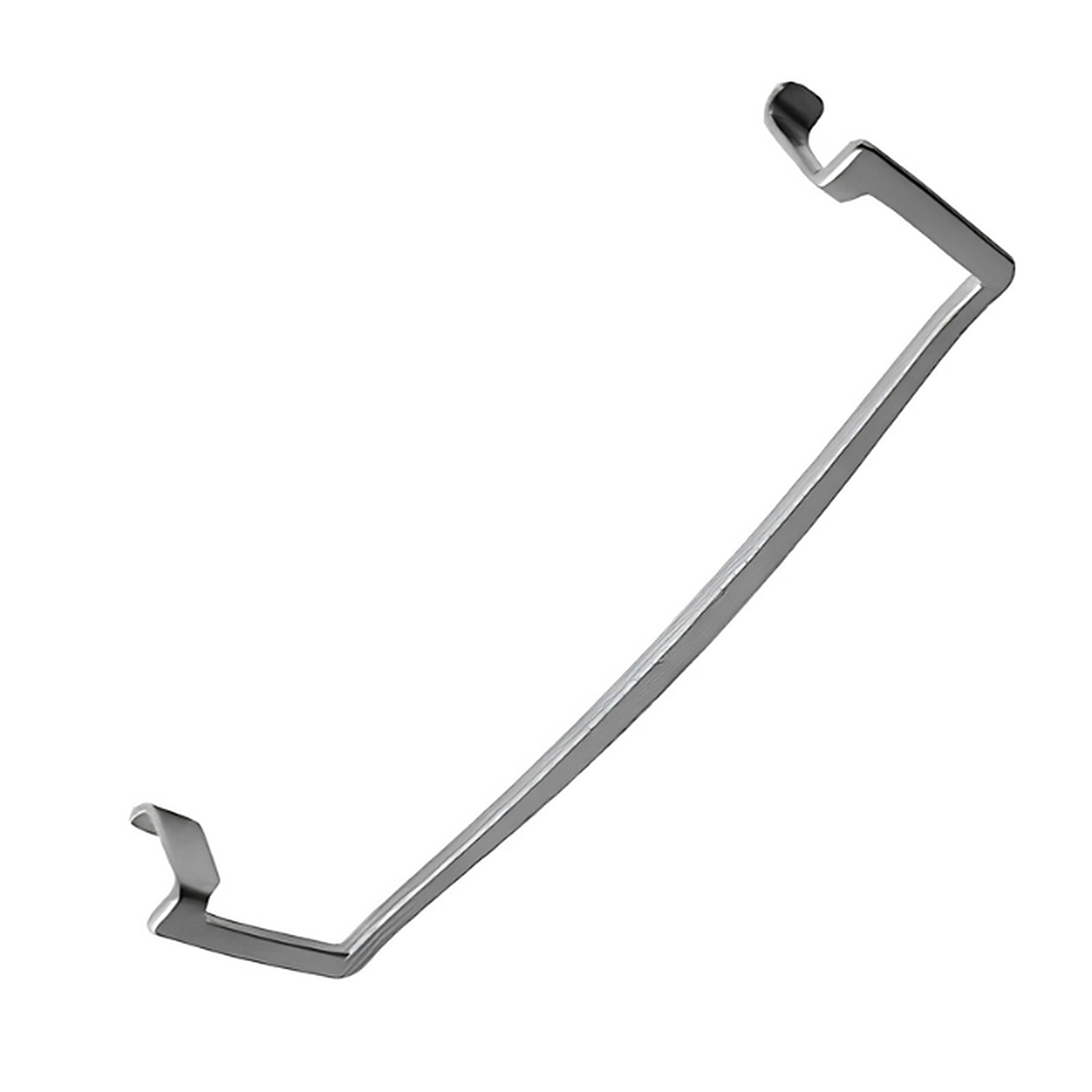
Senn Forward Retractor
$49.00
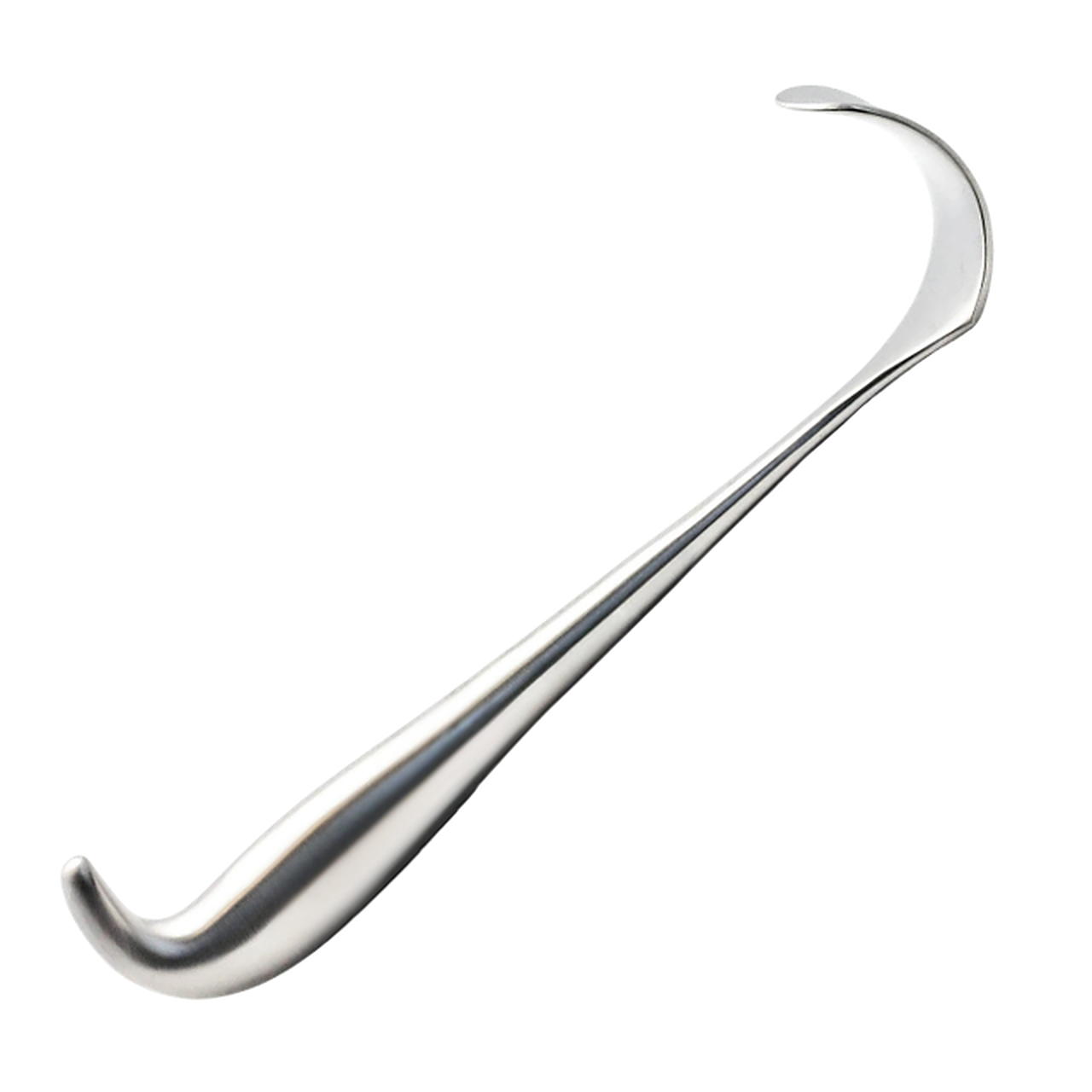
Brewster Retractor
From $159
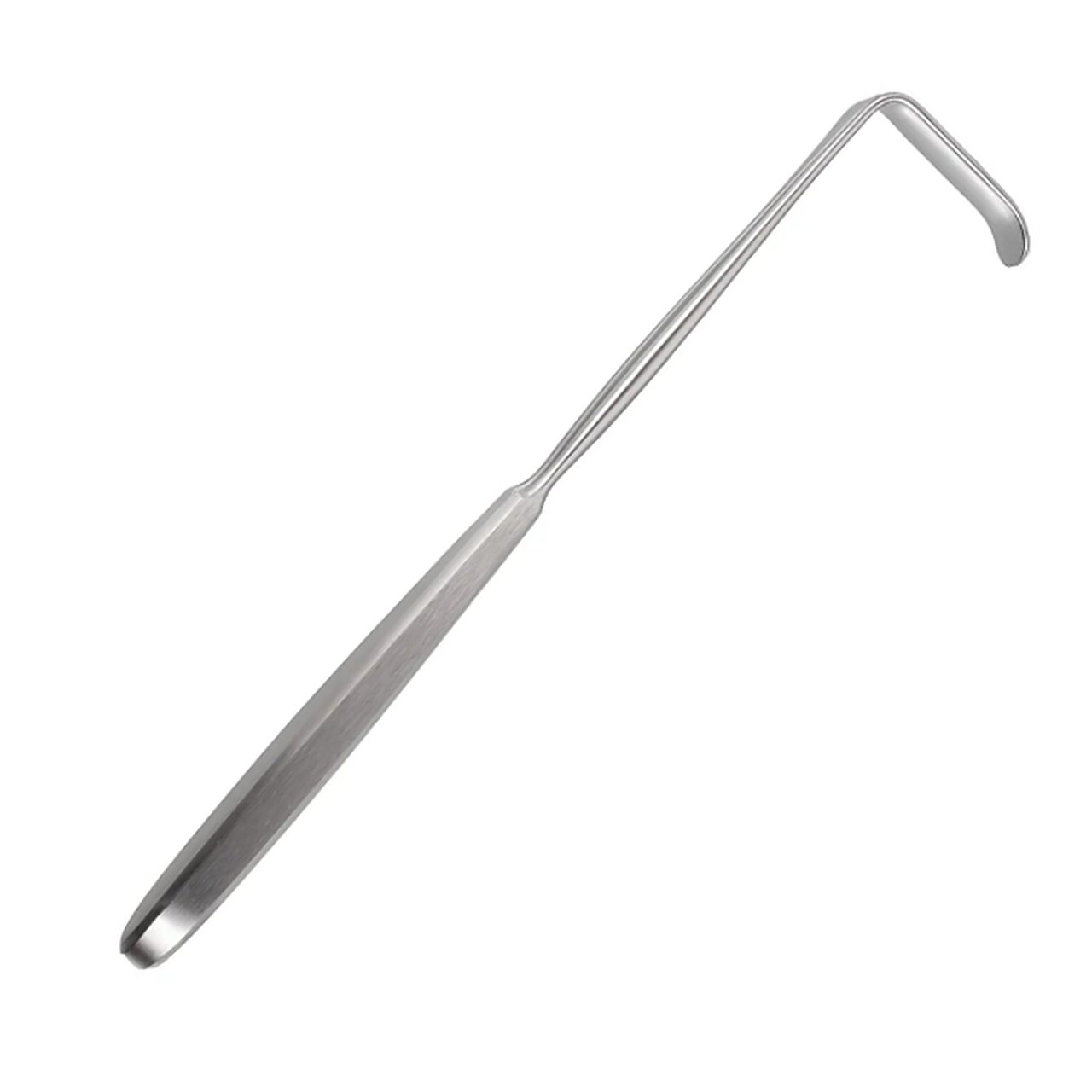
Langenbeck Retractor-Solid Handle
$49.00
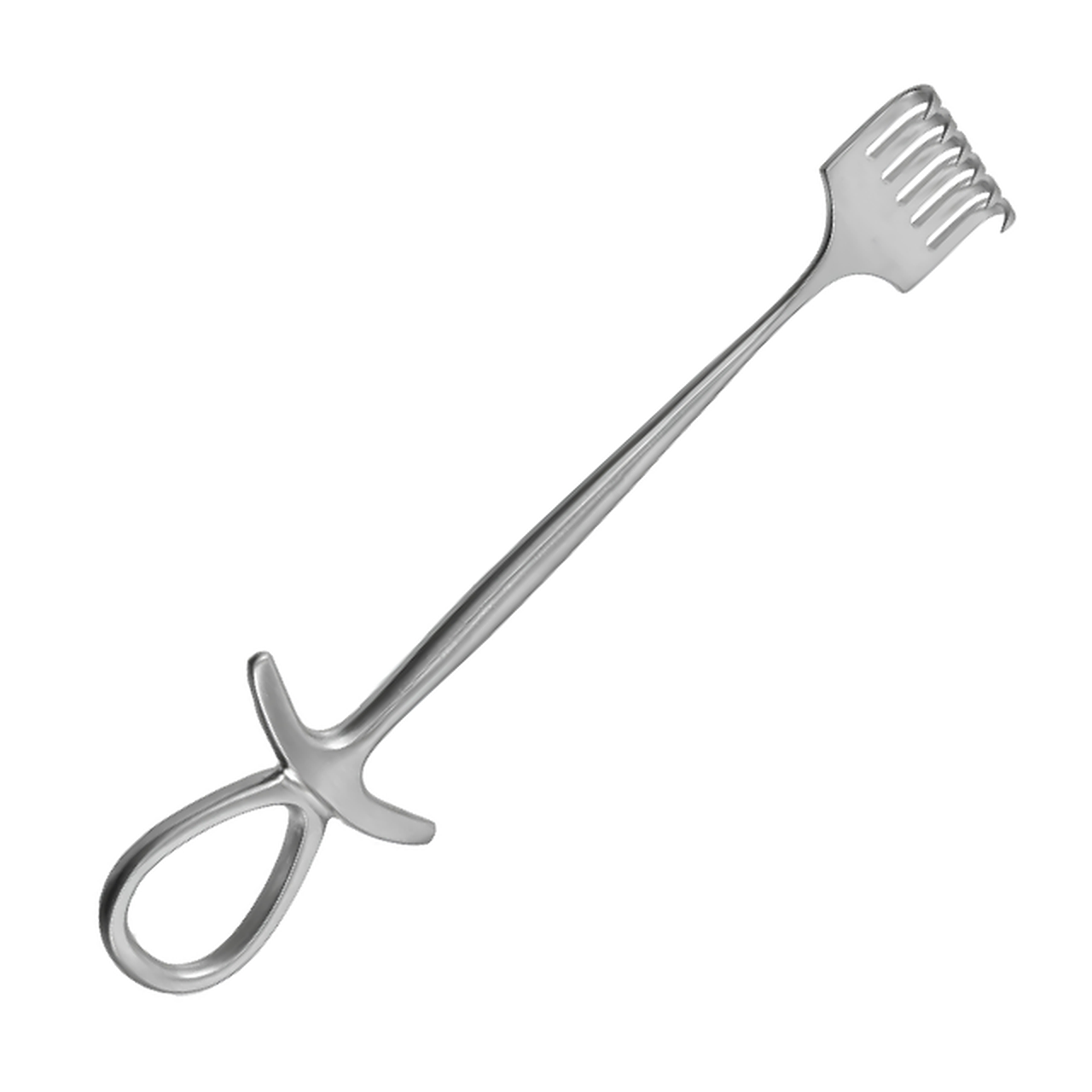
Murphy Retractor
From $44.00
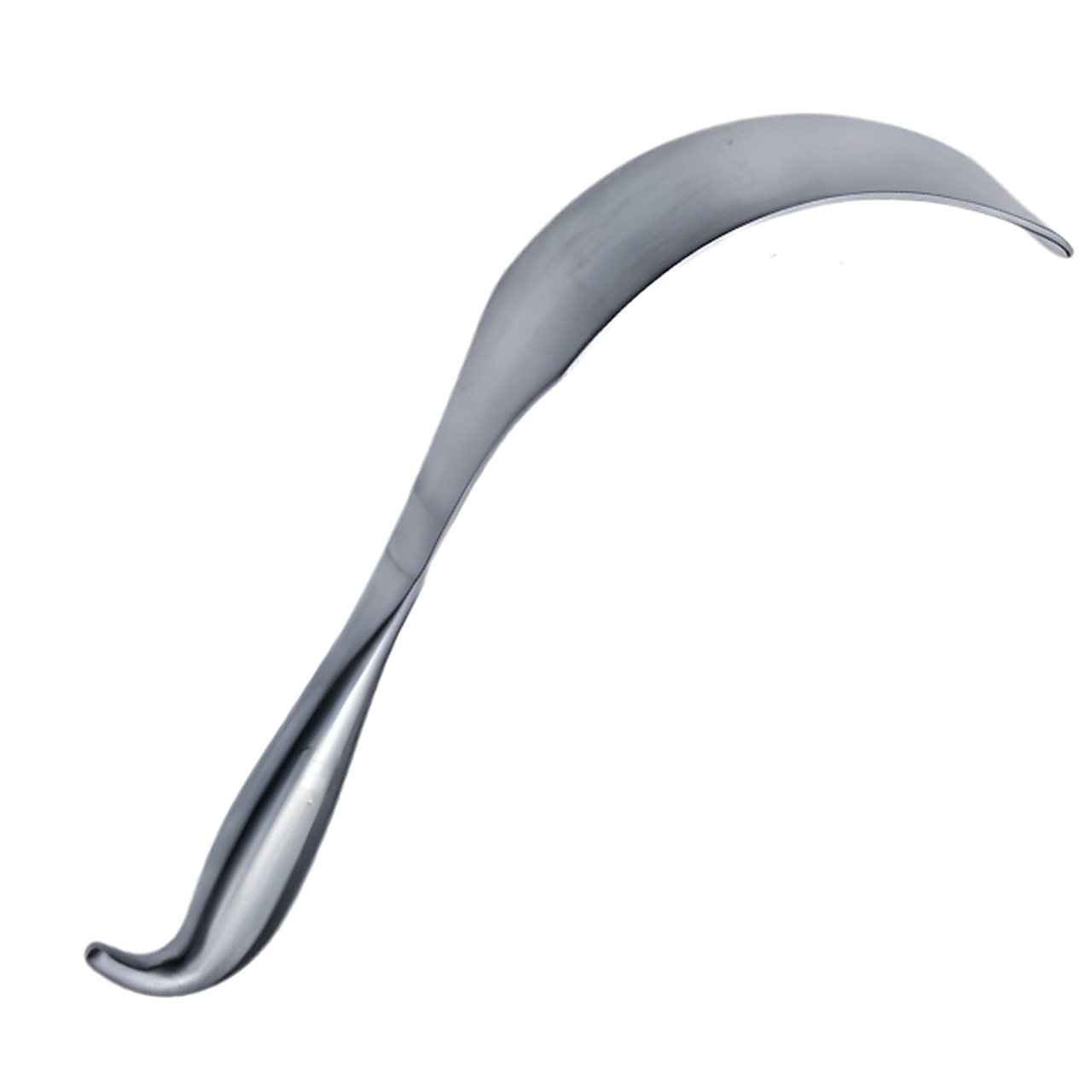
Leriche Retractor-Atraumatic Wide Blade
From $94.00
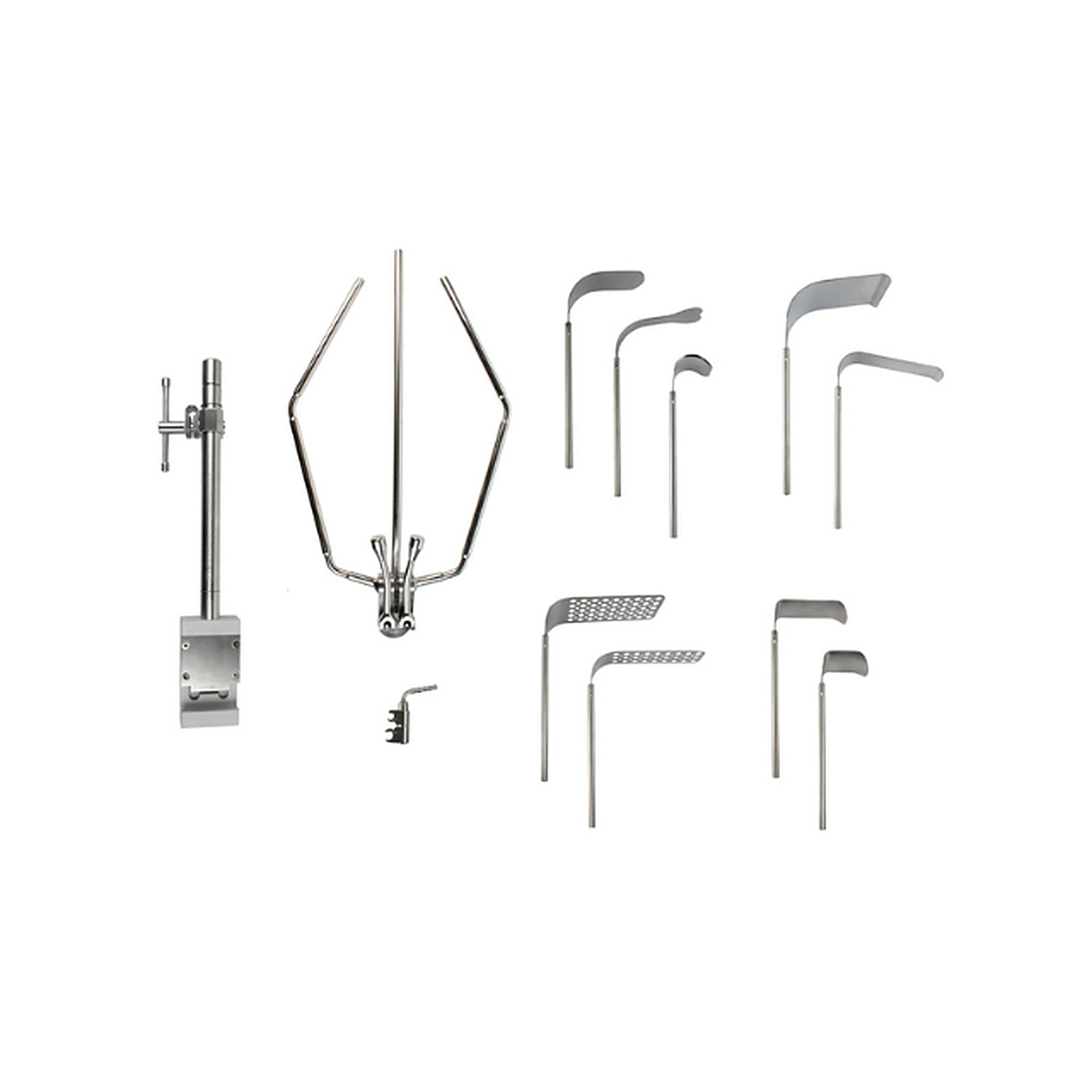
Lobster General Retractor System
$2,699Free Shipping
Need Surgical Retractors or Components?
Tell us what you need, including the product, configuration, quantity and destination country. Retractor Maker can provide availability, specifications and pricing.
Request a Quote