
Orthopedic & Spine Retractors
Cloward Cervical Spine Retractor: Anterior Cervical Discectomy & Fusion (ACDF)
Author: Saad Shahid · Updated · 7 min read
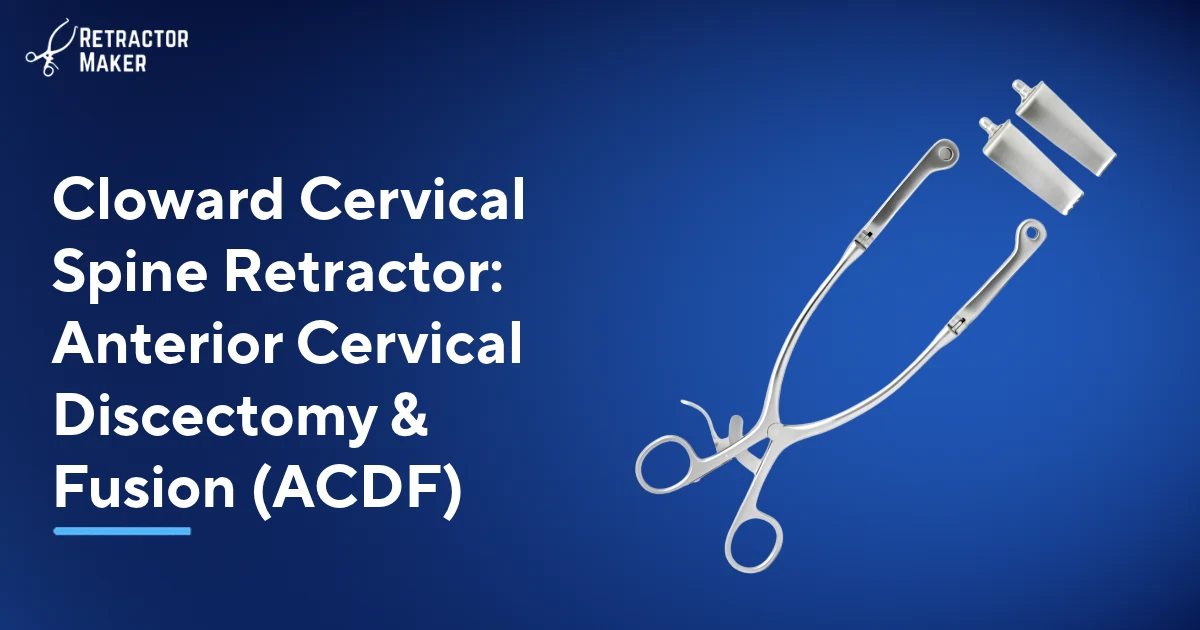
A Cloward cervical spine retractor is a specialized, self-retaining instrument system comprising a low-profile spreader frame and interchangeable blades (blunt and toothed). It is primarily used in Anterior Cervical Discectomy and Fusion (ACDF) to safely maintain transverse exposure of the anterior vertebral bodies.
Retractors discussed in this guide: Cloward Cervical/Lamina Retractor, Cloward-Style Blade Retractor, Cloward-Style Cervical Retractor. Browse all surgical retractors.
The Cloward retractor is a self-retaining system for exposure during anterior cervical spine surgery. Anterior approaches are a cornerstone of modern neurosurgery and spine reconstruction. Anterior Cervical Discectomy and Fusion (ACDF), cervical disc replacement, and anterior corpectomies require access to intervertebral disc spaces. This corridor is bounded by the carotid sheath laterally and the trachea and esophagus medially.
The Cloward cervical spine retractor maintains stable, low-profile exposure during anterior cervical spine surgery. It is an established self-retaining platform developed specifically for this approach.
Contents
What Is a Cloward Cervical Spine Retractor?
The Cloward retractor provides safe, reliable exposure of the anterior vertebral column. It is named after Dr. Ralph B. Cloward, the pioneering American neurosurgeon who transformed anterior cervical spine surgery in the 1950s.
The system addresses the neck’s unique constraints through a low-profile frame, controlled transverse spread, and specialized blade pairings.
- Low-profile architecture: The spreader frame lies flat against the patient’s neck, keeping hardware clear of the surgical microscope, fluoroscopic C-arm, and microsurgical instruments.
- Controlled transverse spread: A fine mechanical rack or screw mechanism provides incremental, calibrated tissue displacement.
- Specialized blade pairings: Opposing blade geometries match medial visceral and lateral vascular tissue boundaries.
What Components Make Up the System?
A standard Cloward-style cervical retractor set contains modular spreader frames and interchangeable blades.
- Spreader frame: A scissor-style or parallel-bar frame with a fine ratcheting or thumb-screw lock maintains lateral arm separation.
- Interchangeable blades: Varying depths, typically 30 mm to 70 mm, snap or slide onto the spreader’s distal arms.
- Blunt medial blades: Smooth, rounded, flat or convex blades gently displace and shield the esophagus, trachea, and recurrent laryngeal nerve.
- Toothed lateral blades: Small, sharp or semi-blunt micro-teeth seat securely beneath the elevated longus colli muscle laterally to prevent instrument dislodgement.
How Does the Cloward Retractor Support ACDF Exposure?
The Cloward retractor stabilizes the interfascial surgical corridor during anterior cervical discectomy.
- Medial visceral protection: The smooth medial blade moves the trachea and esophagus toward the midline without concentrating focal point-pressure on the esophageal wall.
- Lateral vascular clearance: The lateral blade retains the carotid sheath, which encloses the carotid artery, internal jugular vein, and vagus nerve.
- Longus colli anchorage: The toothed blade anchors beneath the longus colli muscle edge, creating a stable working portal directly over the target intervertebral disc space.
Cloward vs. Caspar-Style Cervical Retractors
| Feature | Cloward Cervical Retractor | Caspar-Style Cervical Retractor System |
|---|---|---|
| Spreader Mechanism | Scissor-frame with ratchet or slide lock | Precision parallel-bar frame with thumb-screw drive |
| Directional Exposure | Primarily transverse (lateral) exposure | Dual-frame options (transverse + longitudinal 4-way) |
| Blade Attachment | Snap-on or pin-mount coupling | Ball-snap or slide-clamp modular coupling |
| Material Options | Primarily Premium Grade AISI 304/316 Stainless Steel (Non-Magnetic) | Stainless steel or radiolucent titanium/aluminum |
| Typical Use | 1- to 2-level ACDF procedures | Single-level and complex multi-level corpectomies |
What Should Buyers Check Before Ordering?
Hospitals and distributors should assess blade depth assortment, locking reliability, and blade security when sourcing cervical spine retractors.
- Blade depth assortment: Include graded depths, such as 35 mm, 40 mm, 45 mm, 50 mm, 55 mm, and 60 mm, to accommodate varying neck circumferences.
- Locking reliability: The ratchet or thumb-screw must hold firmly under soft-tissue tension without slipping.
- Blade security: Blade-to-arm couplings must hold blades rigidly to eliminate intraoperative wobbling.
How Should the System Be Inspected and Reprocessed?
- Complete disassembly: Remove all modular blades from the spreader frame before cleaning. Bioburden accumulates in blade mounting channels and ratchet teeth.
- Cleaning and ultrasonic decontamination: Submerge in enzymatic cleaner, scrub blade channels and ratchet teeth with soft nylon brushes, then process with ultrasonic cleaning.
- Inspection: Check toothed blades for bent or broken teeth. Confirm smooth opening and locking throughout the spreader frame’s full range of motion.
- Sterilization: Autoclave unlatched in dedicated sterilization cassettes, following the manufacturer’s validated IFU and hospital infection control guidelines.
What OEM and Contract Manufacturing Options Are Available?
Retractor Maker manufactures precision cervical spine retractors in Sialkot, Pakistan. We partner with spine companies and medical distributors to supply Cloward-style frames, custom blade sets, titanium radiolucent variants, and private-label laser marking.
Cloward Cervical Spine Retractor Blade Measurements and Sizes
Use model-specific measurements to prepare tray lists and purchase requests. The handheld blade dimensions below do not describe interchangeable blades for the separate chassis. Missing measurements are marked “On request”; confirm them before ordering.
| Model | Overall Length | Blade Size | Notes |
|---|---|---|---|
| Cloward-Style Blade Retractor | 19 cm (approx. 7.5 inches) | 13 × 75 mm; 18 × 75 mm; 20 × 75 mm; 23 × 75 mm | Handheld, single-end; With Lip or Without Lip |
| Cloward Cervical/Lamina Retractor | 16 cm (approx. 6.3 inches) | On request | Cross-Serrated Jaws or With Teeth Jaws; intended for paraspinal muscle retraction and lamina/facet exposure |
| Cloward-Style Cervical Retractor | 17 cm (approx. 6.7 inches) | On request | Chassis only; accepts standard snap-in / slide-on interchangeable Cloward cervical blades |
How Should Surgical Assistants Handle Retraction?
- Keep a controlled handle grip and fingers clear of hinges and ratchet catches. Do not rest body weight on a handheld retractor or use the handle as a lever.
- Follow the surgeon’s requested traction angle. Do not twist, rock, or change direction with the blade loaded. Request guidance if the working angle becomes difficult to maintain.
- Agree on pressure-release opportunities with the surgeon and prompt reassessment during prolonged retraction. Release only with operative-team coordination, not on an arbitrary timed schedule.
- Watch visible tissue at blade contact points for pinching, blanching, or displacement. Report changes promptly and request surgical reassessment rather than independently increasing or redirecting traction.
- Communicate immediately if resistance changes, the retractor shifts, or exposure deteriorates. Before adjusting, confirm the intended movement and check that nearby instruments will not obstruct it.
- Pass the retractor handle-first, with the working end controlled and directed away from staff. State whether the ratchet is engaged and confirm a secure receiving grip before release.
What Determines the Autoclave Cycle?
Steam sterilization must follow completed cleaning, rinsing, and inspection; it does not replace soil removal. Exposure time is time at the specified sterilization temperature, not total cycle duration. Packaging, load configuration, and drying requirements must match the validated process. Do not release wet packs for use.
| Cycle | Temperature | Exposure | Drying |
|---|---|---|---|
| Pre-vacuum | 132°C / 270°F | 4 min | 20–30 min |
| Pre-vacuum | 134°C / 273°F | 3 min; some regions specify 18 min for prion protocols | Per validated IFU |
| Gravity displacement | 121°C / 250°F | 30 min | 15–30 min |
The validated instructions for use (IFU), sterilizer manufacturer’s instructions, and hospital policy take precedence over typical reference values. These values are not validated cycles for these specific retractors. Prion protocols require institution-specific guidance, not automatic cycle substitution. All listed retractors are supplied non-sterile and must be sterilized before first use.
Clinical notice: This guide is for surgical teams and hospital buyers. Always follow the manufacturer's instructions for use (IFU) and your hospital's sterilization rules before clinical use.
Frequently Asked Questions
What is a Cloward cervical retractor?
A Cloward cervical retractor is a self-retaining surgical system designed for anterior cervical spine surgery. It combines a low-profile spreader frame with interchangeable blades. The system maintains stable exposure, with blunt and toothed blade options for the opposing tissue boundaries.
What is the primary use of a Cloward retractor?
The Cloward retractor is primarily used to maintain exposure of the anterior vertebral bodies during Anterior Cervical Discectomy and Fusion (ACDF) and cervical disc arthroplasty. Its self-retaining frame and blade system stabilize the surgical corridor during anterior cervical access.
Why are there blunt and toothed blades in a Cloward set?
The Cloward cervical spine retractor uses blunt blades for medial structures and toothed blades for lateral anchorage. Blunt blades gently retract the delicate esophagus and trachea. Toothed blades anchor beneath the longus colli muscle laterally to prevent slippage and maintain exposure.
How does a Cloward retractor differ from a Caspar retractor?
A Cloward retractor typically uses a scissor-style spreader frame for transverse retraction, whereas a Caspar retractor system uses parallel-bar frames. The Caspar system also often supports both transverse and longitudinal retraction, described as four-way retraction.
What blade depths are available for Cloward sets?
Sets typically include blades ranging from 30 mm to 70 mm in 5 mm increments to match varying patient anatomies.
Can a Cloward retractor be autoclaved?
Reusable Cloward retractor sets made from Premium Grade AISI 304/316 Stainless Steel (Non-Magnetic) or titanium are fully autoclavable when processed according to manufacturer IFUs. Steam sterilization follows cleaning, rinsing, and inspection. Follow the validated process rather than treating typical reference values as validated cycles.
Why does a Cloward cervical retractor have a low-profile frame?
A Cloward cervical retractor has a low-profile frame to maintain exposure without obstructing surgical equipment or instruments. The spreader frame lies flat against the patient’s neck. This keeps its mechanical hardware clear of the surgical microscope, fluoroscopic C-arm, and microsurgical instruments.
What should be inspected on a Cloward retractor before use?
A Cloward retractor should be inspected for bent or broken blade teeth, smooth frame movement, reliable locking, and secure blade attachment. The spreader should open and lock smoothly across its entire range of motion. Blade-to-arm couplings should hold blades rigidly without wobbling.
Are handheld Cloward blade measurements interchangeable with chassis blade specifications?
Handheld Cloward blade measurements do not specify interchangeable blades for the separate retractor chassis. The guide’s model-specific sizing section distinguishes handheld, single-ended blade retractors from the chassis-only cervical retractor. The chassis-only cervical retractor accepts standard snap-in or slide-on interchangeable Cloward cervical blades.
About the author
Saad Shahid · Sales & Marketing Manager
Saad Shahid is the Sales & Marketing Manager and founder of Retractor Maker, started in 2023 in Sialkot, Pakistan. He also works with his father at Hospitech Traders, the family surgical instrument business founded in 1989.
Related Blogs & Guide
Related Retractors
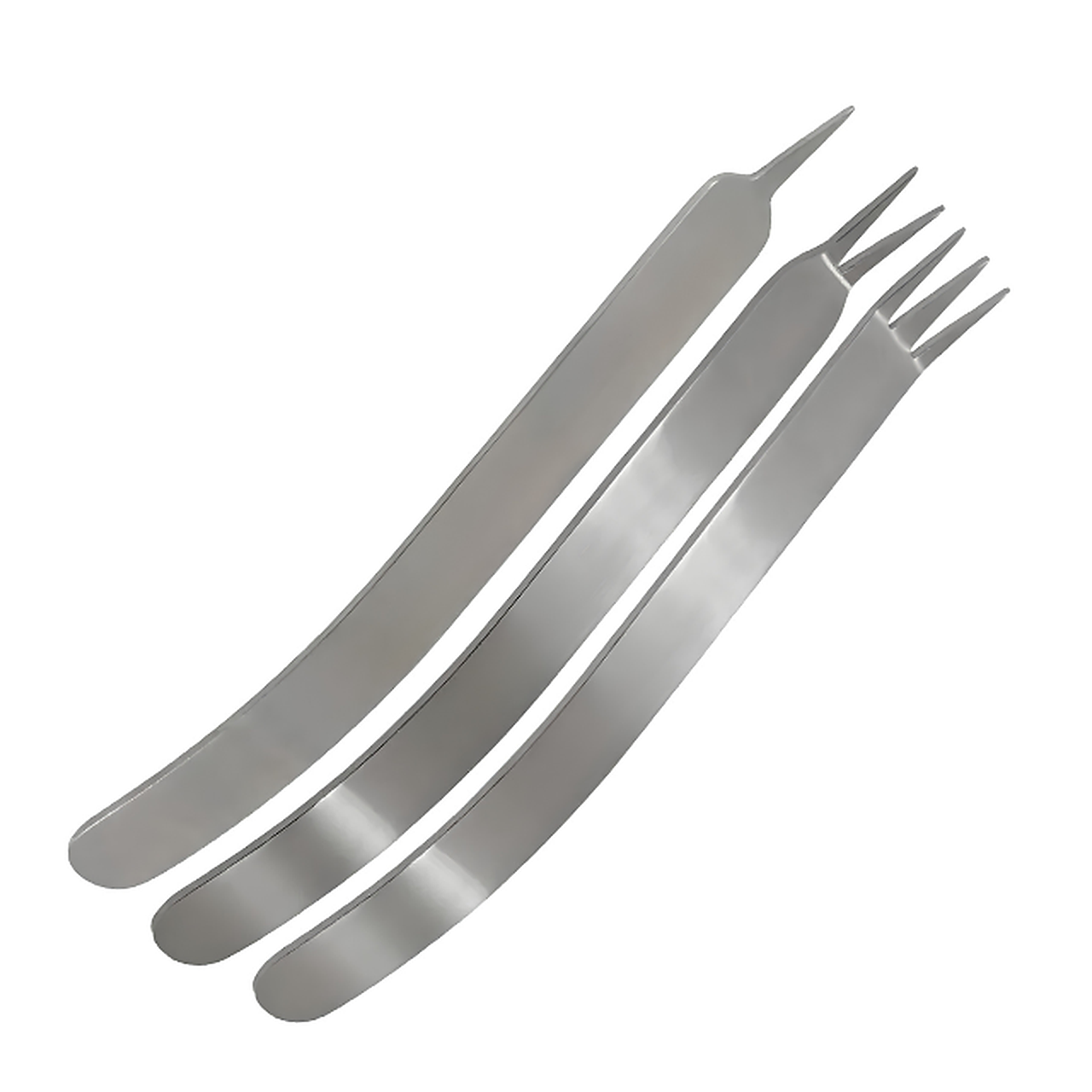
Capsule Retractors
From $64.00
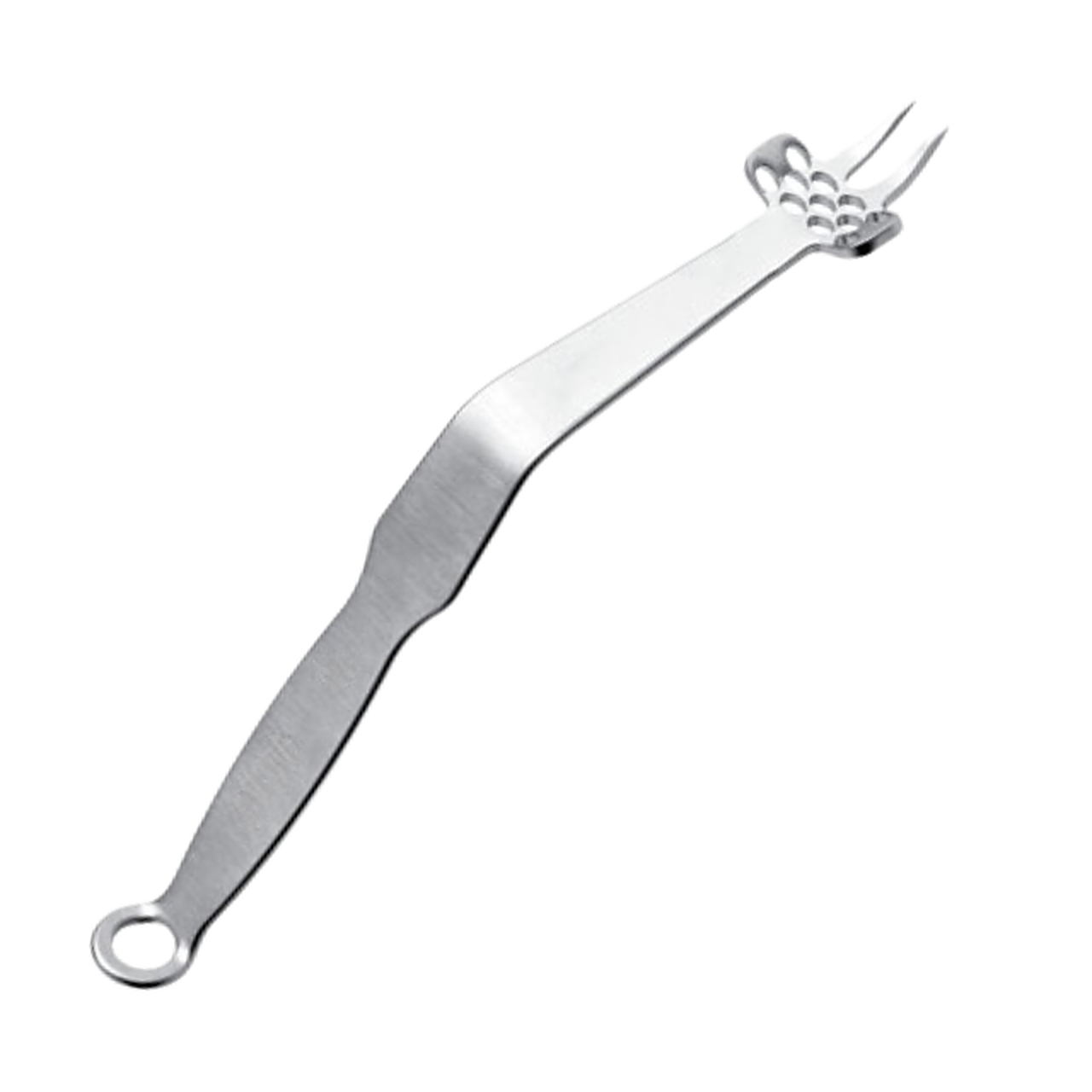
Lateral Soft Tissue Retractors
From $84.00
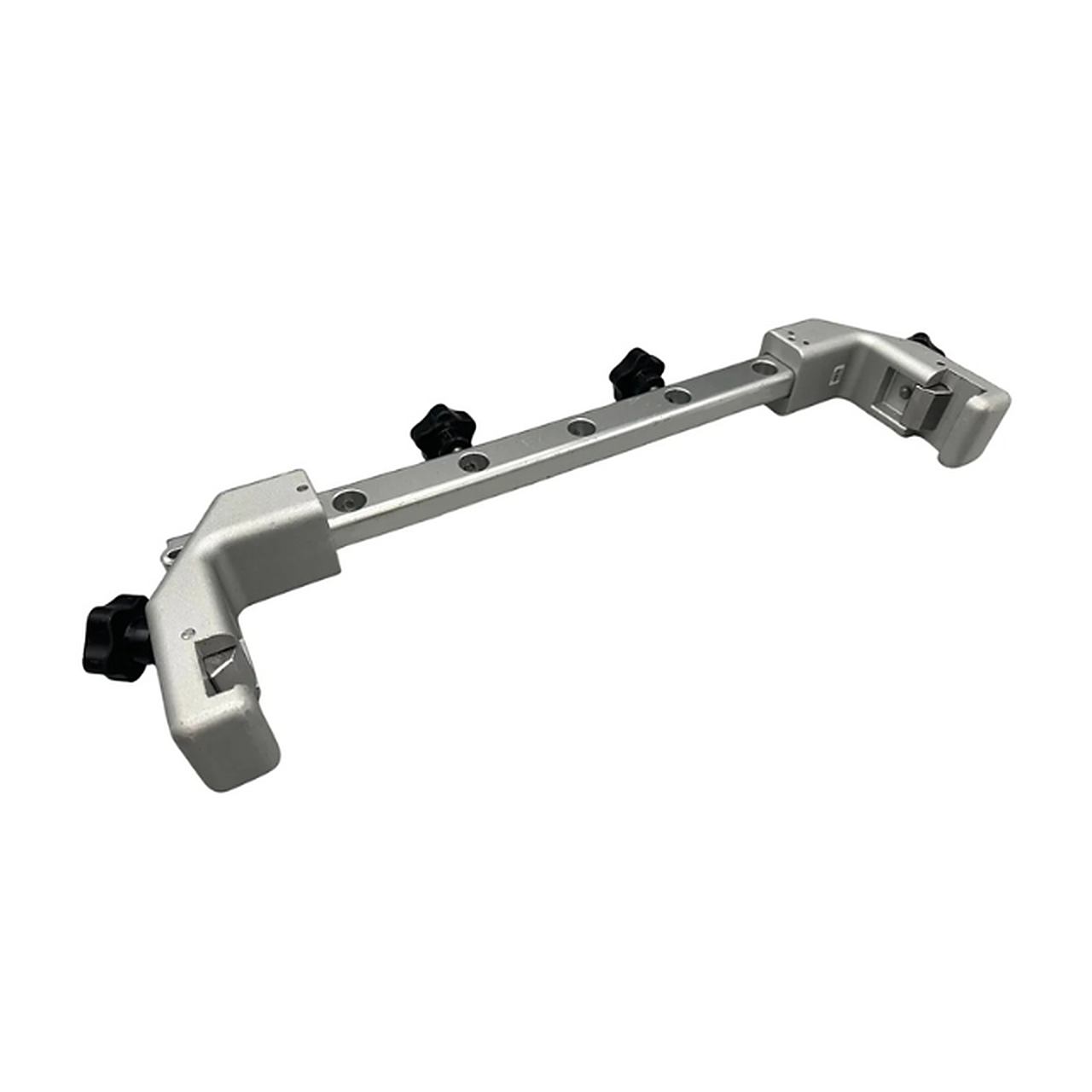
Adjustable Mayfield Adaptor
$1,199Free Shipping
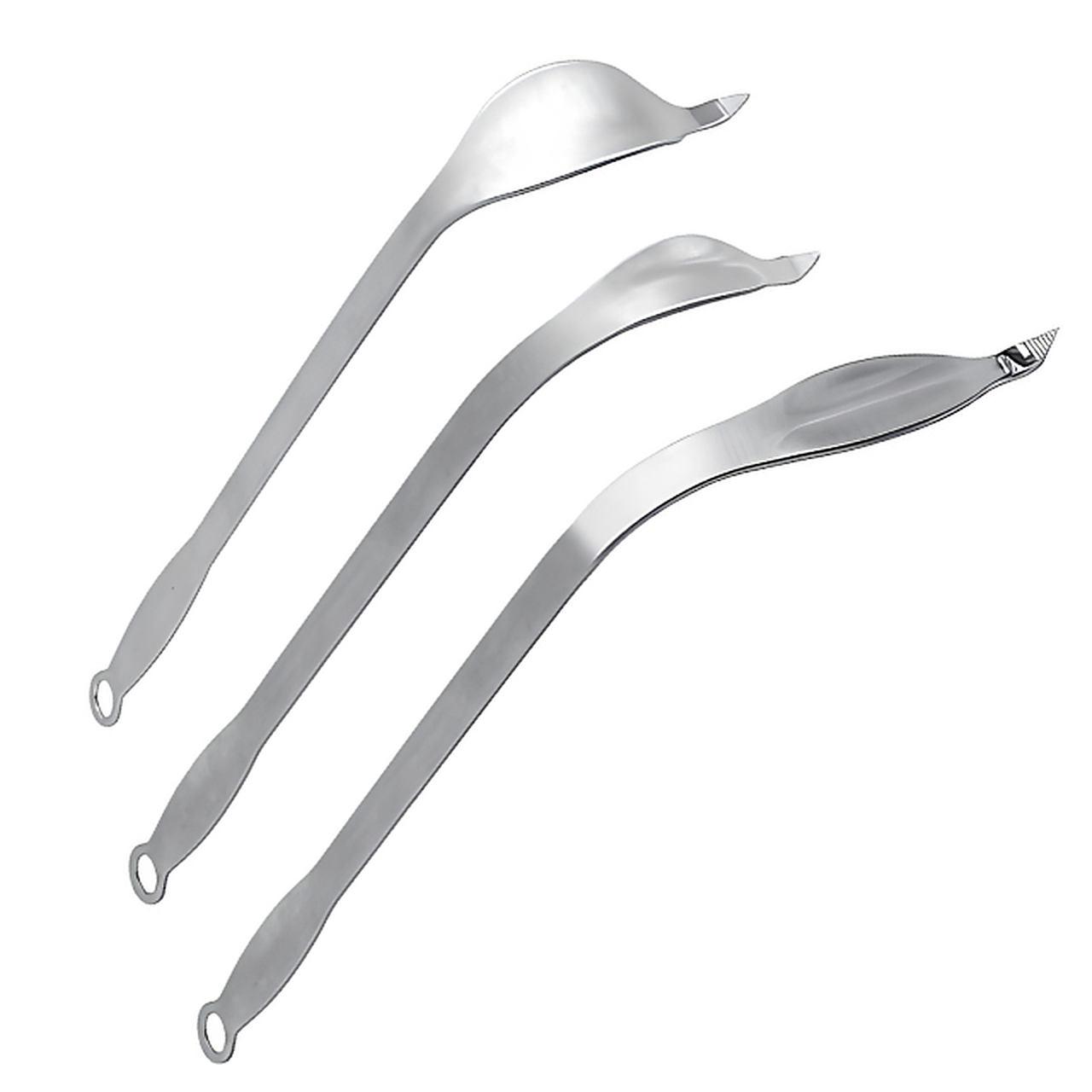
Cobra Retractor
From $79.00
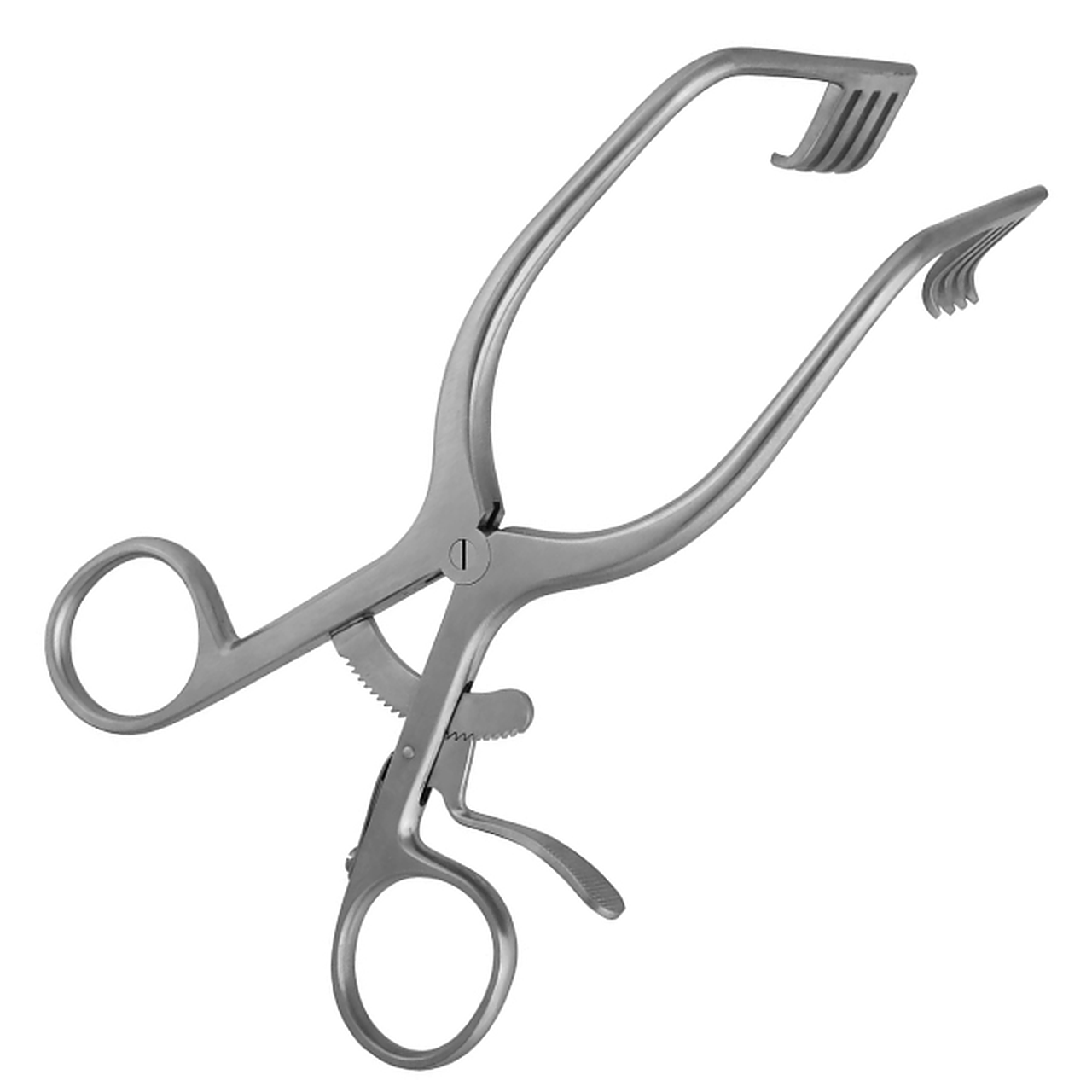
Adson Self-Retaining Cerebellar Retractor
From $189
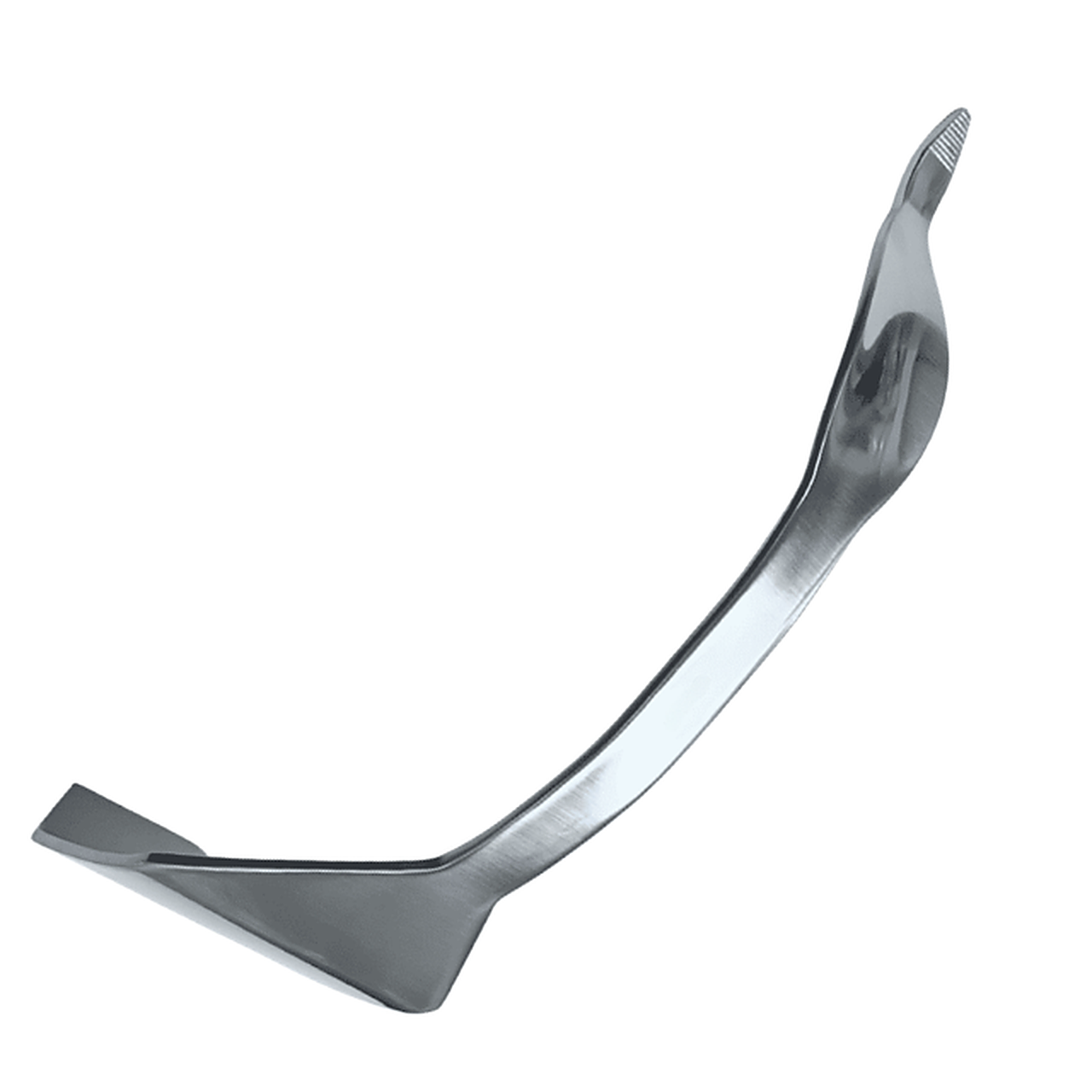
Cobra Retractor with Hand Rest
$169
Need Surgical Retractors or Components?
Tell us what you need, including the product, configuration, quantity and destination country. Retractor Maker can provide availability, specifications and pricing.
Request a Quote