
Plastic Surgery Retractors
Lip Retractor: Surgical Uses, Types & Selection Guide
Author: Saad Shahid · Updated · 7 min read
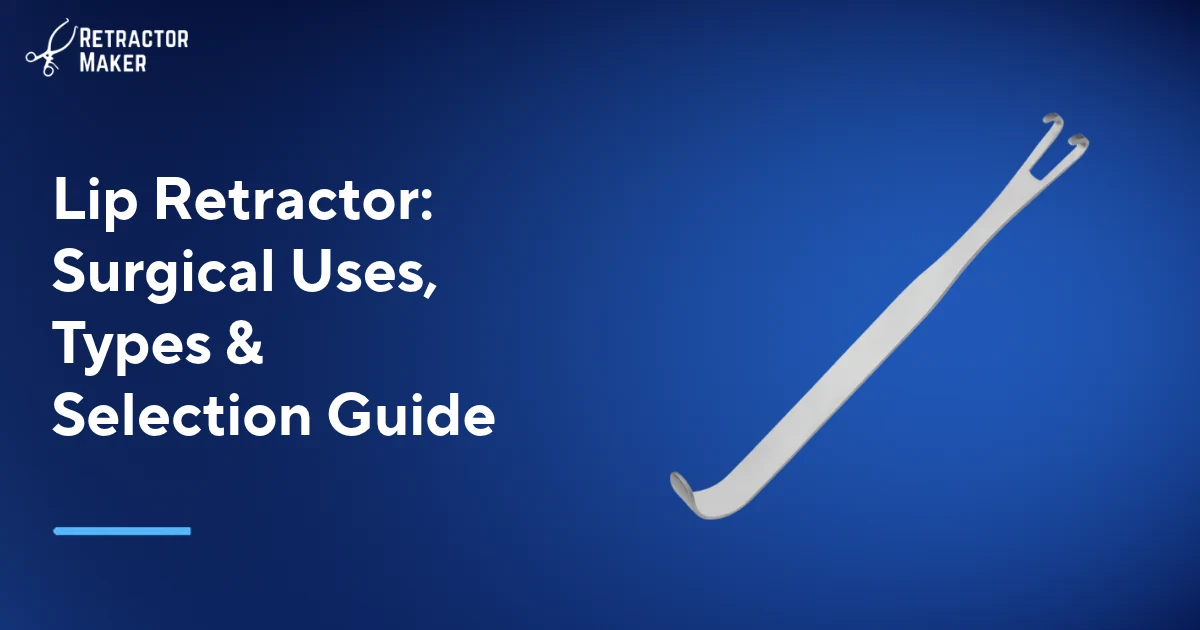
Compare lip retractor designs for oral, maxillofacial and nasal surgery. Review sizes, handling, sterilization and buying options from Retractor Maker.
Retractors discussed in this guide: Arnett Le Fort Upper Lip Retractor, Bishop Lip And Cheek Retractor, Cronin Lip & Nostril Retractor, Lip And Cheek Retractor. Browse all surgical retractors.
A lip retractor is a surgical instrument that holds the lip away from the operative field to improve visibility and access. Depending on its design, it may also retract the cheek, support vestibular mucosa or provide nasal exposure. For surgeons and operating room teams, the important distinction is not simply the instrument name: it is which tissues the working end supports and which surgical approach it serves. This guide compares the lip retractor patterns available from Retractor Maker and explains practical selection, handling and reprocessing considerations.
What is a lip retractor?
A surgical lip retractor provides controlled soft-tissue displacement rather than cutting or grasping tissue. Its working surface supports the lip while the operator maintains the exposure needed for the procedure. The patterns compared here are handheld instruments, so their position and retraction force depend on continuous manual control.
Lip and cheek retractors have overlapping functions, but they are not automatically interchangeable. An upper-lip pattern intended to expose the anterior maxilla differs from a deep-reach instrument intended for lower-jaw exposure. Likewise, a combined nasal and lip instrument has working ends selected for a different anatomical task. Matching the design to the operative site helps avoid relying on excessive traction to obtain a view.
What is a lip retractor used for?
Lip retractors are used for exposure during dental, oral, maxillofacial and selected nasal or reconstructive procedures. The intended application varies by pattern. Selection should follow the planned operation and the operating clinician’s assessment, rather than treating every instrument in the category as suitable for every procedure.
- Le Fort osteotomies and orthognathic surgery: the Arnett Le Fort Upper Lip Retractor elevates and protects the upper lip and vestibular mucosa while exposing the anterior maxilla.
- Dental and intraoral surgery: the Bishop Lip And Cheek Retractor retracts and protects lips, cheeks and buccal mucosa.
- Cleft lip repair and rhinoplasty: the Cronin Lip & Nostril Retractor retracts the nostrils and elevates the upper lip.
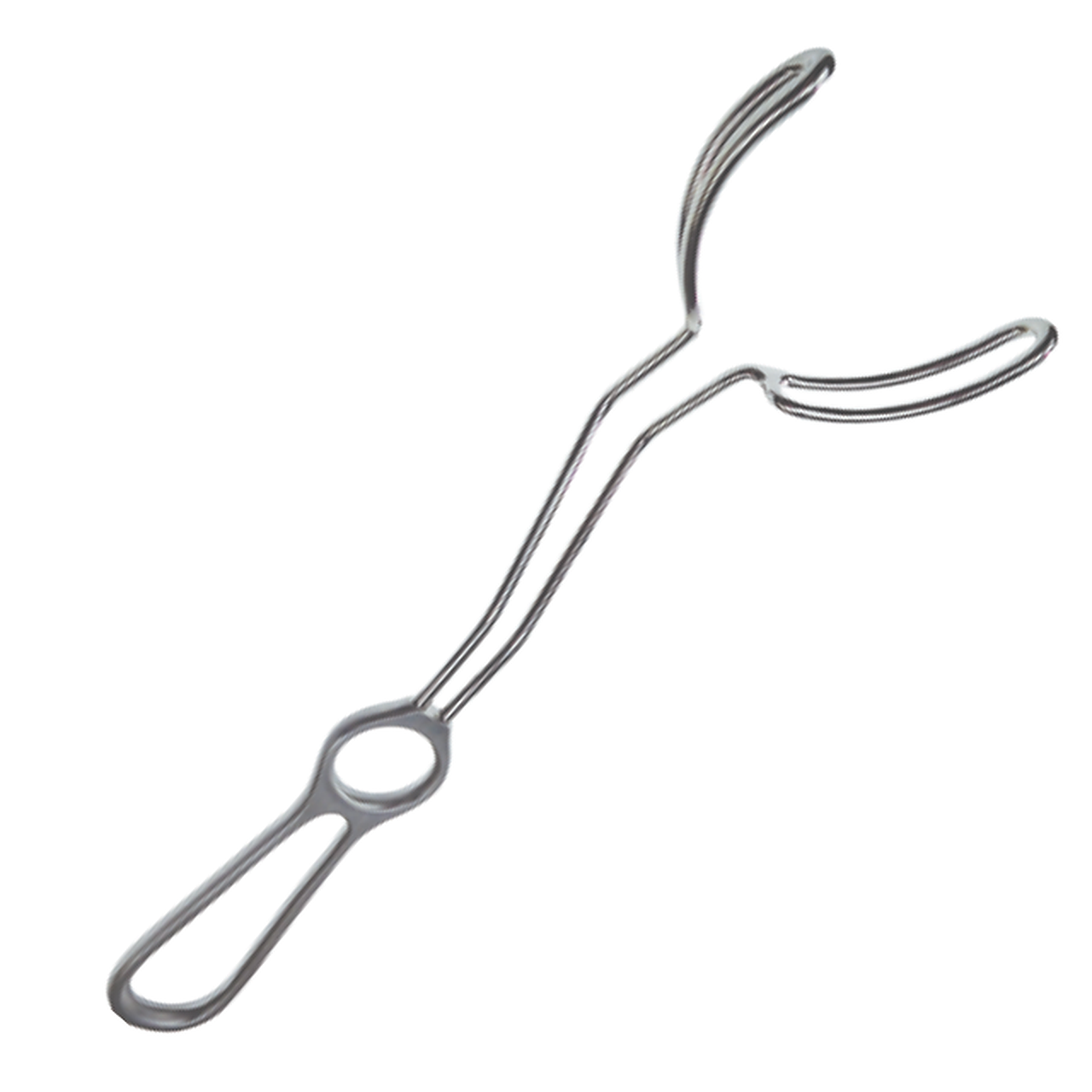
- Lower-jaw exposure: the Lip And Cheek Retractor retracts lips and cheeks during oral and maxillofacial surgery.
- Dental, alveolar and oral surgery: the Martin-Simplex Cheek and Lip Retractor retracts the cheeks and lips.
For tray planning, organize these instruments by exposure requirement. A team preparing for anterior maxillary exposure needs a different working profile from a team preparing for lower-jaw access or nasal retraction.
Which design features and parts matter?
The working end, connecting body and handle determine how a lip retractor contacts tissue and how the operator controls it. Blade curvature should suit the intended tissue surface. Handle shape and reach influence hand position relative to the operative field, while single-ended and double-ended configurations change how the instrument is oriented.
Working surfaces and handle profiles
The Arnett pattern has a broad, anatomically curved blade and an ergonomic flat handle with lateral grip grooves. Bishop has curved blades with smooth, rounded margins and a contoured handle. Cronin combines two blunt nasal prongs with a curved lip end. The Lip And Cheek Retractor has a smooth curved blade and a flat handle with lateral grip serrations. Martin-Simplex uses a narrow-necked shank, a fenestrated concave blade and a flat, solid handle.
All listed patterns use Premium Grade AISI 304/316 Stainless Steel (Non-Magnetic). Material specification does not replace correct handling or validated reprocessing. Similarly, rounded margins and supportive contours do not eliminate the possibility of pressure injury if traction is excessive or poorly directed.
Which lip retractor types and sizes are available?
The available patterns differ in working-end geometry, reach and intended exposure. The table compares the supplied product details; an unlisted dimension should be confirmed before ordering rather than inferred from another pattern.
| Product name | Design and listed dimensions | Typical use |
|---|---|---|
| Arnett Le Fort Upper Lip Retractor | Handheld upper-lip pattern; broad, anatomically curved blade; flat grooved handle. Dimensions not specified. | Upper-lip and vestibular mucosa elevation during Le Fort osteotomies and orthognathic surgery. |
| Bishop Lip And Cheek Retractor | Handheld, double-ended; curved blades with rounded margins; 13.5 cm overall length; 27 mm wide blades. | Lip, cheek and buccal mucosa retraction during dental and intraoral surgery. |
| Cronin Lip & Nostril Retractor | Handheld, double-ended; two blunt nasal prongs and curved lip end; 6″ (15.2 cm) overall length; 14 mm wide profiles on both ends. | Nostril retraction and upper-lip elevation during cleft lip repair and rhinoplasty. |
| Lip And Cheek Retractor | Handheld, single-end deep-reach pattern; curved blade and serrated flat handle; 26 cm overall length. | Lip and cheek retraction for lower-jaw exposure during oral and maxillofacial surgery. |
| Martin-Simplex Cheek and Lip Retractor | Handheld, single-end; fenestrated concave blade and narrow-necked shank; listed lengths of 10 cm and 4 ½ inches / 11 cm. | Cheek and lip retraction during dental, alveolar and oral surgery. |
Overall length and working width describe different characteristics. A longer instrument is not necessarily a wider retractor, and neither measurement alone establishes suitability for a patient. Confirm the selected variant and any missing blade dimensions with the supplier.
How should a lip retractor be positioned?
A trained clinician should position the working end under direct vision, supporting the intended tissue with only the traction needed for exposure. Placement depends on anatomy, the surgical approach and the instrument’s intended use. These general handling principles do not replace procedural training or the manufacturer’s instructions.
- Before use, verify that the selected pattern matches the planned exposure and has completed the required reprocessing.
- Inspect the working surfaces for roughness, damage or deformation before tissue contact.
- Seat the appropriate working surface against the intended tissue, avoiding trapped tissue or unintended pressure on adjacent structures.
- Apply controlled manual traction and reassess tissue appearance, pressure and visibility throughout use.
- Release or reposition when exposure requirements change; coordinate movement with the surgeon and assistant.
For double-ended patterns, verify which end is required before placement and remain aware of the unused end. Do not compensate for an unsuitable blade contour or inadequate reach by increasing force.
How do you clean and sterilize a lip retractor?
All listed retractors are supplied non-sterile and are fully autoclavable. They require appropriate cleaning and sterilization before clinical use. Individual protective packaging is provided, but protective packaging should not be mistaken for a sterile barrier.
Follow the manufacturer’s validated instructions and the facility’s reprocessing policy for cleaning, rinsing, drying, inspection, packaging and steam sterilization. Pay attention to blade contours, grip grooves, serrations, prongs and fenestrations where soil may remain. Sterilization does not substitute for cleaning. Remove damaged instruments from service, and protect working ends during storage and transport.
The supplied product information does not specify a sterilization temperature, exposure time or detergent. Request the applicable instructions for use before establishing a cycle; do not select processing parameters solely from the material description or the statement that an instrument is autoclavable.
How do you choose and buy from Retractor Maker?
Choose a lip retractor by intended procedure, tissue contact profile and required reach. Hospital buyers should confirm the exact product name, configuration and dimensions with the clinical team. Include reprocessing instructions, packaging requirements and inspection criteria in the purchasing review.
Retractor Maker is a surgical retractor manufacturer and exporter in Sialkot, Pakistan, offering wholesale supply, OEM services and worldwide shipping. Each listed product is brand new, individually protectively packaged and available with a minimum order quantity of 1 piece. For a quotation, identify the pattern, listed size where applicable, quantity, destination and any OEM requirements. Confirm current pricing, requested specifications, shipping arrangements and delivery timing before ordering.
Clinical notice: This guide is for surgical teams and hospital buyers. Always follow the manufacturer's instructions for use (IFU) and your hospital's sterilization rules before clinical use.
Frequently Asked Questions
What is a lip retractor used for in surgery?
A lip retractor holds the lip away from the operative field to improve surgical access and visibility. Depending on the pattern, it may also retract cheeks, support vestibular mucosa or assist nasal exposure. The listed instruments serve dental, oral, maxillofacial, cleft lip and rhinoplasty applications, with selection determined by each pattern’s intended use.
What is the difference between a lip and cheek retractor?
A lip retractor primarily supports lip displacement, while a cheek retractor supports cheek displacement, although some instruments perform both functions. Bishop, Lip And Cheek Retractor and Martin-Simplex are listed for combined cheek and lip retraction. Arnett is intended for upper-lip and vestibular mucosa elevation, while Cronin combines nasal and upper-lip functions.
Which lip retractor is used for Le Fort surgery?
The Arnett Le Fort Upper Lip Retractor is intended for Le Fort osteotomies and orthognathic surgery. Its broad, anatomically curved blade elevates and protects the upper lip and vestibular mucosa while exposing the anterior maxilla. The flat handle has lateral grip grooves for manual control. Confirm any required dimensions with Retractor Maker before ordering.
What sizes do lip retractors come in?
The listed lip retractor sizes vary by pattern rather than following a shared size range. Bishop is 13.5 cm long with 27 mm wide blades; Cronin is 15.2 cm long with 14 mm wide working profiles. Lip And Cheek Retractor is 26 cm long, and Martin-Simplex lists 10 cm and 4 ½ inches / 11 cm options. Arnett dimensions are not specified.
Can lip retractors be autoclaved?
All lip retractors listed in this guide are fully autoclavable and supplied non-sterile. Clean, inspect, package and sterilize them according to the manufacturer’s validated instructions and facility policy before clinical use. The supplied specifications do not provide cycle parameters, so request the applicable instructions rather than assuming a temperature or exposure time.
Where can hospitals buy lip retractors wholesale?
Hospitals can request wholesale lip retractor quotations from Retractor Maker, a manufacturer and exporter in Sialkot, Pakistan. The company offers OEM services and worldwide shipping, and the listed products have a minimum order quantity of 1 piece. Provide the required pattern, size, quantity and destination, then confirm specifications, reprocessing documentation, pricing and shipping arrangements.
About the author
Saad Shahid · Sales & Marketing Manager
Saad Shahid is the Sales & Marketing Manager and founder of Retractor Maker, started in 2023 in Sialkot, Pakistan. He also works with his father at Hospitech Traders, the family surgical instrument business founded in 1989.
Related Blogs & Guide
Related Retractors
Gifford-Jansen Retractor
From $84.00
Hajek Cheek Retractor
$24.00
Lip And Cheek Retractor
$49.00
Bellucci Endaural Retractors
From $174
Aufricht Nasal Retractor
From $59.00
Aufricht Walter Nasal Retractor
$69.00
Need Surgical Retractors or Components?
Tell us what you need, including the product, configuration, quantity and destination country. Retractor Maker can provide availability, specifications and pricing.
Request a Quote