
Orthopedic & Spine Retractors
Chandler Retractor: Uses, Design, Sizes & Buying Guide
Author: Saad Shahid · Updated · 7 min read
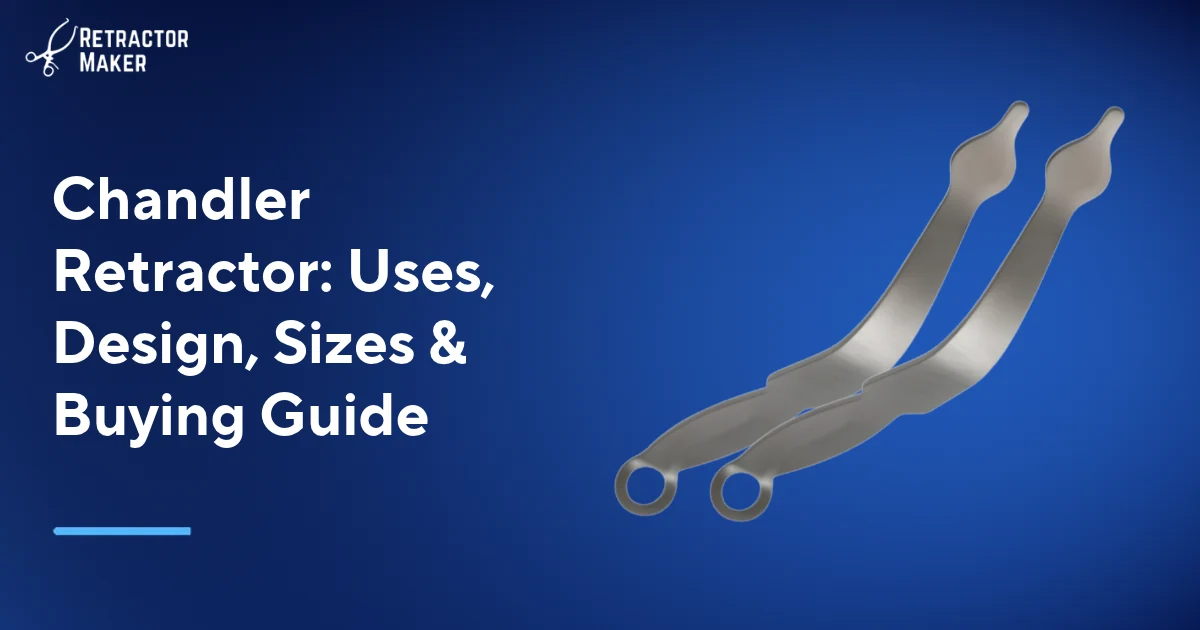
Learn Chandler retractor uses, blade options, positioning principles, and sterilization considerations for hip surgery, plus buying from Retractor Maker.
Retractors discussed in this guide: Chandler Retractor. Browse all surgical retractors.
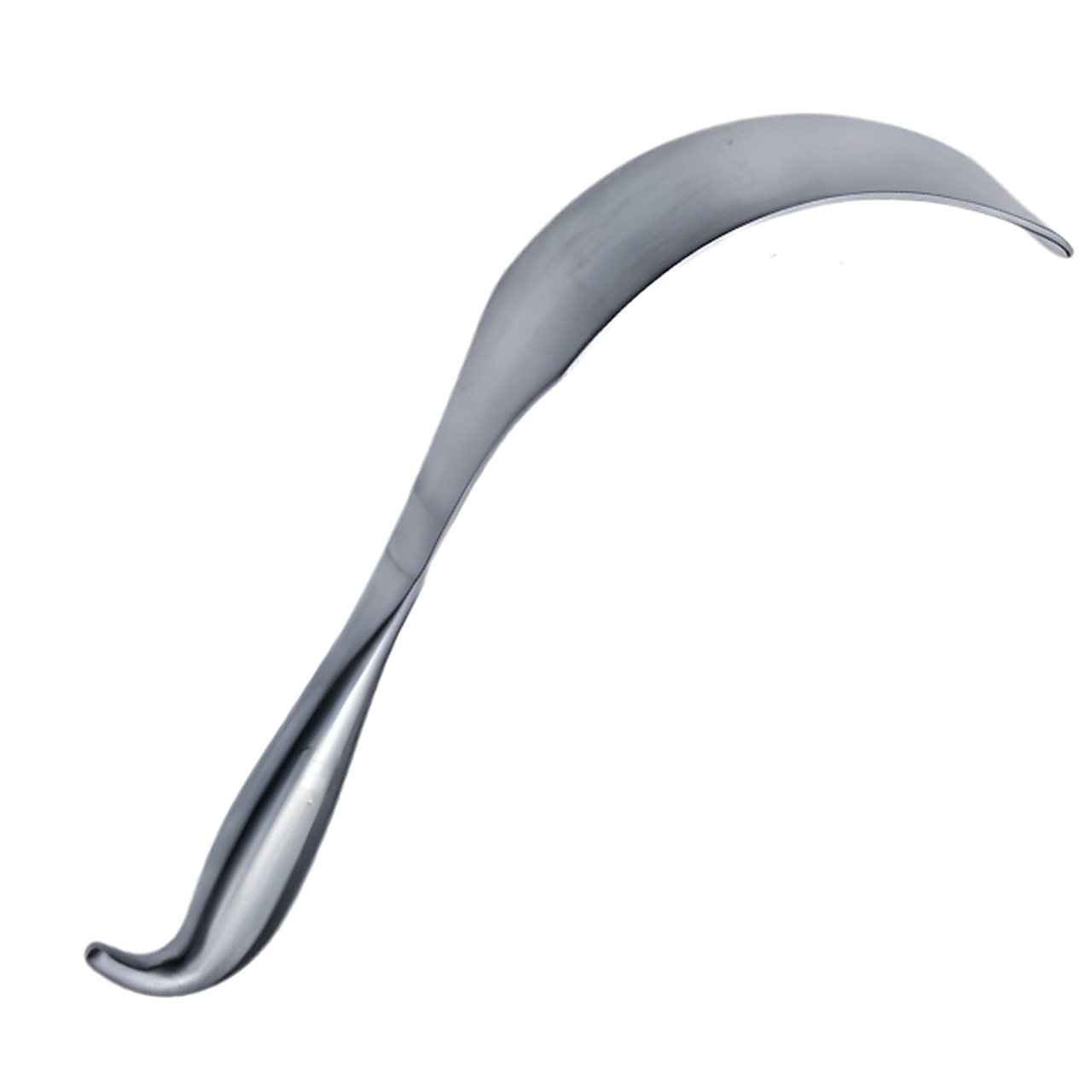
A Chandler retractor is a handheld orthopedic instrument used to leverage bone and retract heavy musculature during total hip arthroplasty and femoral reconstructive procedures. Its backward-arching, leaf-shaped blunt blade supports tissue displacement around the proximal femur and hip joint. For surgeons, OR staff, and hospital buyers, the main selection considerations are blade profile, operative access, manual control, and reprocessing requirements. This guide explains the listed configuration, compares available tip options, and outlines practical questions to resolve before purchase.
What is a Chandler retractor?
The Chandler retractor is a bone leverage retractor intended for deep orthopedic exposure. Unlike a self-retaining retractor, this handheld instrument depends on the operator to maintain its position and applied force. Its leaf-shaped blade forms the working end, while the flat handle provides the point of manual control. The listed overall length is 9.25″ (23.49 cm), with a broad profile.
Its defining combination is a backward-arching blade, blunt edges, and a heavy-duty handle designed for sustained leverage counter-traction. These features should be considered together rather than selecting by instrument name alone. A blunt blade still requires careful positioning: edge shape does not eliminate the possibility of pressure injury or damage from excessive force. Suitability depends on the operative anatomy, the planned exposure, and the surgeon's technique.
What is a Chandler retractor used for?
The stated uses are total hip arthroplasty and femoral reconstructive procedures. In these settings, the instrument supports exposure by displacing heavy musculature and providing controlled bone leverage around the proximal femur and hip joint. It is an exposure instrument, not a substitute for the dissection needed to establish a safe operative plane.
- Total hip arthroplasty: supports tissue displacement and exposure around the hip joint.
- Femoral reconstructive procedures: assists with bone leverage and retraction of heavy musculature.
- Proximal femoral exposure: provides a leaf-shaped working surface for tissue displacement within the stated applications.
These applications place the Chandler retractor within orthopedic instrumentation. The product information does not specify a particular surgical approach or establish compatibility with every hip or femoral procedure. Surgeons should choose retractors according to the structures requiring exposure and protection. OR teams should confirm the requested profile during tray preparation rather than treating all leaf-shaped retractors as interchangeable.
What are its main design features and parts?
The main working features are the backward-arching leaf-shaped blade and the heavy-duty flat ergonomic handle. The blade provides the tissue-contacting surface; the handle allows the operator to direct and maintain retraction. Available leaf profiles span a listed blade width range of 16.0 mm to 25.0 mm. Exact widths for individual tip options are not provided.
Blade shape and handle control
The blade has blunt edges intended for deep joint manipulation. Its backward arch and leaf shape are relevant to how it fits the exposure, while the handle is designed for sustained leverage counter-traction. Neither feature determines a universally safe force. Contact location, surrounding anatomy, and the duration of retraction remain important clinical considerations.
Material and supplied condition
The listed material is Premium Grade AISI 304/316 Stainless Steel (Non-Magnetic). The instrument is brand new, supplied non-sterile, and fully autoclavable, with individual protective packaging. Protective packaging should not be confused with a sterile barrier. Buyers should retain the supplied identification and processing documentation so that receiving, sterile processing, and OR teams work from the same product information.
Which Chandler retractor tip options are available?
Retractor Maker lists Small, Medium, and Large tip options for the Chandler Retractor. These are leaf-profile options within the supplied product, not separately documented instrument families. All share the stated use in total hip arthroplasty and femoral reconstruction. The comparison below shows the listed design distinctions without assigning unsupported dimensions or procedure-specific indications.
| Product option | Design | Typical use | Listed price |
|---|---|---|---|
| Chandler Retractor — Small | Narrow leaf | Bone leverage and heavy-musculature retraction during total hip arthroplasty and femoral reconstruction | $69.00 |
| Chandler Retractor — Medium | Intermediate leaf | Bone leverage and heavy-musculature retraction during total hip arthroplasty and femoral reconstruction | $74.00 |
| Chandler Retractor — Large | Widened leaf | Bone leverage and heavy-musculature retraction during total hip arthroplasty and femoral reconstruction | $79.00 |
Profile selection should balance access with the tissue-contacting surface needed for the planned exposure. A larger option is not automatically preferable, and a smaller option is not automatically safer. Ask for the exact blade width of the selected tip before standardizing a tray or replacing an existing instrument. Confirm current pricing and commercial terms when requesting a quotation.
How should a Chandler retractor be positioned?
Positioning should be performed by trained surgical personnel under the operating surgeon's direction, with the blade contact and nearby anatomy assessed before force is applied. The following are general retraction principles, not a procedure-specific technique or a replacement for training and the manufacturer's instructions. Safe placement depends on the surgical approach and the anatomy exposed.
- Confirm the requested tip profile and inspect the instrument before it enters service.
- Establish the intended exposure before placing the blade; avoid blind advancement into unassessed tissue.
- Protect vulnerable structures and avoid trapping soft tissue at the contact point.
- Apply only the controlled force needed for exposure, with clear communication between the surgeon and assistant.
- Reassess blade position as the operative field changes, and release or reposition retraction when appropriate.
Because this is a handheld instrument, the assistant's control is part of maintaining exposure. Unexpected resistance, slipping, or loss of visibility should prompt reassessment rather than an automatic increase in leverage. Blunt edges do not justify forceful placement.
How is a Chandler retractor cleaned and sterilized?
The Chandler Retractor is supplied non-sterile and is fully autoclavable. It must undergo appropriate processing before surgical use. Autoclavable status does not provide a complete sterilization protocol: the supplied product information does not state cycle parameters, cleaning chemistry, or a detailed reprocessing sequence. Obtain the manufacturer's validated instructions and follow the facility's sterile processing procedures.
Cleaning must precede sterilization because retained soil can compromise processing. After use, handle and transport contaminated instruments according to facility policy, then clean, rinse, dry, and inspect as directed by the applicable instructions. Pay attention to the blade edges, curved surfaces, and handle condition. Remove instruments with damage or concerning surface changes from service for assessment. Select packaging and autoclave settings using validated instructions rather than generic time or temperature assumptions.
How do you choose and buy from Retractor Maker?
Choose the tip profile against the surgeon's exposure requirements, then verify dimensions and processing documentation before ordering. Retractor Maker is a surgical retractor manufacturer and exporter in Sialkot, Pakistan, offering wholesale supply, OEM services, and worldwide shipping. The listed minimum order quantity for this product is 1 Piece. Confirm any OEM requirements separately rather than assuming unlisted configurations are available.
For a purchasing inquiry, identify the Chandler Retractor, requested Small, Medium, or Large option, quantity, and delivery destination. Request exact tip dimensions, current pricing, lead time, shipping terms, and reprocessing instructions. For hospital standardization, have the surgical and sterile processing teams review the same specification. This helps align clinical selection with receiving checks, tray preparation, and the facility's processing workflow.
Clinical notice: This guide is for surgical teams and hospital buyers. Always follow the manufacturer's instructions for use (IFU) and your hospital's sterilization rules before clinical use.
Frequently Asked Questions
What is a Chandler retractor used for?
A Chandler retractor is used to leverage bone and retract heavy musculature during total hip arthroplasty and femoral reconstructive procedures. Its backward-arching, leaf-shaped blunt blade supports tissue displacement around the proximal femur and hip joint. Selection and placement depend on the intended exposure, operative anatomy, and the surgeon's technique.
Is a Chandler retractor self-retaining?
The Chandler Retractor is handheld, not self-retaining. An operator maintains its position and controls the applied retraction or leverage through the heavy-duty flat ergonomic handle. Because exposure depends on manual control, communication between the surgeon and assistant and reassessment of blade contact are important during use.
What sizes does the Chandler retractor come in?
The Chandler Retractor is offered with Small, Medium, and Large leaf-shaped tip options. The listed overall length is 9.25″ (23.49 cm), and blade widths span 16.0 mm to 25.0 mm across the profiles. Individual tip widths are not specified, so confirm the exact dimensions of the selected option before ordering.
Can a Chandler retractor be autoclaved?
The Chandler Retractor is fully autoclavable but is supplied non-sterile. It requires appropriate processing before surgical use, with cleaning before sterilization. The product information does not provide validated cycle parameters or a detailed reprocessing protocol, so obtain the manufacturer's instructions and use the facility's approved sterile processing workflow.
What material is the Chandler retractor made from?
The listed material is Premium Grade AISI 304/316 Stainless Steel (Non-Magnetic). Material identification does not replace cleaning, inspection, and sterilization requirements. Buyers should review the supplied documentation with their sterile processing team and obtain any additional material documentation required by their procurement process before approving the instrument for use.
Where can hospitals buy a Chandler retractor?
Hospitals can purchase the Chandler Retractor from Retractor Maker, a manufacturer and exporter in Sialkot, Pakistan. The company offers wholesale supply, OEM services, and worldwide shipping, and the product's listed minimum order quantity is 1 Piece. Request a quotation specifying tip option, quantity, destination, and documentation requirements, and confirm current commercial terms.
About the author
Saad Shahid · Sales & Marketing Manager
Saad Shahid is the Sales & Marketing Manager and founder of Retractor Maker, started in 2023 in Sialkot, Pakistan. He also works with his father at Hospitech Traders, the family surgical instrument business founded in 1989.
Related Blogs & Guide
Related Retractors
Senn Forward Retractor
$49.00
Brewster Retractor
From $159
Langenbeck Retractor-Solid Handle
$49.00
Murphy Retractor
From $44.00
Leriche Retractor-Atraumatic Wide Blade
From $94.00
Lobster General Retractor System
$2,699Free Shipping
Need Surgical Retractors or Components?
Tell us what you need, including the product, configuration, quantity and destination country. Retractor Maker can provide availability, specifications and pricing.
Request a Quote