
Cardiovascular Retractors
Henly Retractor: Uses, Frame, Center Blades & Selection
Author: Saad Shahid · Updated · 7 min read
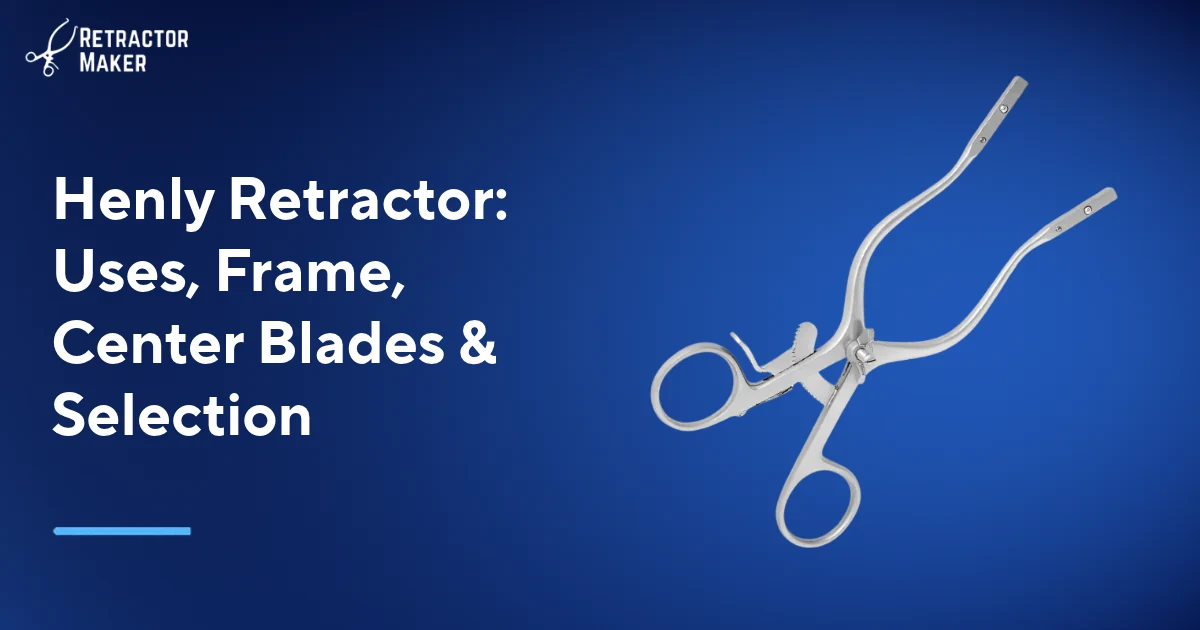
Learn how the Henly retractor frame and center blades support surgical exposure, with guidance on sizes, positioning, sterilization, and purchasing.
Retractors discussed in this guide: Henly Retractor Center Blade, Henly Retractor Frame. Browse all surgical retractors.
A Henly retractor is a modular, self-retaining surgical instrument used to hold soft tissue aside and maintain exposure of an operative field. Its frame supports interchangeable blades, while a locking mechanism maintains the selected opening. Retractor Maker offers a Henly Retractor Frame and a separate Henly Retractor Center Blade. Understanding their different roles helps surgeons select the assembly, OR staff prepare compatible components, and hospital buyers avoid confusing an attachment with a complete retractor.
What is a Henly retractor?
The Henly retractor is a self-retaining system rather than a single handheld blade. The frame provides the mechanical support and locking action; the attached blades contact and retract tissue. Once appropriately positioned and locked, the assembly maintains exposure without continuous manual holding. Self-retaining operation does not remove the need for regular assessment of tissue pressure and the operative field.
The distinction between frame and attachment matters when specifying an order. The Henly Retractor Center Blade is designed to mount onto a Henly frame for center-wall retraction; it is not a standalone self-retaining instrument. Buyers should confirm which components are included in a quotation rather than assume that a frame listing includes every blade needed for the intended procedure.
What is a Henly retractor used for?
The listed Henly frame is intended for hands-free soft-tissue exposure in vascular and orthopedic surgery. The center blade is intended for center-wall tissue retraction in vascular and general surgery when mounted on a compatible self-retaining frame. These component-specific indications should guide selection; they should not be treated as a claim that every configuration suits every procedure.
- Vascular surgery: the frame maintains soft-tissue exposure, while a compatible center blade provides center-wall retraction.
- Orthopedic surgery: the frame supports interchangeable side and center blades for hands-free retraction.
- General surgery: the center blade provides center-wall retraction when fitted to a compatible Henly frame.
- OR preparation: staff should match the requested frame and attachments to the surgeon's planned exposure requirements.
The clinical purpose is controlled access and visibility, not maximum opening. Whether a Henly assembly is appropriate depends on the operative site, tissue condition, available working space, and the surgeon's judgment. Specialty labels alone are insufficient to determine the required blade or retraction force.
What are the Henly retractor's main parts?
Frame, handles, and locking mechanism
The Henly Retractor Frame is a self-retaining mechanical chassis with a modular blade attachment bar. It has dual finger ring handles and a built-in multi-position locking ratchet. Its maximum spread capacity is 6 cm (60 mm) total arm separation width. This is a mechanical capacity, not a recommended opening for every surgical site.
An integrated crossbar socket is designed to host interchangeable Henly center blades. The frame is intended to mount both side and center blades, but the supplied product information does not specify individual side-blade options. Confirm the required attachments and their compatibility before assembling a procedure-specific instrument set.
Center blade and tissue-contacting lip
The center attachment has a standardized mounting shank and a downward-curved blade with a rounded atraumatic lip for tissue security. It supports center-wall retraction and three-way exposure within a compatible assembly. The atraumatic design description does not mean tissue injury is impossible; pressure, placement, and duration still require clinical attention. Both products specify Premium Grade AISI 304/316 Stainless Steel (Non-Magnetic).
Which Henly retractor components and sizes are available?
The products listed are the Henly Retractor Frame and the Henly Retractor Center Blade. The frame supplies the retaining mechanism, while the center blade is available in selectable sizes. Their functions are complementary, so they should be compared as components rather than interchangeable alternatives.
| Product name | Design | Typical use | Listed size or capacity |
|---|---|---|---|
| Henly Retractor Frame | Self-retaining chassis with modular attachment bar, dual finger rings, and multi-position ratchet | Hands-free soft-tissue exposure in vascular and orthopedic surgery | 6 cm (60 mm) maximum total arm separation |
| Henly Retractor Center Blade | Modular center attachment with standardized mounting shank, downward curve, and rounded atraumatic lip | Center-wall tissue retraction in vascular and general surgery on a compatible frame | 19×15 mm, 25×15 mm, 32×15 mm, 76×15 mm |
Listed center-blade prices are 19×15 mm ($48), 25×15 mm ($50), 32×15 mm ($52), and 76×15 mm ($54). Confirm current pricing when requesting a quotation. The supplied dimensions are blade-size designations; do not interpret them as frame spread or assume an orientation not established by the product information.
How should a Henly retractor be positioned?
A trained surgical team should position the Henly retractor under direct visualization, using only the retraction needed for adequate exposure. Exact placement depends on anatomy and the procedure. These general considerations do not replace the manufacturer's instructions, surgical training, or local clinical protocols.
- Before use, confirm appropriate reprocessing, component compatibility, and satisfactory mechanical condition.
- Check that blade attachments are securely seated and that the ratchet engages and releases correctly.
- Place the tissue-contacting surfaces under direct vision, protecting nearby vessels, nerves, and other vulnerable structures.
- Increase opening gradually and reassess tissue tension before relying on the locked position.
- Monitor exposure and tissue condition throughout use, reducing or releasing retraction when clinically appropriate.
- Release the mechanism in a controlled manner before repositioning or removing the assembly.
A slipping attachment, unreliable lock, or visibly damaged tissue-contacting surface warrants removal from service for assessment. Do not compensate for insecure engagement by applying greater force. If exposure is inadequate, reassess placement and component selection rather than automatically increasing the opening.
How are Henly retractors cleaned and sterilized?
Both listed Henly products are supplied non-sterile and are fully autoclavable. They require appropriate cleaning and sterilization before surgical use, including first use. Individual protective packaging protects the supplied instrument but should not be treated as a sterile barrier.
Follow the manufacturer's validated reprocessing instructions and facility procedures for preparation, cleaning, inspection, packaging, and sterilization. Pay attention to mounting interfaces and the frame's locking mechanism, where contamination can be difficult to see. Where instructed, separate modular components so cleaning can reach their contact surfaces.
The supplied information does not include a validated sterilization cycle, exposure time, temperature, detergent, or disassembly method. Obtain those instructions rather than inferring settings from the stainless steel designation or the word autoclavable. Inspect cleaned components for residual soil, damage, and correct function before packaging and processing.
How do you choose and buy a Henly retractor?
Choose the frame and blade according to the intended exposure, required compatibility, and the surgical team's preferences. For a replacement center blade, verify the existing Henly frame interface before ordering. For a new setup, identify all required attachments and confirm the quoted contents.
Retractor Maker is a surgical retractor manufacturer and exporter in Sialkot, Pakistan, offering wholesale supply, OEM services, and worldwide shipping. Both listed products are brand new, supplied in individual protective packaging, and have a minimum order quantity of 1 piece. State the product name, center-blade size where applicable, quantity, destination, and any OEM requirements in your inquiry.
Hospital buyers should also request compatibility confirmation and reprocessing documentation before purchase. Confirm pricing, shipping arrangements, and order contents in the quotation. This gives procurement and sterile processing teams a shared specification without assuming that a frame, blade, or protective package constitutes a complete ready-to-use sterile set.
Clinical notice: This guide is for surgical teams and hospital buyers. Always follow the manufacturer's instructions for use (IFU) and your hospital's sterilization rules before clinical use.
Frequently Asked Questions
What is a Henly retractor used for?
A Henly retractor is used to maintain soft-tissue exposure during surgery. The listed frame is intended for vascular and orthopedic surgery, while the center blade is intended for center-wall retraction in vascular and general surgery on a compatible frame. Selection should follow the component's intended use and the surgeon's assessment of the operative site.
Is the Henly retractor self-retaining?
The Henly Retractor Frame is self-retaining, but the center blade alone is not. The frame uses dual finger ring handles and a multi-position ratchet lock to maintain retraction with compatible attachments. The center blade mounts onto the frame to retract tissue. The surgical team must continue monitoring tissue pressure and positioning even when the instrument holds its opening.
What sizes does the Henly retractor center blade come in?
The Henly Retractor Center Blade is available in 19×15 mm, 25×15 mm, 32×15 mm, and 76×15 mm sizes. These are blade-size designations, not the frame's opening capacity. Choose according to the required exposure and compatible frame, and seek clarification if the dimension orientation is important to your purchasing specification.
What is the maximum opening of the Henly retractor frame?
The Henly Retractor Frame has a maximum total arm separation of 6 cm (60 mm). This describes its mechanical spread capacity, not an opening that should routinely be used. Appropriate retraction depends on anatomy, tissue condition, and operative requirements, with the surgical team using only the opening needed for adequate exposure.
Can a Henly retractor be autoclaved?
Both listed Henly retractor components are fully autoclavable and supplied non-sterile. Cleaning and sterilization are required before surgical use, including first use. The product information does not provide validated cycle parameters, so obtain the manufacturer's reprocessing instructions rather than selecting a temperature or exposure time solely from the material designation.
Where can hospitals buy Henly retractors wholesale?
Hospitals can contact Retractor Maker in Sialkot, Pakistan, for Henly retractor wholesale inquiries. The manufacturer and exporter offers OEM services and worldwide shipping, with a listed minimum order quantity of 1 piece for each product. Specify the frame or center blade, required blade size, quantity, and destination, and confirm compatibility, included components, and reprocessing documentation before ordering.
About the author
Saad Shahid · Sales & Marketing Manager
Saad Shahid is the Sales & Marketing Manager and founder of Retractor Maker, started in 2023 in Sialkot, Pakistan. He also works with his father at Hospitech Traders, the family surgical instrument business founded in 1989.
Related Blogs & Guide



Related Retractors
Gifford-Jansen Retractor
From $84.00
Hajek Cheek Retractor
$24.00
Lip And Cheek Retractor
$49.00
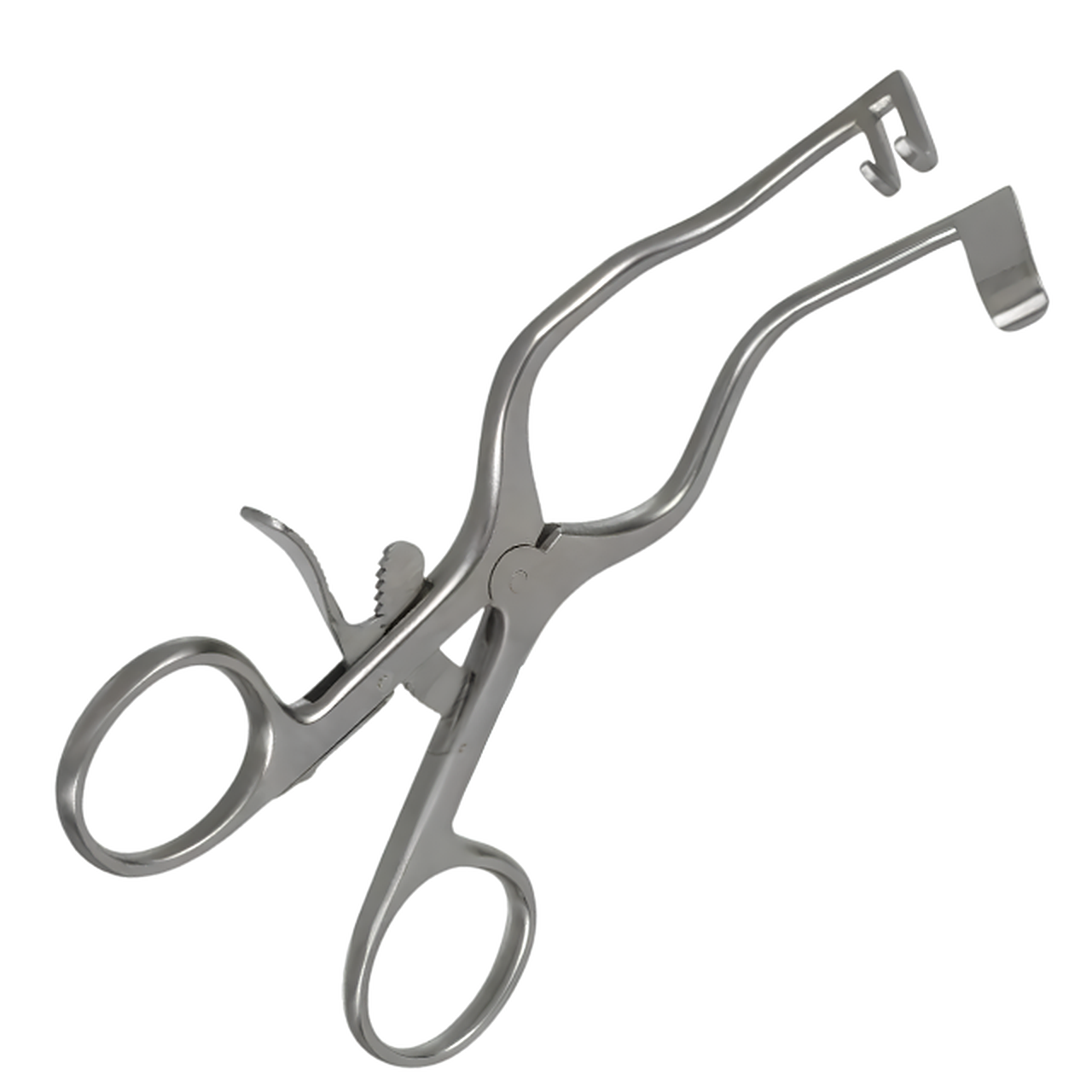
Bellucci Endaural Retractors
From $174
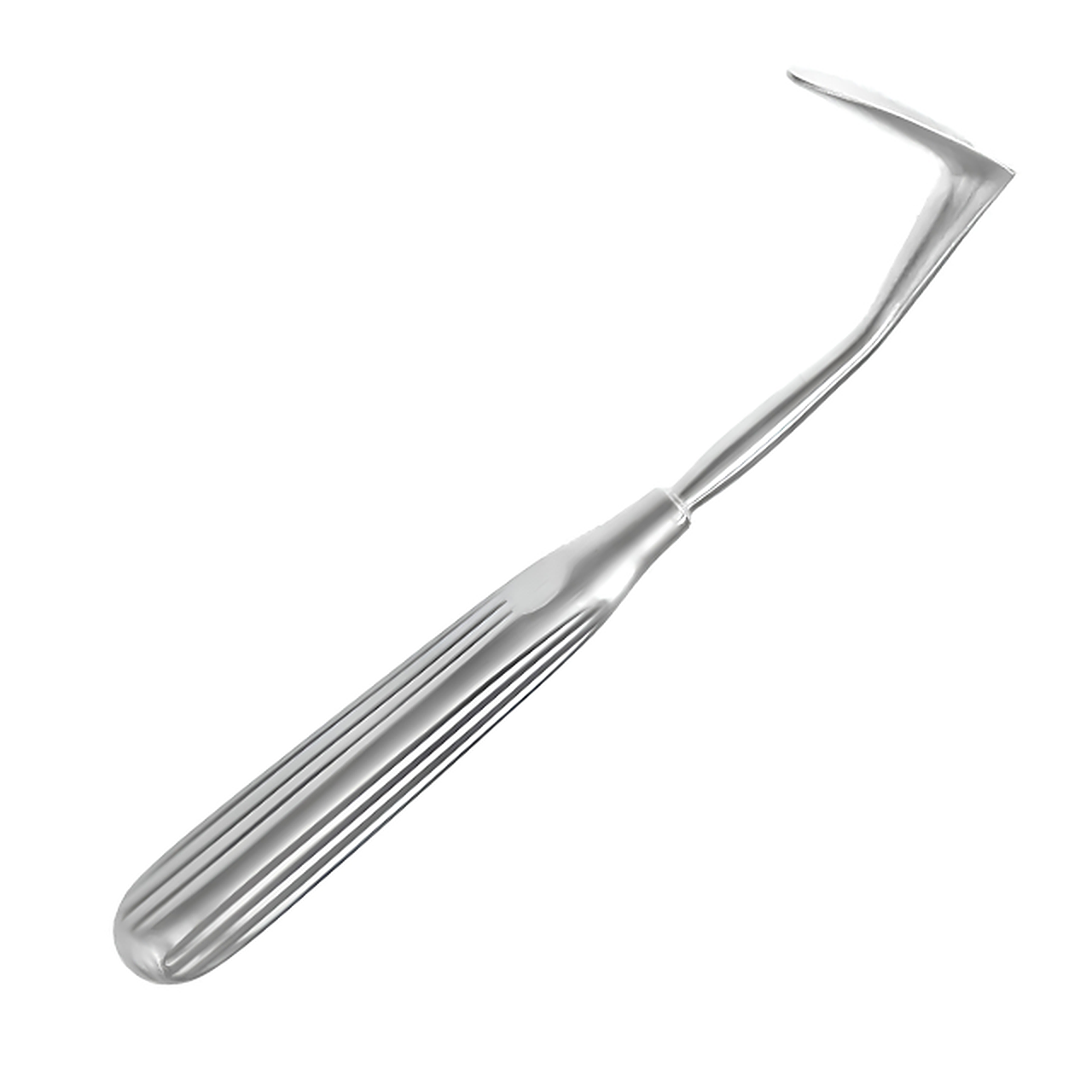
Aufricht Nasal Retractor
From $59.00
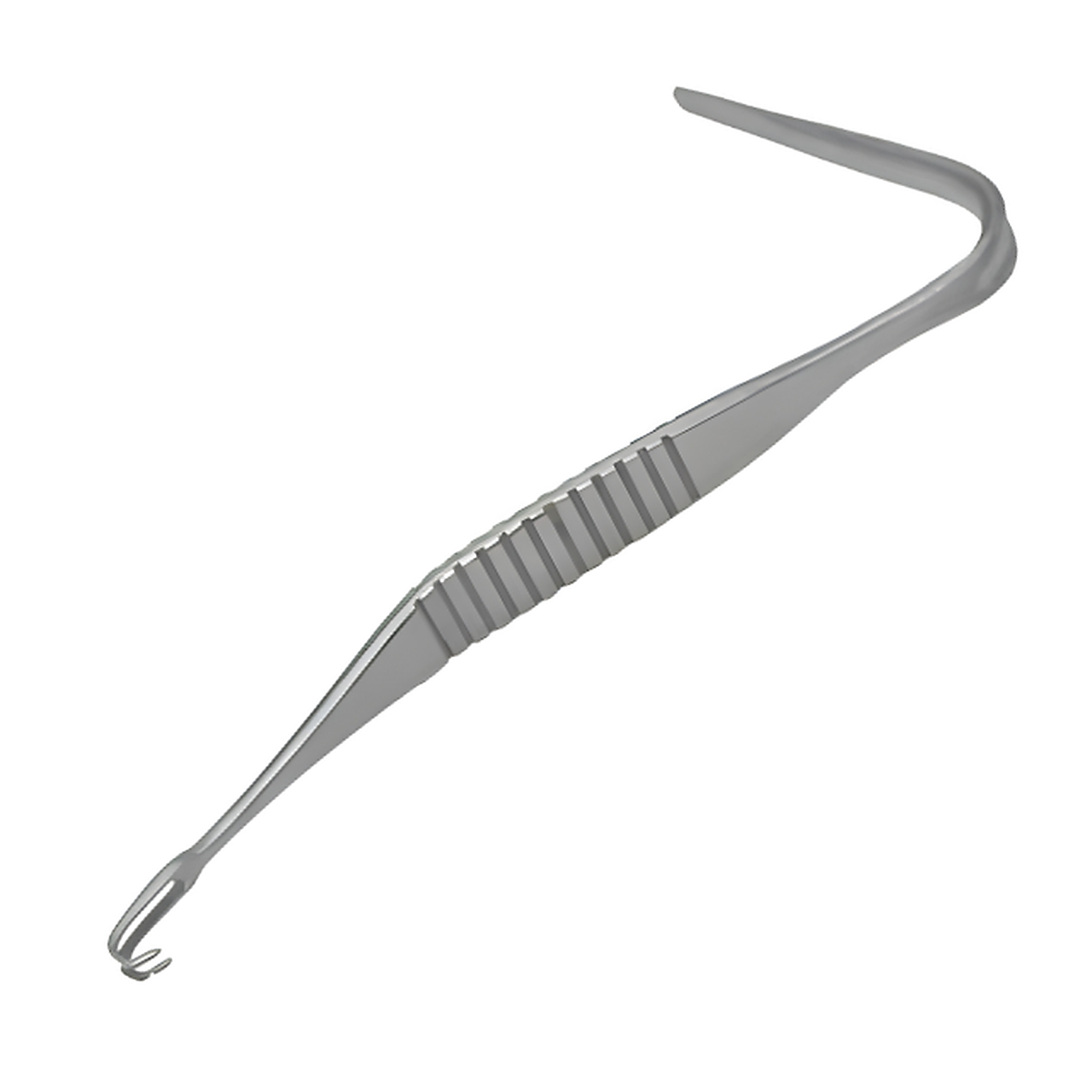
Aufricht Walter Nasal Retractor
$69.00
Need Surgical Retractors or Components?
Tell us what you need, including the product, configuration, quantity and destination country. Retractor Maker can provide availability, specifications and pricing.
Request a Quote