
Surgical Retractor Guides
What Is a Rochard Retractor? Uses, Components, and Assembly
Author: Saad Shahid · Updated · 9 min read
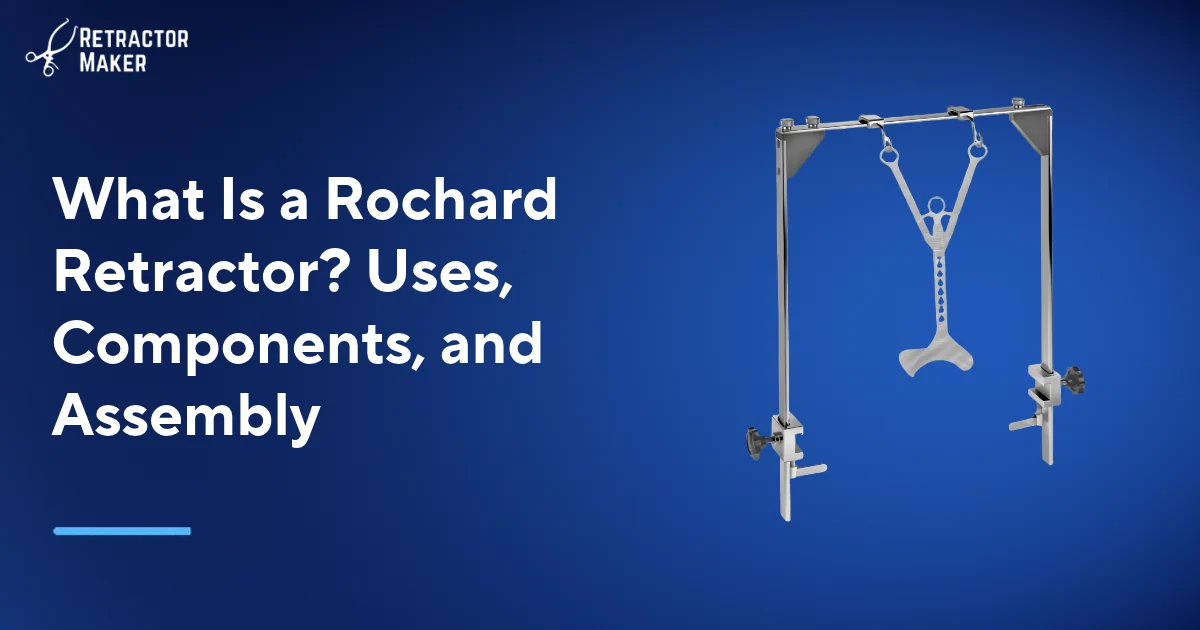
The Rochard Retractor is a table-mounted surgical retraction system that creates stable, hands-free operative exposure. This guide covers its mounting frame, fixation device, abdominal blade sizes, assembly, selection, and reprocessing.
Retractors discussed in this guide: Rochard Retractor. Browse all surgical retractors.
A retractor holds soft tissue away to provide surgical access and viewing. Surgery often requires broad soft tissue exposure. Traditionally, assistants hold instruments for deep access. During long procedures, fatigue and inconsistent tension can obstruct the surgeon's view.
The Rochard Retractor addresses these challenges with table-mounted surgical retraction. It anchors to operating table accessory rails and forms a rigid overhead frame. The frame holds soft tissue securely and still. Understanding the Rochard Retractor, its parts, and its setup helps surgical teams and buyers make informed choices.
Contents
What Is a Rochard Retractor?
A Rochard Retractor is a self-retaining, table-mounted system for abdominal retraction. It keeps the surgical field open and hands-free without resting on the patient's body or requiring manual pulling. A rigid frame clamped directly to the operating table rails provides stability.
The system has four main working parts:
- Table Clamping Hardware: Two rail clamps attach to standard operating table rails to secure the setup.
- Overhead Mounting Frame: Two vertical side bars and a cross bar form a stable bridge over the surgical area.
- Fixation Mechanism: A special Rochard fixation device connects to the cross bar to hold and position the retractor blade.
- Abdominal Retractor Blades: Interchangeable blades of different depths hold soft tissue margins and maintain controlled retraction.
These parts form one system for static, hands-free retraction. They maintain clear sightlines so the surgical team can focus on the procedure.
What Does the Rochard Retractor Set Include?
The complete Rochard Retractor set includes hardware for mounting, fixation, and retraction:
| Quantity | Component | Dimensions / Details |
|---|---|---|
| 2 | Rail Clamp | Operating table rail attachment |
| 2 | Table Side Bar | 26″ (Mounting Frame) |
| 1 | Table Cross Bar | 21″ (Mounting Frame) |
| 1 | Rochard Fixation Device | Cross bar blade fixation mechanism |
| 1 | Rochard Abdominal Retractor | 50 × 90 mm |
| 1 | Rochard Abdominal Retractor | 50 × 105 mm |
| 1 | Rochard Abdominal Retractor | 50 × 120 mm |
What Does Each Component Do?
- Rail Clamps (2 pieces): Attach to the operating table side rails, secure the frame, and provide a firm assembly base.
- Table Side Bars (26″, 2 pieces): Mount vertically into the rail clamps to raise the frame above the patient and provide enough vertical space.
- Table Cross Bar (21″, 1 piece): Spans horizontally across both side bars, forming an overhead bridge and a track for the fixation device.
- Rochard Fixation Device (1 piece): Secures onto the cross bar to lock and position the retractor blade at the required angle and location.
- Rochard Abdominal Retractors (3 sizes): Interchangeable blades directly hold and move soft tissue away from the surgical field.
What Is a Rochard Retractor Used For?
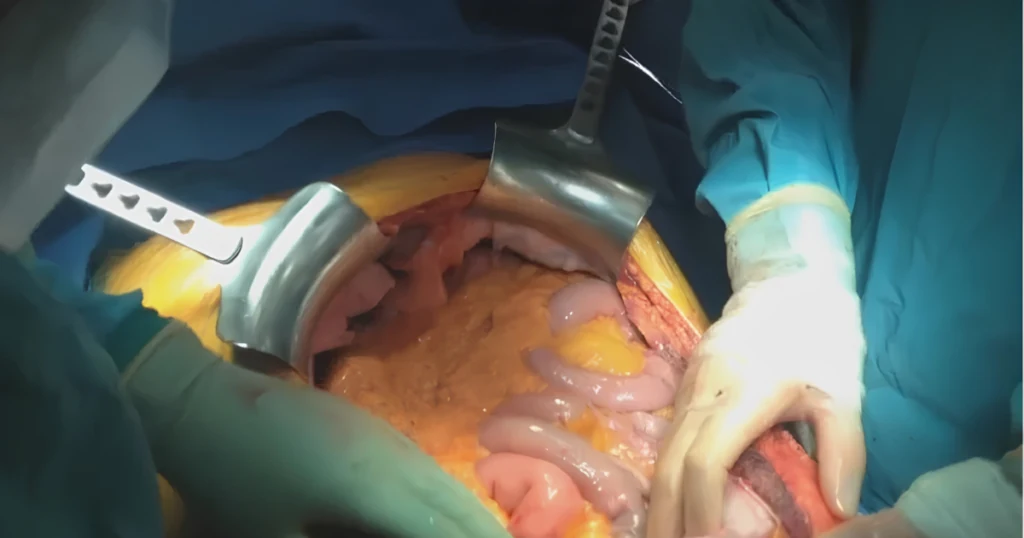
The Rochard Retractor provides stable retraction for procedures that need clear, long-lasting exposure. It supports surgical access from the operating table.
The system's key functions include:
- Maintaining Operative Access: Holds abdominal wall structures and moves soft tissue away from the incision site.
- Supporting Stable Tissue Retraction: Applies static mechanical force to maintain uniform traction throughout the procedure.
- Table-Mounted Support: Removes the need for assistants to hold instruments, freeing personnel for other tasks.
- Adjustable Exposure Depth: Offers 90 mm, 105 mm, or 120 mm blades to match the required surgical depth.
Clinical note: Proper setup and use depend on the surgical procedure, patient anatomy, and the operating surgeon's judgment.
What Sizes Are Rochard Abdominal Retractors?
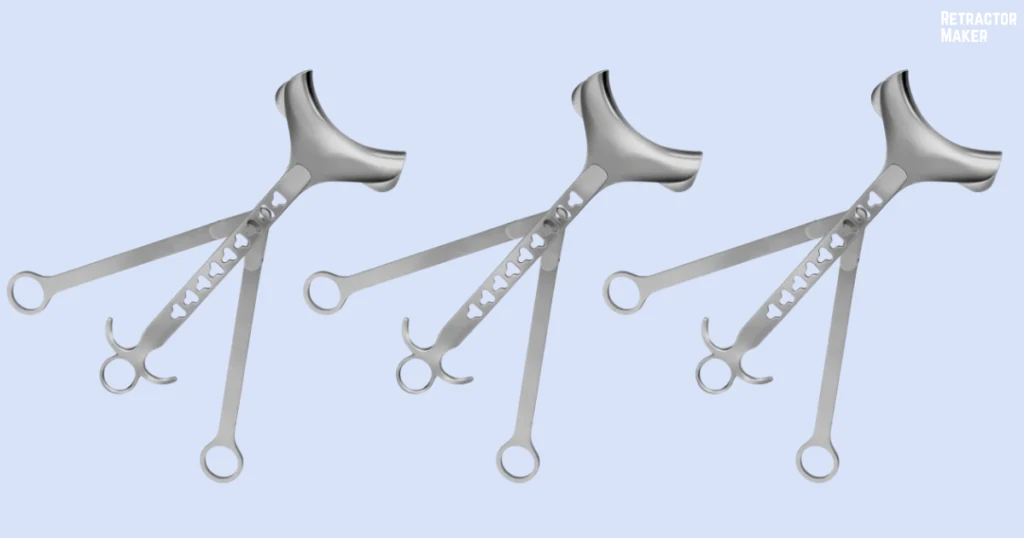
The Rochard Retractor set includes three interchangeable abdominal retractor blade sizes:
- 50 × 90 mm Abdominal Retractor: For shallower surgery and smaller incisions.
- 50 × 105 mm Abdominal Retractor: A medium blade for standard surgical depths.
- 50 × 120 mm Abdominal Retractor: Provides extended reach for deeper surgical fields and broader soft tissue movement.
Multiple blade sizes let the surgical team match patient anatomy and procedure needs. Choosing the appropriate size helps avoid over-retraction or poor viewing.
How Is a Rochard Retractor Assembled?
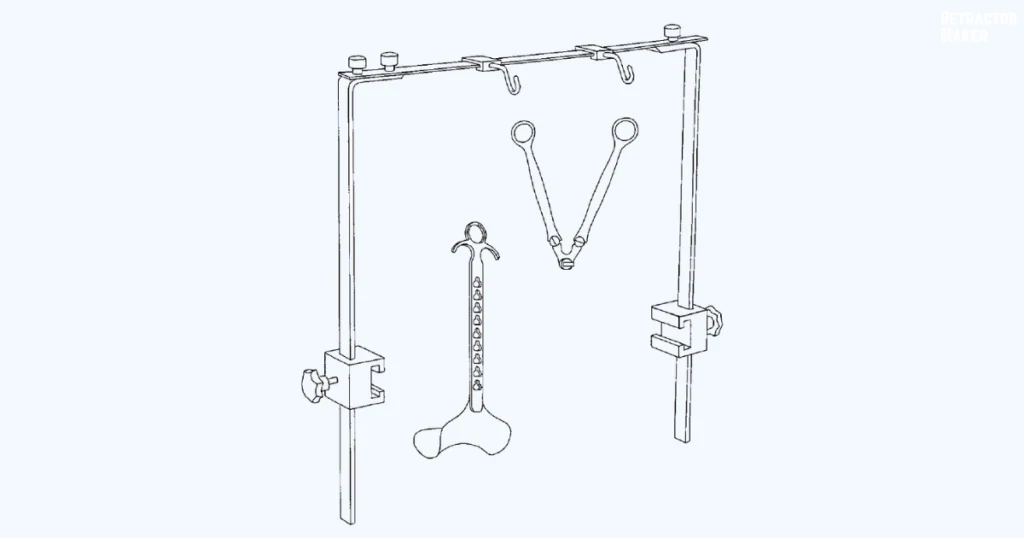
The Rochard Retractor is assembled through the following steps to ensure a rigid mount and clear surgical access:
- Position the Rail Clamps: Firmly attach two rail clamps to the operating table rails near the surgical site.
- Install the Table Side Bars: Insert the two 26-inch side bars vertically into the locked rail clamps and adjust to the required height.
- Connect the Table Cross Bar: Mount the 21-inch cross bar horizontally across both upright side bars to complete the overhead bridge.
- Position the Fixation Device: Attach the Rochard fixation device to the cross bar and slide it to the desired location along the surgical axis.
- Select the Retractor Blade: Choose a Rochard abdominal retractor in 50 × 90 mm, 50 × 105 mm, or 50 × 120 mm based on patient anatomy and tissue depth.
- Attach the Retractor Blade: Insert and secure the chosen retractor blade in the Rochard fixation device, engage the target tissue margin, and lock the fixation mechanism.
- Verify Stability: Check all rail clamps, frame connections, and fixation locking points. Confirm the entire assembly is rigid and secure before continuing.
Safety statement: Trained healthcare professionals must assemble and use the system. Follow manufacturer instructions, hospital rules, and surgical procedure requirements.
What Are the Advantages of Table-Mounted Retraction?
A table-mounted retraction system like Rochard provides practical advantages for surgical teams:
- Rigid, Stable Mounting: Direct table-rail attachment prevents movement or slipping during surgery.
- Hands-Free Operative Exposure: Transfers tissue retraction from people to a mechanical frame.
- Organized Surgical Corridor: The overhead frame spans above the patient to keep the incision area clear.
- Adjustable Retractor Placement: The fixation device allows precise positioning and tension adjustment along the cross bar.
- Reduced Assistant Fatigue: Removes the physical strain of holding retractors during long procedures.
How Do You Choose the Appropriate Configuration?
Choosing and setting up the Rochard Retractor depends on clinical and procedural factors:
- Surgical Approach: The planned incision and access angle determine rail clamp and cross bar placement.
- Operative Field Dimensions: Incision width and length affect setup and where the fixation device locks on the cross bar.
- Tissue Depth: Abdominal wall thickness and anatomical depth determine whether a 90 mm, 105 mm, or 120 mm blade is appropriate.
- Patient anatomy: Body size and physical dimensions determine the required height of the 26-inch side bars and the position of the 21-inch cross bar.
- Surgeon preference: Match the surgical setup to the surgeon's style and instrument needs.
How Does the Rochard Retractor Compare with Hand-Held Retractors?
The Rochard Retractor is a table-mounted system for surgical exposure, unlike manually held retractors. Comparing these approaches helps teams choose the right option.
| Functional Parameter | Rochard Retractor (Table-Mounted) | Hand-Held Retractors (e.g., Deaver, Richardson) |
|---|---|---|
| Mounting Foundation | Attached to operating table rails | Held manually by a surgical assistant |
| Traction Stability | Continuous, static mechanical hold | Subject to assistant fatigue or minor movement |
| Operating Room Personnel | Completely hands-free once locked | Requires dedicated assistant hands throughout |
| Working Corridor | Overhead frame leaves margins open | Handles and arms occupy space near the field |
| Best Suited For | Prolonged procedures, deep exposure | Rapid initial exposure, dynamic repositioning |
How Should the Rochard Retractor Be Cleaned and Sterilized?
The Rochard Retractor needs systematic cleaning and care to maintain performance and mechanical reliability. Reprocess reusable surgical instruments using these steps:
- Decontamination and cleaning: Disassemble all parts after surgery, including frame components, clamps, and blades. Clean with hospital-approved enzymatic detergents. Rinse thoroughly to remove bioburden.
- Inspection and maintenance: Regularly check rail clamp threads, fixation locking screws, and bar connections for wear, alignment, or looseness. Ensure all locking mechanisms work smoothly and securely.
- Sterilization: Reprocess and sterilize all components according to manufacturer instructions and the healthcare facility's standard autoclaving protocols.
Rochard Retractor: Key Features and Uses
The Rochard Retractor provides a stable platform for surgical exposure. Its rigid, table-mounted system attaches directly to operating table rails. This removes fatigue and variability from manual retraction and creates a stable, organized working field.
The Rochard system has a strong mounting frame and an adaptable fixation device. It includes three abdominal retractor sizes: 50 × 90 mm, 50 × 105 mm, and 50 × 120 mm. It is versatile across many procedures and vital for structured, hands-free soft tissue retraction. Trained professionals configure and use the system.
Where Can Buyers Find Related Products and Sourcing Options?
Contact Retractor Maker directly for specialized retraction systems, parts, and custom solutions. Explore the product categories and sourcing options below:
- Product categories: Rochard Retractor Product Page: https://retractormaker.com/rochard-retractor; Abdominal Surgical Retractor Systems: https://retractormaker.com/abdominal-surgical-retractors; Table-Mounted Surgical Retractor Systems: https://retractormaker.com/table-mounted-retractors; Complete Surgical Retractor Catalog: https://retractormaker.com/surgical-retractor-catalog
- Contact our B2B sales team: Request a Direct Factory Quote: https://retractormaker.com/request-quote; Contact Us for Wholesale & OEM Inquiries: https://retractormaker.com/contact-us
Clinical notice: This guide is for surgical teams and hospital buyers. Always follow the manufacturer's instructions for use (IFU) and your hospital's sterilization rules before clinical use.
Frequently Asked Questions
What is a Rochard Retractor?
The Rochard Retractor is a table-mounted system that provides stable, hands-free surgical exposure. Its components include clamps, a frame, a fixation device, and blades. These parts form the system used to maintain exposure without manual holding.
What is a Rochard Retractor used for?
The Rochard Retractor securely holds soft tissue away from the surgical field. This maintains clear visual and physical access to the area being operated on. By holding tissue in position, the system removes the need for manual holding.
Is the Rochard Retractor table-mounted?
Yes, it attaches to standard operating table rails. Two clamps create a rigid support structure.
What components are included in the Rochard Retractor set?
The Rochard Retractor set includes 2 rail clamps, 2 (26″) side bars, 1 (21″) cross bar, 1 fixation device, and 3 Rochard retractors. These components form the table-mounted system, with the bars and clamps providing support for the fixation device and blades.
What abdominal retractor sizes are available?
The Rochard Retractor standard system includes three abdominal blade sizes: 50 × 90 mm, 50 × 105 mm, and 50 × 120 mm. These are the three sizes supplied for the system, which trained professionals configure and use for surgical exposure.
How is the Rochard Retractor assembled?
The Rochard Retractor is assembled by securing the clamps to the operating table rails and inserting the side bars. Next, connect the cross bar and mount the fixation device. Complete the assembly by securing the chosen retractor blade.
Who should assemble and use the Rochard Retractor?
The Rochard Retractor should be assembled and operated only by trained healthcare professionals. Both assembly and use must follow hospital protocols and manufacturer instructions. These requirements apply when configuring the table-mounted system and using it for surgical exposure.
Can the Rochard Retractor fit different surgical configurations?
The Rochard Retractor accommodates different surgical configurations through adjustable components. The clamps, side bar height, and fixation device position can be adjusted. Blade depth can also be changed, allowing trained professionals to configure these parts for the surgical setup.
How should the Rochard Retractor be cleaned and sterilized?
The Rochard Retractor should be disassembled, thoroughly cleaned, inspected, and sterilized after use. Clean all components to remove bioburden, then inspect them for mechanical integrity. Follow hospital protocols and manufacturer instructions when sterilizing the components for reuse.
What types of surgical retractors are discussed in this guide?
The Rochard Retractor is the table-mounted, self-retaining system discussed alongside hand-held retractors in this guide. Hand-held retractors suit rapid initial exposure and dynamic repositioning. The Rochard system suits prolonged procedures and deep exposure, using an overhead frame to keep the working corridor open.
How does the Rochard Retractor differ from hand-held retractors?
The Rochard Retractor provides a continuous mechanical hold, while hand-held retractors require a surgical assistant to maintain traction manually. Once locked, the Rochard system provides hands-free exposure and removes the physical strain of holding retractors during long procedures. Manual traction can vary with assistant fatigue or minor movement.
About the author
Saad Shahid · Sales & Marketing Manager
Saad Shahid is the Sales & Marketing Manager and founder of Retractor Maker, started in 2023 in Sialkot, Pakistan. He also works with his father at Hospitech Traders, the family surgical instrument business founded in 1989.
Related Blogs & Guide



Related Retractors
Gifford-Jansen Retractor
From $84.00
Hajek Cheek Retractor
$24.00
Lip And Cheek Retractor
$49.00
Bellucci Endaural Retractors
From $174
Aufricht Nasal Retractor
From $59.00
Aufricht Walter Nasal Retractor
$69.00
Need Surgical Retractors or Components?
Tell us what you need, including the product, configuration, quantity and destination country. Retractor Maker can provide availability, specifications and pricing.
Request a Quote