
Surgical Retractor Guides
What Is the MAYFIELD Skull Clamp and How Is It Placed?
Author: Saad Shahid · Updated · 11 min read
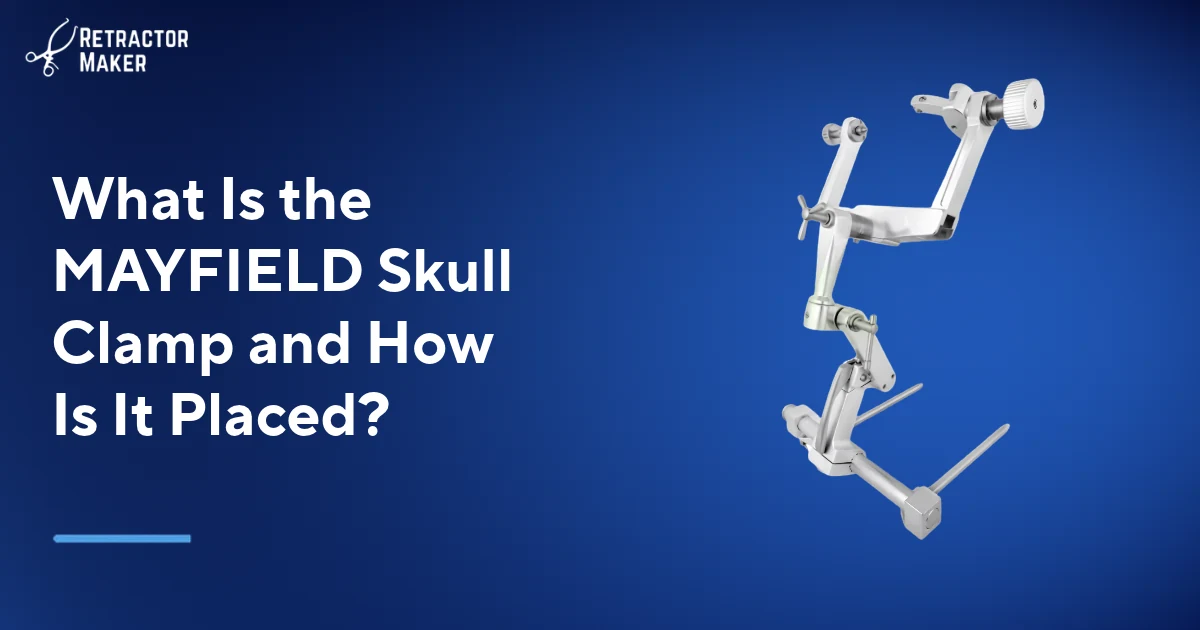
The MAYFIELD Skull Clamp is a three-pin cranial fixation system used to maintain rigid head positioning during neurosurgical and spine procedures. This guide covers its history, components, positioning workflow, patient positions, uses, and care.
Retractors discussed in this guide: Adjustable Mayfield Adaptor, Mayfield Headrest, Mayfield Skull Clamp. Browse all surgical retractors.
The MAYFIELD Skull Clamp, also called a Mayfield clamp, is a rigid, three-pin cranial fixation system that provides absolute head immobilization. It is used in neurosurgery, spine surgery, and skull base procedures. Calibrated mechanical tension anchors the pins into the skull's outer table to eliminate head movement. This stable surgical foundation is vital for high-magnification microneurosurgery. It also supports stereotactic navigation and delicate intradural dissections.
Contents
What Is the MAYFIELD Skull Clamp?
The MAYFIELD Skull Clamp is a specialized rigid head stabilization frame used in operating rooms globally. Small head shifts can be critical during complex cranial and upper cervical spine surgeries. Even sub-millimeter shifts can compromise micro-dissections and disrupt image-guided navigation systems. They may also cause brain injury near vital neural structures.
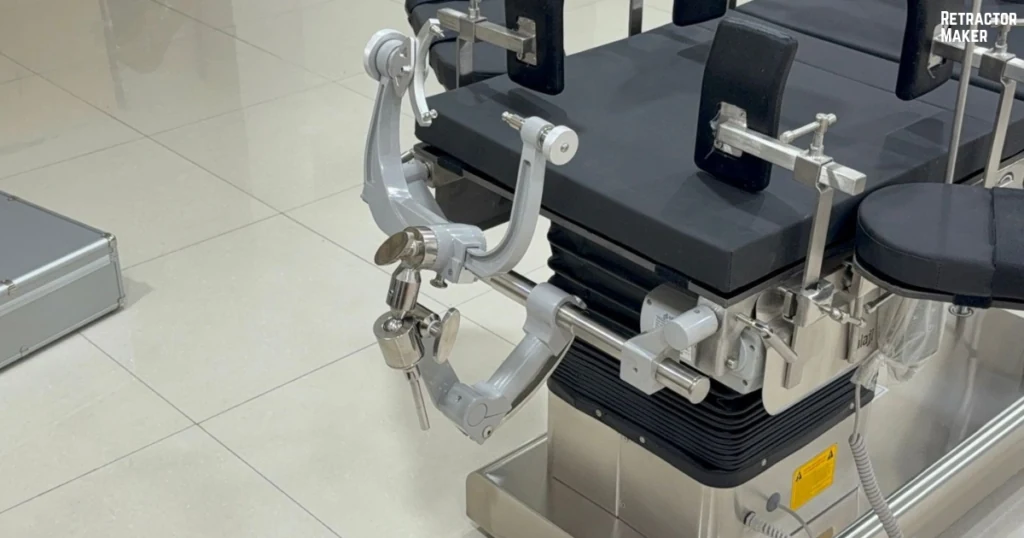
Three sharp metal pins provide positive mechanical fixation to the cranium. Unlike soft headrests or gel cushions, which allow micro-movement, the skull clamp holds the head rigidly. The pins sit on two opposing arms. The clamping frame locks onto a transitional swivel adapter. The adapter and base unit anchor to the operating table, creating a rigid bridge. This maintains exact spatial orientation throughout long procedures.
Who Designed the MAYFIELD Skull Clamp?
Manual head support and sandbags preceded rigid three-pin fixation in neurosurgery. Early clamp designs often slipped and applied uneven pressure to cranial tissues. These setups made deep brain access difficult and posed constant risks during long surgeries.

Dr. Frank Henderson Mayfield designed the MAYFIELD Skull Clamp. A prominent American neurosurgeon, he founded the Mayfield Clinic in Cincinnati, Ohio. In 1973, Dr. Mayfield worked with George Kees to create the pioneering three-pin cranial stabilization system.

Their design combined a balanced single-pin and dual-pin rocker with a calibrated force screw. It replaced older skeletal traction methods and provided stable head fixation for delicate brain surgery. This became a key advance in neurosurgical instrumentation.
Why Is Rigid Cranial Fixation Important?
Rigid cranial fixation supports the sub-millimeter precision needed in cranial and spinal microsurgery. These procedures use high-magnification operating microscopes. Fixation offers several key clinical advantages.
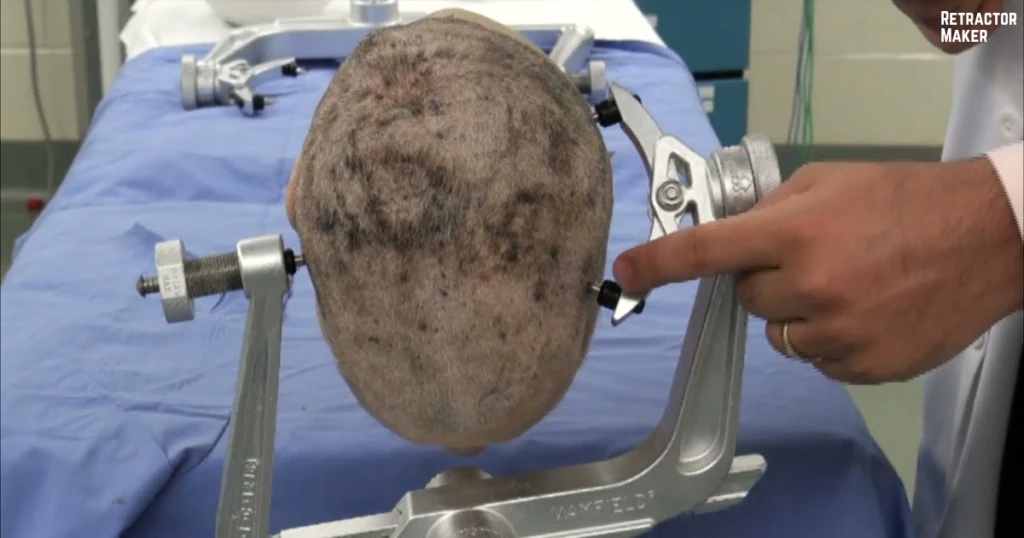
- Keeps the skull absolutely stable during bone drilling, dural opening, and tumor removal.
- Ensures image-guided navigation accuracy by keeping intraoperative mapping aligned with MRI or CT scans.
- Safely mounts retractors with a stable anchor for table-mounted retractor frames, preventing load transfer to scalp tissue.
- Eliminates hand tremor transmission, preventing accidental movement when staff touch the table frame.
- Protects the airway by fixing head and cervical alignment, preventing airway displacement or vein compression.
What Are the Main Components?
Understanding each component supports correct setup and reliable locking during surgery.
What Does the Single-Pin Torque Arm Do?
The single-pin torque arm holds one cranial pin and the calibrated mechanical torque screw. Turning the torque handle advances the pin until it engages the skull's outer table.
How Does the Dual-Pin Rocker Arm Work?
The dual-pin rocker arm holds two skull pins on a pivoting rocker block. The rocker swivels to balance pressure between both pins before final clamping.
What Does the Ratchet Extension Arm Adjust?
The sliding ratchet extension arm adjusts the clamp frame width to fit different skull sizes. This adjustment occurs before mechanical torque is applied.
Swivel Adaptor and Ball Pivot Joint
The multi-axis swivel adaptor and ball pivot joint connect the skull clamp to the operating table base rod. The joint provides 360-degree horizontal rotation and 0° to 90° longitudinal tilt for precise head positioning.
What Does the Calibrated Torque Screw Measure?
The built-in calibrated torque screw measures clamping pressure up to 360 N (80 lb). This ensures adequate bone fixation and prevents skull fracture risks.
High-Grade Sterilization Container
The sterilization container is a perforated aluminum box with a silicone organizing mat. It protects threads, ratchet tracks, and pin sockets during washing and autoclaving.
Cranial Fixation System Components
The table below lists standard cranial fixation components.
| Quantity | Component Name | Primary Function |
|---|---|---|
| 1 | Standard MAYFIELD-Style Skull Clamp | Primary 3-pin clamping frame for rigid head immobilization |
| 1 | Swivel Adaptor Assembly | Multi-axis joint offering 360° rotation and 0°–90° longitudinal tilt |
| 3 | Adult Skull Fixation Pins | Stainless steel or titanium pins for adult cranial fixation |
| 3 | Pediatric Skull Fixation Pins | Specialized pins designed for thin cranial bone fixation |
| 2 | Extra Replacement Skull Pins | Spare fixation pins for procedure preparation |
| 1 | Aluminum Sterilization Box with Silicone Mat | Perforated organizing container for secure washing and autoclaving |
Technical Specifications
| Feature Category | Technical Specification |
|---|---|
| Product Type | Three-Pin Rigid Cranial Fixation System |
| Primary Material | CNC-Machined High-Strength Aluminum Alloy (No cast parts) |
| Clamping Mechanism | 3-Pin Point Contact (Single Pin vs Dual-Pin Rocker Arm) |
| Force Control | Calibrated Mechanical Torque Screw (360 N / 80 lb Adult Standard) |
| Rotation Adjustment | 360-Degree Horizontal Swivel Rotation |
| Longitudinal Tilt | 0° to 90° Longitudinal Angular Adjustment |
| Base Adjustment Width | 190 mm to 560 mm (Fits standard OR table base units) |
| Patient Compatibility | Adult and Pediatric (With specialized pediatric pins/torque parameters) |
| Reusability | 100% Reusable and Autoclavable |
| Sterilization Protocol | Pre-Vacuum Steam Autoclave (134C to 273F for 4 to 5 minutes) |
| Country of Origin | Manufactured by Retractor Maker under ISO 13485 Standards |
| Production Lead Time | Average 12–16 days for wholesale and OEM orders |
How Is the MAYFIELD Skull Clamp Positioned During Surgery?
Only qualified surgical teams must perform the standard clinical positioning steps outlined below.
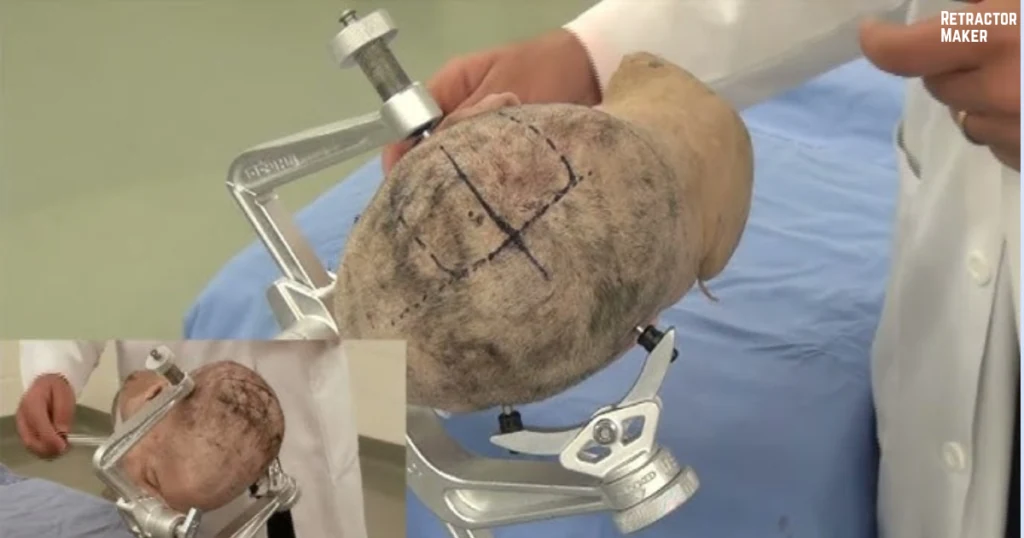
- Review pre-operative images for skull thickness and prior craniotomy defects, and map planned skin incisions.
- Hand-tighten three clean, sharp skull pins into the pin sockets: one on the single-pin torque arm and two on the dual-pin rocker arm.
- Position the clamp around the cranium, avoiding temporal muscles, frontal sinuses, thin skull bone, and shunt hardware. Place the two rocker arm pins on the scalp first to establish a stable plane.
- Advance the single-pin arm along the ratchet track until all three pin tips firmly contact the scalp.
- The surgeon turns the calibrated torque handle clockwise. Increasing force drives the pin tips through the scalp into the outer cranial bone table. Continue compression until the visual indicator reaches the target, usually 360 N (80 lb) for adults.
- Insert the clamp's base extension post into the table-mounted transitional swivel adapter.
- Move the head to the target surgical position using the swivel joint's 360-degree rotation and 0°–90° longitudinal tilt. Tighten the main locking handle once aligned to secure the assembly.
Patient Positions
Rigid cranial fixation accommodates many surgical approaches.
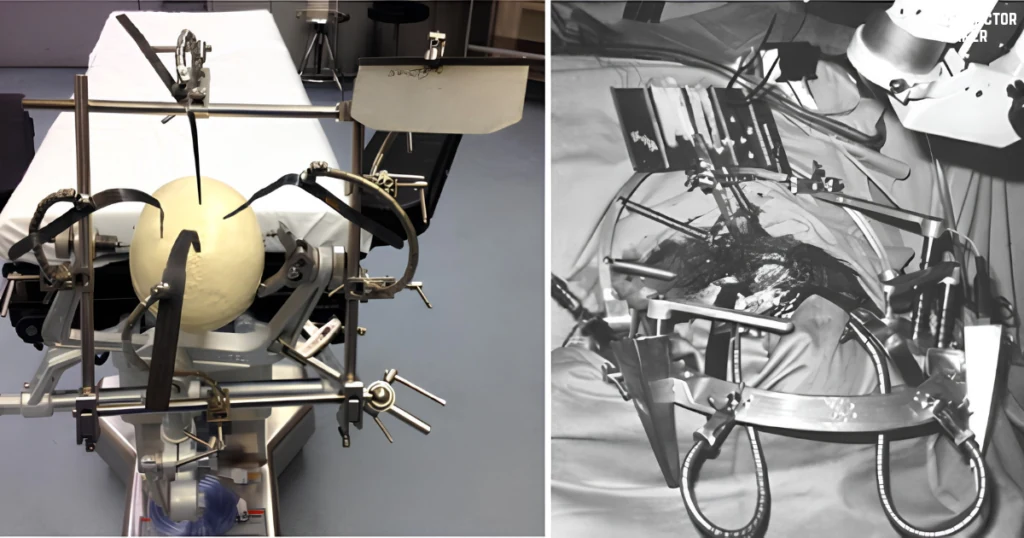
| Patient Position | Surgical Approach | Primary Clinical Applications |
|---|---|---|
| Prone | Face-Down | Posterior fossa craniotomies, occipital tumors, posterior cervical spine procedures |
| Supine | Face-Up | Frontal craniotomies, pterional approaches, anterior skull base surgeries, ACDF |
| Lateral | Side-Lying | Retrosigmoid approaches, subtemporal corridors, temporoparietal tumor resections |
| Sitting | Upright / Semi-Fowler | Supracerebellar infratentorial interventions, pineal region tumor removals |
How Do Skull Pins and the Torque Mechanism Work Together?
The clamp's mechanical core pairs three-point pin geometry with a calibrated force screw.
How Does Adult Fixation Differ From Pediatric Fixation?
- Adult pins are sharp and broadly tapered to engage thick cranial bone. The torque mechanism tightens to 360 N (80 lb).
- Children under five have thinner skulls and open sutures. Pediatric fixation uses special short-taper pins and lower torque limits, typically 180 N (40 lb), to prevent skull depression or internal bone penetration.
How Should Fixation Pins Be Inspected?
Inspect fixation pins before every procedure for sharpness and material damage. Dull, bent, or damaged pin tips can slip, causing scalp lacerations and instability.
What Safety Checks Are Needed?
- Never place pins over frontal sinuses or temporal squama. Avoid major venous sinuses and old craniotomy defects.
- Always check cranial bone maturity on CT scans before placing pins in pediatric patients.
- Before surgery, ensure all ratchet teeth, swivel joints, and table rail clamps are locked.
- Check that the clamp frame does not press on undraped skin to prevent pressure sores during long procedures.
Which Neurosurgical Procedures Need Rigid Head Fixation?
Rigid head fixation is vital for many surgeries.
| Procedure Category | Surgical Goal | Fixation Purpose |
|---|---|---|
| Glioma / Meningioma Resection | Brain tumor excision | Keeps head rigid during high-speed drilling and micro-dissection |
| Cerebral Aneurysm Clipping | Vascular malformation repair | Prevents intraoperative displacement during microsurgical clipping |
| Microvascular Decompression (MVD) | Trigeminal neuralgia treatment | Maintains retrosigmoid exposure of cranial nerves 5, 7, and 8 |
| Skull Base Surgery | Deep lesion removal | Secures narrow access channels around the brainstem |
| Posterior Cervical Fusion | Cervical spine stabilization | Stabilizes cervical spine alignment during hardware placement |
Which Accessories Work With Rigid Skull Clamps?
Rigid skull clamps provide a stable base for table-mounted retractor frameworks and adapters.
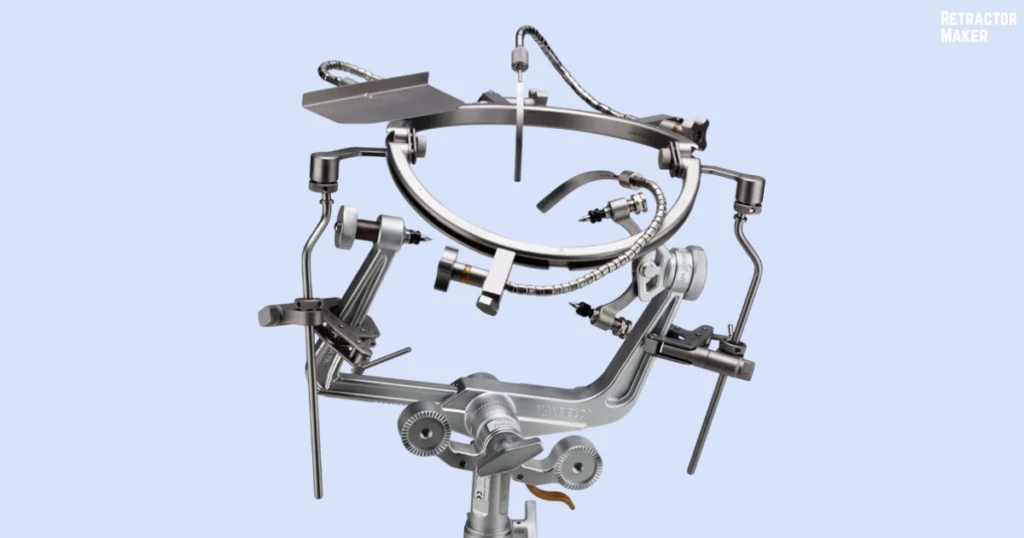
How Does the Budde Halo Retractor Attach?
The Budde Halo Retractor mounts directly to skull clamp posts. It includes a double-hinged circular halo ring, flexible arms, and an integrated handrest. It provides stable, 360-degree brain tissue retraction and forearm support.
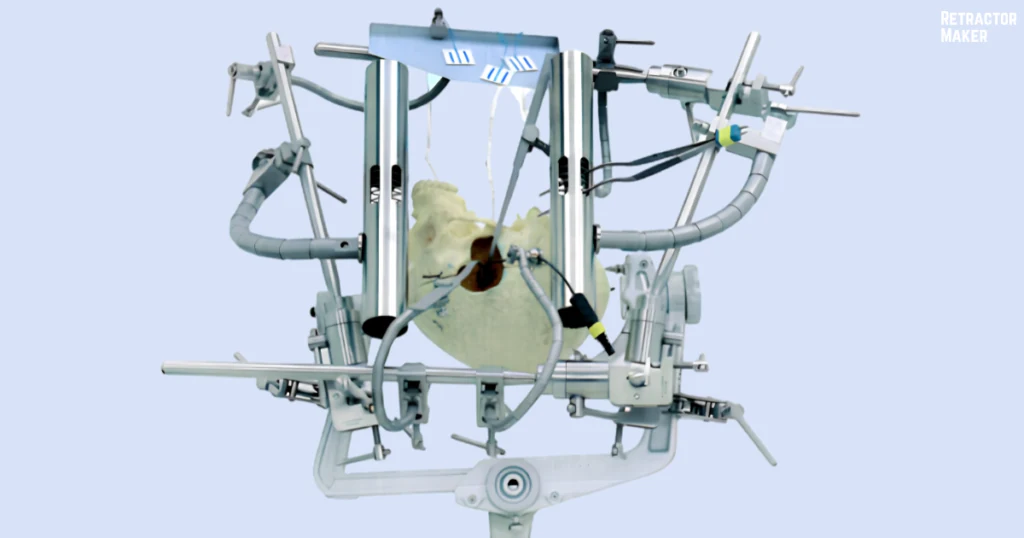
How Does the Greenberg Retractor Work?
The standard Greenberg Retractor anchors to the table and clamp. It uses primary bars, floating secondary rails, and multi-jointed flex arms. These create a 360-degree working area around large craniotomies.
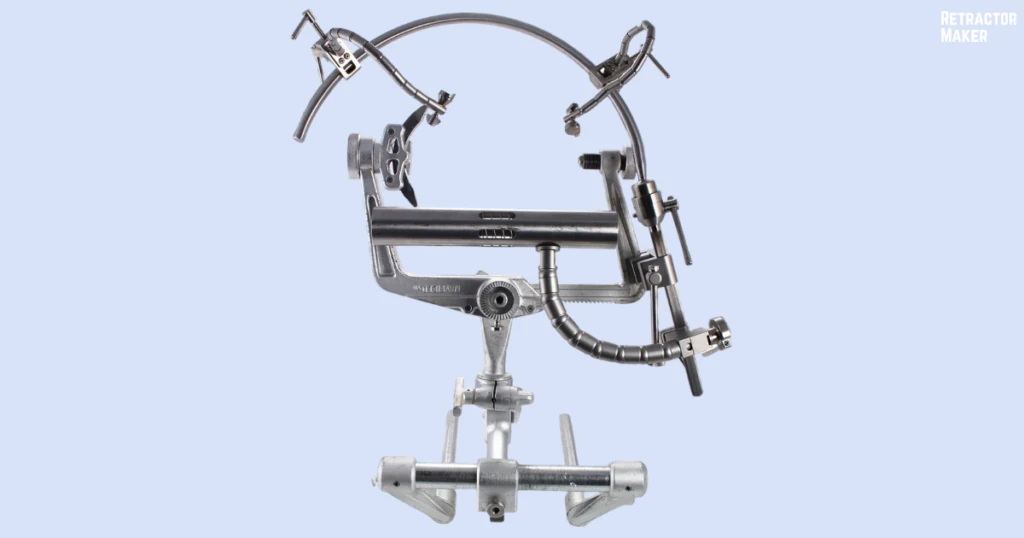
When Is the Greenberg Simplicity Retractor Used?
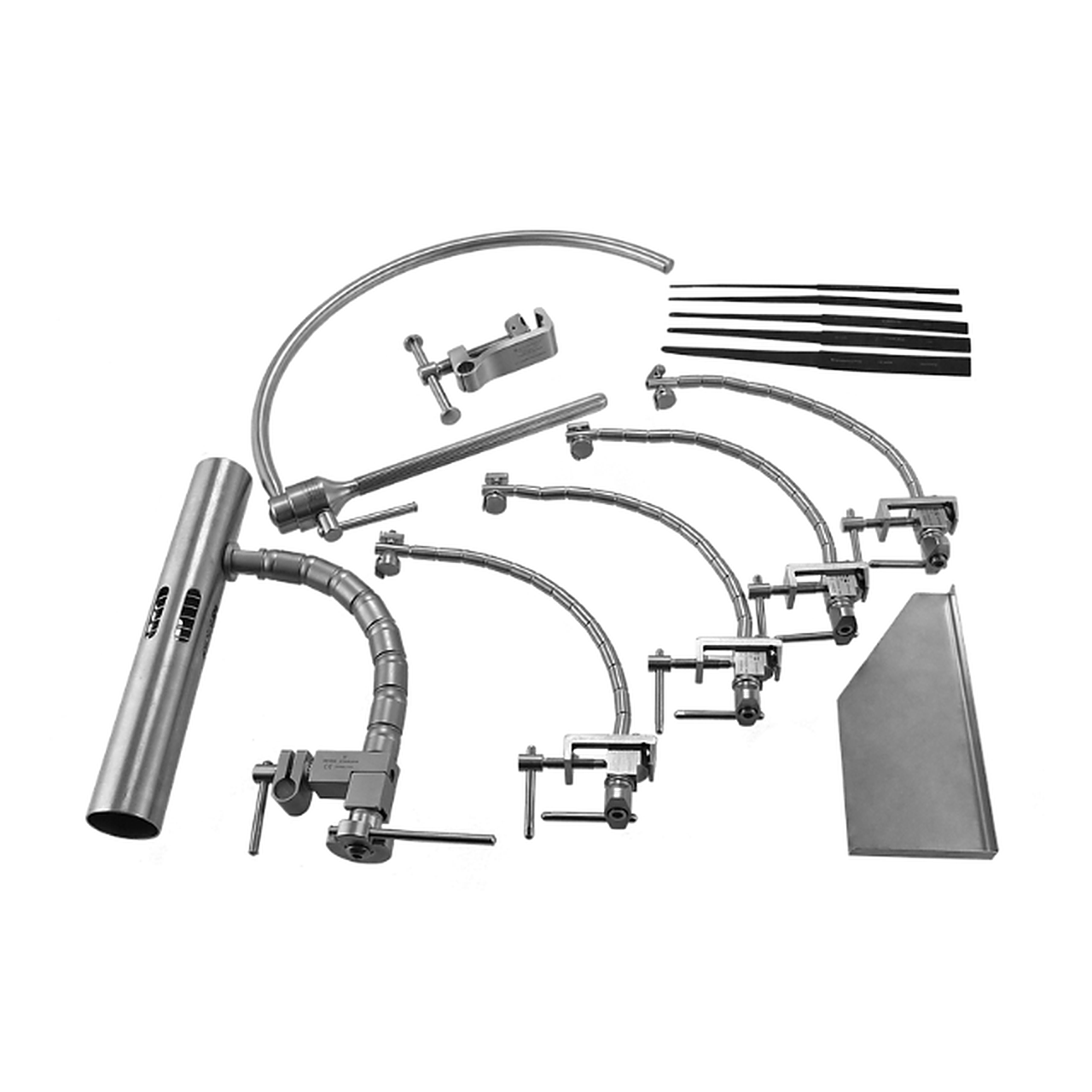
The Greenberg Simplicity Retractor provides low-profile tissue retraction for focused craniotomies and keyhole approaches. Its compact design mounts to skull clamp posts through one primary bar.
How Does the Leyla Retractor Support Microsurgery?
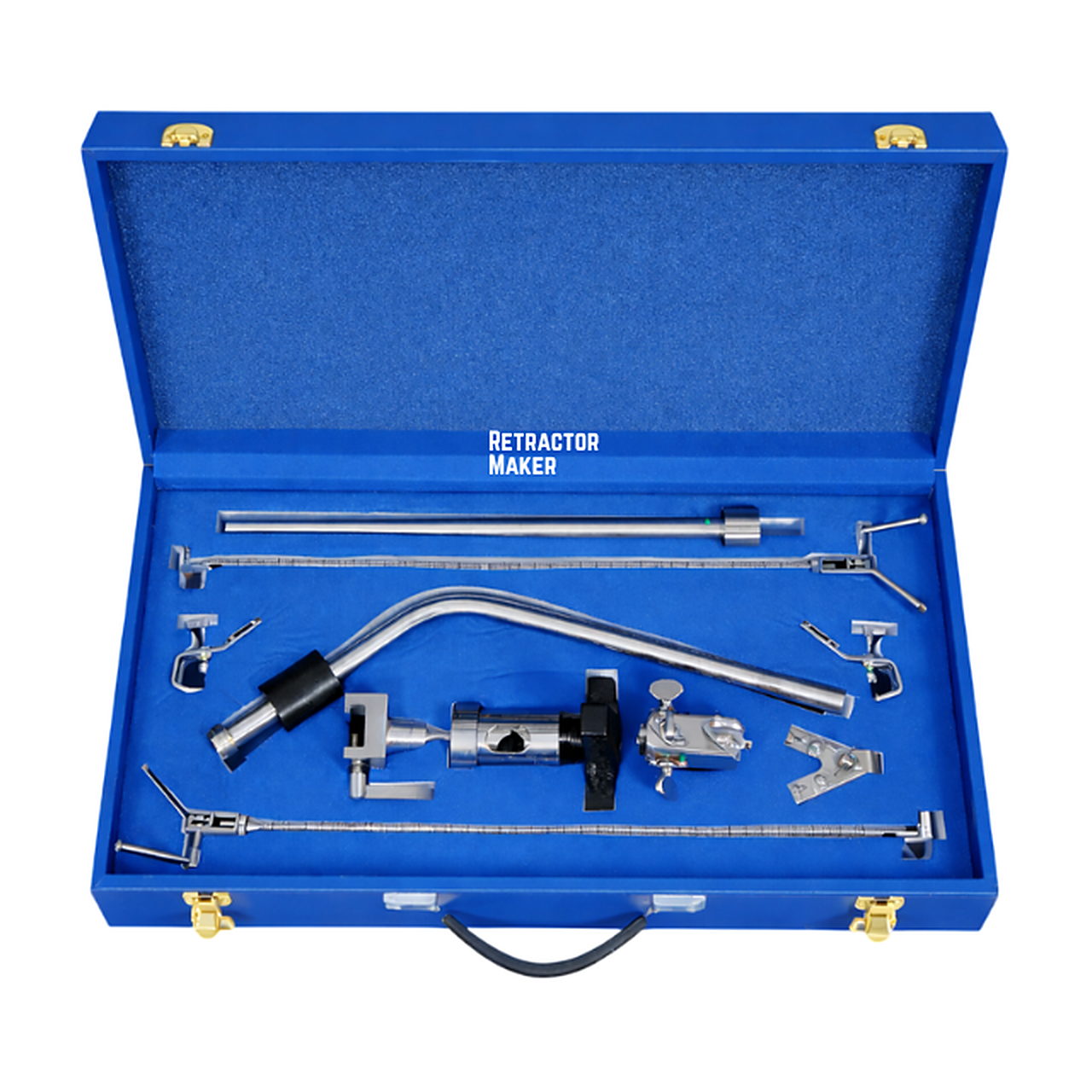
The Leyla Retractor provides low-profile, hands-free tissue retraction for delicate cranial microsurgery. Its dual-arm, serpentine flexible system attaches to table side rails or skull clamps.
Operating Room Accessories and Product Portals
An Adjustable Mayfield Adaptor safely mounts skull clamp base units on operating tables that lack built-in end sockets. For non-pinned procedures, use the Mayfield Headrest. Visit our Leyla Retractor Website and Bookwalter Retractor Website.
Compare Neurosurgical Retractor Systems
The table below compares neurosurgical retractor systems compatible with cranial fixation frames.
| Retractor System | Frame Architecture | Mounting Interface | Key Clinical Advantage |
|---|---|---|---|
| Budde Halo Retractor | Double-Hinged Circular Halo Ring | Clamp posts or OR table rails | Integrated surgeon handrest with 360° flex arm positioning |
| Greenberg Retractor | Dual Primary & Secondary Frame | Rigid skull clamp posts | Full 360-degree perimeter frame for complex skull base cases |
| Greenberg Simplicity Retractor | Single-Bar Low-Profile Frame | Rigid skull clamp posts | Compact design with setup under 3 minutes for keyhole procedures |
| Leyla Retractor | Dual Serpentine Flexible Arms | Table rail or clamp posts | Independent flex arms with single-dial joint locking |
How Do You Clean and Sterilize a Mayfield Clamp?
Proper reprocessing maintains mechanical precision and extends instrument working life.
- Rinse the clamp immediately after surgery with neutral-pH enzymatic detergent to prevent blood and tissue from drying in tracks.
- Open the quick-release lock, remove all skull pins, and separate the base extension rod from the swivel joint.
- Clean disassembled metal parts in an ultrasonic bath to remove hidden debris from internal ratchet teeth and joint threads.
- Inspect pin sockets and lock dials for wear. Apply water-soluble lubricant to moving threads before packaging.
- Place components in their perforated aluminum sterilization box lined with a silicone mat. Use standard pre-vacuum steam cycles at 134°C (273°F) for 4 to 5 minutes. Non-autoclavable boxes should only be wiped down.
Choosing a Cranial Fixation System
The MAYFIELD Skull Clamp provides stable head stabilization through its three-pin design and remains key in neurosurgery. This stability allows surgical teams to perform delicate micro-dissections, tumor removals, and spinal procedures. Trained professionals use the MAYFIELD Skull Clamp with precision and safety. Choosing the right system and accessories ensures an efficient, stable environment.
Need Cranial Fixation Systems for Your Operating Rooms?
Factory-direct, precision-made cranial fixation systems equip operating rooms and provide reliable clinical performance.
- Explore technical details on the MAYFIELD Skull Clamp product page.
- Evaluate our complete line of Neurosurgery Retractors.
- Review table accessories, including the Adjustable Mayfield Adaptor and non-pinned Mayfield Headrest.
- Visit our specialized portals: Leyla Retractor Website and Bookwalter Retractor Website.
Request a quote for bulk hospital orders, OEM manufacturing, or distributor pricing. Contact Retractor Maker's engineering sales team today. Retractor Maker is your trusted partner in the medical field.
Clinical notice: This guide is for surgical teams and hospital buyers. Always follow the manufacturer's instructions for use (IFU) and your hospital's sterilization rules before clinical use.
Frequently Asked Questions
What is a MAYFIELD Skull Clamp?
It is a rigid, three-pin cranial fixation system. It fully immobilizes the head during neurosurgery and spine surgery.
Who invented the MAYFIELD Skull Clamp?
Dr. Frank Henderson Mayfield designed it. He worked with George Kees in 1973.
Why is a skull clamp used during neurosurgery?
It prevents head micro-movements. This avoids brain contusions or navigation disruptions.
How does a three-pin skull clamp work?
A single pin opposes a dual-pin rocker block. A calibrated screw advances pins into the skull.
What surgeries require rigid cranial fixation?
Many procedures need rigid head clamping. These include craniotomies, tumor resections, and spine fusions.
Can a MAYFIELD Skull Clamp be used for spine surgery?
Yes, it is used in posterior cervical spine surgeries. It also helps with ACDF procedures.
Is the MAYFIELD Skull Clamp reusable and autoclavable?
Yes, the metal clamping assembly is autoclavable. It uses standard pre-vacuum steam cycles.
What is the difference between adult and pediatric skull pins?
The MAYFIELD Skull Clamp uses adult pins for thick bone and pediatric pins for thinner skulls. Adult pins use 360 N (80 lb) torque, while pediatric pins use 180 N (40 lb) torque. The qualified surgical team reviews pre-operative images for skull thickness before positioning.
What is the difference between a skull clamp and a surgical headrest?
A skull clamp uses metal pins for rigid fixation. A headrest uses gel cushions for non-invasive support.
What retractor accessories attach to a MAYFIELD Skull Clamp?
Retractor systems like Budde Halo and Greenberg attach directly to skull clamp posts.
Do you offer OEM manufacturing for skull clamps and accessories?
Yes, Retractor Maker offers contract OEM manufacturing. It also provides custom branding and pin engineering.
How can I request a price quotation?
Request a quote via our website. You can also download our catalog or contact sales directly.
What checks are needed before positioning a MAYFIELD Skull Clamp?
The MAYFIELD Skull Clamp requires pre-positioning review of pre-operative images, planned skin incisions, and fixation pins by the qualified surgical team. Images are reviewed for skull thickness and prior craniotomy defects, and planned skin incisions are mapped. Fixation pins are inspected before every procedure because dull, bent, or damaged tips can slip, causing scalp lacerations and instability.
How does the MAYFIELD Skull Clamp allow head positioning adjustments?
The MAYFIELD Skull Clamp provides 360-degree horizontal rotation and 0° to 90° longitudinal tilt through a swivel adaptor and ball pivot joint. This multi-axis connection attaches the clamp to the operating table base rod. The main locking handle secures the assembly once the head is aligned.
How should a MAYFIELD Skull Clamp be cleaned after surgery?
The MAYFIELD Skull Clamp should be rinsed immediately after surgery with neutral-pH enzymatic detergent to prevent blood and tissue from drying in its tracks. Remove the pins and separate the base extension rod from the swivel joint. Ultrasonically clean the disassembled metal parts, then inspect the sockets and lock dials. Apply water-soluble lubricant to moving threads before packaging.
About the author
Saad Shahid · Sales & Marketing Manager
Saad Shahid is the Sales & Marketing Manager and founder of Retractor Maker, started in 2023 in Sialkot, Pakistan. He also works with his father at Hospitech Traders, the family surgical instrument business founded in 1989.
Related Blogs & Guide



Related Retractors
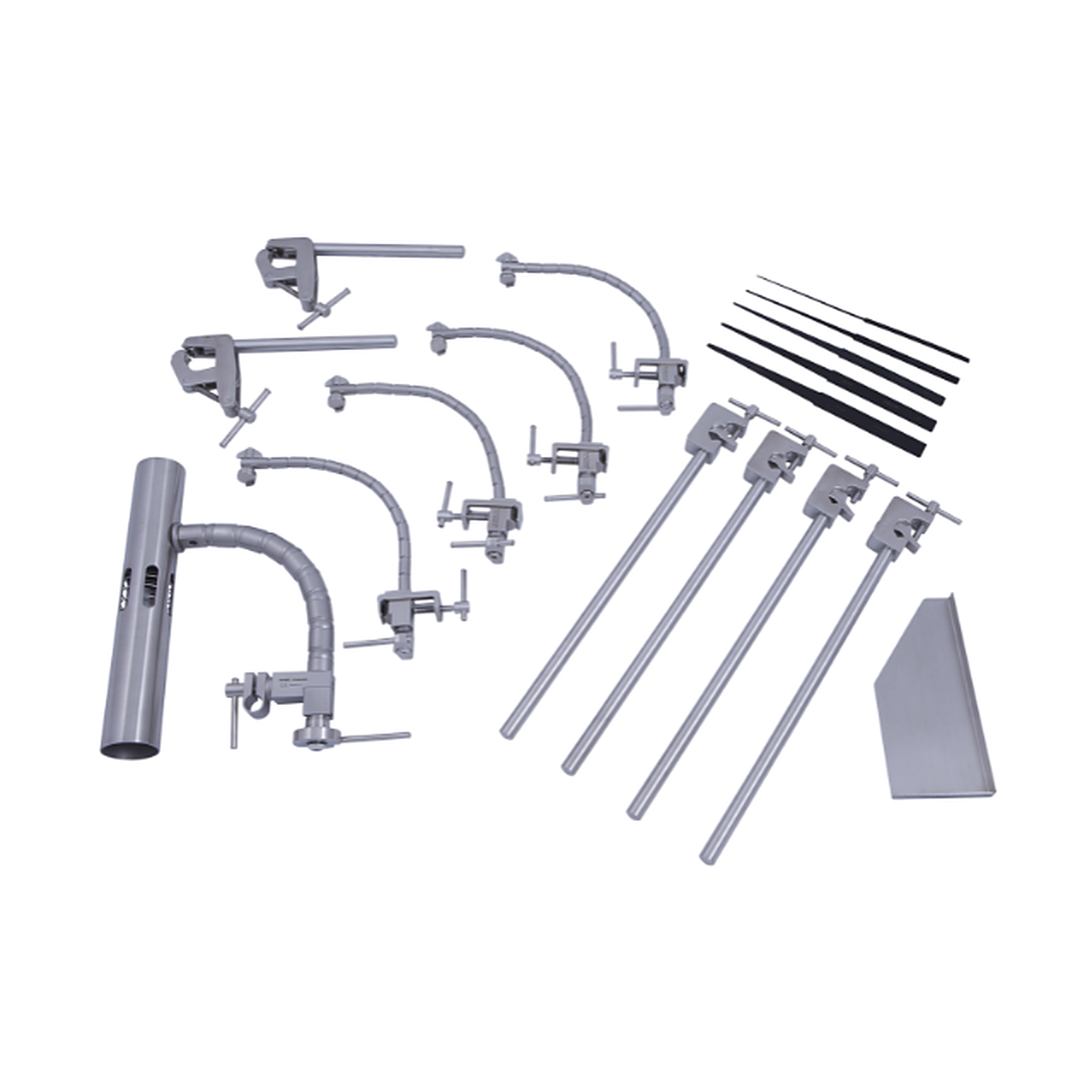
Greenberg Retractor Kit
$3,499Free Shipping
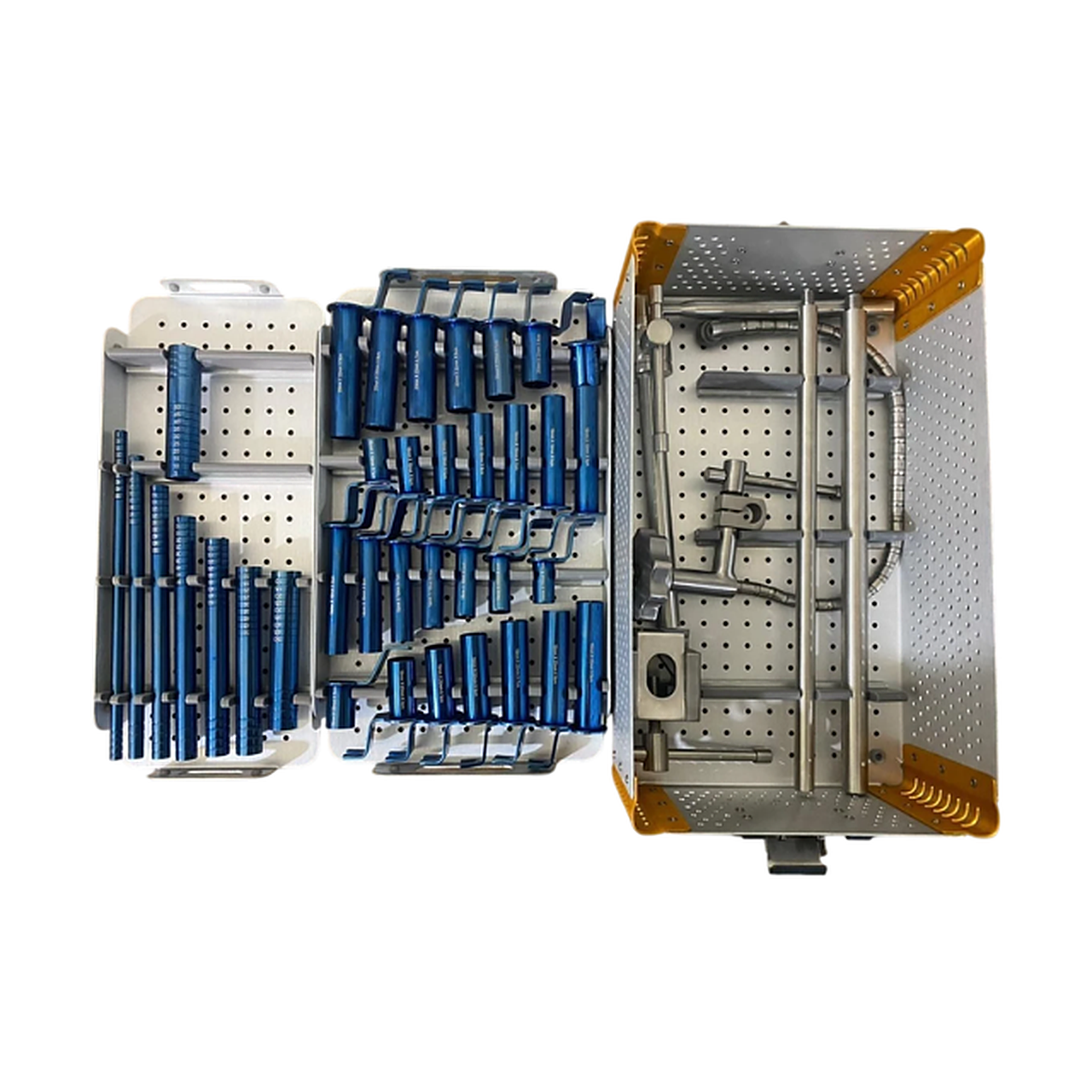
Tubular Retractor System
$2,199Free Shipping
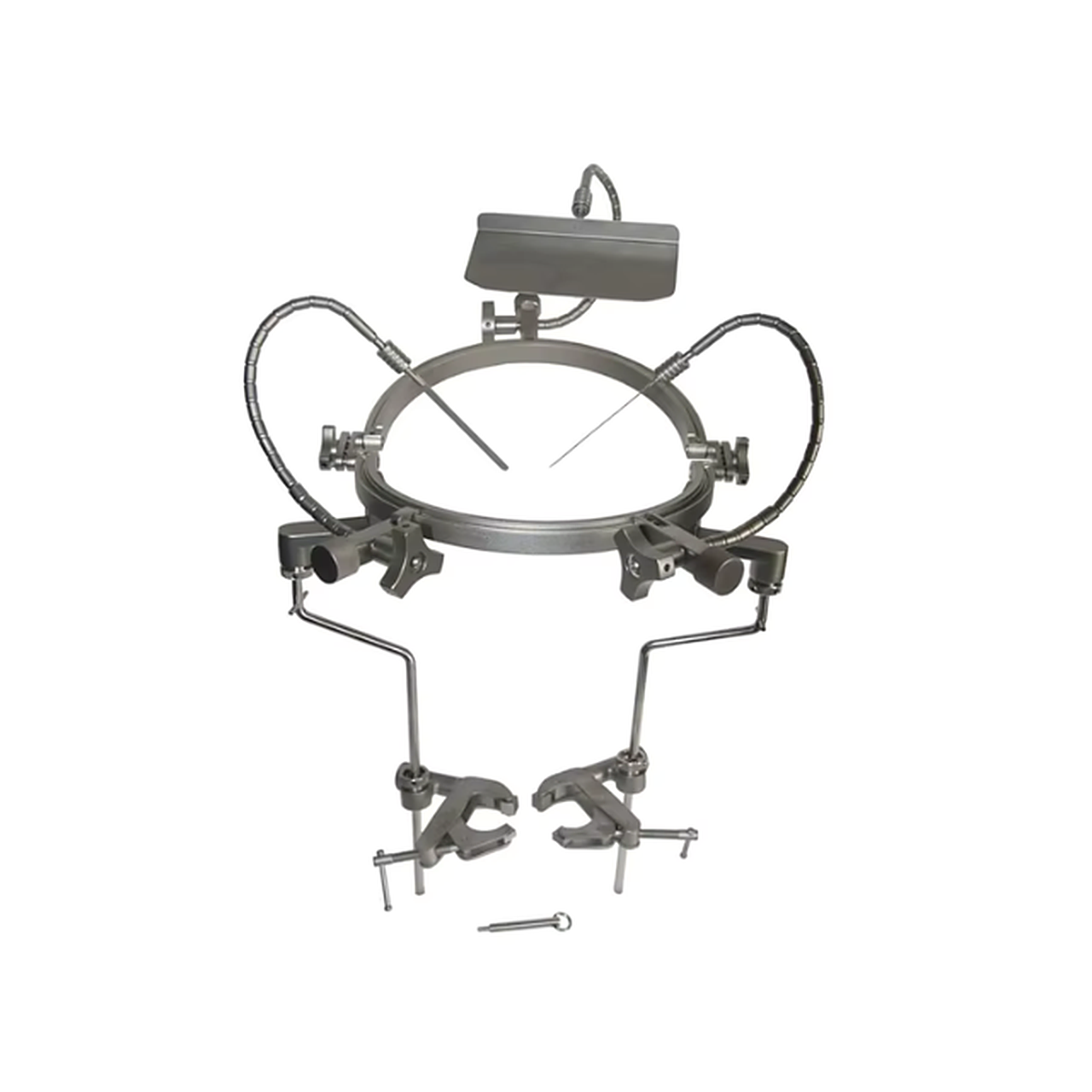
Budde Halo Retractor
$2,499Free Shipping
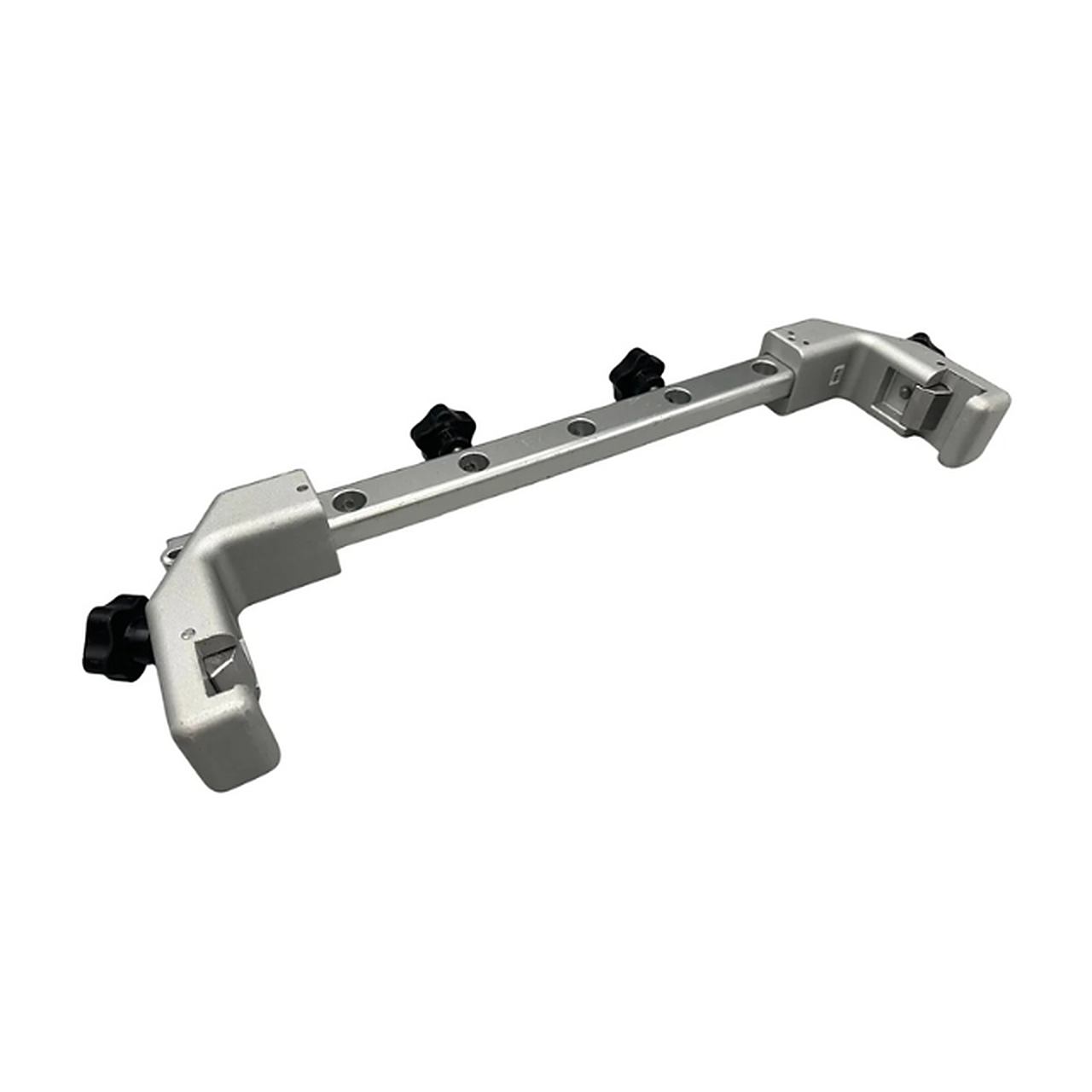
Adjustable Mayfield Adaptor
$1,199Free Shipping
Leyla Retractor
From $1,199Free Shipping
Greenberg Simplicity Retractor
$2,499Free Shipping
Need Surgical Retractors or Components?
Tell us what you need, including the product, configuration, quantity and destination country. Retractor Maker can provide availability, specifications and pricing.
Request a Quote