
Obstetrics & Gynecology Retractor Guides
O'Connor-O'Sullivan Abdominal Retractor: OB/GYN & Pelvic Surgery
Author: Saad Shahid · Updated · 6 min read
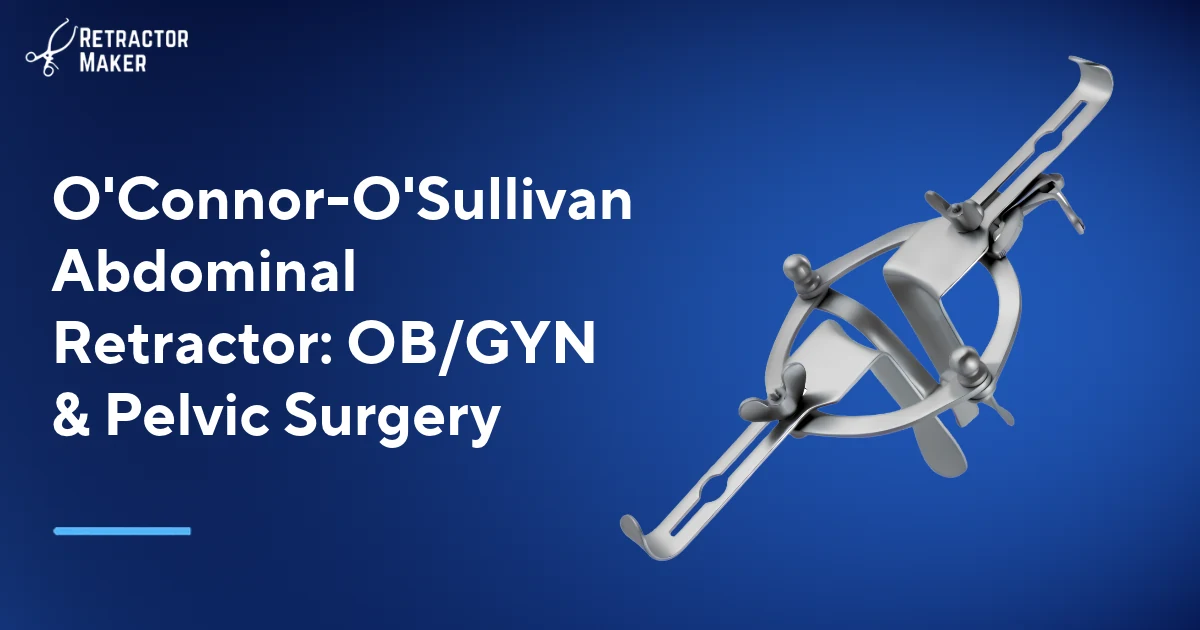
Open pelvic and lower abdominal surgical procedures present distinct anatomical constraints. Deep pelvic spaces are enclosed by rigid skeletal structures (the pubic symphysis, iliac crests, and sacrum) while housing mobile, delicate viscera such as the bowel, bladder, and uterus. To perform complex gynecological resections or pelvic floor reconstructions safely, surgical teams require continuous, multi-quadrant visualization.
Retractors discussed in this guide: O'Sullivan-O'Conner Vaginal Retractor. Browse all surgical retractors.
Contents
The O'Connor-O'Sullivan abdominal retractor (O'Connor O'Sullivan retractor) is an established self-retaining ring system developed for lower abdominal, pelvic, and obstetrics and gynecology (OB/GYN) surgery. A rigid circular or oval perimeter frame supports adjustable lateral and central pelvic blades to provide broad, four-way operative exposure.
The O'Connor-O'Sullivan retractor maintains multi-directional exposure of the lower abdomen and pelvic cavity, primarily in OB/GYN and pelvic surgery. This self-retaining surgical retraction system has a circular or oval perimeter ring, paired sliding lateral blades, and adjustable curved pelvic blades.
How Is the O'Connor-O'Sullivan Retractor Designed?
The O'Connor-O'Sullivan retractor uses a circular perimeter foundation to address the spatial challenges of deep pelvic interventions. Its frame and blades work together as follows:
- Perimeter ring: A continuous circular or oval stainless-steel frame replaces linear spreader bars. It spans a Pfannenstiel or lower midline laparotomy incision and rests flat against sterile drapes.
- Sliding lateral blades: Two opposing curved lateral blades attach to the ring with mechanical thumb-screws or friction-clamp brackets for lateral abdominal wall retraction.
- Curved pelvic blades (bladder / upper depressors): One or two broad, curved center blades attach perpendicular to the lateral axis. They depress the bladder inferiorly and pack bowel loops superiorly.
- Multi-directional counter-traction: The arrangement converts a standard two-way incision opening into four-quadrant, circumferential visualization and stabilizes the entire operative perimeter.
What Blade Configurations and Sizing Options Are Available?
The O'Connor-O'Sullivan retractor combines specialized blade geometries for different retraction needs.
| Component | Standard Design Geometry | Functional Clinical Role |
|---|---|---|
| Perimeter Ring | Circular or oval rigid frame (typically 180 mm – 220 mm diameter) | Serves as the static mounting perimeter over the lower abdomen |
| Lateral Blades (Pair) | Curved rectangular flanges with retaining lips | Displaces the lateral abdominal wall and rectus muscle margins |
| Small Pelvic Blade | Shallow curved blade (approx. 45 mm – 55 mm depth) | Retracts the bladder inferiorly or manages superficial wound margins |
| Deep Pelvic Blade | Extended curved blade (approx. 70 mm – 90 mm+ depth) | Displaces deep pelvic viscera and packing sponges away from pelvic structures |
Interchangeable blades fit standard rings. Surgical teams can adjust blade depth to suit patient body habitus and pelvic depth.
Which OB/GYN and Pelvic Procedures Use This System?
The O'Connor-O'Sullivan retractor is used across pelvic and gynecological interventions, including the procedures below.
How Is It Used in Abdominal Hysterectomy?
During total abdominal hysterectomy (TAH) for benign or malignant indications, the system maintains a stable perimeter around the uterus. This provides clear visualization of the uterine arteries, broad ligaments, and ureteral pathways.
Gynecologic Oncology and Staging
The system facilitates extended pelvic lymphadenectomy, omentectomy, and debulking procedures. It keeps small bowel loops packed superiorly while exposing the retroperitoneal pelvic sidewalls.
Cesarean Delivery in Select Open Approaches
The ring frame can provide wide, stable exposure of the lower uterine segment in complex or repeated cesarean deliveries involving extensive scarring. It also shields adjacent bladder tissue.
Urological and Colorectal Pelvic Procedures
The system stabilizes pelvic wound margins during radical cystectomies, pelvic organ prolapse repairs (sacrocolpopexy), and low anterior resections.
O'Connor-O'Sullivan vs. Balfour vs. Bookwalter Systems
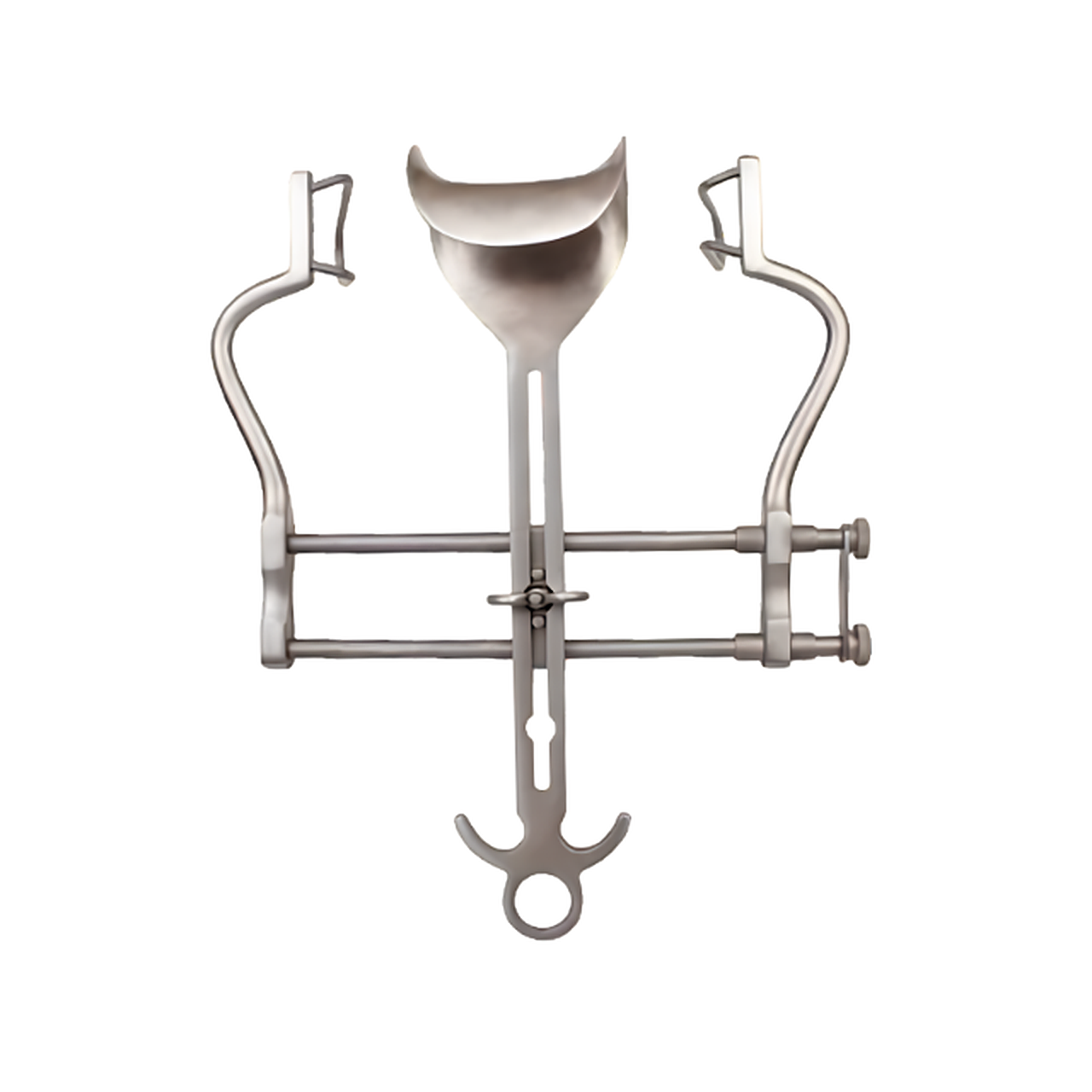
| Feature | O'Connor-O'Sullivan | Balfour Retractor | Bookwalter-Style System |
|---|---|---|---|
| Frame Concept | Independent circular/oval ring | Lateral sliding parallel bar frame | Table-mounted post, bar, and ring |
| Mounting Basis | Field-based (rests on abdomen) | Field-based (rests on abdomen) | Table-mounted (rigid rail clamp) |
| Exposure Trajectory | 4-way radial exposure | 2-way lateral + 1 central blade | 360-degree radial exposure |
| Setup Complexity | Low to moderate (rapid ring placement) | Low (simple sliding mechanism) | Moderate to high (post, clamp, ratchets) |
| Working Space | Optimized for lower abdomen & pelvis | Optimized for mid-to-upper abdomen | Adaptable to any abdominal/pelvic depth |
| Primary Specialty | OB/GYN, Pelvic Surgery | General Surgery, Laparotomy | Colorectal, Oncology, Urology, Vascular |
What Are the Advantages and System Considerations?
System Advantages
- Self-contained field design: Rests directly on the patient without attachment to operating table side rails.
- Rapid assembly: Operating room personnel can position the ring and tighten four blade clamps in minutes.
- Four-quadrant clearance: Provides superior, inferior, and lateral retraction simultaneously.
Technical Considerations
- Abdominal wall clearance: The ring rests on the patient's abdominal wall. Patients with a high body mass index (BMI) require careful placement for adequate stability without slippage.
- Fixed perimeter boundary: Ring diameter determines maximum lateral reach. Extremely wide incisions may require larger table-mounted systems.
How Should the System Be Maintained and Reprocessed?
- Complete disassembly: Remove all sliding blade brackets, thumb-screws, and modular blades from the ring before cleaning. Bioburden accumulates in screw threads and clamp grooves.
- Cleaning and ultrasonic processing: Submerge in neutral enzymatic detergents. Scrub all bracket channels with soft nylon brushes, then use ultrasonic cleaning to clear threads.
- Mechanical inspection: Check thumb-screws for thread stripping. Confirm that bracket clamps tighten securely onto the ring without slipping under lateral tension.
- Sterilization: Autoclave fully disassembled in dedicated sterilization trays. Follow the manufacturer's IFU and hospital infection control guidelines.
What Should B2B Buyers Check Before Sourcing?
Procurement teams sourcing O'Connor-O'Sullivan systems should confirm frame uniformity, thread durability, and OEM customization requirements.
- Frame uniformity: Check that the ring frame is flat and free of warping so it sits flush on the sterile field.
- Thread durability: High-grade stainless-steel threads are essential for repeated manual clamping without stripping.
- OEM customization: Retractor Maker works with international distributors to supply standard sets, custom ring diameters, specialized blade depths, and custom private-label branding to B2B specifications.
Request Factory-Direct Sourcing from Retractor Maker
Retractor Maker manufactures precision-crafted surgical retractor systems in Sialkot, Pakistan. It serves hospitals, surgical centers, and medical device distributors worldwide.
Contact Retractor Maker to request pricing, review technical specifications, or discuss contract manufacturing for O'Connor-O'Sullivan systems.
Clinical notice: This guide is for surgical teams and hospital buyers. Always follow the manufacturer's instructions for use (IFU) and your hospital's sterilization rules before clinical use.
Frequently Asked Questions
What is an O'Connor-O'Sullivan retractor?
The O'Connor-O'Sullivan retractor is a self-retaining surgical instrument designed for lower abdominal and pelvic exposure. It features a circular perimeter ring and modular blades. The ring and adjustable blades maintain multi-directional exposure of the lower abdomen and pelvic cavity.
What surgeries commonly use the O'Connor-O'Sullivan retractor?
The O'Connor-O'Sullivan retractor is widely used in obstetrics and gynecology, urological surgery, and pelvic reconstructive surgery. Common gynecological uses include abdominal hysterectomies and pelvic tumor debulking. Pelvic applications also include radical cystectomies and pelvic organ prolapse repairs such as sacrocolpopexy.
How does the O'Connor-O'Sullivan retractor differ from a Balfour retractor?
The O'Connor-O'Sullivan retractor uses a circular ring for four-way, circumferential pelvic exposure, while a Balfour retractor uses a lateral spreading bar frame primarily for three-way exposure. The ring system combines superior, inferior, and lateral retraction to stabilize the operative perimeter.
Does the O'Connor-O'Sullivan retractor clamp to the operating table?
The O'Connor-O'Sullivan retractor does not clamp to the operating table. It is a field-based system that rests directly over the surgical incision on the patient's abdomen. Its self-contained design requires no attachment to operating table side rails.
Are O'Connor-O'Sullivan retractor blades interchangeable?
Yes. The system utilizes detachable lateral and pelvic blades of varying sizes that clamp onto the perimeter ring.
Can the O'Connor-O'Sullivan retractor be autoclaved?
The O'Connor-O'Sullivan retractor is reusable and fully compatible with steam autoclave sterilization. O'Connor-O'Sullivan systems are manufactured from Premium Grade AISI 304/316 Stainless Steel (Non-Magnetic). Autoclave fully disassembled in dedicated sterilization trays, following the manufacturer's IFU and hospital infection control guidelines.
How should an O'Connor-O'Sullivan retractor be cleaned?
The O'Connor-O'Sullivan retractor should be fully disassembled before cleaning with neutral enzymatic detergents, soft nylon brushes, and ultrasonic processing. Remove all sliding blade brackets, thumb-screws, and modular blades from the ring. Scrub bracket channels because bioburden accumulates in screw threads and clamp grooves.
What mechanical checks are needed for an O'Connor-O'Sullivan retractor?
The O'Connor-O'Sullivan retractor requires checks for thumb-screw thread stripping, secure bracket clamping, and ring flatness. Confirm that bracket clamps grip the ring without slipping under lateral tension. Check that the ring frame is free of warping so it sits flush on the sterile field.
What limits working space with an O'Connor-O'Sullivan retractor?
The O'Connor-O'Sullivan retractor's ring diameter limits its maximum lateral reach. Extremely wide incisions may require larger table-mounted systems. The ring rests on the patient's abdominal wall, so patients with a high body mass index require careful placement to maintain stability without slippage.
About the author
Saad Shahid · Sales & Marketing Manager
Saad Shahid is the Sales & Marketing Manager and founder of Retractor Maker, started in 2023 in Sialkot, Pakistan. He also works with his father at Hospitech Traders, the family surgical instrument business founded in 1989.
Related Blogs & Guide


Related Retractors
Balfour Retractor
From $299
Delee Universal Retractor
$129
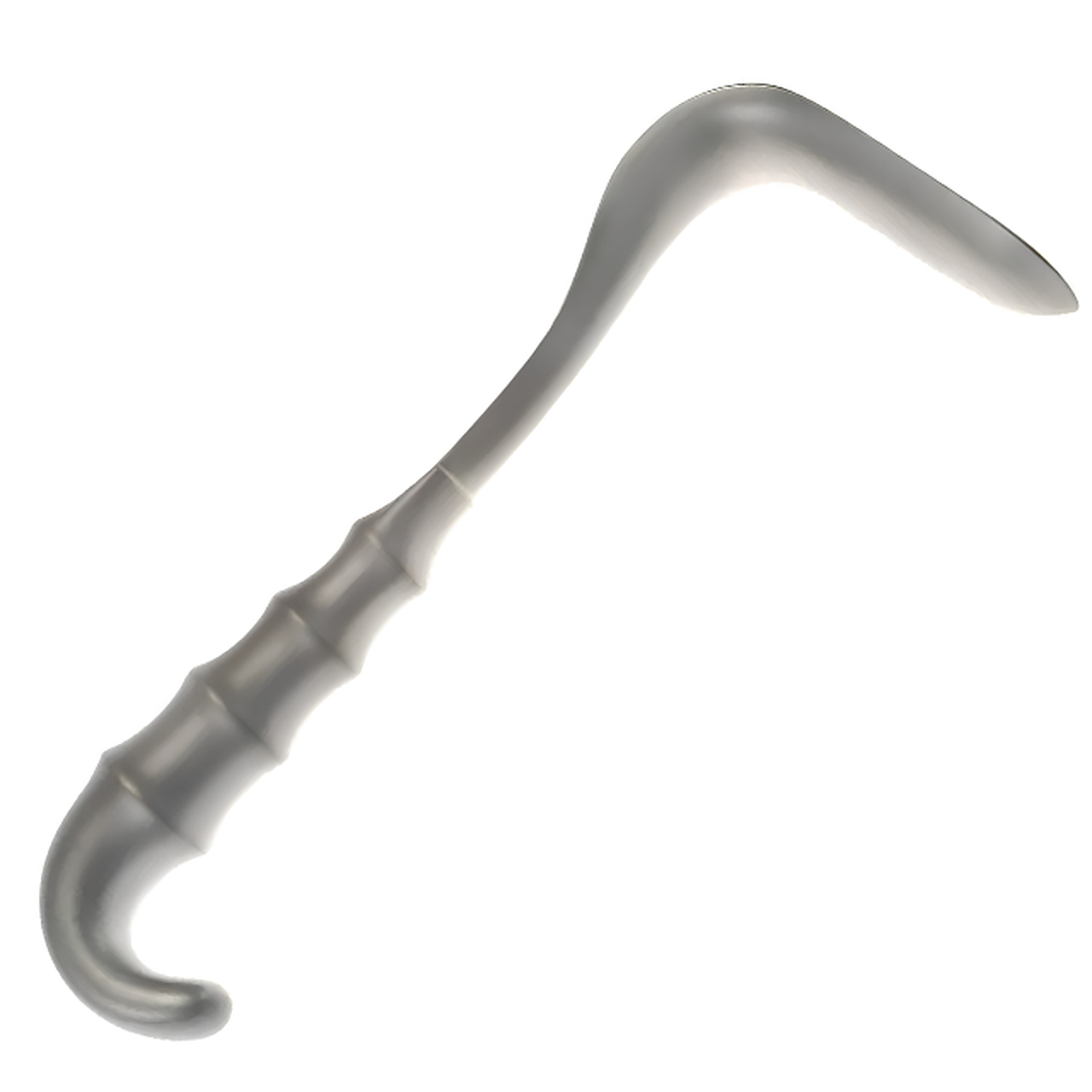
Sims Vaginal Retractor — Hollow Grip Handle
From $89.00
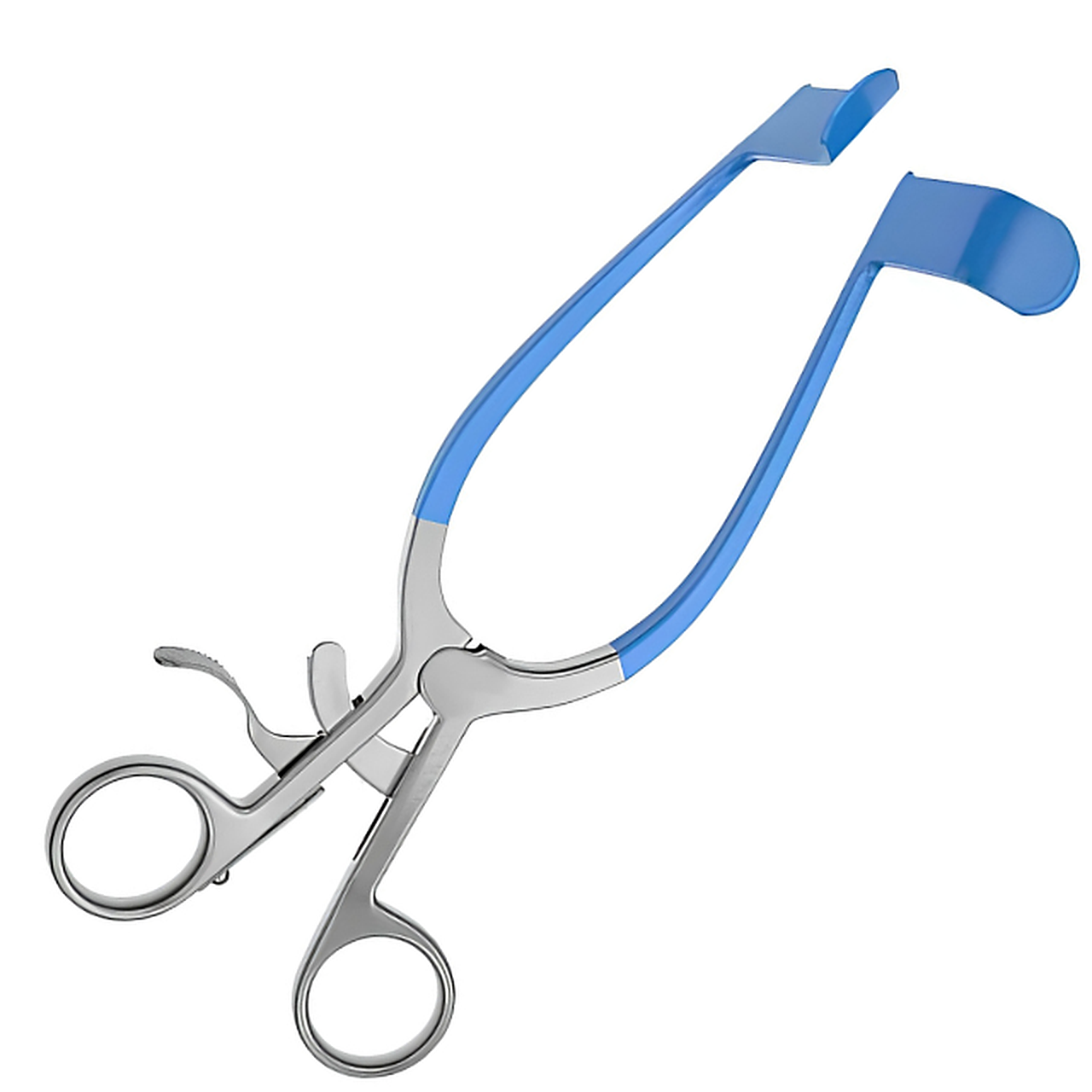
Redundant Nonconductive Wall Retractor
From $99.00
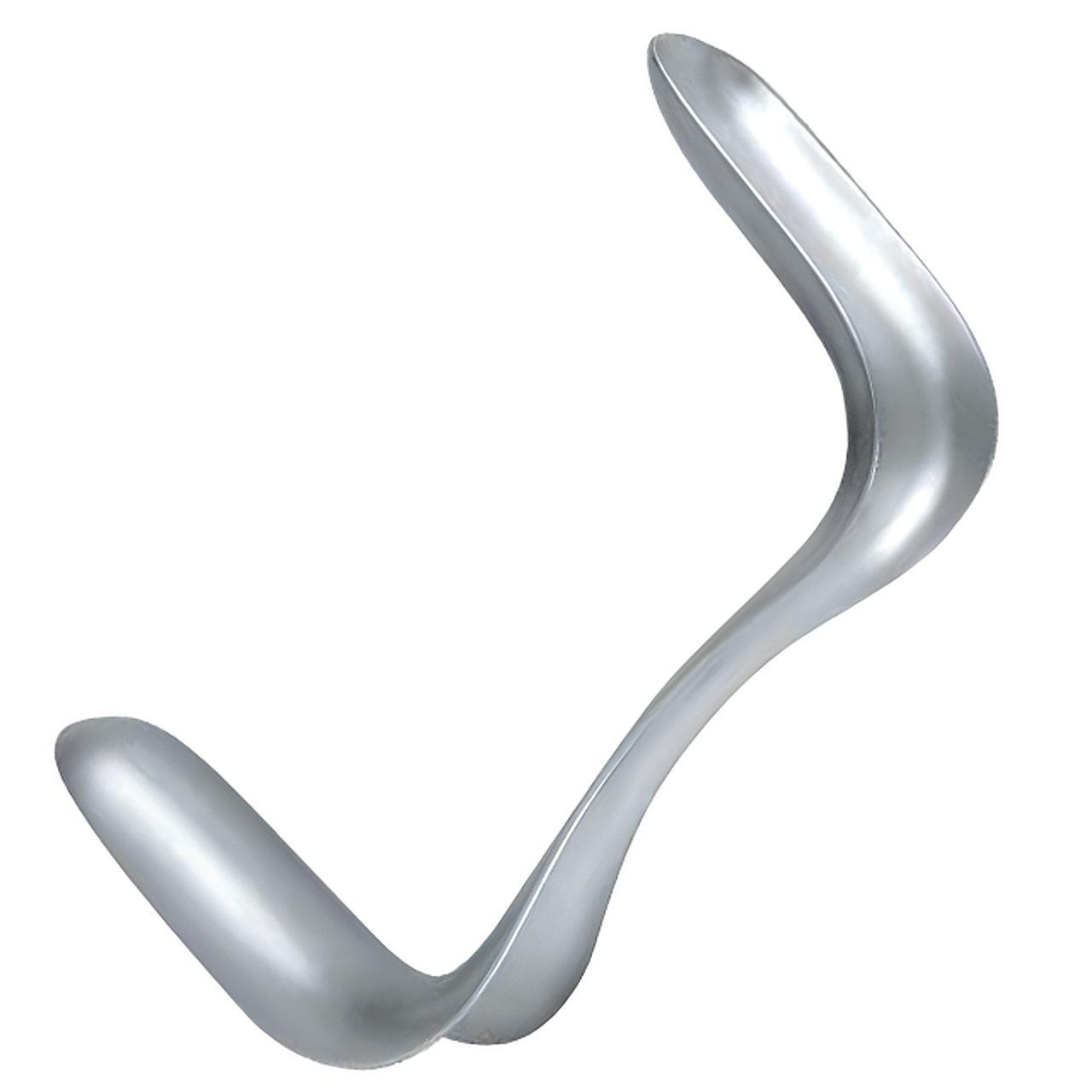
Sims Vaginal Retractor
From $91.00
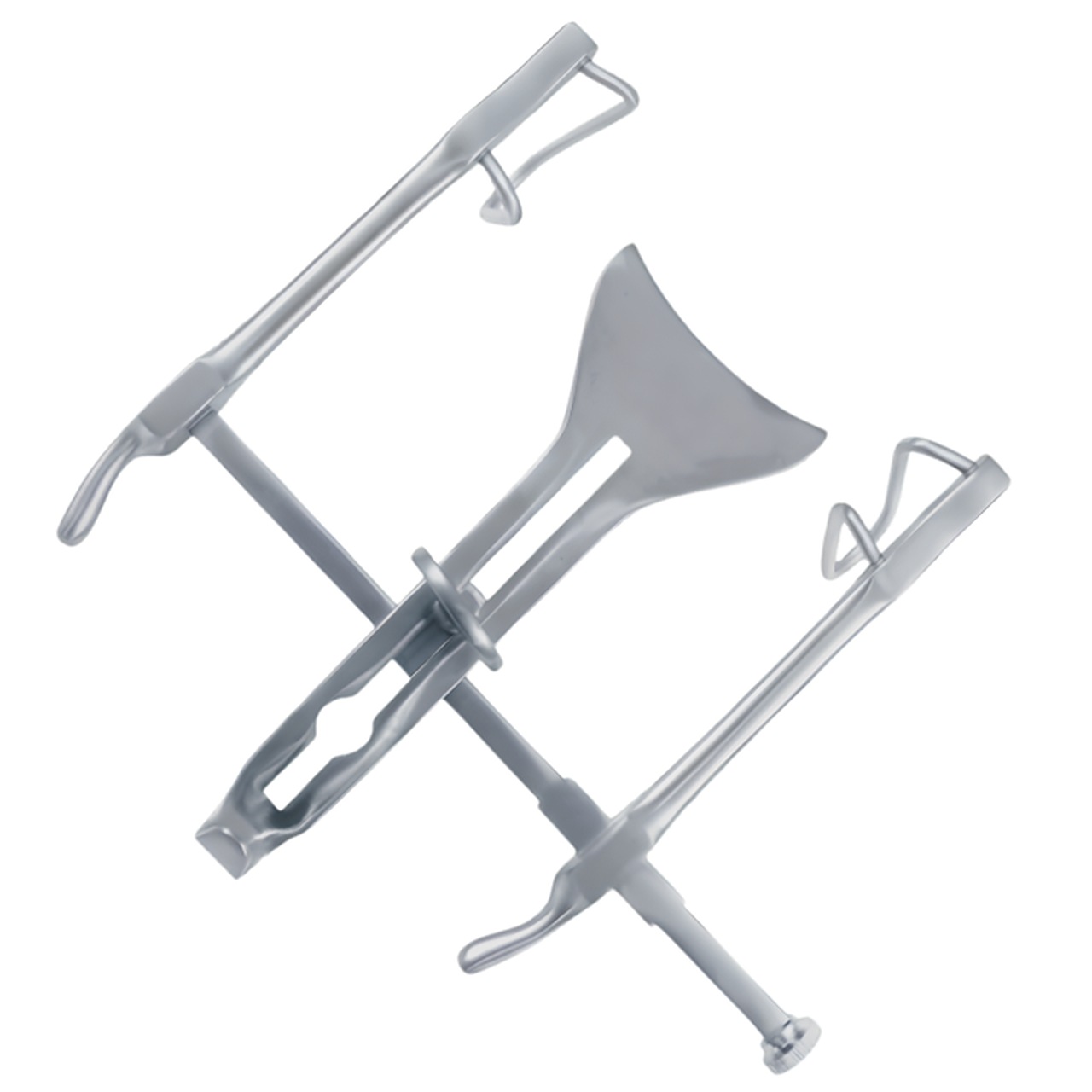
Gosset Self Retaining Retractor
$349
Need Surgical Retractors or Components?
Tell us what you need, including the product, configuration, quantity and destination country. Retractor Maker can provide availability, specifications and pricing.
Request a Quote