
Surgical Retractor Guides
What Is a Bookwalter Gyn Retractor? Uses and Surgical Applications
Author: Saad Shahid · Updated · 10 min read

The Bookwalter Gyn Retractor is a self-retaining, table-mounted system configured for stable exposure in gynecological and pelvic surgery. This guide explains its components, operation, blade selection, setup, reprocessing, and clinical applications.
Retractors discussed in this guide: Bookwalter GYN Retractor System, Bookwalter GYN Magrina Pelvic Surgery Retractor System, Bookwalter StrongArm GYN Surgery System. Browse all surgical retractors.
The Bookwalter retractor in its Gyn configuration is a self-retaining, table-mounted system for pelvic and vaginal surgical exposure. These surgeries involve narrow, deep working spaces bordered by delicate structures. They require steady, uninterrupted exposure. Traditional setups often use manual retractors held by surgical assistants. This can cause fatigue and obstruct vision.
The Bookwalter Gyn Retractor meets these needs with a self-retaining platform for gynecological and pelvic surgery. It combines rigid, table-mounted support with a specialized notched perineal ring. Targeted vaginal and pelvic blades complete the setup. Understanding the system helps surgical teams, hospital buyers, and medical distributors select appropriate instruments.
Contents
What Is a Bookwalter Gyn Retractor?
A Bookwalter Gyn Retractor is a self-retaining system that mounts to the operating table. It keeps the surgical field stable during gynecological procedures. Its components stay in place and provide steady mechanical tension. Assistants do not need to hold them continuously.
Unlike general abdominal setups, this gynecological system uses an anatomically contoured perineal frame. It mounts to the operating-table rail, creating a static base over the pelvic area. Interchangeable blades attach to the frame with multi-angle tilt ratchets. These allow controlled tissue retraction tailored to the patient's anatomy.
How Does a Bookwalter Gyn Retractor Work?
The Bookwalter Gyn Retractor combines rigid mechanical support with modular blade positioning:
- A solid field post attaches to the operating table side rail with a heavy-duty post coupler, creating a stable vertical anchor.
- A horizontal bar connects to the vertical post and extends over the patient, positioning the frame above the surgical area.
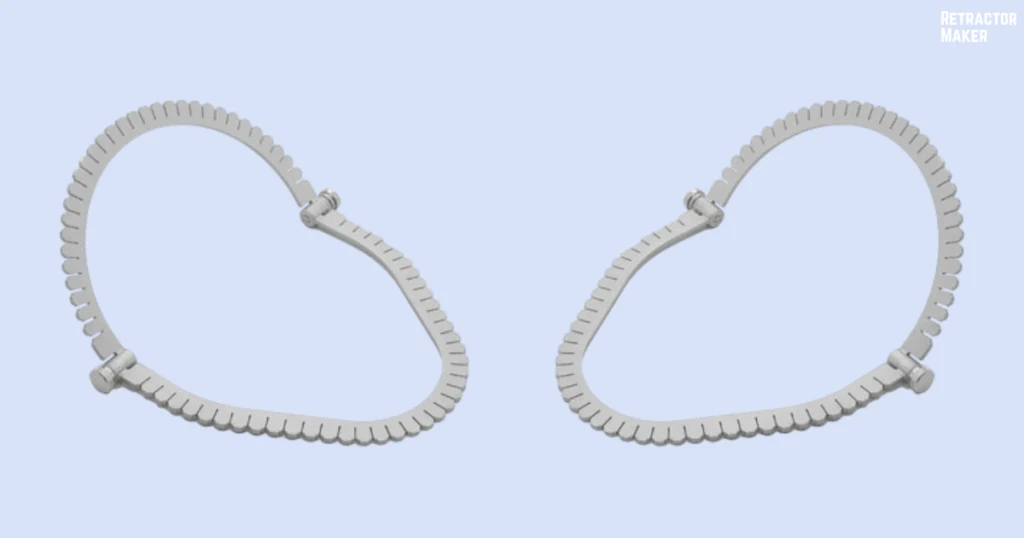
- A notched perineal ring attaches to the horizontal bar and borders the surgical field.
- Slide-on tilt ratchet mechanisms clamp onto the ring, allowing blade adjustments at multiple angles and depths.
- Dedicated lateral, posterior, and pelvic blades engage soft tissue margins and maintain static retraction throughout the procedure.
This design distributes retraction tension evenly. It keeps the operative corridor clear for instruments.
What Components Make Up the Bookwalter Gyn Retractor?
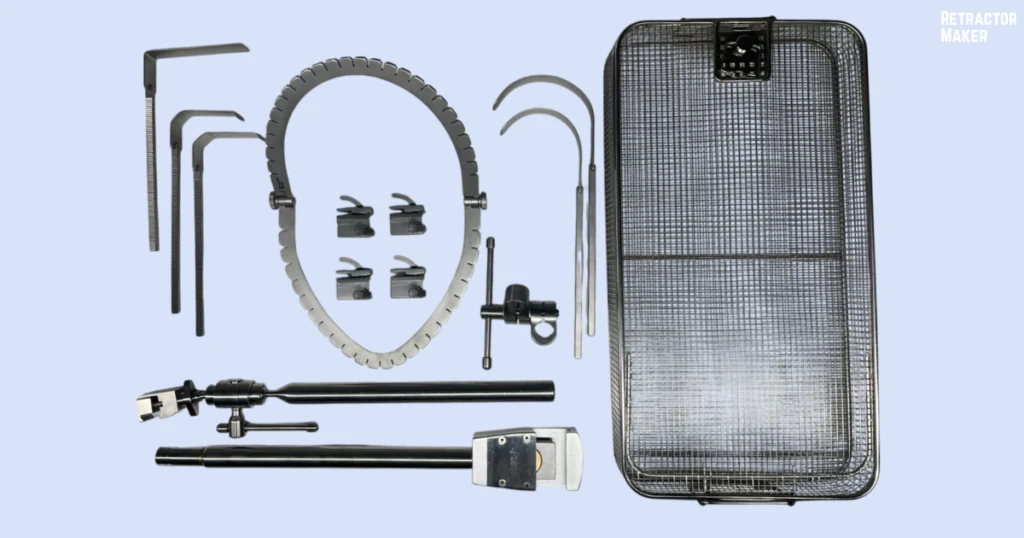
The Bookwalter Gyn Retractor includes dedicated mounting hardware, frame elements, and positioning ratchets. Specialized blades and containment equipment complete the system.
What Does the Field Post Support?
The field post is a solid vertical support rod that anchors into the table coupler. It provides upright stability and suspends the retraction framework over the surgical field.
How Does the Post Coupler Secure the System?
The post coupler is a heavy-duty rail clamp that fastens the field post to standard table rails. It forms a rigid foundation that prevents shifting during surgical movements.
What Does the Horizontal Bar Do?
The horizontal bar is a rigid crossbar extension connecting the vertical field post to the retractor frame. It allows horizontal positioning over the pelvic site.
How Do the Tilt Ratchet Mechanisms Position Blades?
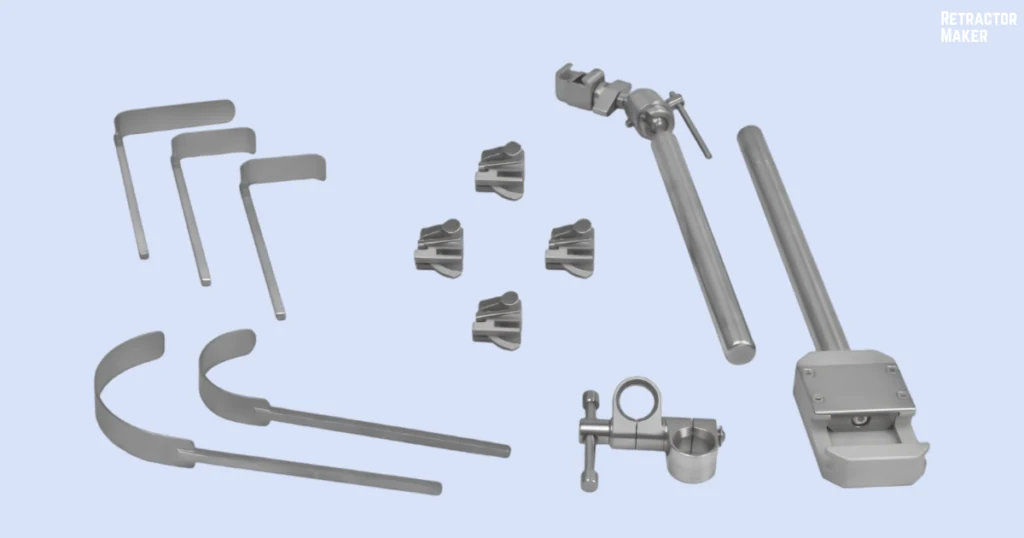
Four multi-angle tilt ratchet mechanisms lock retractor blades into place. These clamps slide along the perineal ring. They allow multi-angle adjustments for precise tissue tension.
What Size Is the Perineal Ring?
The perineal ring measures 9½″ × 14½″ (24.1 × 36.8 cm). Its contoured shape fits around the perineal and pelvic area. Perimeter notches provide many attachment points for ratchets.
What Are the Vaginal Lateral Blade Dimensions?
The set includes two curved vaginal lateral blades, each measuring 1″ × 3″ (2.5 × 7.6 cm). They move side-wall tissue to open the vaginal corridor.
What Does the Vaginal Posterior Blade Do?
The included 1″ × 4½″ (2.5 × 11.4 cm) vaginal posterior blade moves posterior tissue. Its extended reach supports deeper visualization within the canal.
Which Deaver Blades Are Included?
The system includes two curved pelvic Deaver blades:
- One 1″ × 3½″ (2.5 × 8.9 cm) curved pelvic blade.
- One 1″ × 5″ (2.5 × 12.7 cm) curved pelvic blade.
These curved blades retract pelvic soft tissue at varying depths. They also assist with deep anatomical boundaries.
How Is the System Stored?
The complete system stores in a special perforated sterilization box. The box keeps components organized for transport and reprocessing.
What Is the Bookwalter Gyn Retractor Used For?
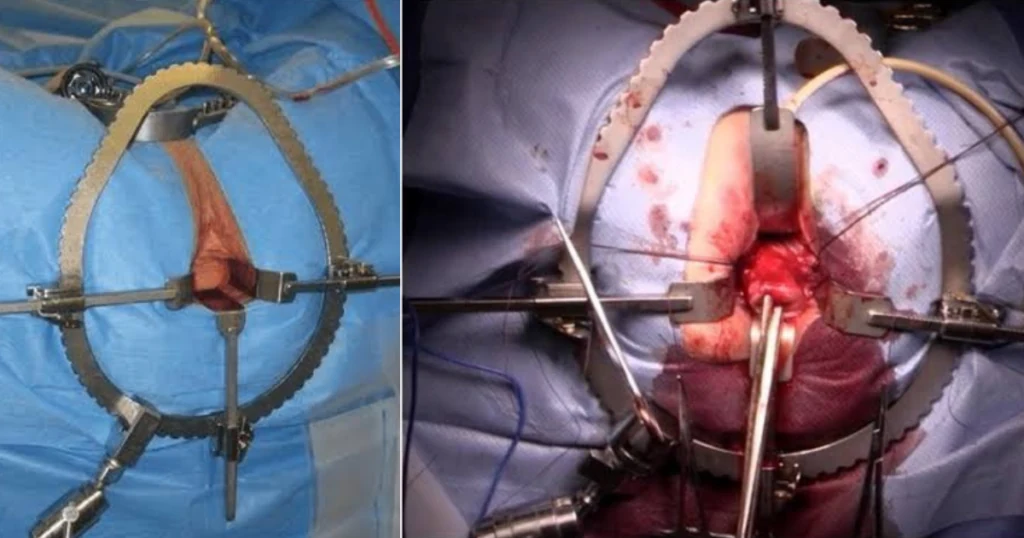
The Bookwalter Gyn Retractor maintains exposure during gynecological and pelvic surgeries. It provides hands-free access to the surgical field.
Its key functions include:
- Maintaining open, static exposure across the surgical field.
- Supporting controlled tissue movement in deep or narrow areas.
- Providing stable, hands-free positioning of blades, including lateral and posterior blades.
- Securing pelvic tissue boundaries without manual holding.
The setup depends on the surgery. Blade selection varies with patient anatomy and surgeon judgment.
How Does the Gyn Set Differ From a Standard Bookwalter Retractor?
The Bookwalter Gyn Retractor differs in its specialized framework and blade selection. Both systems use a table-mounted base and ratchets:
- The Gyn configuration uses a notched perineal ring for pelvic and perineal access. Standard Bookwalter uses round or oval abdominal rings.
- Dedicated lateral and posterior vaginal blades expose the canal.
- Curved Deaver blades provide depth options for pelvic tissue retraction.
- Components accommodate gynecological surgery limits rather than broad abdominal exposure.
What Are the Benefits of Self-Retaining Gynecological Retraction?
A self-retaining gynecological retractor supports surgical teams by maintaining tension and reducing manual holding:
- Maintains static, uniform tension to prevent the surgical field from collapsing.
- Removes the need for assistants to hold tools, reducing manual fatigue.
- Preserves an unobstructed view and wide working angles for instruments.
- Multi-angle tilt ratchets allow fine adjustments to blade elevation and tension on the ring.
- Lateral, posterior, and Deaver blades provide options for varying tissue depths.
How Do You Choose the Right Blade?
Bookwalter retractor blade selection means matching the blade to the body area and required depth of exposure.
- Paired 1″ × 3″ lateral blades move side-wall tissue; the 1″ × 4½″ posterior blade reaches deeper.
- Curved 1″ × 3½″ and 1″ × 5″ Deaver blades retract broader pelvic tissue margins at shallow or deeper levels.
- The surgeon selects blade profiles for patient anatomy, tissue density, and surgical approach to maintain visibility without excessive tension.
How Do You Set Up the Bookwalter Gyn Retractor?
The Bookwalter Gyn Retractor uses standard setup and routine handling practices. Follow these steps:
- Before surgery, inspect all clamps, posts, ratchets, and blades for mechanical integrity and smooth adjustment.
- Attach the post coupler to the operating table rail, insert the field post, and connect the horizontal bar.
- Secure the notched perineal ring over the surgical site and align it with the patient’s anatomy.
- Attach selected blades to the tilt ratchets, engage the target tissue margins, and lock the ratchets along the ring notches.
- Verify that all connections and locks are secure before beginning the operation.
Safety note: Follow manufacturer instructions for assembly and use, along with institutional protocols. Use the judgment of qualified healthcare professionals.
How Should Components Be Cleaned, Sterilized, and Stored?
Proper care and reprocessing protect function and patient safety. Follow these cleaning, inspection, and sterilization steps:
- After use, disassemble all parts, including blades, ratchets, bars, and couplers. Clean thoroughly with hospital-approved detergents to remove bioburden from all crevices.
- Regularly inspect ratchet teeth, screw threads, and frame alignment for wear, distortion, or looseness.
- Place disassembled components in their sterilization box. Reprocess according to validated autoclaving protocols and manufacturer instructions for use.

What Are the Key Features of the Bookwalter Gyn Retractor?
- Self-retaining, table-mounted support structure for hands-free access.
- 12″ solid vertical field post with a heavy-duty rail clamp.
- Rigid horizontal crossbar extension for overhead positioning.
- Specialized 9½″ × 14½″ notched perineal ring for pelvic access.
- Four multi-angle tilt ratchet mechanisms for blade positioning.
- Two 1″ × 3″ vaginal lateral blades for side-wall exposure.
- One 1″ × 4½″ vaginal posterior blade for deep canal retraction.
- Two curved pelvic Deaver blades for variable pelvic depth.
- Included perforated sterilization box for processing and storage.
Who Uses and Buys the Bookwalter Gyn Retractor?
Trained healthcare professionals use the Bookwalter Gyn Retractor in specialized surgical settings. Primary users and buyers include:
- Gynecological and pelvic surgeons.
- Hospital operating room teams and surgical technologists.
- Specialized surgical centers and women’s health suites.
- Hospital procurement and supply chain departments.
- Medical device distributors and equipment importers.
Bookwalter Gyn Retractor vs. Other Gynecological Retractors
Understanding the Bookwalter Gyn system clarifies its role compared with other gynecological retraction methods.
| Feature | Bookwalter Gyn Retractor | Hand-Held Retractors (e.g., Graves, Breisky) |
|---|---|---|
| Mounting Foundation | Table-mounted post and rigid frame | Held manually by operating room personnel |
| Traction Stability | Static mechanical hold; self-retaining | Subject to assistant fatigue and subtle movement |
| Working Space | Overhead frame keeps working field open | Assistant hands and handles occupy entry angles |
| Blade Adjustability | Multi-angle tilt ratchets with notched ring | Dynamic manual repositioning |
| Primary Indication | Sustained exposure during complex procedures | Short-duration, dynamic, or preliminary exposure |
About Retractor Maker
Retractor Maker manufactures specialized surgical instruments and supplies surgical retraction systems globally. Our focus is manufacturing capability for healthcare institutions, surgical centers, and distributors.
Our manufacturing emphasizes dimensional accuracy, secure mechanical locking, and durable surgical instruments. We specialize in table-mounted and self-retaining retraction platforms. Retractor Maker provides reliable supply, direct factory pricing, and OEM support.
Summary: Exposure for Gynecological and Pelvic Surgery
The Bookwalter Gyn Retractor provides specialized exposure for gynecological and pelvic surgery. It combines a rigid table-mounted frame with an anatomically contoured perineal ring. Multi-angle tilt ratchets and specialized blades maintain a reliable, hands-free surgical field.
Static counter-traction reduces operating room fatigue and gives surgeons sustained visibility in challenging anatomical areas. Used by trained professionals, the system provides dependable performance and results in clinical environments.
Related Products and Sourcing Options
Retractor Maker offers specialized surgical retraction platforms, component sets, and OEM solutions. Explore product categories or contact our B2B sales team:
- Explore Product Categories: Bookwalter Retractor Systems; Gynecological & Urology Retractors; Table-Mounted Surgical Retractor Systems; Complete Surgical Retractor Catalog.
- Get in Touch with Our B2B Sales Team: Request a Direct Factory Quote; Contact Us for Wholesale & OEM Inquiries.
Clinical notice: This guide is for surgical teams and hospital buyers. Always follow the manufacturer's instructions for use (IFU) and your hospital's sterilization rules before clinical use.
Frequently Asked Questions
What is a Bookwalter Gyn Retractor?
A Bookwalter Gyn Retractor is a self-retaining, table-mounted system for maintaining exposure during gynecological surgery. The system includes a special perineal ring, tilt ratchets, and blades. These components work together to maintain exposure at the surgical site.
What is a Bookwalter Gyn Retractor used for?
The Bookwalter Gyn Retractor holds soft tissue and tissue boundaries open during gynecological and pelvic procedures. It provides continuous visual access to the surgical area. Tissue remains held open without manual holding during these procedures.
How does a Bookwalter Gyn Retractor work?
The Bookwalter Gyn Retractor holds tissue under static tension through blades secured by tilt ratchets. The system clamps to the operating table rail. A notched perineal ring sits over the pelvic area and supports the blade arrangement.
What makes the Bookwalter Gyn configuration different?
The Bookwalter Gyn Retractor differs from standard Bookwalter sets through its anatomical perineal ring and dedicated blades. The Gyn version includes vaginal blades as well as pelvic Deaver blades. These components distinguish the Gyn configuration from standard sets.
What is the purpose of the perineal ring?
The Bookwalter Gyn Retractor’s notched perineal ring provides a stable frame around the pelvic site. Its contour follows the pelvic area. Multiple notches provide attachment points for tilt ratchets, allowing them to be attached at various angles.
What blades are included in the Bookwalter Gyn Retractor set?
The Bookwalter Gyn Retractor set includes vaginal lateral, vaginal posterior, and curved pelvic Deaver blades. The set contains two 1″ × 3″ vaginal lateral blades, one 1″ × 4½″ vaginal posterior blade, and two curved pelvic Deaver blades.
Why does the Bookwalter Gyn Retractor use different blade types?
The Bookwalter Gyn Retractor uses different blade sizes and curves to manage lateral, posterior, and deep pelvic retraction. These blade options allow retraction to be adjusted to patient anatomy and the surgical needs of the procedure.
Is the Bookwalter Gyn Retractor self-retaining?
The Bookwalter Gyn Retractor is self-retaining and maintains tension once its blades are in place. An assistant is not needed to hold the Bookwalter Gyn Retractor, because the positioned blades maintain tension without continuous manual holding.
How should the Bookwalter Gyn Retractor be cleaned and sterilized?
The Bookwalter Gyn Retractor should be disassembled, cleaned, inspected, and autoclaved after use. Disassemble all components and clean them thoroughly with approved detergents. Inspect the components for wear, then autoclave them in the sterilization box. Follow facility protocols.
Where can I request a quotation for a Bookwalter Gyn Retractor?
Bookwalter Gyn Retractor quotations are available directly from Retractor Maker through its quotation inquiry portal. Hospitals and distributors can use the portal to request pricing. They can also ask Retractor Maker for product details through the same inquiry channel.
How does the Bookwalter Gyn Retractor compare with handheld retractors?
The Bookwalter Gyn Retractor provides static, table-mounted retraction, while handheld retractors require continuous holding by operating room personnel. The overhead frame keeps the working field open and reduces manual fatigue. Assistants’ hands and handheld retractor handles can occupy entry angles.
What should be checked before using a Bookwalter Gyn Retractor?
The Bookwalter Gyn Retractor requires checks of all clamps, posts, ratchets, and blades for mechanical integrity and smooth adjustment before use. Verify that every connection and lock is secure before beginning the operation. Follow manufacturer instructions, institutional protocols, and qualified healthcare professionals’ judgment.
Who uses a Bookwalter Gyn Retractor?
The Bookwalter Gyn Retractor is used by trained healthcare professionals in specialized surgical settings. These include gynecological and pelvic surgeons, operating room teams, and surgical technologists. The guide also identifies specialized surgical centers and women’s health suites as users. Hospital procurement departments and medical device distributors are among its buyers.
About the author
Saad Shahid · Sales & Marketing Manager
Saad Shahid is the Sales & Marketing Manager and founder of Retractor Maker, started in 2023 in Sialkot, Pakistan. He also works with his father at Hospitech Traders, the family surgical instrument business founded in 1989.
Related Blogs & Guide



Related Retractors
Balfour Retractor
From $299
Delee Universal Retractor
$129
Sims Vaginal Retractor — Hollow Grip Handle
From $89.00

Redundant Nonconductive Wall Retractor
From $99.00
Sims Vaginal Retractor
From $91.00
Gosset Self Retaining Retractor
$349
Need Surgical Retractors or Components?
Tell us what you need, including the product, configuration, quantity and destination country. Retractor Maker can provide availability, specifications and pricing.
Request a Quote